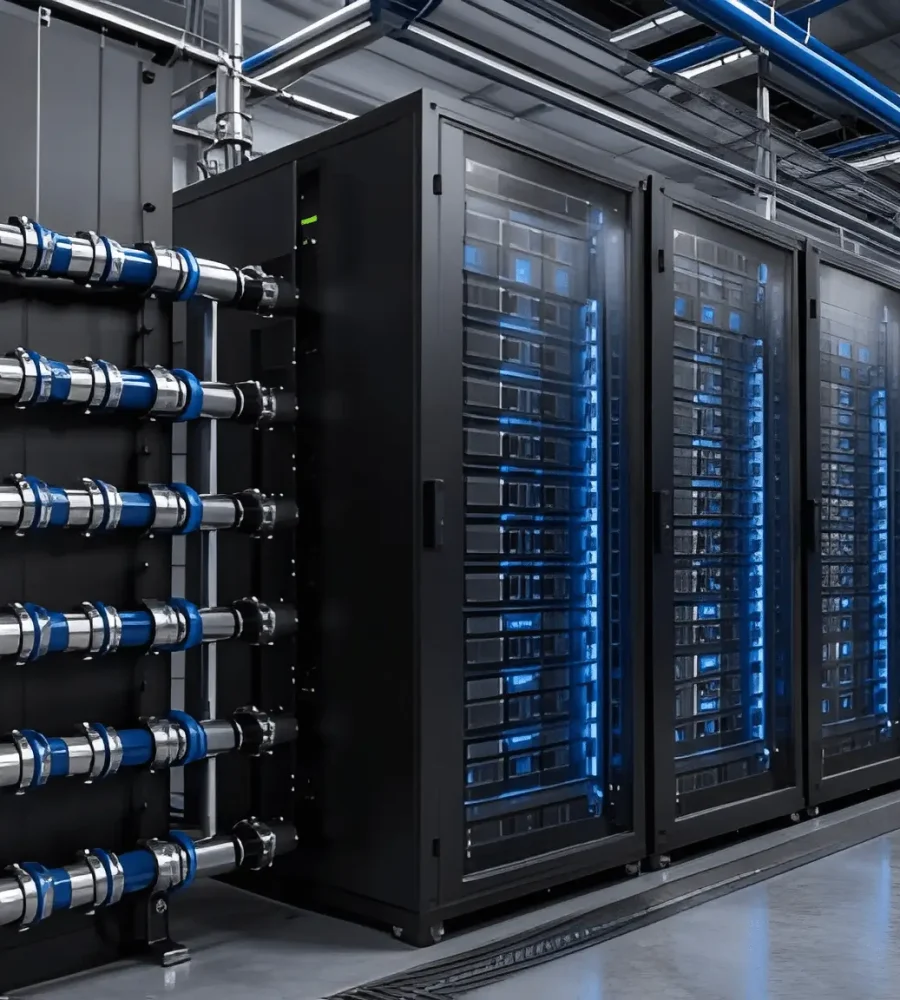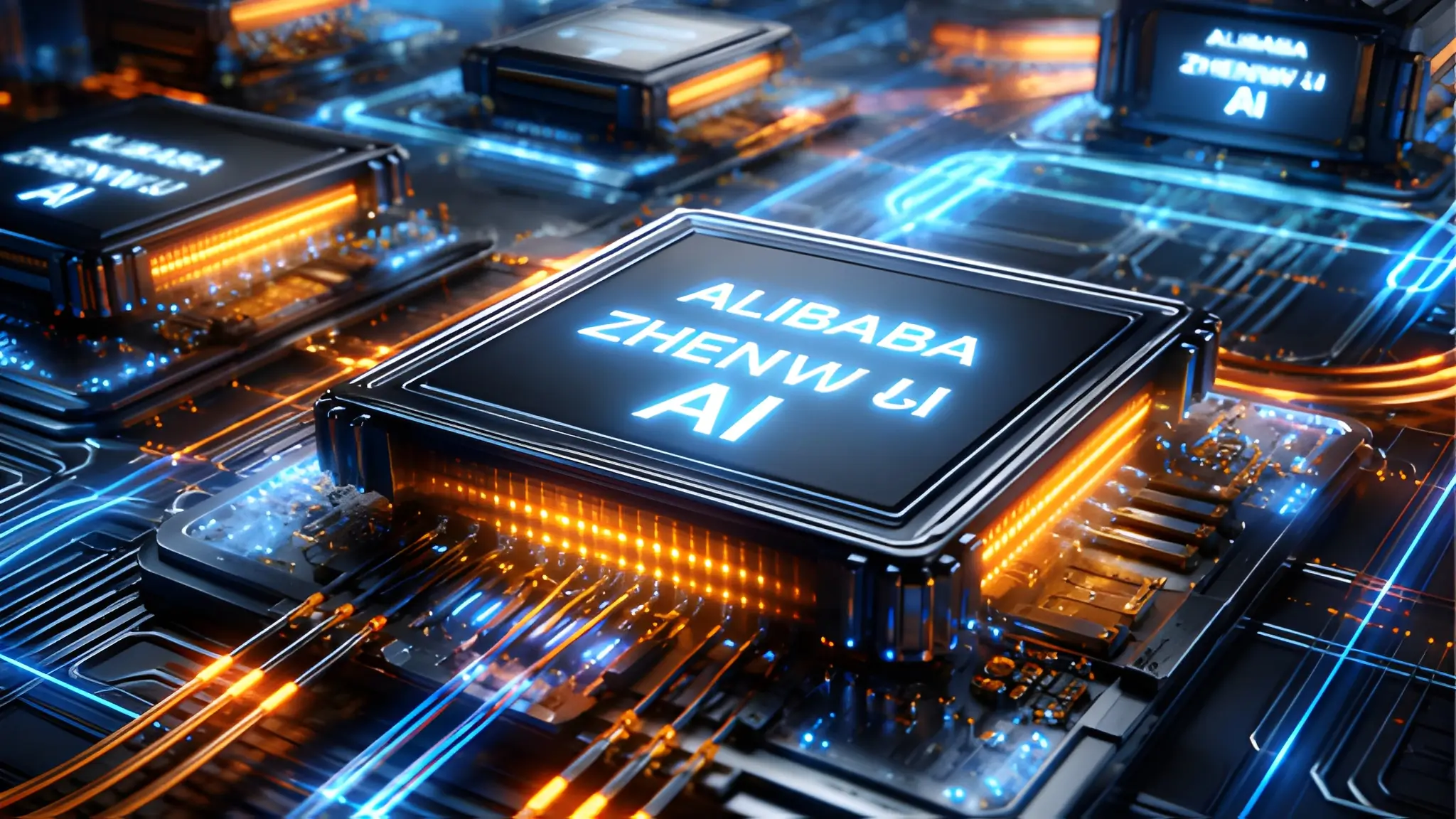
Alibaba Group and China Telecom have launched a new AI-focused data center in southern China, signaling a decisive step in the country’s push to internalize critical compute infrastructure. The facility integrates 10,000 of Alibaba’s self-developed Zhenwu AI semiconductors, positioning it as one of the most concentrated deployments of domestically designed AI chips to date.
The system targets both AI training and inferencing workloads, with the capacity to support models scaling into hundreds of billions of parameters. China Telecom will own and operate the facility, reinforcing a hybrid model where state-backed operators align with private-sector silicon innovation.
Alibaba’s Zhenwu semiconductors anchor the architecture of the new data center, reflecting the company’s long-term investment in vertical integration. Developed through its T-head unit, these chips extend Alibaba’s control across the full AI stack from silicon to cloud delivery.
The scale of deployment underscores a broader shift. China’s leading technology firms are no longer experimenting with in-house chips; they are operationalizing them at infrastructure scale. This transition marks a structural evolution in how compute ecosystems get built and monetized within China.
Policy Pressure Reshapes Semiconductor Strategy
Nvidia remains a benchmark in global AI chip performance; however, U.S. export restrictions have constrained China’s access to advanced semiconductor technologies. As a result, domestic players have accelerated efforts to replace external dependencies with internally developed alternatives.
This data center reflects that urgency. It demonstrates how geopolitical constraints now directly shape infrastructure design, vendor selection, and long-term capital allocation across China’s AI economy.
On Tuesday, Alibaba CEO Eddie Wu announced the formation of a new technology committee aimed at tightening execution across the company’s AI initiatives. The committee includes Chief AI Architect Zhou Jingren, Alibaba Cloud CTO Li Feifei, and Group CTO Wu Zeming.
The organizational changes were made to “accelerate” Alibaba’s AI development, Wu said, according to a memo seen by CNBC. This internal restructuring aligns leadership across chip design, cloud infrastructure, and model development areas that increasingly operate as a single integrated system rather than discrete functions.
Scaling Beyond 10,000 Chips
The Shaoguan-based facility in Guangdong province represents only the initial phase. Alibaba and China Telecom expect the deployment to scale to 100,000 chips, creating a compute cluster capable of supporting a wide range of industrial AI applications, including healthcare and advanced materials research.
China has increased its focus on building large-scale data centers powered by domestic technologies. A computing cluster built with Huawei’s Ascend 910C AI chips recently came online, highlighting a parallel effort across the ecosystem.
A Divergent Capital Strategy in AI Expansion
U.S. hyperscalers continue to commit massive capital toward AI infrastructure, with projected spending nearing $700 billion this year. Chinese firms, however, are taking a more targeted approach. They prioritize sector-specific AI deployments that align directly with revenue generation and measurable returns.
Moreover, this divergence signals a different philosophy in scaling AI, one that favors efficiency and application depth over brute-force infrastructure expansion.
Alibaba’s latest deployment captures a broader inflection point. AI infrastructure in China is no longer defined by access to global supply chains but by the ability to build, scale, and optimize domestic alternatives. However, the long-term competitiveness of these systems will depend on performance parity, ecosystem maturity, and the speed at which domestic chips can iterate against global leaders.