
It’s hard to ignore the seismic shift happening in Europe’s digital backbone right now. As someone watching the industry, I can tell you: The demand for data center capacity has absolutely exploded.
We’re talking about global tech giants pouring billions into Europe, not just for storage, but to power the future of AI. This isn’t just a business trend; it’s going to define the European economy for the next decade.
The sheer scale of this AI revolution is demanding an overhaul of our data grid that, frankly, we weren’t prepared for. Gartner projects AI spending to hit an astonishing $133 billion by 2028, growing by 30% annually. That kind of growth doesn’t ask for better capacity; it demands a total structural redesign.
The big players like Microsoft, Amazon, Google are acting as a massive accelerator, pumping huge funds into data center expansions across the continent. And as part of the EU, countries like Poland are right in the path of this technological shockwave.
In 2024, operators added an average of 33 MW of new capacity. Think about that: it’s double the 16 MW average from the year before. And by 2025? The projection is 47 MW. We are witnessing a tripling of capacity in three years.
This isn’t driven by your average business, it’s the hyperscale cloud providers. They’re launching projects that easily exceed 100 MW, facilities specifically designed for one thing: training gargantuan AI models.
The EU Commission understands the urgency. They’ve launched the “AI Continent Action Plan” with an ambitious, almost aggressive, goal: triple the EU’s data center capacity within the next five to seven years.
To achieve this, the EU has earmarked €200 billion and approved 19 AI Factory locations across Europe. We saw the first seven including Spain, Germany, and Sweden, announced last year, and six more, such as the Czech Republic and Lithuania, followed this past October.
This is Europe’s official response to the investment wave coming from the US. Companies like Meta, Amazon, and Google are committing, and we’ve got OpenAI building a center in Norway. But perhaps the most eye-watering development is Brookfield’s “Stargate” project in Stockholm, a $10 billion investment promising 750 MW of pure AI computing power.
The speed at which data centers are consuming electricity is genuinely alarming. Currently, our data infrastructure uses about 62 TWh per year, roughly 2% of the EU’s total electricity. But McKinsey forecasts this figure to more than double, climbing above 150 TWh by 2030.
Training an LLM like ChatGPT is an energy marathon, requiring thousands of high-end GPUs to run in parallel for weeks on end. Goldman Sachs reports that there are a staggering 170 GW of power connection requests pending across Europe. That’s about a third of the continent’s peak grid demand. Even if only a fraction of those get built, our overall electricity needs could jump by 60%.
Right now, Germany, the UK, and France are the biggest power hogs in this space, but the demand is spreading rapidly.
For years, the undisputed champions were the FLAP-D markets: Frankfurt, London, Amsterdam, Paris, and Dublin. Today, they’re choked. Frankfurt and Dublin are nearing their power limits; Ireland has actually hit the brakes with a moratorium on new builds.
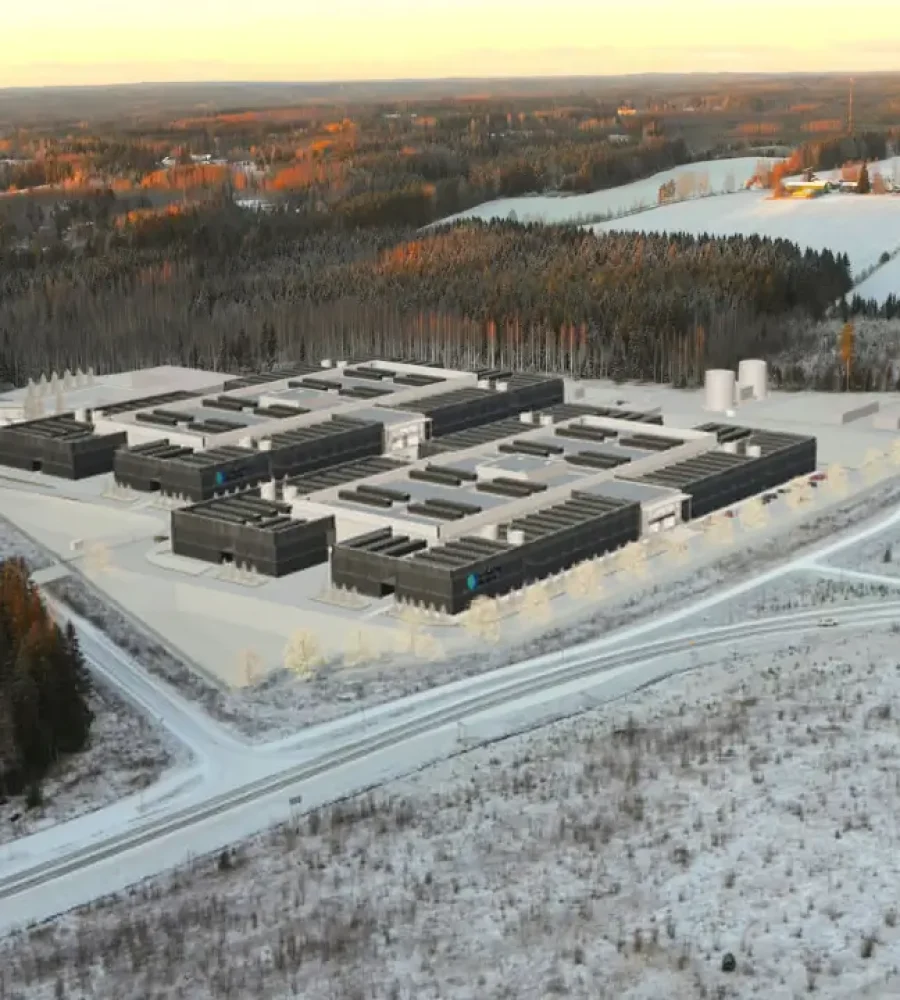
The smart money is moving north and east. The Nordic countries offer cool climates, reliable power, and cheap renewables, a perfect trifecta. And now, we’re seeing new hubs emerge in the east: Finland, Lithuania, the Czech Republic, and Poland.
The European Union has a clear strategic imperative: digital sovereignty.
But this hinges on two things: power grids and people. Our energy system was never designed for this exponential demand; building new transmission lines can take a decade, while the AI timeline is a matter of months. Meanwhile, we have a critical shortage of the skilled professionals needed to run this massive, complex infrastructure.
The next phase of this race will be defined by pure innovation: liquid cooling to handle the heat, greater energy efficiency, and seamless renewable integration. Smart grids, large-scale solar, and even modular nuclear reactors will be essential to stabilize and decarbonize these facilities.
We’ll also see more edge computing, pushing workloads closer to the end-user to improve speed and efficiency. With its growing industrial momentum and renewable energy capacity, Poland is perfectly positioned to become a major node in this evolving, hyper-connected AI network.