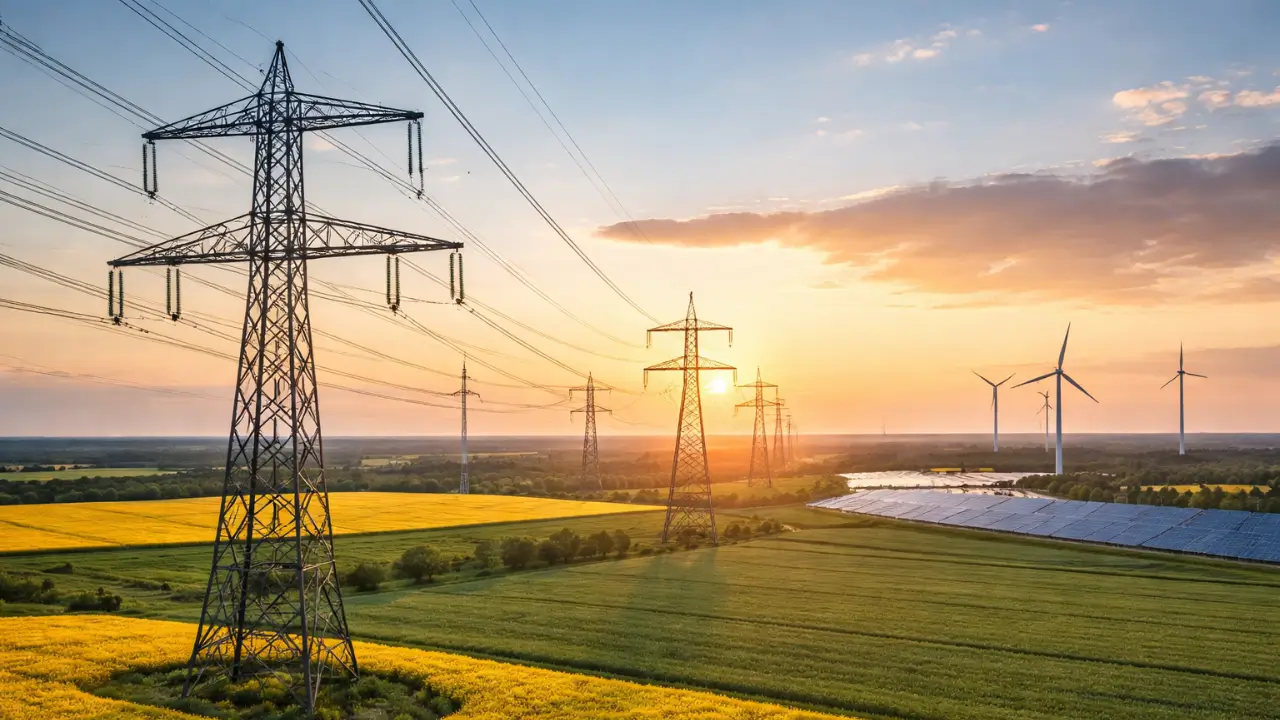
Germany grid expansion approvals increased sharply in 2025 as federal regulators accelerated decisions on new transmission infrastructure, reflecting rising pressure to align grid capacity with renewable energy growth and industrial electrification.
Power Line Approvals Increase Sharply
Germany’s Federal Network Agency, Federal Network Agency (BNetzA), approved around 2,000 kilometers of new power lines in 2025. The figure represents a 45% increase compared with the previous year, signaling a step change in permitting momentum.
For the first time, the agency also completed permitting for four major high-voltage direct current corridors. These projects are commonly described as power highways because they move large volumes of electricity across long distances with lower losses.
The approvals lifted the total length of transmission lines with fully completed procedures under the agency’s remit to about 4,700 kms, or 2,920 miles. This total includes the four north-to-south connections A-Nord, Ultranet, SuedLink and SuedOstLink. Construction permits have now been issued for all four corridors.
Grid developers and large power consumers have long tracked these projects closely. The corridors form the backbone of Germany’s strategy to move renewable power from northern regions to industrial centers in the south.
Strategic Role of HVDC Corridors
The completion of permitting for the four HVDC routes marks a structural milestone for Germany’s transmission network. Industry planners view these links as critical to system stability as coal and nuclear capacity exits the mix.
Delays in transmission approvals have previously slowed renewable integration and increased congestion costs. By completing permitting at this scale, regulators have reduced one of the most persistent sources of uncertainty in grid delivery.
From an infrastructure perspective, the issuance of construction permits allows transmission system operators to move from planning into execution. Equipment suppliers, engineering firms and contractors can now align delivery schedules with greater confidence.
Expansion Needs Remain Substantial
Despite the progress, Germany still faces a large build-out task. The country’s legally defined grid expansion requirement stands at around 16,800 kms. The target aims to ensure a secure and reliable electricity supply after the transition to renewable energy sources.
Of this total, the federal agency is responsible for permitting about 9,600 kilometers. Germany’s federal states must clear the remaining sections. This split continues to shape project timelines and coordination across regions. By the end of 2025, around 4,100 kms of lines remained either in or ahead of the planning approval stage. These projects have not yet reached final clearance.
In contrast, projects covering around 4,700 kms have already completed the clearance process or do not require approval because of legal provisions. The figures highlight uneven progress across the national portfolio.
Implications for Industry and Digital Infrastructure
For energy-intensive industries and digital infrastructure operators, Germany grid expansion approvals carry direct operational relevance. Power availability and grid connection timelines increasingly influence decisions on factory expansion, data center siting and long-term investment planning.
Faster permitting improves visibility across the value chain. Developers can better estimate delivery risk, while financiers gain clearer signals on project readiness. Transmission progress also supports more predictable power purchase agreements tied to renewable generation.
From a broader perspective, the 2025 approvals suggest that regulatory capacity is beginning to scale in line with system needs. Whether this pace can continue will remain a central question for stakeholders tracking Germany’s energy transition.
Construction schedules and commissioning timelines will now determine when new capacity reaches the grid. Even so, the permitting advances achieved during 2025 place Germany on firmer footing as it works to modernize its transmission network and support long-term economic electrification.