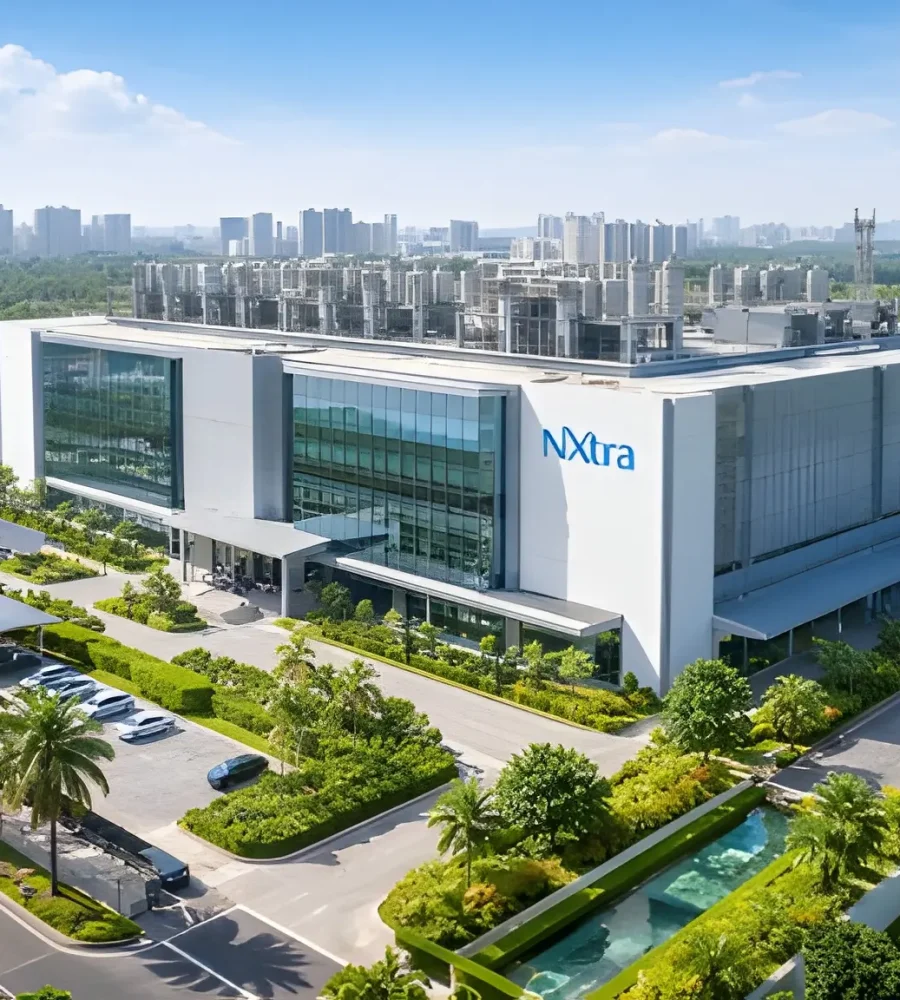

NxtGen AI has deployed a national-scale Sovereign AI Factory designed to anchor India’s next generation of AI development within domestic infrastructure. The facility integrates NVIDIA Blackwell GPUs, Dell’s liquid-cooled compute systems, and Vertiv’s end-to-end data centre infrastructure stack to deliver high-density, population-scale AI capacity within India’s sovereign cloud framework.
Unlike incremental expansions seen across the market, this deployment signals architectural intent. NxtGen AI is not simply adding compute. It is establishing a vertically integrated AI production layer designed to sustain long-term training, inference, and model development workloads inside national borders.
NVIDIA Blackwell at Population Scale
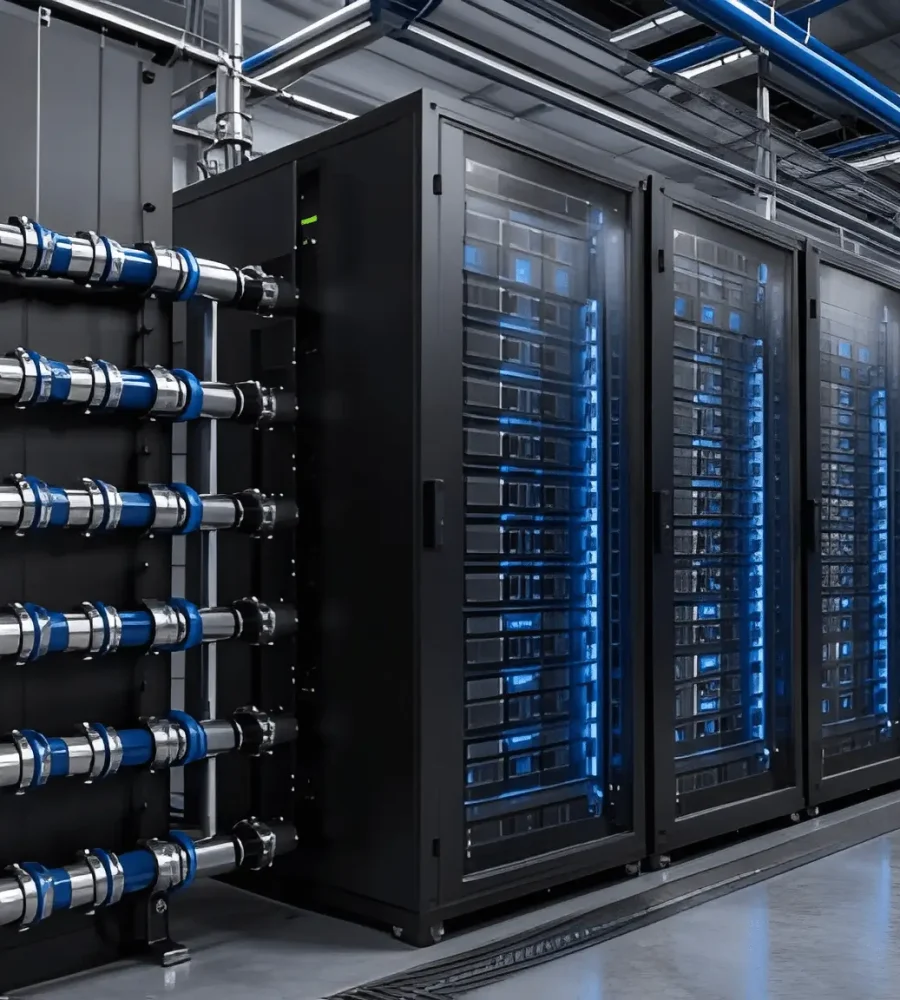
At the heart of the Sovereign AI Factory sit more than 4,000 NVIDIA Blackwell GPUs. NxtGen AI is deploying them through Dell Integrated Rack Scalable Systems (IR5000), powered by Dell PowerEdge XE9685L liquid-cooled servers. The architecture supports ultra-dense compute clusters optimized for both AI model training and inference at scale.
This configuration reflects a broader shift in AI infrastructure design. GPU clusters now operate as industrial assets rather than experimental compute pools. Consequently, physical infrastructure resilience, power density management, and thermal stability define performance outcomes as much as silicon capability.
Vertiv Delivers the Physical AI Backbone
Vertiv provides the physical infrastructure foundation for the facility. The company’s integrated portfolio supports both the power and thermal demands of next-generation AI workloads, which operate at significantly higher densities than traditional enterprise compute.
The power train spans distribution transformers, switchboards, uninterruptible power supply systems, room power distribution units, racks, and rack PDUs. On the thermal side, the deployment integrates advanced liquid cooling systems purpose-built for high-density compute, including high-capacity Coolant Distribution Units (CDUs), modular secondary piping infrastructure skids, perimeter cooling systems, and ambient-compatible heat rejection units.
Importantly, Vertiv’s agnostic infrastructure strategy allows the deployment to pivot toward high-efficiency dry-cooler systems tailored to operational needs. By using water at ambient temperatures for direct heat removal, the design improves thermal-chain efficiency and reduces cooling power overhead. As a result, GPU stability improves while overall energy efficiency strengthens.
Power Efficiency and Long-Term Sustainability
Beyond cooling, Vertiv supplies a fully integrated power architecture featuring UPS systems paired with lithium-ion energy storage. Compared with traditional lead-acid batteries, lithium-ion systems deliver longer service life and fewer replacement cycles. Therefore, the infrastructure reduces material waste and operational emissions over time.
Together, liquid cooling and lithium-ion energy storage allow NxtGen AI to operate high-density sovereign AI infrastructure with a lower energy footprint than conventional data centre models. This alignment between performance and sustainability reflects the evolving economics of AI facilities, where efficiency now shapes both margin and policy alignment.
Executive Perspective: Infrastructure as National Strategy
“Building a national-scale AI factory requires not just accelerated computing but a resilient and scalable AI infrastructure foundation,” said A. S. Rajgopal, MD & CEO, NxtGen Cloud Technologies. “Vertiv’s experience in designing and deploying high-density AI data centres globally, combined with its ability to execute at speed, supports our vision of strengthening India’s sovereign AI capabilities.”
The statement underscores a broader shift in AI geopolitics. Nations increasingly view AI compute capacity as strategic infrastructure, comparable to telecom or energy networks. By anchoring compute domestically, India reduces exposure to cross-border latency, policy constraints, and external supply dependencies.
Subhasis Majumdar, Managing Director, Vertiv India, emphasized the structural redesign AI demands.
“AI factories are redefining how data centres are designed and operated,” said Subhasis Majumdar, Managing Director, Vertiv India. “Vertiv’s 360AI approach enables NxtGen AI to deploy a highly efficient, scalable, and future-ready infrastructure that supports the latest generation Dell compute systems accelerated by NVIDIA Blackwell, delivering industry-leading power efficiency and cost-effective AI operations.”
Domestic Supply Chain, National Execution
The deployment draws support from Vertiv’s Make in India supply chain and national service network. Additionally, regional design and engineering capabilities operate through Vertiv’s Integrated Business Services hub in Pune. This domestic execution layer strengthens operational resilience while reducing dependency on international logistics cycles.
As sovereign cloud demand expands across enterprises, startups, and public-sector institutions, the Sovereign AI Factory positions NxtGen AI as a central infrastructure enabler in India’s AI growth trajectory.
Ultimately, this initiative signals more than hardware deployment. It marks the industrialization of AI within India’s borders. In the emerging global compute order, Sovereign AI Factory models may define not just technological advantage, but economic autonomy itself.