A Strategic Grid Reinforcement for Southern Nairobi
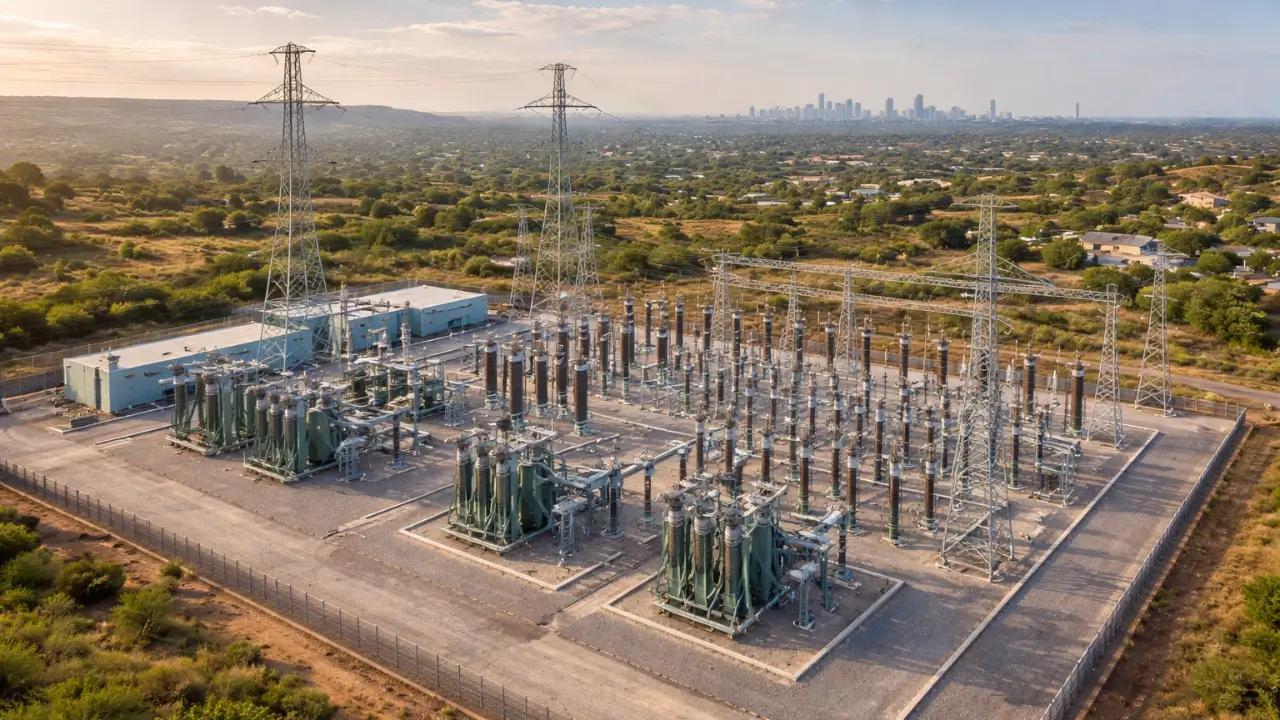
Kenya power reliability entered a new phase this week as a critical high-voltage substation came online in the country’s southern transmission corridor, adding redundancy to one of East Africa’s most heavily loaded urban grids. The commissioning of the 220/66 kilovolt Kimuka substation introduces a new node into the national network, addressing long-standing constraints that have shaped electricity delivery to Nairobi and its surrounding counties.
Located near Nairobi’s southern outskirts, the Kimuka installation expands the transmission system’s ability to manage faults without cascading outages. For years, grid planners flagged the southern corridor as a single-point vulnerability, where disruptions on one major line could trigger widespread blackouts. The new facility changes that operational reality by enabling alternative routing during line failures or maintenance.
The project was delivered by the Kenya Electricity Transmission Company, which oversees Kenya’s high-voltage transmission infrastructure. Its completion reflects a broader push to harden the grid against growing demand from urban expansion, industrial activity, and digitally dependent services.
Kenya Power Reliability and Network Redundancy
The Kimuka substation functions as a secondary supply path into the Nairobi load center, reducing dependence on a single transmission line. Grid operators can now reroute electricity during faults, minimizing the risk of extended outages. This redundancy is central to modern transmission planning, particularly in fast-growing metropolitan regions.
Before Kimuka’s commissioning, a fault along the main southern supply route often resulted in large-scale service interruptions. With the new substation integrated, engineers gain operational flexibility, allowing isolation of affected sections while maintaining service continuity elsewhere. The result is a more resilient network capable of absorbing shocks without system-wide consequences.
Load Balancing and Voltage Stability Benefits
A key operational impact involves the long-stressed Nairobi North substation. For years, that facility carried surplus load to serve southern suburbs, pushing equipment close to its technical limits. The imbalance contributed to voltage fluctuations and occasional instability, especially during peak demand periods.
With Kimuka now operational, load sharing becomes more evenly distributed across the network. Voltage regulation improves as power flows align more closely with regional demand patterns. This stabilization matters for industrial users, data-driven businesses, and households that rely on sensitive electronics vulnerable to power quality issues.
Engineers also expect reduced thermal stress on aging infrastructure, extending asset life and lowering the risk of unplanned outages. Over time, this operational relief may reduce maintenance costs and improve overall system efficiency.
Infrastructure Modernization and Economic Context
The commissioning aligns with Kenya’s broader strategy to modernize its power transmission backbone in support of economic growth. Reliable electricity underpins manufacturing output, logistics operations, and service-sector expansion. Grid resilience also influences investor confidence, particularly for energy-intensive industries evaluating regional hubs.
Funding for the Kimuka substation combined government resources with support from international development partners, reflecting shared priorities around energy security and regional stability. Such partnerships have become a defining feature of large-scale infrastructure projects across East Africa.
Local Impact and Advanced Monitoring
Communities including Karen, Ngong, Matasia, and parts of Kajiado stand to benefit directly from improved service continuity. Reduced outage frequency and steadier voltage levels are expected as the substation assumes its role in daily grid operations.
The facility incorporates advanced monitoring and protection systems designed to detect anomalies in real time. These digital controls enable faster fault identification and isolation, shortening restoration times and improving safety for maintenance crews. The technology also supports data-driven planning by providing granular insights into load behavior and system performance.
Regional Trends in Power Transmission Development
Across East Africa, utilities are accelerating investments in high-voltage transmission to keep pace with rising demand, renewable integration, and cross-border power trade. Kenya, Ethiopia, and Tanzania have all prioritized grid reinforcement as solar, wind, and geothermal capacity expand. Substations like Kimuka play a critical role in translating generation gains into reliable end-user supply.
In Kenya, the focus has shifted from generation adequacy toward transmission robustness, recognizing that bottlenecks and single-line dependencies can undermine system reliability. Similar projects are underway to strengthen urban load centers and interregional corridors.
A Measured Step Forward
The commissioning of the Kimuka substation marks a practical advancement in Kenya power reliability without altering the underlying generation mix. By reinforcing the southern Nairobi corridor, the project reduces outage risk, improves voltage stability, and supports sustained economic activity. As regional demand continues to rise, such targeted transmission upgrades will remain central to maintaining grid resilience and operational confidence.