Meta Platforms is expanding its push into custom silicon, outlining plans for four internally developed processors designed to power the next generation of its data-center infrastructure.
The roadmap centers on the company’s Meta Training and Inference Accelerator (MTIA) initiative, a program created to tailor compute hardware specifically for Meta’s machine-learning systems. By designing processors internally, the company aims to optimize performance for its own workloads while gradually reducing dependence on external chip vendors.
The first processor in the program, MTIA 300, has already entered production environments. It currently supports recommendation and ranking systems across several Meta platforms, including Facebook and Instagram.
New Chips Aim to Strengthen AI Inference
Meta plans to introduce three additional processors by 2027. The later-generation chips, MTIA 450 and MTIA 500 will focus primarily on inference workloads, the stage in which trained models deliver outputs such as recommendations or responses to user prompts.
Across the technology sector, companies increasingly pursue similar strategies. Major cloud and platform operators such as Alphabet and Microsoft have invested in internal chip programs to complement processors purchased from vendors like NVIDIA and Advanced Micro Devices.
Custom processors allow companies to tune architecture directly to their own software stacks. Consequently, hyperscalers can lower power consumption and operating costs across large-scale AI deployments. Meta has already delivered working silicon for inference tasks. However, training large generative AI models presents a significantly more complex engineering challenge.
The company’s upcoming MTIA 400 processor marks its next step toward closing that gap. Engineers are integrating the chip into a full system architecture built specifically for Meta’s data centers.
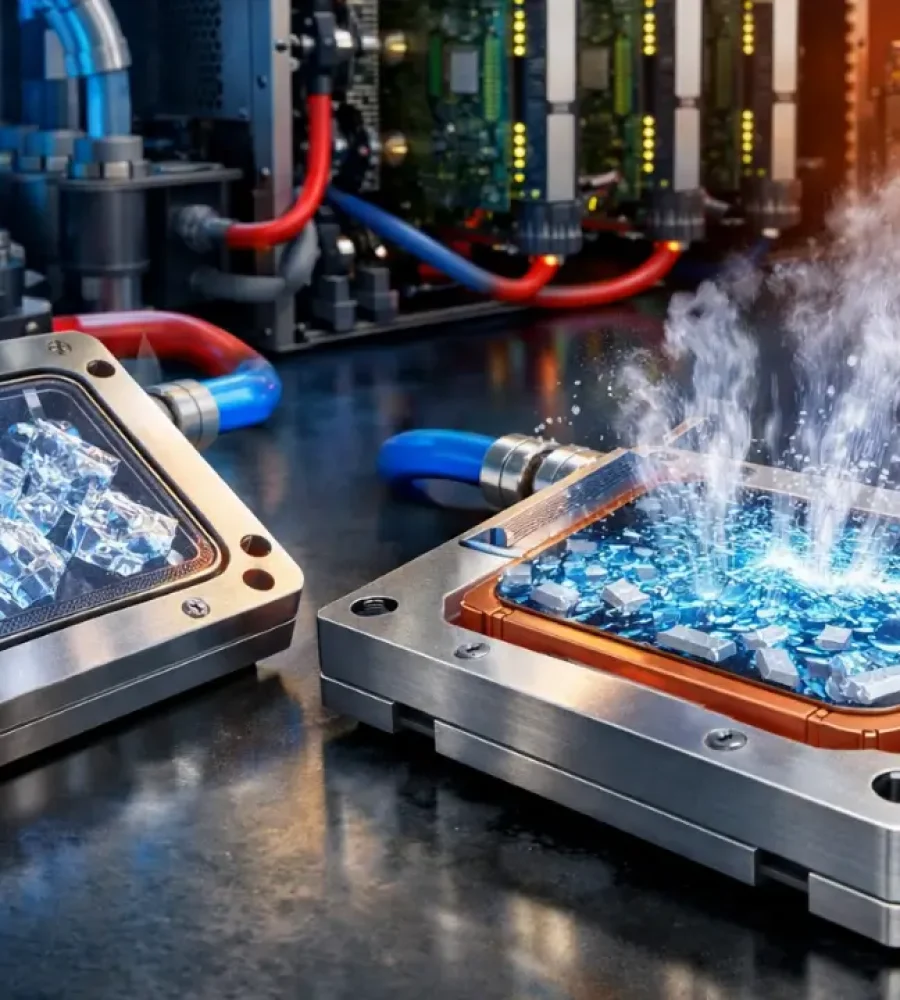
The infrastructure surrounding the processor spans multiple server racks and incorporates liquid-cooling technology to handle the higher thermal loads associated with AI training workloads.Meta intends to launch the new processors roughly every six months. Meanwhile, the accelerated timeline reflects the speed at which the company is expanding compute capacity across its global infrastructure. AI systems now drive a growing share of Meta’s operational requirements from content recommendations to generative AI services embedded across its applications.
Billions Flow Into Data Center Expansion
The company’s infrastructure spending reflects that shift. Earlier this year, Meta projected capital expenditures between $115 billion and $135 billion, with most of the investment tied to data-center construction and computing capacity.
Even as Meta pushes deeper into custom silicon, it continues to rely on industry partners. The company collaborates with Broadcom on aspects of chip design, while fabrication takes place at Taiwan Semiconductor Manufacturing Company. Meta’s internal silicon efforts do not replace external supply. Instead, they form part of a hybrid infrastructure strategy.
Earlier this year, the company signed agreements worth tens of billions of dollars to purchase AI processors from NVIDIA and AMD. Therefore, Meta will continue combining proprietary hardware with third-party accelerators as demand for AI computing surges.
The Bigger Infrastructure Shift
The MTIA roadmap signals a structural change in hyperscale infrastructure strategy. Technology companies no longer rely solely on merchant silicon. Instead, they increasingly design hardware aligned with their own software ecosystems and workload patterns.
For Meta, custom processors represent both a cost lever and a performance strategy. As AI workloads expand, the ability to control the silicon stack could become a defining advantage in the race to scale global AI infrastructure.