Meta is no longer thinking in clusters. It is thinking in power grids.
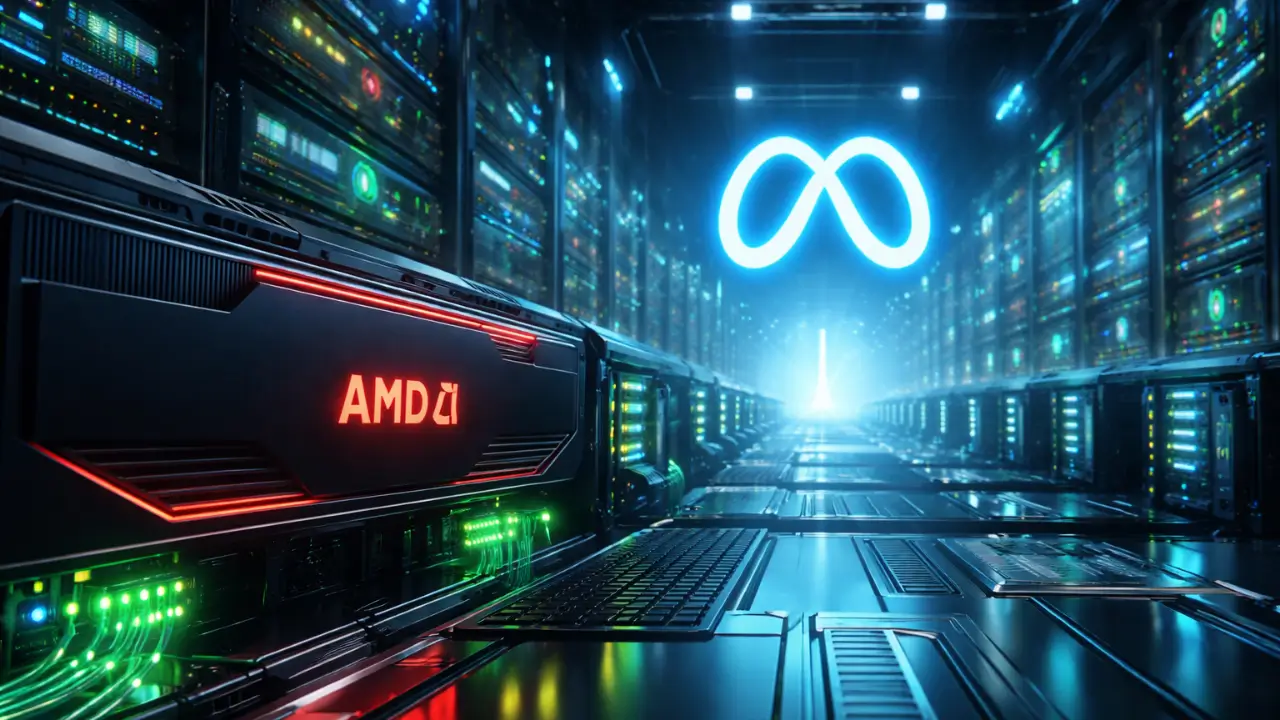
In a sweeping infrastructure move, the company has signed a long-term supply agreement with Advanced Micro Devices for up to 6 gigawatts of AMD Instinct GPUs, a capacity figure that signals structural, not incremental, growth. Rather than treating accelerators as procurement line items, Meta is repositioning compute as strategic energy allocation for its next wave of artificial intelligence systems.
The timing is deliberate. As AI models demand sustained training runs and always-on inference layers, Meta is scaling capacity with a multi-year horizon instead of quarterly hardware cycles. Chief Executive Mark Zuckerberg has framed the company’s direction around “personal superintelligence,” a vision that assumes continuous compute availability across consumer platforms.
Under the agreement, the companies will align product roadmaps across silicon, systems and software. Meta said the deal forms part of a broader effort to build a more flexible and resilient infrastructure stack, reducing reliance on any single supplier as AI workloads intensify.
Shipments supporting initial deployments will begin in the second half of 2026. The infrastructure will run on Helios, a rack-scale architecture jointly developed by the two companies and introduced at the Open Compute Project Global Summit. By moving to rack-level integration rather than component-level optimization, Meta is tightening the feedback loop between performance, power density, and software orchestration.
AMD Chief Executive Lisa Su described the arrangement as a “multi-year, multi-generation collaboration” spanning Instinct GPUs, EPYC CPUs and rack-scale AI systems. The partnership, she said, would deliver high-performance, energy-efficient infrastructure tailored to Meta’s AI workloads and support one of the industry’s largest AI deployments.
Zuckerberg said the agreement marked an important step in diversifying Meta’s compute base. “I expect AMD to be an important partner for many years to come,” he said.
From Vendor Strategy to Compute Sovereignty
The deal anchors Meta’s broader “Meta Compute” initiative, which expands infrastructure capacity to support large language models and AI-driven services across its ecosystem. At the same time, the company continues development of its in-house Meta Training and Inference Accelerator (MTIA) silicon program, a parallel track that signals architectural independence rather than supplier substitution.
This dual-track strategy reflects a deeper shift in hyperscale design philosophy. Instead of optimizing around a single dominant GPU vendor, Meta is building a diversified compute fabric. Merchant silicon, custom accelerators, and rack-scale systems now coexist within a single architectural blueprint. Consequently, bargaining power improves, supply risk decreases, and design flexibility increases.The 6-gigawatt commitment also reshapes competitive dynamics among chipmakers. Winning AI contracts at this scale locks in not just revenue, but influence over future data centre standards. Roadmap alignment across hardware and software becomes a prerequisite for relevance.
As deployments move toward 2026, AMD becomes embedded in the foundation of Meta’s next-generation compute stack. At the same time, the agreement does more than expand capacity; rather, it reinforces a structural shift in how Meta approaches AI scale. The company signals a broader industry reality: infrastructure strategy now carries competitive weight. Indeed, as models grow larger and training cycles lengthen, architectural control over systems, power, and supply chains becomes increasingly decisive.