
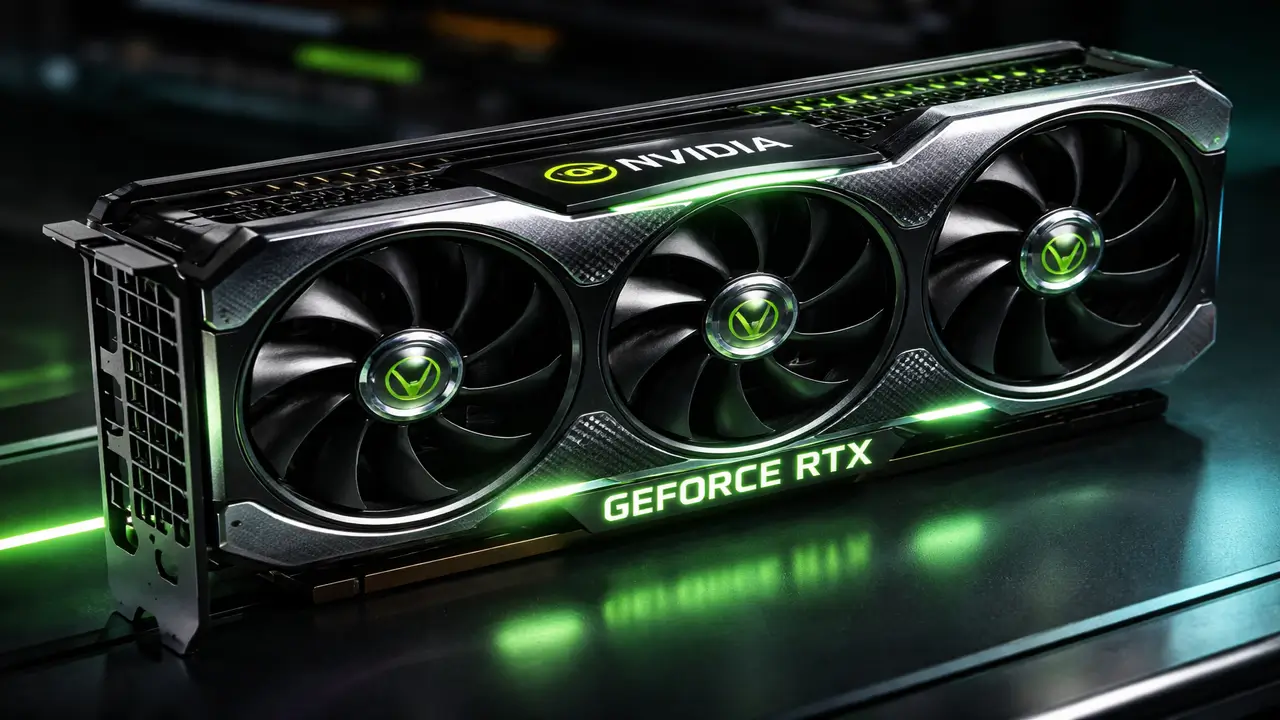
We are tracking developments suggesting that Nvidia GeForce GPU production cuts may influence global graphics card availability in early 2026. Multiple supply-chain reports indicate that NVIDIA is preparing to reduce output of its GeForce RTX 50 series GPUs due to ongoing memory constraints. These signals are emerging as manufacturers reassess production strategies amid rising component costs.
Nvidia GeForce GPU production cuts tied to memory availability
Recent reports indicate that NVIDIA plans to scale back production of its GeForce RTX 50 series GPUs during the first half of 2026. The adjustment is linked to shortages across multiple memory categories, including GDDR7, rather than a single supply issue.
Sources suggest that output in the first half of 2026 could be reduced by approximately 30–40% compared with the same period in 2025. This level of adjustment highlights how memory availability is increasingly shaping GPU manufacturing volumes.
China-based reports outline scale of planned reductions
A report originating from China’s BoBantang states that NVIDIA intends to adjust GeForce RTX 50 series production capacity to address memory shortages.
“According to a report from China’s BoBantang, NVIDIA will adjust the GPU production capacity of its GeForce RTX 50 series graphics cards in 2026 to address memory shortages.”
– Benchlife
The report adds that supply could decline by 30–40% year-on-year during the same period.
Selective supply adjustments across GeForce RTX models
Rather than uniform reductions, the reported changes appear to be targeted at specific consumer GPUs. This approach suggests that NVIDIA is managing limited memory resources by prioritising certain product segments.
Such selective adjustments may allow available memory to be redistributed across the lineup, depending on pricing tiers and demand expectations.
RTX 5060 Ti and RTX 5070 Ti identified by supply sources
According to Benchlife, early reductions may focus on the RTX 5060 Ti 16GB and RTX 5070 Ti.
“Benchlife has claimed that Nvidia plans to start its cuts by targeting its RTX 5060 Ti 16GB and RTX 5070 Ti.”
– Benchlife
Both models use memory capacities similar to the RTX 5080, making them potential candidates for reallocation if memory supply remains limited.
Production allocation reflects portfolio-level priorities
Notably, the reports do not reference any adjustments affecting non-GeForce RTX PRO GPUs. This absence suggests that NVIDIA may be prioritizing memory allocation toward higher-margin or enterprise-focused products.
RTX PRO GPUs typically serve professional workloads, where pricing and demand dynamics differ from the consumer market.
Partner feedback reinforces targeted supply strategy
In addition to BoBantang’s reporting, several AIC partners and component suppliers have echoed similar expectations.
“Several AIC partners and component suppliers have also mentioned to us that NVIDIA will be the first to adjust the supply of GeForce RTX 5070 Ti and GeForce RTX 5060 Ti 16GB GDDR7.”
– Benchlife
These comments support the view that adjustments are being implemented selectively rather than across all GeForce products.
Broader implications for global PC hardware markets
The timing of these developments is notable. DDR5 memory prices remain elevated, and continued increases could affect GPU pricing and availability. Manufacturers may prioritize lower-memory configurations to maintain shipment volumes.
As a result, availability of higher-VRAM consumer graphics cards could tighten across several regions.
Outlook as 2026 production planning evolves
As memory supply conditions continue to influence manufacturing decisions, Nvidia GeForce GPU production cuts remain a key factor shaping expectations for 2026. The extent and duration of these adjustments will depend on how memory markets stabilize over the coming months. We continue to monitor developments involving NVIDIA, its partners, and suppliers across China and other manufacturing regions, as clearer signals emerge around next-year GPU availability.