 Skip to content
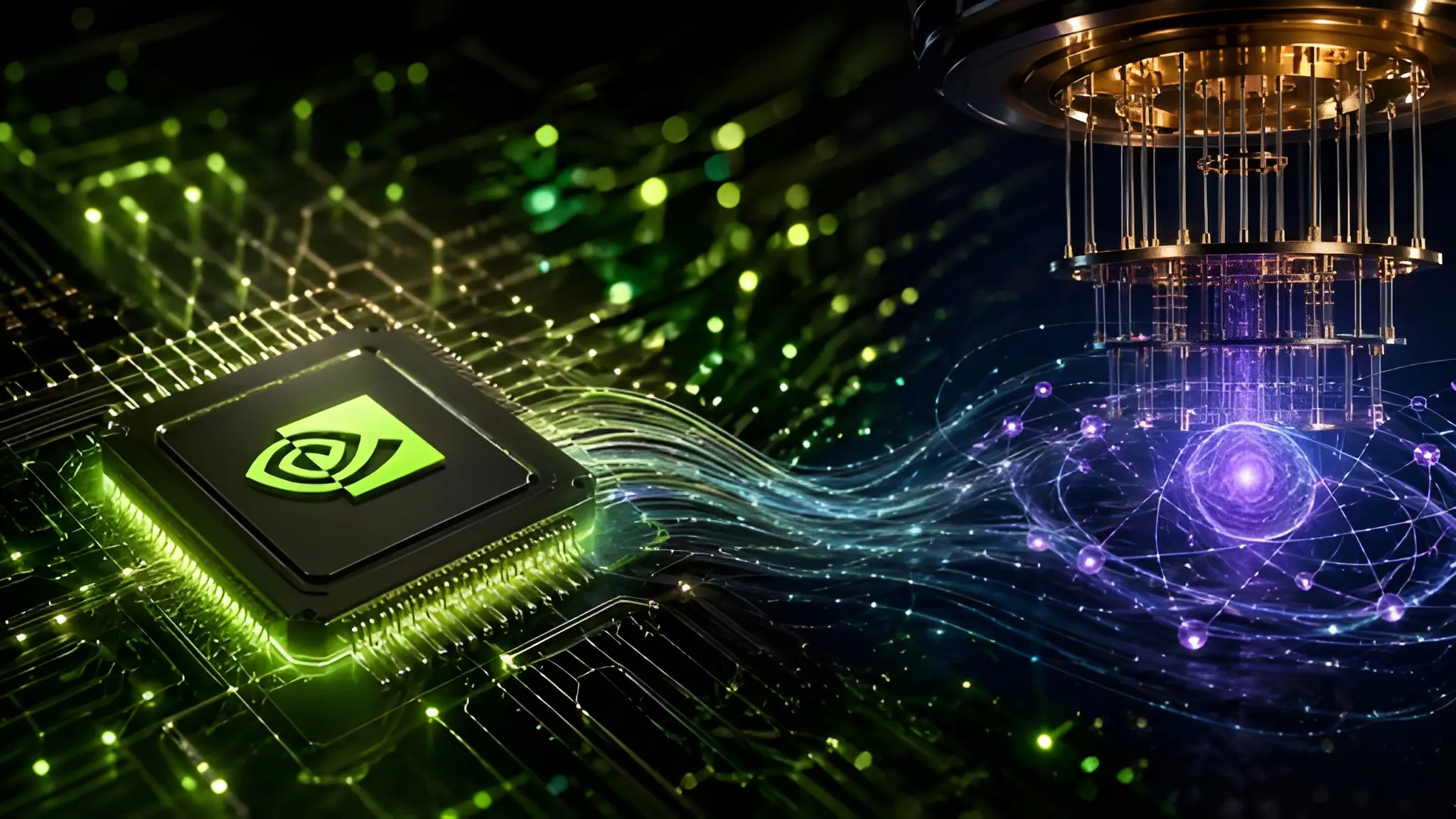
Nvidia has spent the last decade defining accelerated computing through GPUs, turning parallel processing into the backbone of artificial intelligence infrastructure. That momentum has pushed the company into a dominant position as data center demand surged worldwide. Now, Nvidia is extending that advantage into quantum computing without abandoning its core architecture. Instead of pursuing quantum hardware directly, the company is refining a hybrid strategy that tightly integrates classical and quantum systems.

The company has made it explicit that it will not build its own quantum processing unit. That decision reflects a calculated approach rather than a limitation in capability. Nvidia sees greater long-term value in enabling quantum systems through classical compute acceleration. This positioning allows the company to remain central regardless of how the quantum market evolves.
Nvidia’s latest announcement centers on a new AI model designed to directly support quantum computing operations. The model focuses on calibrating quantum systems and improving their error correction mechanisms. These two functions remain critical barriers preventing quantum computing from scaling into mainstream adoption. By addressing them, Nvidia targets the most immediate bottlenecks in the ecosystem.
Quantum systems are highly sensitive to environmental noise and interference. These disruptions introduce significant error rates that limit reliability and practical use. Nvidia claims its Ising model delivers error correction that is up to 2.5 times faster and three times more accurate than traditional approaches. The company also confirmed that several research institutions and select enterprises have already deployed the model.

Strengthening the Hybrid Computing Stack
This move builds on Nvidia’s broader hybrid computing framework. Last year, the company introduced NVQLink, a technology that enables quantum systems to interface directly with Nvidia’s GPU infrastructure. That integration creates a seamless bridge between classical and quantum environments. It ensures that GPUs remain central even as quantum workloads emerge.
In parallel, Nvidia continues to expand its CUDA-Q platform. The software allows developers to distribute workloads across GPUs while connecting with different quantum systems. This flexibility strengthens Nvidia’s role as the orchestration layer in hybrid computing environments. Moreover, it positions the company as an essential enabler rather than a direct competitor to quantum hardware vendors.
Nvidia’s approach reflects a broader hedge across multiple future scenarios. If quantum computing fails to scale commercially, its GPU dominance remains intact. If hybrid computing becomes the dominant model, Nvidia sits at the center of that architecture. Only a full displacement of classical computing by quantum systems would challenge its position, and that scenario remains highly unlikely in the near term.
However, the company’s current trajectory suggests confidence in hybridization as the most viable path forward. By embedding AI into quantum workflows, Nvidia creates immediate value while preparing for long-term shifts. This dual focus allows it to monetize present demand while building future relevance.
The Road Ahead for Quantum-AI Convergence
Nvidia’s strategy signals a shift in how the industry approaches quantum adoption. Instead of waiting for fully mature quantum systems, companies can now extract incremental value through hybrid models. This accelerates timelines and lowers barriers to entry for enterprises exploring quantum use cases. It also reinforces the importance of classical infrastructure in enabling next-generation computing.
Furthermore, Nvidia’s growing ecosystem creates a gravitational pull around its platforms. Developers, researchers, and enterprises gain incentives to build within its environment. As a result, Nvidia strengthens its network effects across both AI and quantum domains. This integrated approach could prove difficult for competitors to replicate at scale.
Nvidia’s latest development underscores a broader industry reality: quantum computing will not evolve in isolation. It will depend heavily on classical systems, AI models, and software orchestration layers. Nvidia understands this dynamic and continues to position itself accordingly. By focusing on hybrid enablement, it avoids the risks associated with unproven quantum hardware bets.
Consequently, the company aligns itself with the most probable trajectory of computing evolution. It leverages its existing strengths while extending into adjacent domains with high upside potential. This strategy not only preserves its current dominance but also ensures relevance in the next era of computing.












