 Skip to content
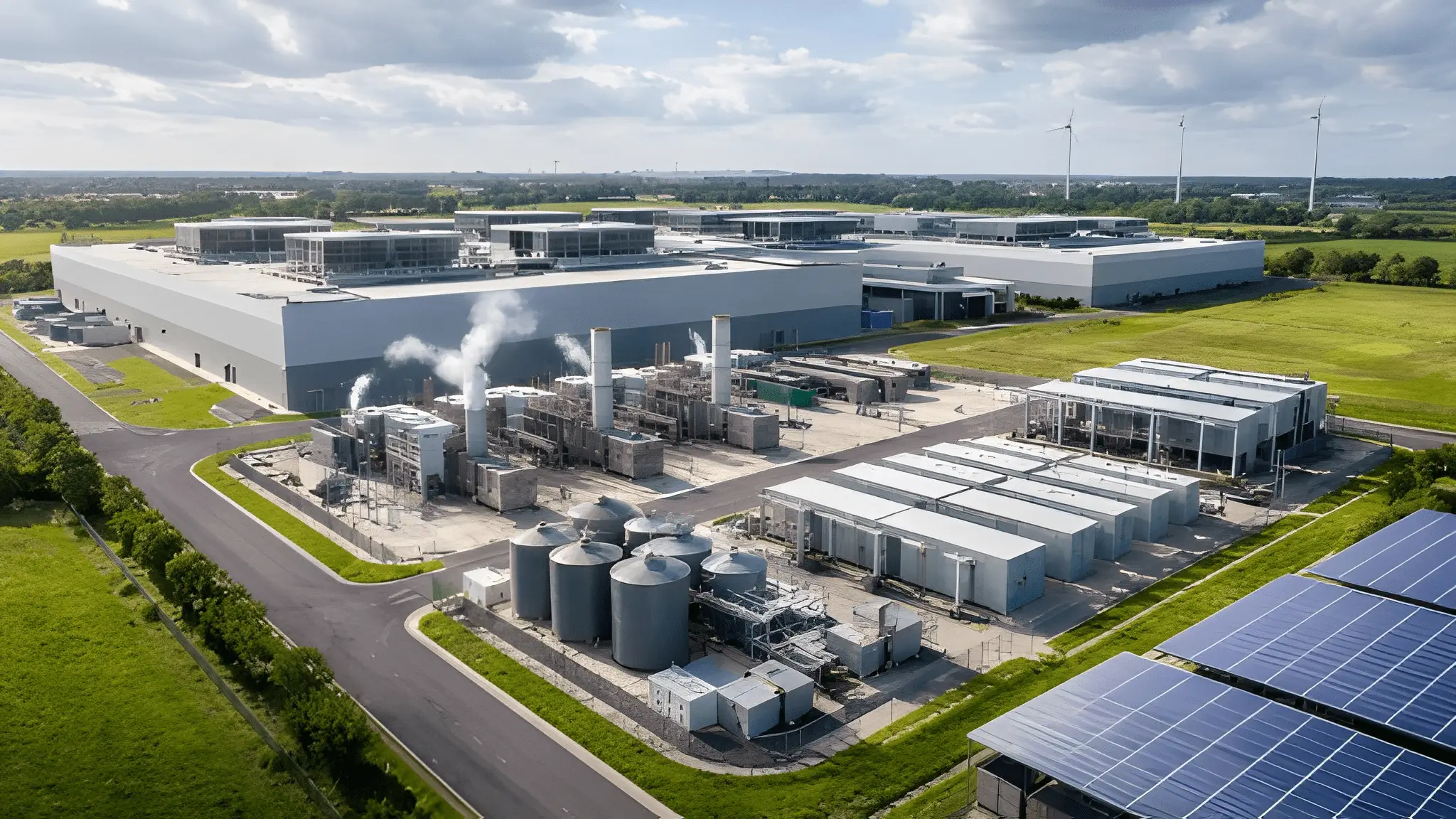
Veolia has introduced Data Center Resource 360, a global platform designed to align the rapid expansion of digital infrastructure with tightening environmental constraints. The move positions the company at the intersection of rising compute demand and intensifying scrutiny over resource consumption.

Data centers now underpin the digital economy, yet their operational footprint continues to expand. Facilities consume escalating volumes of water, energy, and land, while annual growth rates exceeding 11% amplify pressure on urban ecosystems where most deployments cluster. Veolia’s latest offering reframes this challenge as a systems problem rather than a single-variable optimization exercise.
Integrated Lifecycle Approach Targets Measurable Gains
The Data Center Resource 360 platform introduces a full lifecycle resource management model that integrates water, waste, and energy systems into a unified operational framework. The company states the solution can deliver up to a 75% reduction in water footprint, achieve 95% waste recycling and reuse, and enable up to 20% energy reuse through heat recovery and optimization systems.
Already deployed across more than 100 sites globally, the platform reflects Veolia’s strategy to scale environmental performance alongside digital infrastructure growth. It leverages proprietary technologies and advanced digital tools that optimize plant performance in real time, anticipate operational risks, and enhance efficiency.
Moreover, the model adopts a decentralized architecture, allowing localized adaptation while maintaining global operational consistency.
Leadership Frames Data as a Strategic Resource
“This is a strategic market at the crossroads of the digital and ecological revolutions,” said Estelle Brachlianoff, CEO of Veolia. “As pressure on resources intensifies, transforming data centers into assets for local communities is becoming a necessity,” she added.

Brachlianoff positioned the initiative within Veolia’s long-term innovation trajectory. “Today, data is the next generation of resources,” she said. “We are the innovation lab for essential services.”
Her framing signals a broader shift: data infrastructure no longer operates as a neutral backbone but as an active participant in resource allocation and environmental impact.
The rise of artificial intelligence introduces a new layer of complexity. AI workloads demand higher compute density, which in turn increases energy consumption, cooling requirements, and water usage.
In regions such as the Middle East, where up to 85% of water supply depends on desalination, these pressures carry geopolitical implications. Water availability increasingly functions as a strategic lever, comparable to energy resources in earlier industrial cycles. Veolia’s approach targets these constraints through integrated resource orchestration, bridging infrastructure performance with environmental resilience.
Scaling Innovation With Operational Discipline
Emmanuelle Menning, deputy CEO in charge of finance, emphasized the importance of execution at scale.
“Innovation only has value if it can be implemented efficiently and at controlled cost,” she said. She noted that Veolia supplies water to more than 110 million people globally, underscoring its capability to deploy complex infrastructure solutions at scale.
Menning also pointed to the growing integration of AI within Veolia’s own operations. “AI and design innovation are generating significant operational gains for our clients, partners, and teams,” she added.
The company’s positioning reflects a broader industry transition. Data centers are evolving from passive technical facilities into strategic infrastructure nodes that intersect industrial policy, environmental regulation, and urban planning.
However, the economic upside remains substantial. The market for integrated data center solutions is expanding into the multi-billion-dollar range, driven by hyperscale demand and regulatory pressure for sustainable operations. Veolia aims to capture this opportunity by embedding circular economy principles directly into infrastructure design and operation.
The platform extends beyond efficiency gains. It introduces a model where data centers contribute to local ecosystems through waste heat recovery, integration with district energy systems, and improved territorial alignment. Consequently, Veolia’s strategy reframes sustainability as both a compliance requirement and a value creation mechanism.
At a time when ecological transition has become a global priority, the company is betting that systemic innovation can convert infrastructure constraints into competitive advantage, turning data centers into engines of sustainable development rather than sources of environmental strain.












