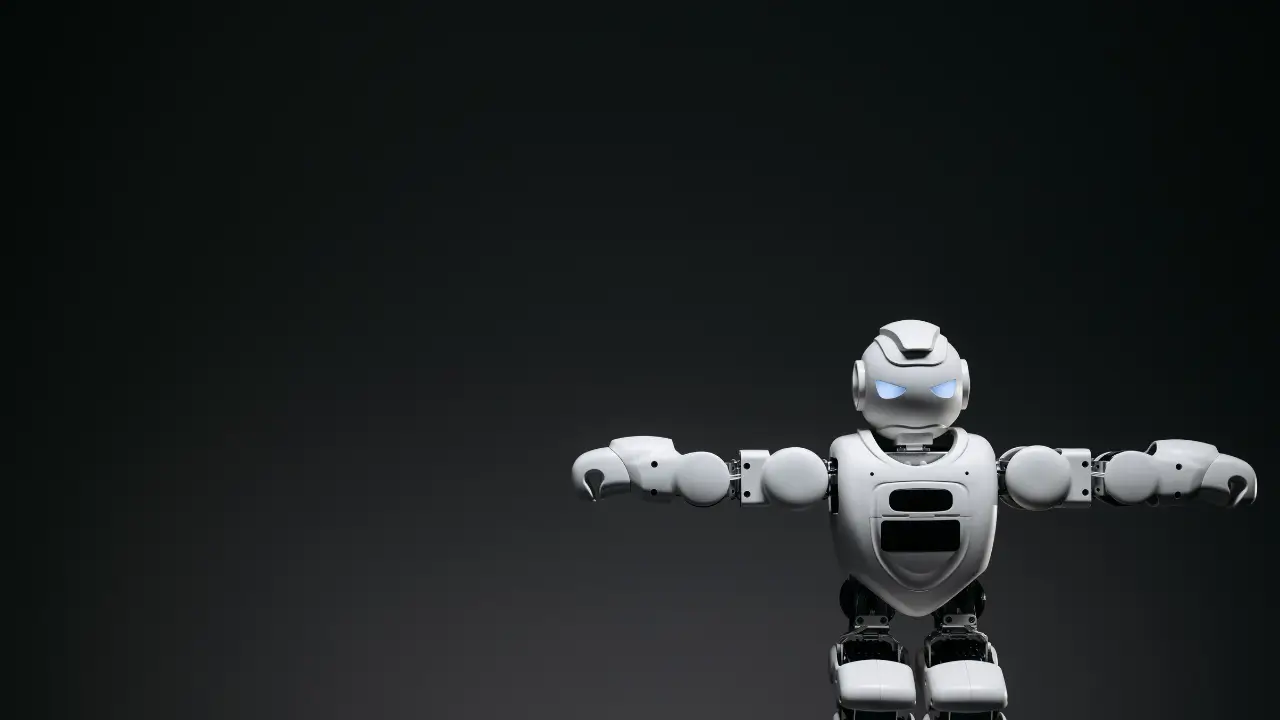
The surge of excitement around artificial intelligence is now spilling into one of tech’s most ambitious frontiers: humanoid robotics. But behind the glossy demos and soaring valuations, investors are beginning to sound a note of caution. According to a recent report from CB Insights, many venture-backed humanoid robotics startups are running far ahead of what today’s technology, and economics can realistically support.

The concern isn’t about AI losing momentum. Quite the opposite. Data from KPMG and PitchBook shows that AI continues to dominate global venture capital flows, accounting for more than half of all investments this year. What’s changing is- “where” inside the AI ecosystem that capital is flowing and how speculative some of those bets may be becoming.
CB Insights data indicates that investor attention is rapidly pivoting toward industrial humanoid robotics. Last quarter alone, the sector recorded 17 deals, making it the most active investment category during that period. By comparison, funding into coding AI agents and copilots reached 14 deals, while end-to-end software development agents accounted for 12. AI remains the overarching destination for capital, but humanoids are fast becoming its most eye-catching, and potentially riskiest, subset.
That rapid influx of capital has already sparked unease beyond venture circles. China’s top economic planning body recently warned that the humanoid robotics industry must carefully “balance speed with the risk of bubbles,” according to Bloomberg. The message was clear: growth driven primarily by hype rather than commercial reality rarely ends well.

At the heart of the enthusiasm lies AI itself. Advances in machine learning have given humanoid robots capabilities that once seemed unattainable, reigniting hopes that machines shaped like humans could finally find real-world economic roles. For investors, AI has transformed humanoids from science fiction curiosities into what appears, at least on the surface, to be a plausible commercial category.
But some investors see troubling parallels with the past. Daiva Rakauskaitė, partner and manager at Aneli Capital, which oversees a €35 million early-stage fund focused on Central and Eastern Europe, compares today’s AI-driven investment boom to the dotcom era of the early 2000s. In her view, the similarities are hard to ignore, and the risks are mounting. She expects an AI-related bubble to burst within the next two to three years.
“There’s growing agreement that many AI startups without revenue will not survive,” Rakauskaitė says. “What’s concerning is that the same warning signs exist in humanoid robotics, yet investors are often willing to overlook them.”
She draws an important distinction within the robotics landscape. Industrial and logistics robots already generate revenue and deliver measurable productivity gains. Humanoid robots, by contrast, have yet to demonstrate comparable commercial value. While companies frequently showcase robots that can run, box, or perform athletic feats, these demonstrations rarely translate into immediate, scalable use cases.
Even in industrial settings, humanoid robotics faces stubborn technical and economic barriers. CB Insights highlights persistent challenges around real-time decision-making, physical dexterity, system reliability, and high costs. These constraints significantly limit where humanoids can be deployed today, confining most viable applications to tightly controlled environments such as factories or warehouses with predictable workflows.
For Rakauskaitė, the solution isn’t to abandon robotics, but to reset expectations. In a market increasingly driven by excitement rather than fundamentals, she argues that venture capital firms must return to a revenue-first mindset. Growth, she insists, should follow economics, not precede it.
“AI and robotics investments are essential for long-term human progress,” she says. “But discipline matters. Investors should back companies with realistic goals grounded in economics, not hype. From day one, startups need to think about monetization, whether through licensing, partnerships, or early revenue streams. That principle applies across every sector.”
Despite her caution around humanoid robotics, Rakauskaitė remains optimistic about the broader robotics industry. Falling hardware costs and rapid advances in AI are accelerating deployment in areas where robots already deliver tangible value. In these segments, innovation is translating into adoption, not just attention.
She also sees particular promise in Central and Eastern Europe. The region’s proximity to Germany, Europe’s largest industrial robotics market, offers a strategic advantage for scaling. Combined with what she describes as “hidden talent” across the region, CEE has the potential to produce globally competitive robotics companies.
That belief is reflected in Aneli Capital’s strategy. The firm has dedicated its latest fund specifically to supporting founders in the region, offering hands-on guidance and faster decision-making. Rakauskaitė is clear-eyed about the long road ahead.
“When hype fades, many investors step back,” she says. “But building real innovators requires staying the course. Venture capital isn’t just about riding trends, it’s about supporting companies through their entire journey. That’s the commitment we’re making.”
As AI continues to reshape technology investment, humanoid robotics sits at a crossroads, caught between genuine long-term promise and the familiar dangers of speculative excess. Whether the sector matures into a sustainable industry or becomes another cautionary tale may depend less on technical breakthroughs, and more on whether investors are willing to slow down and demand real-world results.