
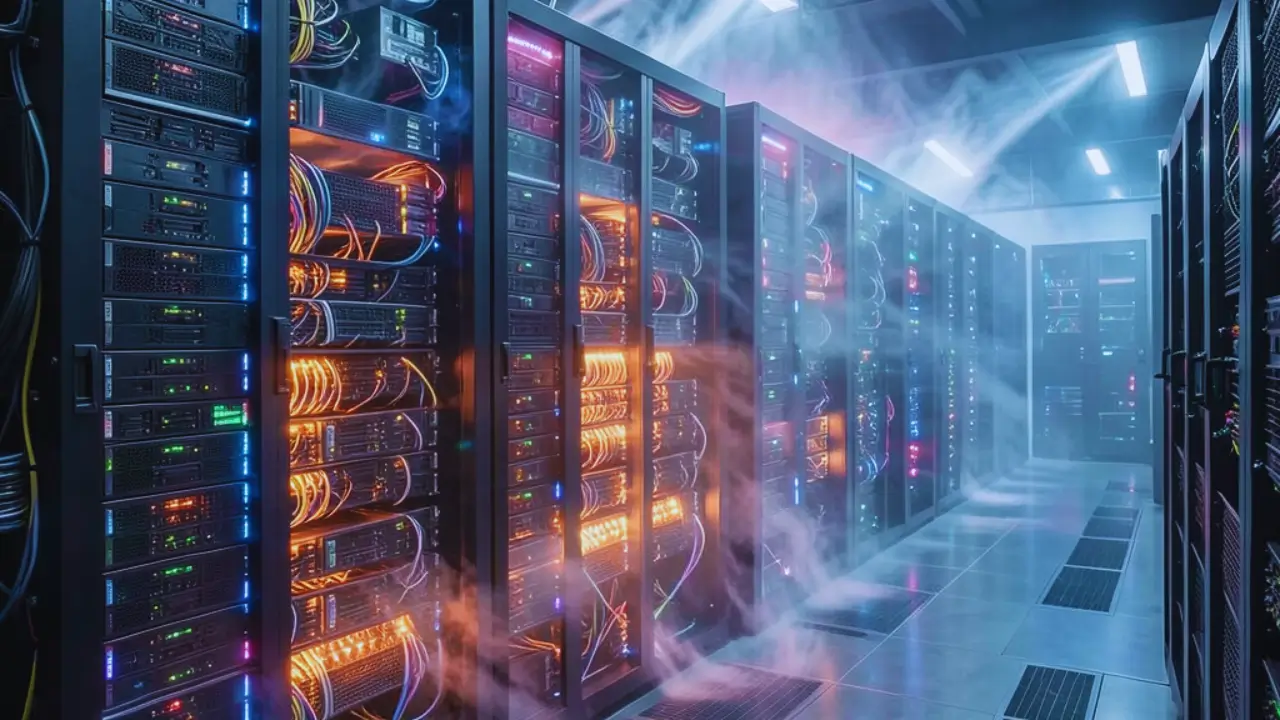
AI has changed the physical reality of data centers and the shift is structural.

Training and running large-scale models now concentrates enormous amounts of compute into dense clusters. Heat output has risen accordingly, often beyond what legacy facilities were ever designed to handle. As a result, thermal management has moved from an operational afterthought to a defining factor in whether a data center can support modern AI workloads at all.
In this context, thermal flexibility has emerged as a central design principle. The term refers to cooling systems that can adapt over time to higher power densities, new hardware generations, and different operating conditions without requiring disruptive rebuilds. Flexibility is becoming essential because the pace of change in AI infrastructure has outgrown static design assumptions.
This move was underscored when Johnson Controls released a set of thermal management reference design guides aimed at gigawatt-scale AI data centers. The guides do not prescribe a single cooling approach. Instead, they outline multiple architectures and focus on how thermal systems can evolve alongside hardware and workloads. Their underlying message is clear: cooling strategy now shapes long-term viability.
Why AI Is Forcing a Rethink of Cooling
AI workloads place demands on data centers that differ fundamentally from traditional enterprise computing. Large training clusters push rack densities well beyond conventional thresholds, while sustained inference workloads introduce continuous thermal stress rather than short-lived peaks.
Air cooling systems, which remain widespread, struggle to perform efficiently under these conditions. Once rack densities climb past certain limits, airflow becomes difficult to manage and temperature margins narrow. Performance degradation, higher failure rates, and operational instability become real risks.

Many existing facilities were built for workloads with predictable and moderate heat profiles. Retrofitting those sites to support AI can be costly, complex, and operationally risky. This mismatch between legacy design and current demand explains why cooling has become a gating factor for AI deployment.
Thermal flexibility addresses this challenge by reducing dependence on a single cooling method or fixed operating envelope. Instead of optimizing for a narrow set of conditions, flexible systems are designed to accommodate change, whether that change comes from denser accelerators, different deployment models, or regional constraints.
What Flexible Thermal Design Actually Means
In practice, thermal flexibility is less about any one technology and more about architectural choices made early in the design process.
One key element is support for multiple cooling approaches within the same facility. High-density AI racks increasingly require liquid-based solutions, while lower-density equipment may still operate efficiently on air. A flexible design allows these systems to coexist, with infrastructure in place to expand liquid cooling where and when it becomes necessary.
Another factor is modularity. Cooling plants built around modular loops and scalable subsystems can grow with demand. This makes it possible to add capacity or adjust thermal profiles without disrupting live operations. Reference designs like those from Johnson Controls emphasize end-to-end thermal chains that can be extended rather than replaced, preserving capital investment over time.
Compatibility with future hardware is equally important. Each new generation of AI accelerators introduces different thermal characteristics, often with higher allowable fluid temperatures. Systems that can operate efficiently across a wider temperature range are better positioned to support these transitions without fundamental redesign.
Cost, Risk, and Long-Term Economics
Cooling decisions have long-term financial consequences. Retrofitting thermal infrastructure after a facility is operational can involve significant capital expense, downtime, and operational risk. Designing for flexibility upfront helps avoid these costs by reducing the need for major midlife upgrades.
Efficient thermal systems also affect operating expenses. Improvements in Power Usage Effectiveness and Water Usage Effectiveness directly influence energy and water costs, which are increasingly scrutinized by investors and regulators alike. Flexible cooling architectures make it easier to adopt more efficient technologies as they mature, rather than locking operators into suboptimal performance.
As energy prices rise and AI workloads continue to scale, these efficiencies become less about optimization and more about economic viability.
Sustainability Pressures Are Converging with Thermal Design
Thermal strategy now intersects directly with sustainability. AI data centers consume large amounts of power and reject significant heat, placing pressure on local grids and water resources.
Flexible cooling designs allow operators to respond to these pressures more effectively. Options such as dry cooling, higher-temperature liquid loops, and heat reuse systems can reduce reliance on water and lower environmental impact. Some reference designs already outline pathways toward zero water consumption for heat rejection, depending on site conditions.
These considerations are no longer peripheral. Communities, regulators, and customers increasingly expect data centers to demonstrate environmental responsibility alongside technical performance. Thermal systems that can adapt to both regulatory and environmental constraints provide a meaningful advantage.
Remaining Friction Points
Despite growing consensus around the value of thermal flexibility, challenges remain. Industry standards for hybrid and modular cooling are still evolving, which complicates interoperability across vendors. Liquid cooling introduces new operational requirements, including maintenance procedures and staff training. Financial planning also becomes more complex when designs prioritize optionality over immediate optimization.
Even so, the emergence of detailed reference frameworks suggests that the industry is moving toward shared solutions rather than treating thermal challenges as isolated engineering problems.
Cooling as Infrastructure Strategy
The next phase of data center development will be shaped by how effectively operators manage heat, not simply how much compute they deploy.
AI has elevated thermal engineering into a strategic discipline that influences performance, cost structure, and sustainability over decades. Flexible cooling systems provide a way to navigate uncertainty in hardware evolution, workload demand, and environmental constraints.
Facilities designed with thermal adaptability at their core will be better equipped to support the continued expansion of AI. Those that rely on rigid, single-purpose cooling strategies may find their growth limited long before their power capacity runs out.











