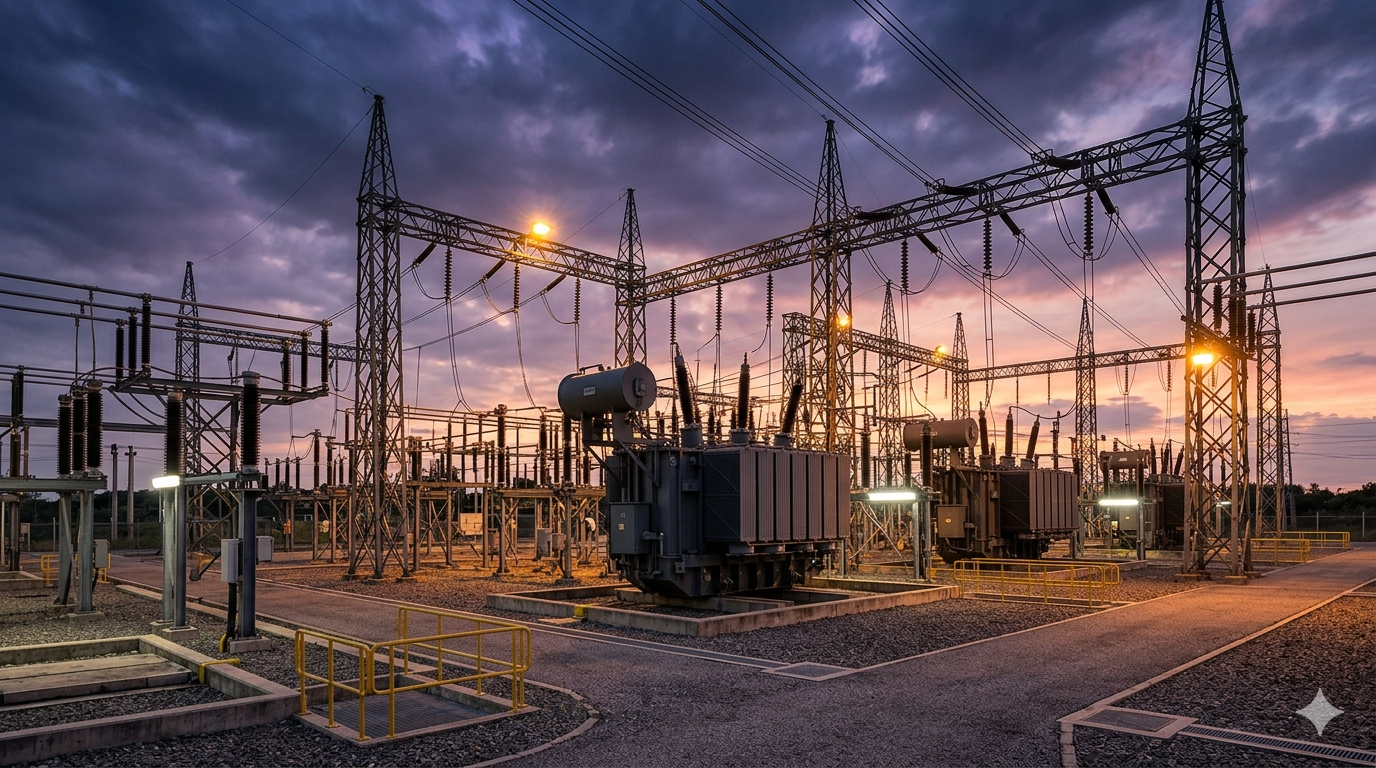
There is a mismatch sitting at the center of the AI infrastructure buildout that the industry has been slow to confront. GPU generations refresh on roughly eighteen-month cycles. Transformer lead times for high-capacity units that AI campuses require now stretch to five years in some markets. Those two timelines do not belong in the same infrastructure planning framework. One moves at the pace of semiconductor innovation. The other moves at the pace of heavy industrial manufacturing. The collision between them is not a procurement inconvenience. It is a structural constraint quietly determining which AI infrastructure projects get built, on what timelines, and at what cost.

The industry has been treating the transformer shortage as a supply chain problem to manage around rather than a structural condition to plan for. That framing is wrong. Operators who continue to hold it will find themselves making infrastructure commitments they cannot execute on timelines that customers, investors, and competitive position cannot absorb.
The Mismatch Nobody Modeled
The AI infrastructure buildout accelerated on the assumption that physical components would follow capital and demand. Fiber, servers, and networking equipment all scaled rapidly in the early internet era. Cloud infrastructure scaled rapidly in the 2010s. Electrical infrastructure behaves differently. It is a physical product, manufactured in facilities that require years to build, staffed by workforces that require years to train, using materials with their own supply constraints.
A large high-voltage transformer is a custom-engineered product weighing hundreds of tons. It requires grain-oriented electrical steel, copper windings, and specialized insulation systems assembled by skilled manufacturers. The global manufacturing base for these units did not scale to meet AI infrastructure demand. The demand signal arrived faster than any manufacturing investment cycle could respond. Lead times for large power transformers that averaged six to eight months before 2020 now stretch to two to four years for standard units. The largest high-capacity units that gigawatt-scale AI campuses require can take up to five years to deliver.

Why the Entire Electrical Stack Is Affected
As documented in our analysis of transformer and substation supply chains, this constraint operates across the entire electrical equipment category. Switchgear, busways, and high-voltage circuit breakers all face versions of the same problem. Transformers represent the most acute bottleneck because they sit on the critical path of every large data center development. Their lead times are also longest relative to the development timelines operators are trying to meet.
The manufacturing constraint is not just about volume. It is about specialization. Each large transformer is engineered to specific voltage, capacity, and footprint requirements. Standardization is limited. Manufacturers cannot simply run more shifts to clear a backlog when each unit requires custom engineering before production begins. That characteristic makes the transformer shortage fundamentally different from a commodity supply shortage that additional manufacturing investment can resolve quickly.
What Five-Year Lead Times Mean for Planning
The practical consequence of five-year transformer lead times is that operators must make procurement commitments for electrical components years before they have clarity on the GPU hardware those components will need to power. A developer breaking ground on an AI campus in 2026 who needs large custom transformers on site by 2028 needed to place those orders no later than 2023 or 2024. Most did not. The demand for that capacity was not visible enough in 2023 to justify the capital commitment.
That sequencing problem compounds across the entire electrical equipment stack. Grid interconnection strategy positions must be secured years in advance. Transformer orders must follow immediately. Switchgear and distribution equipment orders must align with transformer delivery. The entire electrical procurement sequence needs to begin earlier than most AI infrastructure development timelines assumed. Developers who did not build this lead time into their planning in 2023 and 2024 are now managing a gap between their delivery commitments and their actual procurement positions.
The Financial Cost of Getting the Sequence Wrong
The financial consequences of that gap are significant. Developers who committed to hyperscaler tenants on eighteen-month construction timelines and then discovered their electrical equipment would not arrive for three years face a stark set of choices. Delaying delivery means renegotiating tenant agreements at significant commercial cost. Sourcing through the secondary market commands substantial price premiums. Redesigning power architecture to use equipment with shorter lead times carries cost and efficiency penalties. None of these options come without pain.
Roughly half of planned US data center builds in 2026 face delays or cancellations, not because of a shortage of capital or demand, but because electrical grid infrastructure and equipment cannot support them on the timelines originally announced. That figure reflects what happens at scale when an industry plans infrastructure timelines around GPU refresh cycles rather than transformer manufacturing cycles.
How Operators Are Responding
The operators who recognized the transformer lead time problem earliest now hold procurement advantages competitors cannot easily replicate. Developers who placed transformer orders in 2022 and 2023, before the full scale of AI infrastructure demand became apparent, secured delivery positions years ahead of operators who waited. That foresight is now materializing as delivered capacity and met hyperscaler commitments.
Several strategic responses have emerged among operators who did not move early enough. The first is a shift toward DC power architectures that reduce dependence on certain categories of large transformers. Behind-the-meter generation combined with DC distribution can reduce utility-scale transformer requirements for some facility types. However, cost and complexity limit this approach to operators with specific site conditions and technical capabilities.
Manufacturer Relationships as Competitive Assets
The second response is investment in transformer manufacturer relationships that go beyond transactional procurement. Operators who provide manufacturers with multi-year demand visibility, commit to volume agreements that justify capacity investment, and accept longer planning horizons in exchange for delivery priority are building supply chain relationships that function as competitive assets. A manufacturer that knows an operator will reliably purchase ten large units per year for the next five years has strong incentive to prioritize that operator’s orders over spot buyers.
The third response is geographic diversification of procurement. European and Asian transformer manufacturers have different order book positions and lead time profiles than North American producers. Operators willing to manage international procurement complexity can access supply that purely domestic procurement strategies cannot reach. Each of these responses requires organizational capability and capital commitment. None of them is a quick fix. Together they represent a new procurement model suited to an environment where electrical components behave like strategic assets rather than commodity inputs.
Electrical Components as Long-Lead Strategic Assets
Treating electrical components as strategic assets means something specific. Tracking transformer lead times and manufacturer order book positions as continuous market intelligence inputs is the starting point. Procurement relationships with multiple manufacturers across different geographies need to function as a portfolio rather than a series of one-off transactions. Capital commitment to electrical equipment procurement must happen earlier in the development cycle than traditional financial models assumed was necessary.
Operators who have made this shift are discovering that early electrical equipment commitment changes the risk profile of their entire development pipeline. A project with committed transformer delivery has a fundamentally different execution risk than a project that has not yet placed its electrical equipment orders. Lenders recognize this difference. Hyperscaler tenants recognize this difference. Capital markets are beginning to price it explicitly in the valuations they assign to developers with strong procurement positions.
Building the Procurement Framework
Building a procurement framework suited to five-year transformer lead times requires changes at multiple levels of infrastructure development organizations. Procurement functions need elevation from operational support to strategic planning. The people responsible for electrical equipment procurement need visibility into the development pipeline years earlier than current structures typically provide. They also need authority to commit capital before projects reach the construction phase.
At the financial level, development economics models need to incorporate electrical equipment procurement costs earlier in the project timeline. A developer that commits to electrical equipment two years before construction begins and carries that cost at its weighted average cost of capital is making an investment in supply security with a calculable return in avoided delay costs and preserved customer relationships. The transformer lead time problem will not resolve quickly. Manufacturing capacity takes years to build. The demand signal driving the shortage is not dissipating. The operators who build procurement frameworks suited to this environment now will execute their development pipelines more reliably than those who continue to treat electrical equipment as a commodity available on demand.