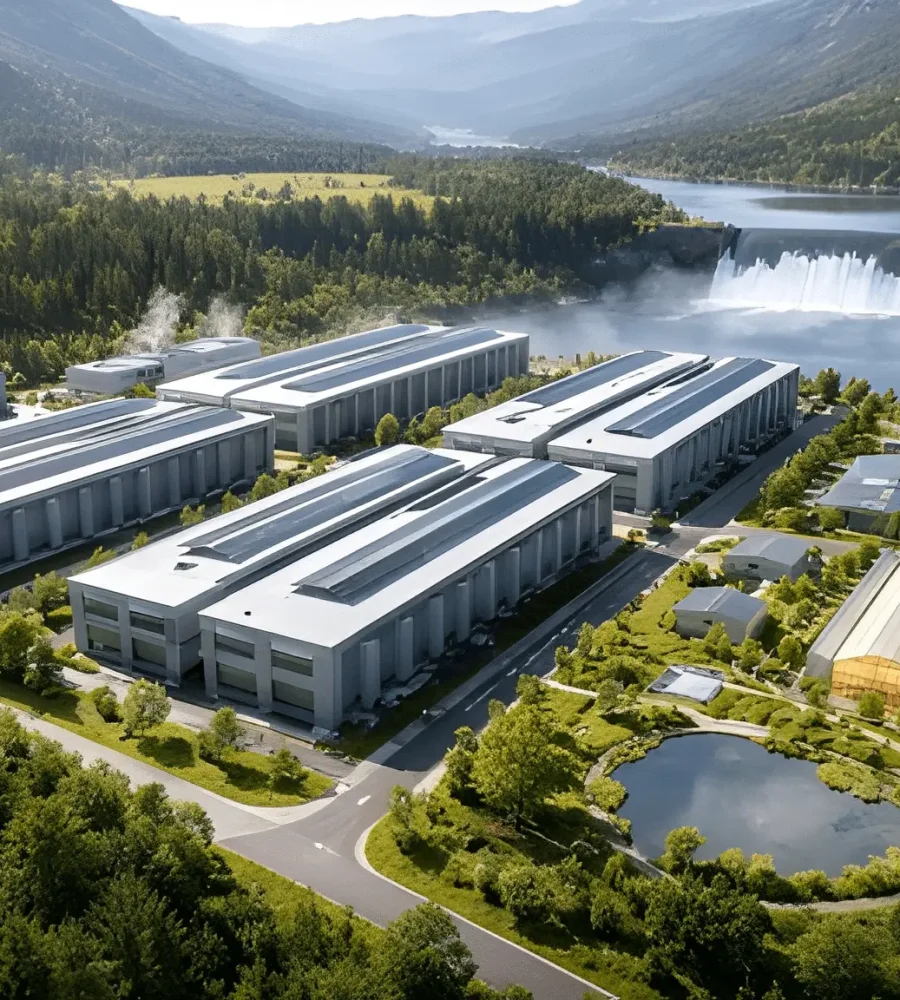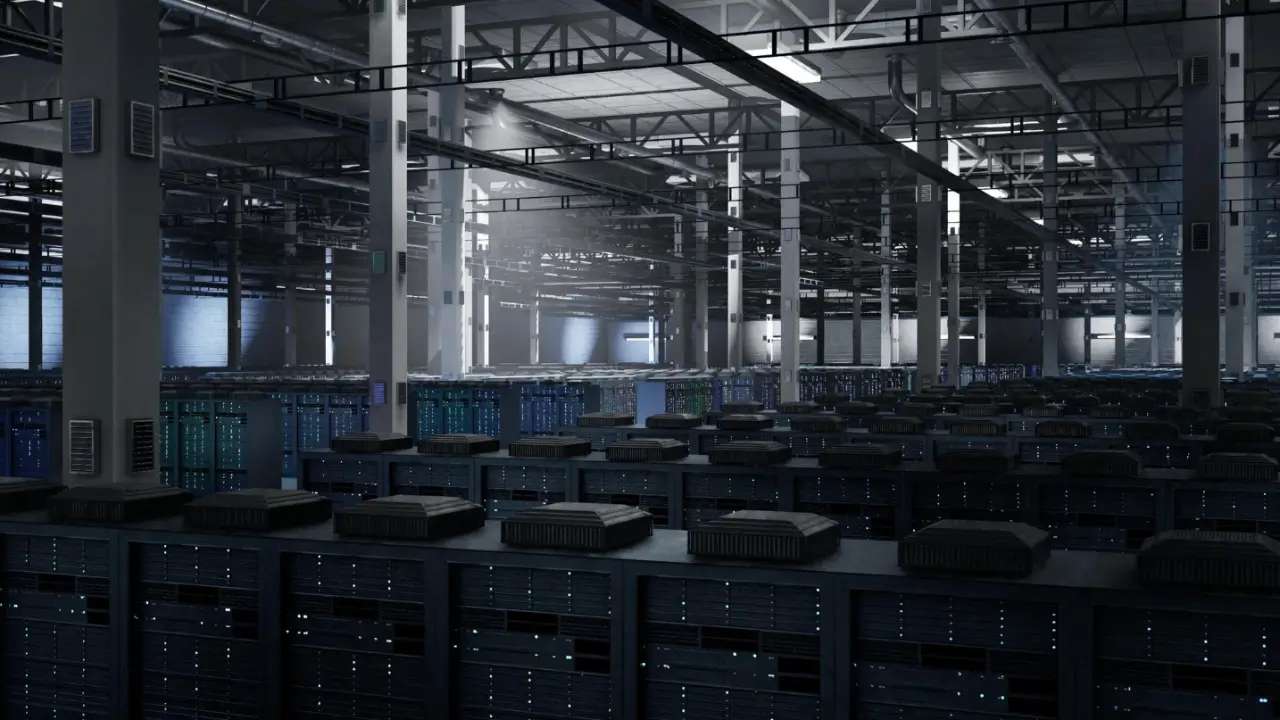
The debate around AI factories and grid stress is intensifying as power-hungry data centers collide with aging energy infrastructure. Across major technology corridors in the United States, new AI facilities are sitting in development limbo, not because demand is lacking, but because electricity capacity is. Years-long delays tied to grid upgrades have become common. In response, a different approach is being proposed: make AI factories work with the grid rather than against it.
That idea is being advanced by Emerald AI, a Washington, D.C.–based startup that argues grid congestion is not solely a supply problem. Instead, it is being framed as a coordination problem. By treating AI workloads as flexible assets rather than fixed loads, the company suggests that new data centers could be connected sooner, while existing grids are used more efficiently.
Why AI Factories Are Straining Power Systems
Electric utilities have long planned around predictable consumption. Data centers, however, have been categorized as rigid users, often assumed to draw their full contracted power at all times. A 500-megawatt AI facility has therefore been modeled as a constant drain, leaving little room for compromise during peak demand.
Yet AI workloads vary widely. Some tasks, such as model training or fine-tuning for research, can tolerate delays. Others, including real-time inference services used by millions, cannot. According to Emerald AI founder and CEO Varun Sivaram, this distinction has been ignored in traditional grid planning. As a result, AI factories and grid stress have become tightly linked in ways that may not be inevitable.
Software That Treats AI Load as Flexible
Emerald AI’s response comes in the form of its Emerald Conductor platform. The system acts as an intermediary between utilities and data centers, using AI to adjust workloads when the grid is under pressure. During periods of high demand or limited supply, certain computing tasks are slowed, paused, or shifted elsewhere.
That concept was tested recently in Phoenix, Arizona. During a real grid stress event, Emerald AI and its partners showed that power use across a cluster of 256 NVIDIA GPUs could be reduced by 25 percent for three hours. Importantly, compute service quality was maintained. The demonstration suggested that flexibility can be introduced without sacrificing reliability.
Lessons From the Phoenix Grid Trial
The Phoenix test was carried out in Oracle Cloud Infrastructure’s regional data center and involved NVIDIA hardware managed through Databricks MosaicML. Workloads were carefully selected based on how much interruption they could tolerate. Some were temporarily slowed, while others were redirected to locations where the grid faced less strain.
Salt River Project (SRP), the regional utility, set a demanding target for the trial: a 25 percent reduction from baseline consumption. On May 3, a day marked by extreme heat and heavy air-conditioning use, the AI cluster ramped down over 15 minutes, held the reduced load for three hours, and then returned to normal without overshooting prior usage. Historical demand data from Amperon later confirmed that the response aligned with the grid’s peak period.
Why Grid Flexibility Matters More Now
Electric grids are typically built to handle rare peak events, meaning capacity often sits unused for much of the year. Studies suggest that modest flexibility could unlock significant headroom. Research from Duke University estimates that if AI data centers could cut power use by 25 percent for just two hours at a time, fewer than 200 hours annually, roughly 100 gigawatts of new capacity could be freed. That figure corresponds to more than $2 trillion in potential data center investment.
From this perspective, AI factories and grid stress appear less like an unsolvable clash and more like a coordination challenge waiting for tools that can respond in real time.
Clean Energy Integration Adds Urgency
Flexibility also carries implications for decarbonization. Renewable energy sources fluctuate by nature, making balancing supply and demand more complex. According to Emerald AI chief scientist Ayse Coskun, grids absorb renewables more easily when flexible loads are present. Data centers, if designed to respond dynamically, could serve as stabilizing elements rather than liabilities.
That potential has attracted attention across the energy sector. Emerald AI’s Phoenix project was conducted under the Electric Power Research Institute’s DCFlex initiative, with support from NVIDIA, Oracle, and SRP. EPRI has also launched the Open Power AI Consortium, which brings together utilities, researchers, and technology firms to explore similar ideas.
Policy Pressure Is Already Building
The urgency is not theoretical. The International Energy Agency expects global data center electricity demand to more than double by 2030. In Texas, lawmakers have already acted. A new state law requires data centers to reduce load or disconnect entirely during grid emergencies. Under such rules, facilities that can modulate consumption may avoid being cut off altogether.
Emerald AI has raised more than $24 million in seed funding and plans to expand testing beyond Arizona. Continued collaboration with NVIDIA is also planned, signaling that large players are watching closely.
A Shift in How AI Infrastructure Is Viewed
The broader implication is clear. AI factories and grid stress will continue to collide as digital infrastructure expands. However, the Phoenix trial suggests that rigidity is not a fixed condition. With software-driven coordination, AI workloads can be aligned with grid realities.
Rather than waiting years for new transmission lines and power plants, utilities and data center operators may find relief in flexibility. If that shift takes hold, AI factories could move from being viewed as grid burdens to becoming active participants in maintaining reliability. The challenge now lies in scaling these experiments before demand outruns the system entirely.