Within modern data center infrastructure, the cooling stack is fragmenting as facilities move away from singular thermal architectures. Earlier designs favored homogeneity to simplify planning and operations. That preference reflected the technical constraints and workload uniformity of the time. Today’s facilities support a wide range of computing profiles that generate uneven thermal loads. Cooling strategies increasingly mirror that diversity through the use of specialized, coexisting systems. This development signals a broader shift in how thermal management is integrated into long-term infrastructure planning.
Heterogeneous Thermal Management: A New Normal
The evolving thermal landscape within modern facilities stems from the diverse nature of contemporary computing workloads. Traditional thermal systems were often centralized, large-scale chilled water plants feeding computer room air conditioners (CRAC) or computer room air handlers (CRAH) that conditioned the entire data hall air uniformly. This approach assumed relatively uniform server power profiles and predictable heat dissipation patterns. Recent trends in rack density and specialized hardware workloads have challenged that model, prompting the integration of localized and fluid-based cooling solutions alongside air conditioning infrastructure to optimize thermal performance.
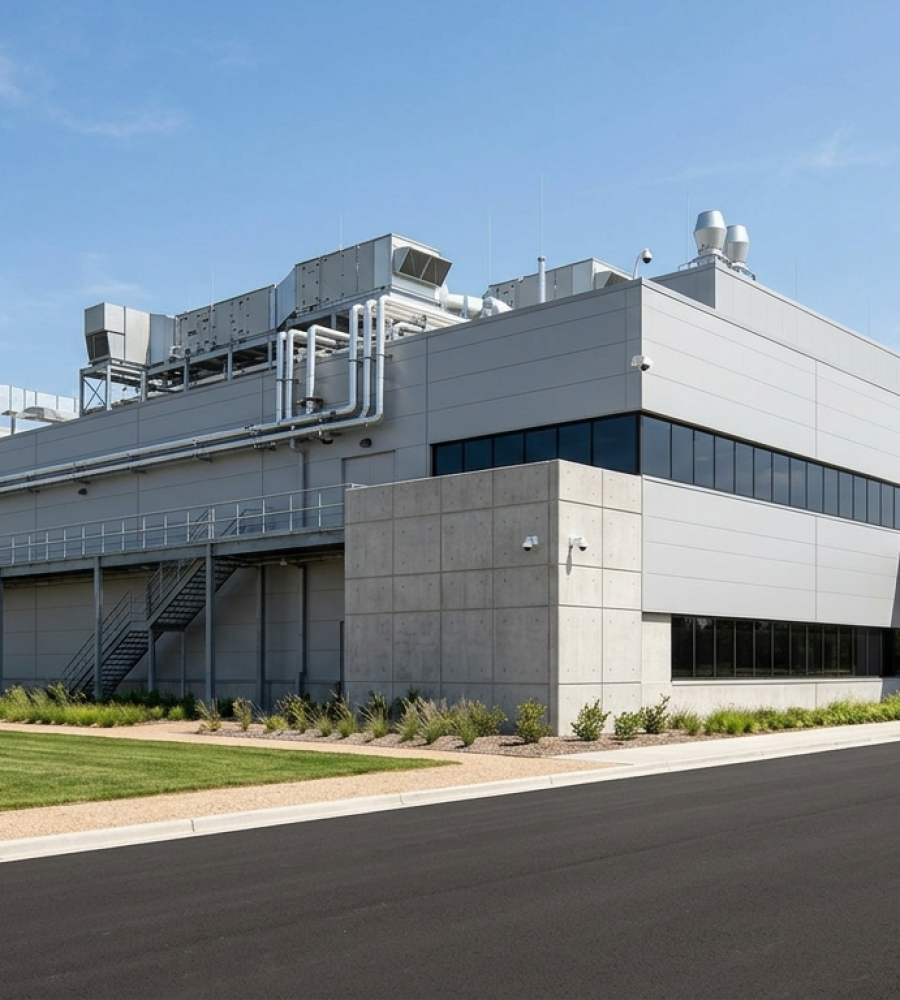
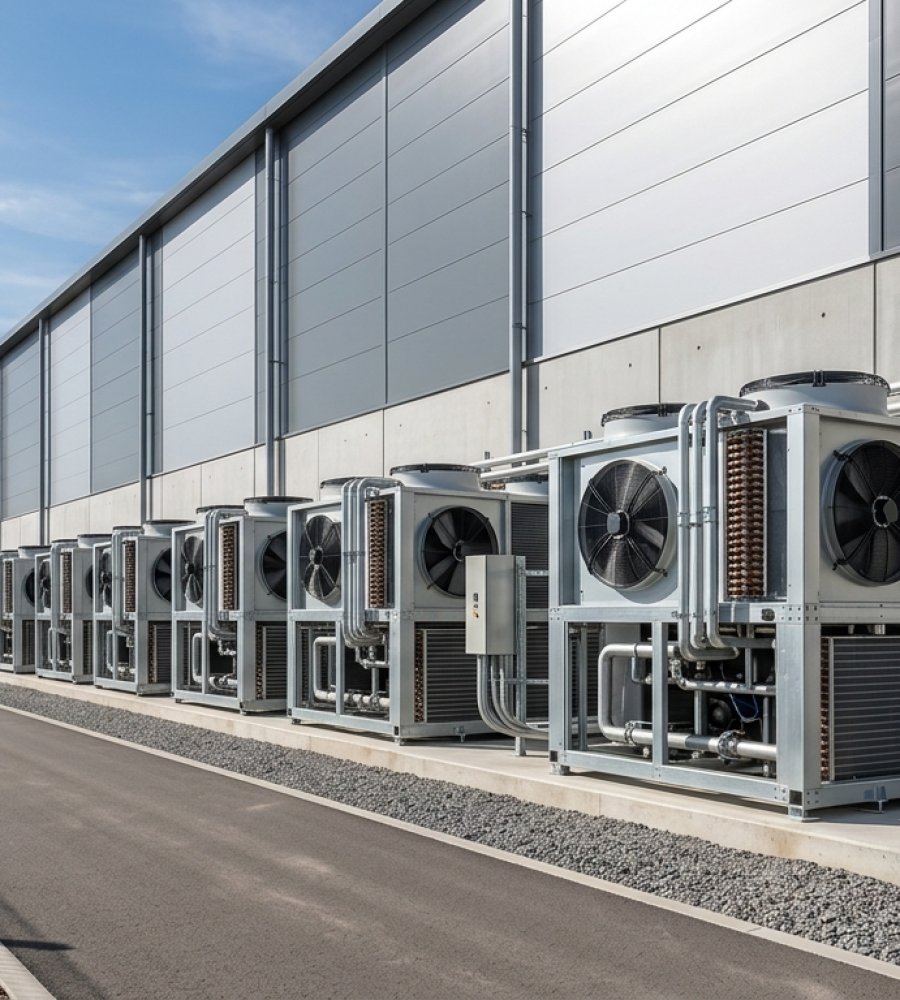
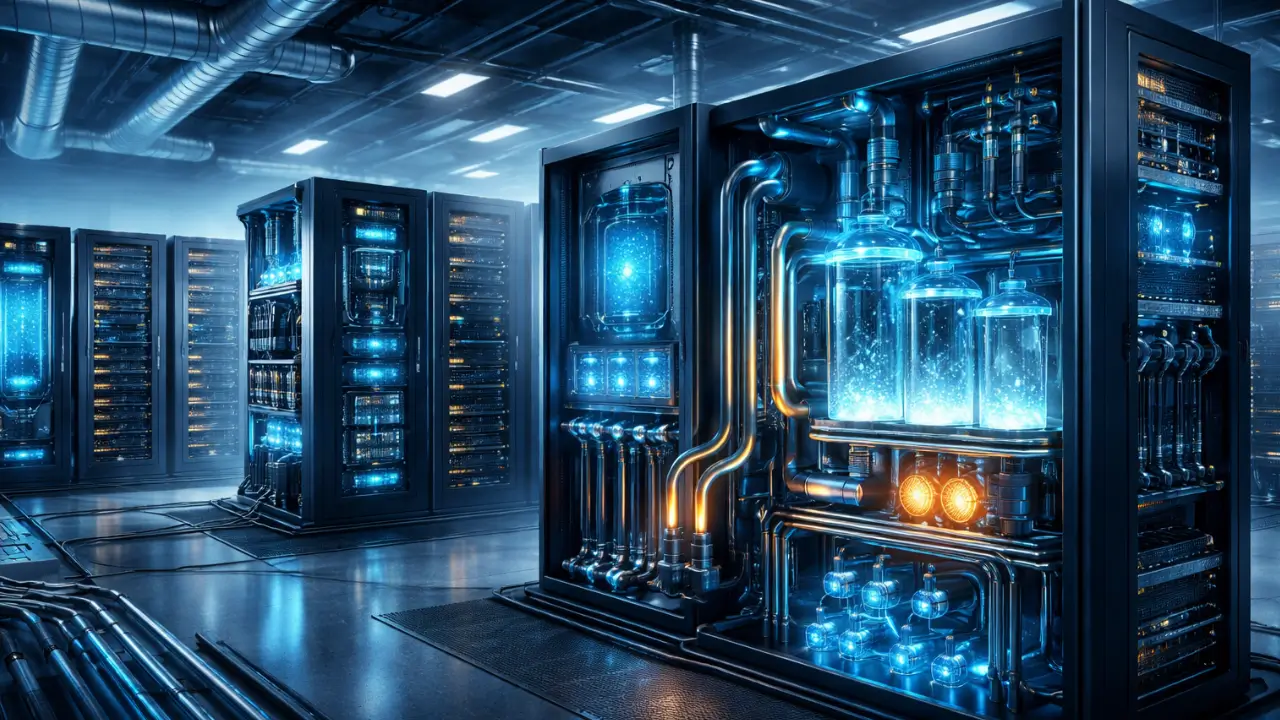
Data center operators increasingly deploy multiple cooling technologies in the same facility, often tailored to the specific physical and computational characteristics of individual racks or zones. These include aisle containment and close-coupled air handling systems that isolate hot and cold air streams for improved efficiency. Beyond air management, liquid cooling variants such as direct-to-chip plates, rear-door heat exchangers, and immersion cooling tanks are being introduced to handle thermal loads that conventional air systems cannot dissipate effectively. Together, these systems illustrate how the cooling stack is fragmenting into purpose-built thermal solutions that coexist in large data centers.
In practice, this fragmentation does not represent disarray; rather, it embodies a deliberate strategy to align cooling methods with the heterogeneous requirements of specific workloads and equipment densities. For example, high-performance computing clusters and AI accelerators generate intense, localized heat that challenges standard air cooling. Liquid cooling systems address this by removing heat directly at the source, providing greater thermal transfer efficiency. Meanwhile, open-air or economizer-based solutions leverage external ambient conditions to reduce mechanical cooling needs where possible. As a result, a suite of complementary technologies now constitutes the thermal architecture of modern facilities, with each element deployed for its unique strengths.
The shift to heterogeneous cooling also reflects broader trends in data center design. Facility planners increasingly recognize that no single modality will serve all thermal use cases effectively. High rack densities, multi-tenant deployments, and varying workload types require modular, scalable cooling strategies that can respond in real time to changing conditions. In this environment, the cooling stack is fragmenting not as a symptom of failure but as an optimized response to complex thermal management challenges.
This fragmentation also influences how operators measure and manage performance. Rather than evaluating the efficiency of a singular system, engineers now assess a portfolio of cooling solutions working in concert. Metrics related to overall energy consumption, heat removal effectiveness and reliability are monitored across multiple subsystems, providing a more nuanced view of operational performance. As cooling subsystems proliferate, the interplay between them becomes a critical factor in ensuring consistent environmental conditions across the facility.
Why Uniform Cooling Architectures Are Losing Relevance
For decades, uniform cooling architectures defined best practice across enterprise and hyperscale facilities. Engineers favored centralized systems because predictability simplified design, operations and maintenance. Cooling plants were sized to meet peak loads across entire halls, while airflow management focused on maintaining consistent inlet temperatures for all equipment. This paradigm worked effectively when server configurations, power draw and application profiles exhibited limited variance. As compute diversity expanded, however, the limitations of uniformity became increasingly apparent across modern data center environments.
Workload heterogeneity has fundamentally altered thermal distribution patterns inside facilities. High-density racks now sit adjacent to legacy infrastructure that operates at significantly lower thermal output. Uniform cooling systems must be overprovisioned to support peak demand, which often results in inefficiencies elsewhere in the facility. Consequently, operators have recognized that rigid cooling homogeneity constrains flexibility rather than enabling it. In this context, the cooling stack is fragmenting as operators adopt localized strategies that respond directly to variable thermal profiles.
Design rigidity also limits how facilities evolve over time. When a single cooling approach underpins an entire building, introducing new equipment types can require costly retrofits or operational compromises. Modular cooling subsystems, by contrast, allow incremental upgrades without disturbing existing infrastructure. This capability aligns with broader trends toward phased deployment and scalable architecture planning. As facilities increasingly support mixed-use workloads, the inflexibility of uniform cooling becomes a structural disadvantage rather than a safeguard.
Operational risk further undermines the case for monolithic cooling strategies. A centralized cooling failure can propagate across an entire facility, affecting multiple tenants or workloads simultaneously. Fragmented cooling architectures reduce this blast radius by isolating thermal dependencies within discrete zones. When one subsystem experiences degradation, others continue operating independently, preserving service continuity. This resilience-oriented design philosophy reinforces why the cooling stack is fragmenting across mission-critical environments.
Economic considerations also shape the shift away from uniformity, though not in simplistic cost terms. Capital investments increasingly prioritize adaptability and lifecycle alignment over single-system optimization. Cooling solutions are now selected based on compatibility with specific hardware classes rather than facility-wide averages. This approach reduces stranded capacity and improves long-term asset utilization. Uniform cooling architectures, by comparison, struggle to reconcile fixed infrastructure with evolving compute demands.
The erosion of uniform cooling norms does not imply disorder or inefficiency. Instead, it reflects a maturation of design philosophy informed by operational realities. Engineers now treat cooling as an adaptive layer rather than a static backbone. Through this lens, fragmentation represents alignment with physical realities rather than deviation from best practice. Accordingly, the cooling stack is fragmenting as part of a deliberate and informed evolution.
Coexistence of Multiple Cooling Modalities Within One Facility
Modern facilities increasingly function as composite thermal environments rather than singularly cooled spaces. Engineers now design data halls to support parallel cooling modalities operating side by side, each optimized for a specific class of equipment. Air-based systems continue to serve general-purpose compute and storage racks with moderate thermal output. In adjacent zones, liquid-assisted technologies manage concentrated heat loads generated by accelerators and high-density processors. This coexistence reflects a pragmatic response to physical constraints rather than a departure from engineering discipline.
Zoning plays a central role in enabling this coexistence. Facilities increasingly segment data halls into thermal domains defined by rack density, airflow requirements and heat rejection methods. Physical separation through containment systems allows different cooling strategies to operate without interference. Control systems then maintain stability across zones by coordinating temperature setpoints and airflow balance. Through this architecture, the cooling stack is fragmenting into interoperable layers that share infrastructure while retaining functional independence.
Liquid cooling integration within air-cooled environments demonstrates this principle clearly. Direct-to-chip systems remove heat at the processor level while relying on room-level air systems for residual heat management. Rear-door heat exchangers similarly interface with chilled water loops without altering upstream airflow patterns. These hybrid configurations reduce thermal stress on air systems while preserving compatibility with existing layouts. Consequently, facilities evolve incrementally rather than undergoing disruptive redesigns.
Operational coordination becomes essential as cooling modalities multiply. Facility management platforms increasingly monitor diverse thermal subsystems simultaneously, ensuring they operate within defined parameters. Control logic emphasizes stability and predictability rather than aggressive optimization. Engineers design fail-safe behaviors that prioritize continuity over peak efficiency. Within this framework, fragmentation does not introduce complexity for its own sake but reflects intentional orchestration.
The coexistence model also supports workload mobility across the facility. Operators can assign applications to environments suited to their thermal characteristics without reconfiguring the entire cooling plant. This flexibility aligns with dynamic provisioning and infrastructure abstraction trends. As workloads shift, cooling resources adapt locally rather than globally. Such responsiveness reinforces why the cooling stack is fragmenting as an operational advantage rather than a liability.
Cultural shifts within engineering teams further support heterogeneous cooling. Designers increasingly collaborate across mechanical, electrical and IT disciplines to align thermal strategies with compute architecture. Cooling decisions now occur earlier in infrastructure planning rather than as downstream accommodations. This integration fosters systems thinking that values coexistence over standardization. Through this lens, fragmentation represents cohesion at a higher level of design intent.
Fragmentation as a Driver of Resilience and Longevity
Resilience has emerged as a central design objective in modern data center engineering. As facilities grow in scale and importance, tolerance for systemic failure has diminished significantly. Fragmented cooling architectures contribute directly to resilience by reducing single points of thermal dependency. When cooling systems are distributed across zones or modalities, failures remain localized rather than cascading across the facility. This structural separation enhances operational continuity under a wide range of conditions.
Traditional centralized cooling plants concentrate risk within a narrow set of mechanical components. A disruption at the plant level can compromise temperature control throughout the building. By contrast, facilities that deploy multiple cooling subsystems compartmentalize risk. Each subsystem operates semi-independently while remaining integrated through supervisory controls. Within this configuration, the cooling stack is fragmenting in a way that mirrors redundancy principles long applied to power and networking systems.
Upgrade flexibility represents another resilience-adjacent benefit of cooling fragmentation. Facilities designed around uniform cooling often face rigid upgrade paths tied to the capacity limits of centralized systems. Introducing higher-density hardware can strain existing cooling plants or require wholesale replacement. Fragmented cooling architectures allow operators to introduce targeted upgrades without disrupting legacy environments. This modularity extends facility relevance over longer operational lifecycles.
Lifecycle alignment between cooling infrastructure and IT equipment further supports fragmentation. Cooling systems historically outlived compute hardware, creating mismatches in capability and efficiency. Modular cooling subsystems can now be deployed, upgraded or retired in sync with specific equipment generations. This alignment reduces overengineering and minimizes technical debt. As a result, the cooling stack is fragmenting to better match the temporal dynamics of modern infrastructure.
Operational resilience also benefits from diversified maintenance profiles. Different cooling technologies require distinct service regimes, inspection intervals and expertise. Fragmentation distributes maintenance activity over time rather than concentrating it around singular systems. Planned maintenance can occur without exposing the entire facility to thermal risk. This approach improves predictability and reduces the operational stress associated with large-scale interventions.
From a strategic perspective, fragmented cooling enhances a facility’s ability to remain relevant amid rapid technological change. Emerging compute architectures continue to challenge established thermal assumptions. Facilities that support multiple cooling modalities adapt more readily to unforeseen requirements. Rather than retrofit under pressure, operators deploy additional subsystems as needs arise. This adaptability underscores why the cooling stack is fragmenting as a foundation for long-term viability.
Orchestration Over Uniformity in Cooling Operations
As cooling architectures diversify, operational control has shifted from standardization toward orchestration. Rather than managing a single thermal system, operators now coordinate multiple subsystems through centralized platforms. These platforms integrate sensor inputs, control logic and alerting mechanisms across air and liquid cooling environments. The objective emphasizes stability, predictability and fault containment instead of uniform performance. Through orchestration, facilities ensure that fragmented systems function cohesively without sacrificing reliability.
Advanced monitoring underpins this orchestration model. Facilities deploy granular sensing across racks, aisles and cooling loops to maintain situational awareness. Temperature, pressure and flow metrics are evaluated in context rather than isolation. Control strategies prioritize maintaining defined operating envelopes rather than aggressively optimizing individual components. In this environment, the cooling stack is fragmenting while operational oversight remains unified.
Automation further enables effective coordination among heterogeneous cooling systems. Control sequences increasingly account for interdependencies between subsystems without enforcing uniform behavior. For instance, air handling units may adjust airflow based on liquid cooling performance in adjacent zones. These interactions are governed by predefined rules rather than ad hoc intervention. Consequently, complexity is managed through design discipline rather than avoided through oversimplification.
Operational teams have adapted their practices to support this orchestration-first approach. Training now emphasizes systems thinking and cross-domain awareness rather than component-level specialization alone. Engineers interpret thermal behavior holistically, understanding how localized changes affect facility-wide conditions. Documentation and procedures reflect these interconnections, reducing reliance on institutional knowledge. This cultural shift supports the effective management of fragmented cooling environments.
Alarm management strategies also evolve alongside fragmentation. Facilities increasingly suppress nuisance alerts that arise from localized deviations within acceptable bounds. Escalation protocols focus on trends and correlated events rather than isolated sensor readings. This approach prevents alert fatigue while maintaining operational vigilance. Within such frameworks, the cooling stack is fragmenting without overwhelming operators with complexity.
Governance models reinforce orchestration by defining clear ownership boundaries. Each cooling subsystem has accountable teams and maintenance plans, while centralized oversight ensures alignment with facility objectives. Decision-making authority balances autonomy with coordination. This structure enables rapid response to localized issues without compromising global stability. Through governance, fragmented cooling remains coherent and controllable.
Fragmentation as a Marker of Design Maturity
Design philosophies within critical infrastructure rarely change abruptly. Instead, they evolve as operational experience exposes the limitations of earlier assumptions. Uniform cooling architectures emerged during an era when predictability and simplicity outweighed adaptability. As operational contexts grew more complex, those same characteristics began to constrain long-term effectiveness. The current moment reflects a recalibration of priorities rather than a rejection of engineering fundamentals. In that sense, fragmentation signals maturity rather than experimentation.
Mature systems often favor specialization over generalization. Cooling infrastructure increasingly mirrors this principle by aligning specific technologies with specific thermal challenges. Rather than forcing all workloads into a single thermal envelope, facilities acknowledge diversity as an inherent condition. Designers now treat variability as a baseline assumption rather than an exception. Consequently, the cooling stack is fragmenting because uniformity no longer represents the most robust solution.
This shift also reflects greater confidence in operational capabilities. Early data center models emphasized minimizing variables to reduce human error. Modern facilities, supported by advanced controls and monitoring, manage complexity with greater precision. Engineers can now predict and mitigate interactions between subsystems more effectively. As control improves, the tolerance for heterogeneity increases accordingly. Fragmentation therefore becomes feasible only when operational maturity supports it.
Design governance frameworks further reinforce this maturation. Standards bodies and industry groups increasingly acknowledge multiple valid cooling approaches within shared facilities. Guidance documents now describe ranges of acceptable configurations rather than prescriptive architectures. This flexibility empowers designers to tailor solutions without departing from best practice. Within this environment, the cooling stack is fragmenting under recognized and controlled parameters.
Experience from early adopters has also informed broader acceptance. Facilities that integrated mixed cooling modalities demonstrated stable operations over extended periods. Lessons learned from these deployments reduced uncertainty and informed refinement. Over time, what began as targeted adaptation became institutional knowledge. Fragmentation thus transitioned from exception to expectation across the industry.
The language used by practitioners has evolved alongside these practices. Discussions increasingly frame cooling as a portfolio rather than a single system. This vocabulary shift reflects deeper conceptual change. Engineers now optimize for alignment and interoperability instead of uniformity. Through this reframing, the cooling stack is fragmenting as a natural outcome of disciplined design evolution.
Strategic Implications for Facility Planning and Ecosystems
Facility planning has adjusted to reflect the realities of heterogeneous cooling from the earliest design stages. Rather than committing to a single thermal architecture, planners now allocate physical, mechanical and control capacity for multiple cooling pathways. This foresight allows future deployments to integrate seamlessly without reworking foundational systems. Design documentation increasingly treats cooling as an adaptable layer that evolves alongside compute density. Such planning assumptions reinforce why fragmentation has become an intentional strategy rather than a reactive measure.
Space allocation strategies illustrate this shift clearly. Mechanical rooms, ceiling plenums and raised floors are now designed with modularity in mind. Facilities reserve expansion zones that accommodate additional piping, heat exchangers or containment structures as needed. This approach prevents physical constraints from dictating thermal strategy. As a result, the cooling stack is fragmenting in a way that remains spatially coherent and forward-compatible.
Vendor ecosystems have evolved in parallel with these planning changes. Cooling suppliers increasingly offer interoperable components designed to integrate with mixed environments. Standardized interfaces and control protocols support coexistence rather than exclusivity. Procurement decisions now emphasize compatibility and lifecycle alignment over single-vendor optimization. This market response reflects recognition that fragmented cooling environments represent a durable trend.
Contracting and delivery models also reflect fragmentation’s influence. Turnkey solutions give way to collaborative frameworks involving multiple specialized providers. Mechanical, electrical and IT stakeholders coordinate more closely during deployment phases. Integration responsibilities receive explicit attention within project scopes. Through these arrangements, facilities manage complexity without reverting to uniform solutions.
Long-term infrastructure strategy increasingly prioritizes optionality. Facility owners seek to preserve decision-making flexibility amid uncertain technology trajectories. Fragmented cooling architectures support this objective by reducing lock-in to specific thermal assumptions. Future equipment classes can be accommodated through incremental additions rather than disruptive change. Consequently, the cooling stack is fragmenting as a hedge against obsolescence.
Risk management frameworks incorporate these strategic considerations as well. Planners evaluate not only immediate performance but also adaptability under future scenarios. Cooling fragmentation reduces dependency on singular assumptions about workload evolution. This diversification parallels approaches long used in power and network design. In this context, fragmentation enhances strategic resilience rather than introducing uncertainty.
Fragmentation as Resolution, Not Complexity
Complexity in infrastructure environments is commonly evaluated through operational visibility and control rather than through architectural uniformity. Earlier data center designs often favored singular cooling systems to reduce the number of variables requiring oversight. However, industry guidance has increasingly emphasized that unmanaged interdependence, rather than system count, presents the primary operational risk. Fragmented cooling architectures introduce explicit boundaries between subsystems, making thermal relationships easier to observe and manage. These boundaries support clearer fault identification and localized response. As a result, facilities adopt fragmentation to improve operational clarity, not to increase systemic intricacy.
Uniform cooling systems historically relied on averaged environmental conditions across entire data halls. While this approach simplified initial design, it often concealed localized thermal variation until intervention became necessary. Facilities using multiple cooling modalities surface these variations earlier through zoned monitoring and control. Engineers can then respond within defined operational limits rather than addressing facility-wide deviations. This approach aligns with established principles of observability and control in critical systems engineering.
Standardization continues to play a role within heterogeneous cooling environments, though its focus has shifted. Interfaces, control protocols, and governance frameworks now provide consistency without enforcing identical cooling behavior. Industry standards increasingly define acceptable operating ranges instead of prescribing singular architectural solutions. This shift allows facilities to deploy varied cooling methods while remaining aligned with formal guidance. Fragmentation therefore operates within standardized constraints rather than outside them.
Operational practices have evolved alongside these architectural changes. Facilities managing mixed cooling environments emphasize documentation, training, and procedural clarity to maintain predictability. Over time, recurring operational patterns emerge across different cooling subsystems. These patterns support consistent response strategies without requiring identical system behavior. The presence of multiple cooling approaches does not inherently increase uncertainty when governance structures are clearly defined.
Industry definitions of best practice increasingly emphasize alignment between infrastructure design and workload characteristics. Cooling strategies are evaluated based on suitability for specific operating conditions rather than adherence to uniform templates. Oversight organizations assess outcomes related to stability, control, and resilience instead of architectural homogeneity. This evaluation framework accommodates heterogeneous cooling environments without redefining compliance thresholds. Fragmentation thus reflects alignment with operational requirements rather than departure from accepted practice.
Institutional acceptance of heterogeneous cooling architectures has expanded through audit, certification, and operational review processes. Regulatory and assurance frameworks increasingly focus on demonstrable control and documented procedures. Facilities employing fragmented cooling systems remain subject to the same operational expectations as uniformly cooled environments. This parity confirms that architectural diversity does not undermine compliance when managed within established controls.