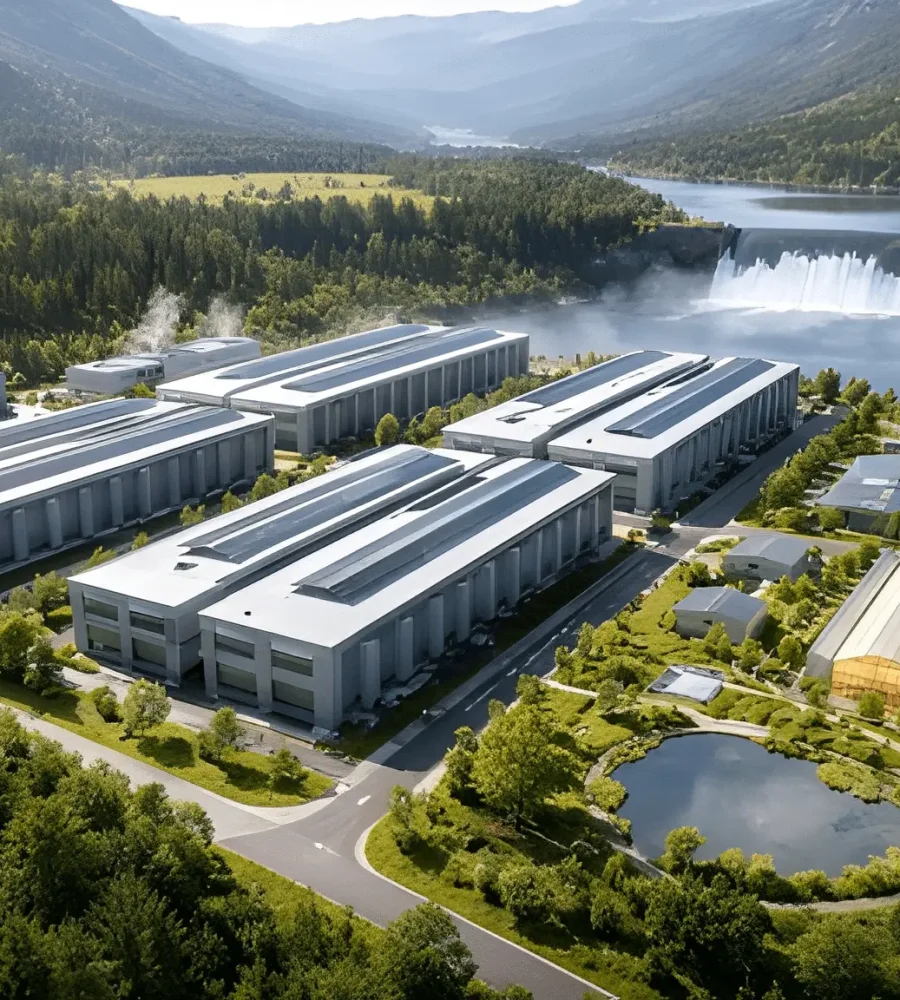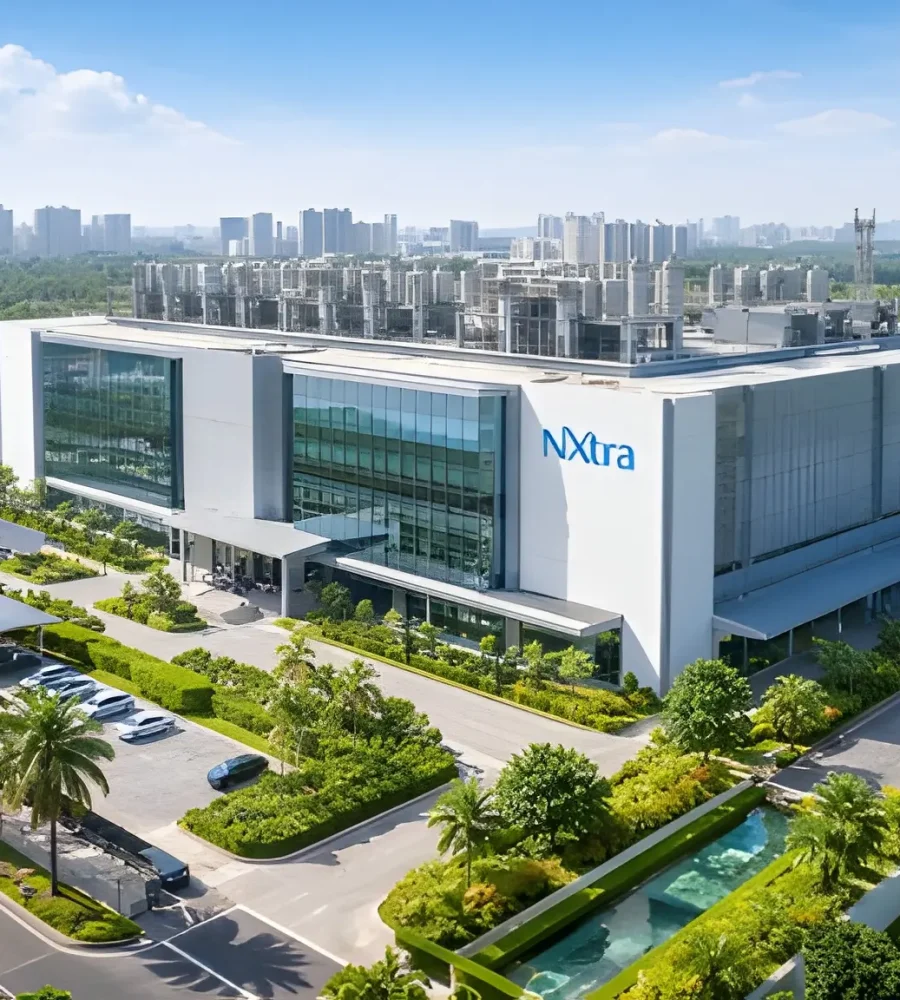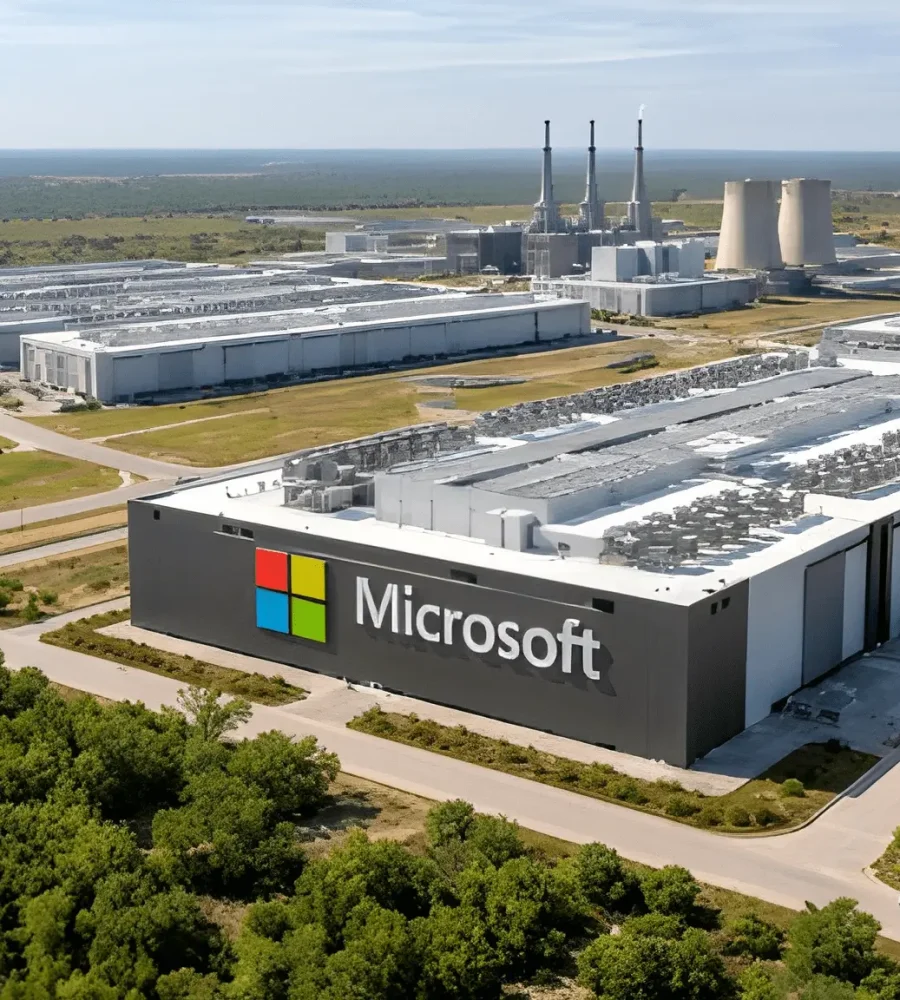

For decades, discussions about sustainable data centers have revolved around a single metric: Power Usage Effectiveness, or PUE. Over time, the industry has made meaningful progress by improving cooling efficiency and expanding the use of renewable energy. As a result, operational emissions have declined steadily across many facilities. However, this success has drawn attention away from a critical and often overlooked source of climate impact. Long before a data center processes its first byte, a substantial volume of emissions has already been released. This upfront footprint, known as embodied carbon, is embedded in concrete, steel, servers, cabling, and mechanical systems.
As research increasingly shows, embodied carbon can account for the majority of a data center’s lifetime emissions, particularly when operations rely on clean energy. In facilities powered entirely by renewables, upfront construction emissions frequently exceed those generated during decades of use. Consequently, embodied carbon has emerged as the next defining challenge in sustainable data center design. Addressing it requires a fundamental change in how infrastructure is planned, specified, and built.
Understanding the Scale of the Embodied Challenge
Embodied carbon includes emissions from raw material extraction, product manufacturing, transportation, construction activities, and eventual end-of-life handling. Although these stages occur before operations begin, their climate impact is immediate and irreversible. For large operators, the scale is significant. In 2023, Meta reported 4.8 million metric tons of CO₂e from capital goods, including IT hardware, representing a substantial share of its total emissions.
This timing matters. Because these emissions are front-loaded, their warming effect accumulates early. Even if a facility operates efficiently for decades, the initial carbon cost remains unchanged. Furthermore, as electricity grids continue to decarbonize, embodied emissions occupy an even larger share of total lifecycle impact. Therefore, early design decisions now carry greater weight than ever before.
The sources of embodied carbon span both structural and technical systems. Together, they form a complex web of materials and components that shape the overall footprint of a facility.
Major Sources of Embodied Carbon in Data Centers
- Structural Materials
- Concrete, structural steel, and rebar form the core of the building shell.
- Cement production contributes disproportionately to emissions and often accounts for the majority of embodied carbon in a facility.
- Concrete, structural steel, and rebar form the core of the building shell.
- Mechanical, Electrical, and Plumbing Systems
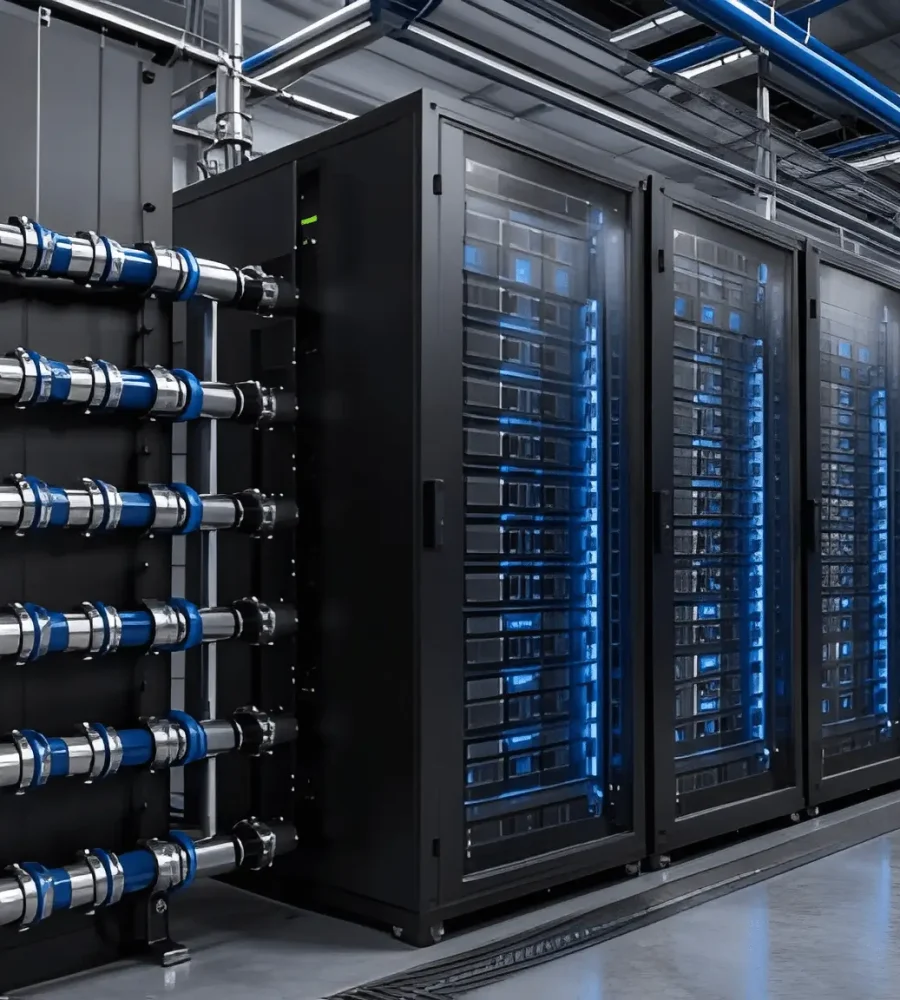
- HVAC units, chillers, backup generators, piping, and cable trays represent a large share of upfront emissions.
- Across the full lifecycle, these systems can dominate embodied carbon due to their material intensity and complexity.
- HVAC units, chillers, backup generators, piping, and cable trays represent a large share of upfront emissions.
- IT Hardware and Digital Infrastructure
- Servers, switches, memory modules, storage devices, and extensive cabling create significant cumulative emissions.
- Although individual components are replaced frequently, their combined material footprint is substantial at scale.
- Servers, switches, memory modules, storage devices, and extensive cabling create significant cumulative emissions.
- Interior Components and Finishes
- Raised floors, partitions, fireproofing materials, and protective coatings add incremental carbon impact.
- When deployed across large facilities, these elements meaningfully increase total embodied emissions.
- Raised floors, partitions, fireproofing materials, and protective coatings add incremental carbon impact.
A Three-Part Strategy: Measure, Innovate, Circulate
Reducing embodied carbon requires a coordinated approach built around three complementary actions.
Measure with Precision
Effective action begins with accurate measurement. Whole Building Life Cycle Assessments conducted early in the design phase establish a baseline and reveal carbon-intensive hotspots. Increasingly, leading operators are moving beyond coarse estimates. Meta, for example, has developed internal models capable of estimating emissions across hundreds of millions of individual components. Supplier-provided Life Cycle Assessments form the foundation of this work, supported by material modeling where data gaps exist.
In parallel, standardized tools such as the TM65 methodology are gaining traction. These frameworks enable consistent estimation of embodied carbon for mechanical and electrical equipment, thereby improving comparability across projects and suppliers.
Innovate Through Materials and Design
Once high-impact areas are identified, attention turns to reduction through smarter choices. This process typically follows three principles: avoiding unnecessary material use, reducing carbon intensity, and introducing lower-impact alternatives.
Avoidance begins with adaptive reuse and material recovery from existing sites. Reduction focuses on improving specifications, such as using low-carbon concrete mixes that incorporate fly ash or slag, which can significantly lower emissions. For steel, sourcing from electric arc furnaces powered by renewable energy delivers meaningful gains. At the same time, innovation continues through the exploration of materials like mass timber for select structural applications.
Crucially, early collaboration across the supply chain amplifies these benefits. Equinix demonstrated this approach in London by working closely with contractors to cut embodied carbon in steel, concrete, and rebar by approximately 30 percent relative to national benchmarks.
Build for Circularity
The most transformative opportunity lies in circular design. Rather than following a linear path from construction to disposal, circular strategies account for reuse, refurbishment, and recovery from the outset.
Design for disassembly plays a central role. Bolted connections, standardized components, and detailed material passports make future recovery practical and economical. Modular construction further supports circularity by reducing waste during build-out and enabling redeployment of entire modules. For IT hardware, extending useful life through refurbishment and remanufacturing reduces demand for new materials while strengthening supply chain resilience.
Importantly, circularity delivers business value alongside environmental gains. Cost savings, reduced material risk, and operational flexibility increasingly position circular practices as a strategic advantage rather than a compliance exercise.
Addressing Residual Emissions Through Carbon Removal
Even with aggressive reduction strategies, certain emissions from materials such as cement and steel remain difficult to eliminate in the near term. As a result, carbon removal is becoming part of a more complete climate strategy. High-quality solutions, including direct air capture and mineralization, offer a pathway to neutralize unavoidable embodied emissions by permanently removing carbon dioxide from the atmosphere.
While these technologies remain costly, their role is expanding as organizations pursue credible net-zero targets that account for full lifecycle emissions.
Making Embodied Carbon a Core Design Metric
The direction is increasingly clear. Sustainable data center development must place embodied carbon alongside operational efficiency from the earliest stages of planning. This shift requires setting whole-life carbon targets at project inception, demanding Environmental Product Declarations from suppliers, and rewarding designs that prioritize low-carbon materials and circular systems.
Equally important, progress depends on collaboration across architects, engineers, contractors, manufacturers, and operators. The infrastructure built today will shape emissions profiles for decades. By addressing embodied carbon before construction begins, the data center industry can align growth with long-term climate responsibility and ensure that digital expansion rests on a truly sustainable foundation.