
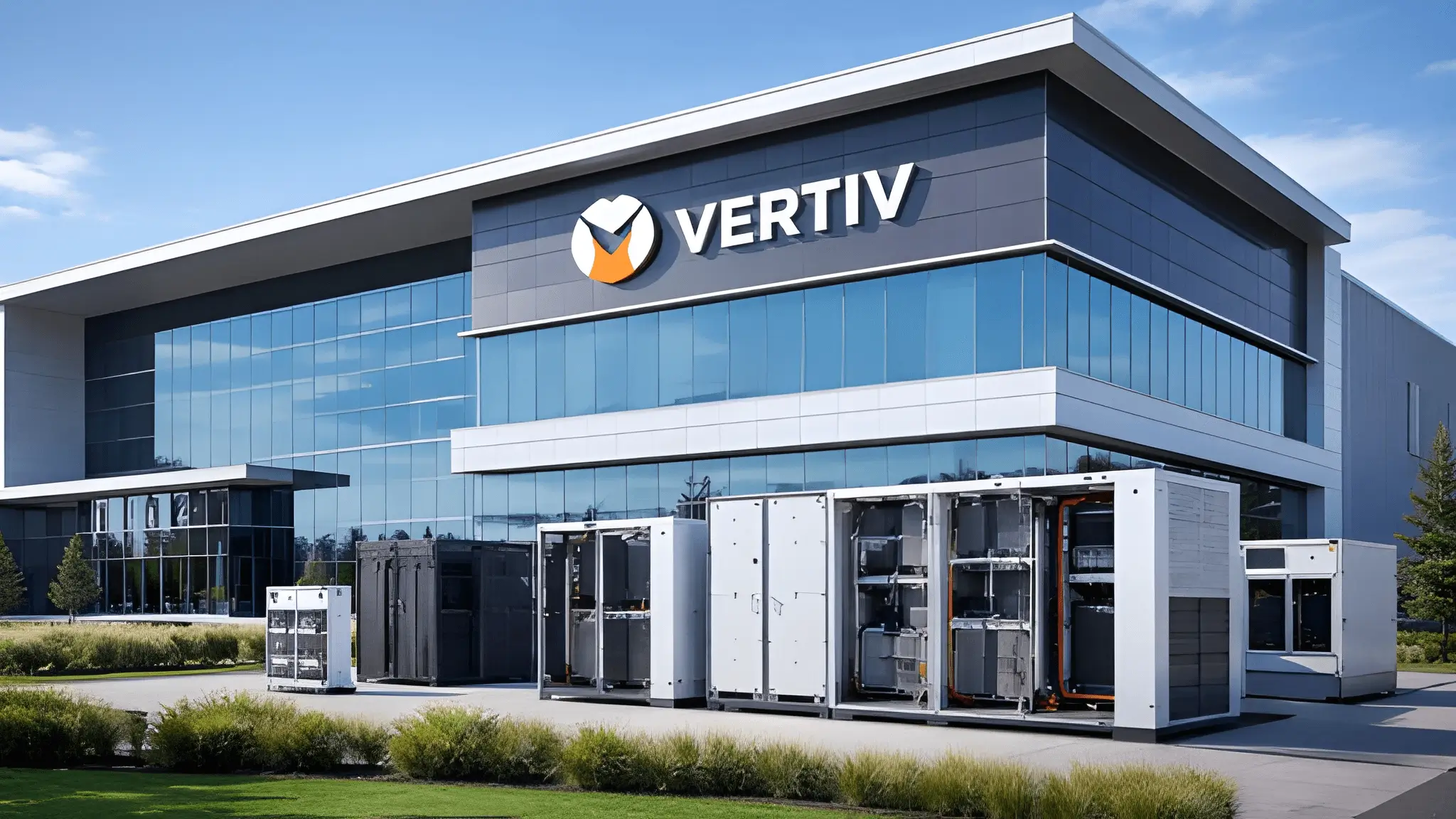
Vertiv is expanding its modular infrastructure strategy as artificial intelligence workloads reshape global data centre design priorities. The company positions its updated MegaMod HDX platform to meet the growing demands of AI training and inference clusters. These workloads drive higher rack densities, tighter thermal tolerances, and faster construction schedules across major markets.

Vertiv has widened the scope of its MegaMod HDX modular platform. The new configurations handle surging power density and thermal demands as data centre operators accelerate capacity builds across North America, Europe, and parts of Asia.
The expansion arrives as cloud providers, colocation operators, and large enterprises reassess how quickly they can scale infrastructure. AI deployments stress conventional facility designs, optimized for lower-density compute. Infrastructure suppliers now must deliver systems that combine speed, flexibility, and predictable performance.
Expanded MegaMod HDX Integrates Advanced Capabilities
Vertiv said the expanded MegaMod HDX range integrates higher-capacity power distribution, advanced liquid cooling options, and prefabricated deployment models. These upgrades target facilities supporting racks exceeding 100 kilowatts. The move comes as operators race to accommodate AI clusters that strain conventional air-cooled designs.

The updated MegaMod HDX combines prefabricated power modules with scalable liquid cooling loops. Options include direct-to-chip and rear-door heat exchangers. This design allows operators to tailor deployments to various chip architectures and workload profiles. Vertiv executives said the approach shortens build timelines while offering predictable scaling as compute intensity rises.
Power Delivery and Cooling Drive Design Shifts
Industry observers say power delivery and heat removal now define modern data centre constraints. Floor space matters, but it no longer limits expansion. Operators must deliver stable electricity and manage thermal loads as AI accelerators increase energy consumption beyond historical norms.
Analysts note that operators face challenges in power and cooling, not just space. Leading chipmakers’ AI accelerators drive rack densities above traditional enterprise levels. Operators must rethink electrical design, cooling topology, and redundancy strategies. Modular systems, once mainly for edge deployments, now appear in hyperscale and large colocation environments to speed delivery and control costs.
Predictability increasingly guides procurement decisions. AI infrastructure projects involve large capital commitments with limited tolerance for delays. Operators value modular systems for speed and for standardizing deployment across multiple sites and regions. Hyperscale campuses and multi-tenant data centres use parallel construction models. Infrastructure can be manufactured off-site while core buildings progress. This method reduces exposure to labor shortages and supply chain disruptions.
MegaMod HDX Expansion Aligns With AI Facility Standards
Vertiv’s MegaMod HDX expansion reflects this shift. The platform is a factory-built solution that assembles off-site and deploys alongside core building works. This approach reduces on-site labour and commissioning risks. According to the company, the new configurations support higher-voltage architectures and comply with emerging power distribution standards in AI-focused facilities.
As AI adoption accelerates, vendors that align infrastructure design with evolving compute requirements gain strategic relevance. For Vertiv, the MegaMod HDX expansion highlights that modular AI data centre infrastructure is moving deeper into the mainstream. It reshapes how large-scale facilities are built and scaled worldwide.











