 Skip to content
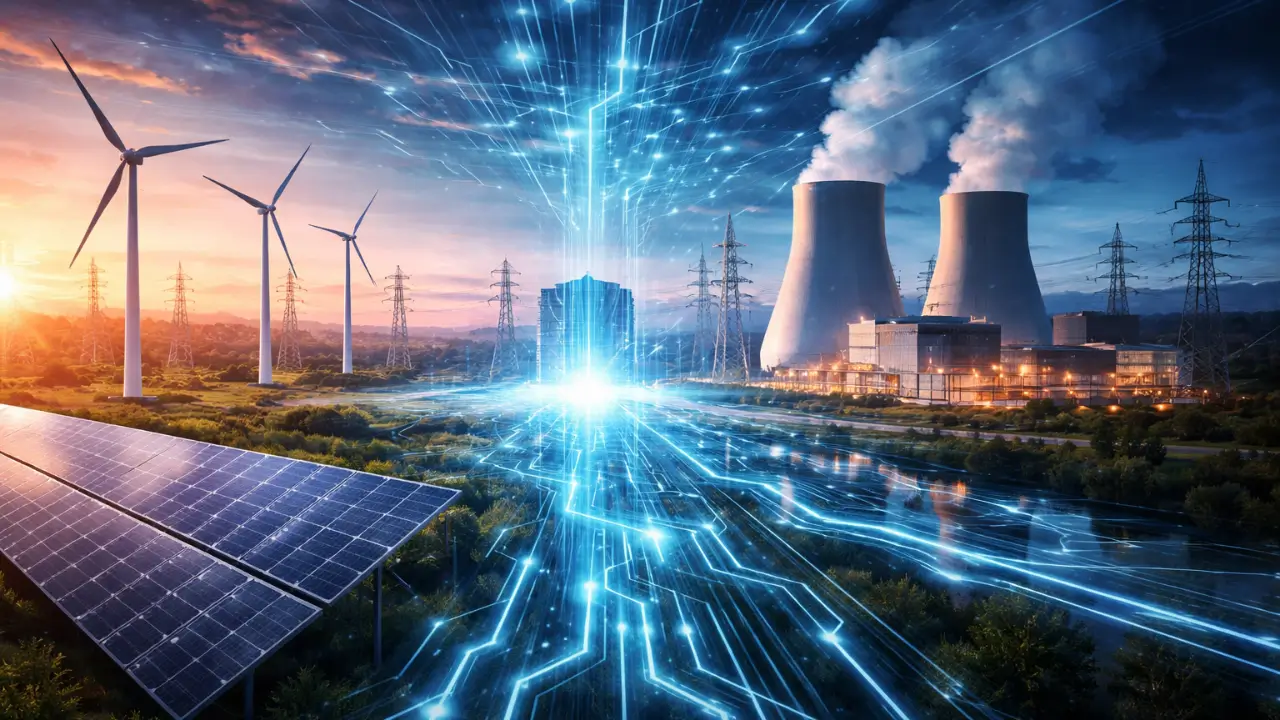
The global expansion of artificial intelligence has introduced a new class of industrial electricity demand, one where baseload power returns as a governing requirement rather than a legacy concept. Unlike prior waves of digital growth, advanced compute systems operate continuously and without tolerance for interruption. Energy availability is therefore treated as a structural condition rather than a variable input. This shift has altered how power systems are evaluated by infrastructure planners and system operators. Renewable generation remains foundational to energy transitions, yet its operational characteristics are being reassessed under constant-load conditions. The resulting tension is reshaping long-term power strategy across advanced economies.

Electricity discussions surrounding AI are increasingly detached from legacy sustainability framing. Instead, they are grounded in questions of endurance, predictability, and system integrity. Compute infrastructure is being positioned alongside heavy industry rather than consumer technology. Power supply is evaluated by its ability to operate without interruption across extended periods. This reframing has introduced renewed attention to generation sources capable of continuous output. Nuclear energy has reentered technical conversations through this operational lens. The change has unfolded gradually and without public spectacle.
Always-On Compute and Structural Demand
Artificial intelligence systems differ fundamentally from earlier computing architectures in how they consume electricity. Training environments, inference engines, and orchestration layers are designed for uninterrupted execution. Power disruptions propagate across dependent services rather than remaining localized. Energy continuity is therefore treated as a design requirement rather than a performance optimization. Electrical systems supporting AI must operate without cyclical relief. This demand profile has reshaped how reliability is defined within digital infrastructure.
Previous generations of cloud infrastructure were built around flexibility. Workloads could be deferred, relocated, or throttled in response to supply constraints. Artificial intelligence environments exhibit minimal tolerance for such adjustment. Latency sensitivity and synchronization requirements limit operational elasticity. Energy sourcing decisions now directly affect service stability. Power systems are evaluated on their ability to sustain continuous delivery. These characteristics have reintroduced older reliability principles into modern planning.

Renewable Generation Under Constant Load
Solar and wind generation have transformed electricity markets through scale and accessibility. Their deployment reshaped assumptions about fuel dependency and emissions reduction. However, these systems are governed by environmental conditions beyond operator control. Output variability is managed through forecasting, grid balancing, and complementary resources. Under constant-load conditions, variability shifts from manageable inconvenience to operational constraint. Continuous demand exposes limits that were previously absorbed by diversified consumption patterns.
Energy systems historically relied on demand diversity to absorb supply fluctuation. Residential and commercial loads introduced daily and seasonal variation. Artificial intelligence infrastructure reduces this diversity by operating uniformly across time. Renewable output mismatches therefore require compensatory mechanisms at all hours. Grid operators must maintain stability without predictable demand relief. This environment places greater emphasis on generation that does not fluctuate intrinsically. The constraint arises from physics rather than policy design.
Reliability has become central to the valuation of digital infrastructure. Uptime metrics are closely tied to service continuity and institutional credibility. Artificial intelligence systems amplify the consequences of failure due to interconnected dependencies. Energy disruptions propagate computational instability across platforms. Power reliability is therefore treated as equivalent to system security. Infrastructure planning increasingly prioritizes electrical certainty. This emphasis reshapes how energy sources are compared.
Earlier reliability strategies emphasized redundancy through backup generation and geographic distribution. These approaches remain relevant but insufficient under uninterrupted demand. Backup systems are designed for episodic use rather than permanent operation. Continuous reliance on contingency introduces inefficiency and risk. Infrastructure planners now seek primary supply stability rather than layered mitigation. This shift has influenced long-term procurement strategies. Reliability is framed as a foundational attribute rather than a safeguard.
Nuclear Energy Reconsidered
Nuclear power has remained a steady contributor to electricity systems despite declining visibility in public discourse. Existing reactors deliver consistent output independent of weather conditions. Operational cycles are measured in months rather than hours. These characteristics align closely with uninterrupted demand profiles. As a result, nuclear energy has regained relevance in infrastructure planning discussions. The reconsideration is driven by system requirements rather than ideological repositioning.
Unlike combustion-based generation, nuclear facilities do not require continuous fuel logistics. Energy density enables extended operation with minimal external dependency. This stability reduces exposure to supply chain disruption. For compute-intensive infrastructure, such predictability is operationally valuable. Energy sourcing decisions increasingly reflect this alignment. Nuclear generation is evaluated on functional performance rather than historical perception. The reassessment remains largely technical in nature.
Grid Stability Under Continuous Demand
Electric grids were historically designed to balance diverse consumption patterns. Residential, commercial, and industrial users created offsetting load cycles across time. Artificial intelligence infrastructure disrupts this equilibrium by introducing uniform demand. Electrical systems now face sustained pressure without natural periods of relief. Grid stability becomes harder to maintain when demand does not recede. This condition alters how system operators prioritize generation characteristics.
Frequency control and voltage regulation become more sensitive under persistent load. Minor deviations can cascade into broader instability when buffers are reduced. Variable generation introduces additional management requirements under these conditions. Operators must intervene more frequently to maintain equilibrium. Predictable generation simplifies these control challenges. Planning frameworks increasingly reflect this operational reality.
Storage as a Supporting Mechanism
Energy storage technologies play a critical role in modern power systems. Batteries smooth short-term fluctuations and provide rapid response capability. These functions are valuable in grids with high renewable penetration. However, storage systems operate within defined temporal limits. Continuous demand extends beyond these limits by design. Storage therefore functions as a supplement rather than a foundation.
Operational complexity increases as storage layers are added. Charging cycles, degradation management, and control systems require constant oversight. Each layer introduces additional points of coordination. Artificial intelligence infrastructure favors simplicity to reduce failure exposure. Power systems supporting such environments are designed to minimize operational variables. Storage retains importance but does not resolve continuity requirements alone.
Risk assessment has become central to infrastructure development decisions. Power interruptions are evaluated for systemic impact rather than isolated inconvenience. Artificial intelligence workloads amplify downstream consequences of instability. Energy selection directly influences operational risk profiles. Sources that reduce uncertainty are favored in planning decisions. This logic increasingly guides long-term commitments.
Regulatory predictability also factors into risk evaluation. Energy sources governed by established oversight frameworks reduce exposure to procedural delays. Nuclear facilities operate within mature regulatory regimes. These structures emphasize long-term operational clarity. Predictability at the regulatory level complements technical reliability. Infrastructure planners weigh both dimensions carefully.
Energy Permanence and Site Selection
Location decisions for compute infrastructure increasingly prioritize energy permanence. Proximity to reliable generation influences site viability. Network connectivity remains important but no longer dominates selection criteria. Artificial intelligence facilities favor regions with assured electrical supply. Geographic patterns of development are shifting accordingly. Energy availability shapes digital geography.
Land-use considerations are also affected by these priorities. Regions with stable generation assets attract sustained investment. Areas reliant on highly variable supply face additional infrastructure requirements. These compensations increase cost and complexity. Site planners evaluate trade-offs through an operational lens. Long-term viability outweighs short-term incentives.
Environmental objectives remain integral to energy planning. Artificial intelligence infrastructure does not negate decarbonization goals. Instead, it reshapes how transitions are executed. Emissions reduction pathways must preserve operational continuity. Energy systems are expected to evolve without introducing instability. This requirement narrows the range of viable options.
Clean energy sources with consistent output gain attention under these conditions. Renewable generation continues to expand within integrated systems. Its deployment is increasingly coordinated around stable supply anchors. This architecture balances environmental intent with operational necessity. Infrastructure planning reflects coexistence rather than exclusivity. Transition strategies are evaluated on execution integrity.
Institutional Memory and Energy Cycles
Energy systems evolve through recurring structural patterns shaped by demand characteristics. Industrial eras historically favored constant power availability over flexibility. Later transitions emphasized adaptability as consumption diversified. Artificial intelligence introduces a return to concentrated, uninterrupted load. Planning institutions are revisiting earlier system logic under new technological conditions. This reevaluation reflects continuity rather than reversal.
Institutional memory influences how quickly systems adapt. Engineers and grid operators retain knowledge of operating under constant industrial demand. That experience informs present-day planning for compute-heavy infrastructure. Familiar solutions are reassessed through modern constraints. Energy policy frameworks adjust as historical context regains relevance. Structural lessons persist across technological cycles.
Safety, Oversight, and System Confidence
Energy infrastructure supporting critical systems operates under heightened scrutiny. Safety assurance becomes inseparable from reliability considerations. Nuclear energy is governed by established oversight mechanisms emphasizing procedural rigor. These frameworks provide long-term operational confidence. Artificial intelligence infrastructure values such predictability. Confidence in oversight supports confidence in supply.
Oversight consistency reduces uncertainty during long planning horizons. Infrastructure investments span decades rather than years. Energy systems must align with this temporal scale. Predictable governance minimizes exposure to abrupt policy shifts. Planning teams incorporate regulatory maturity into risk assessment. Stability across institutions reinforces infrastructure durability.
Electricity markets transmit priorities through contract design and capacity arrangements. Continuous demand encourages long-duration agreements over short-term optimization. Artificial intelligence infrastructure aligns with supply models emphasizing certainty. Market structures adjust to accommodate these preferences. Energy procurement increasingly reflects endurance requirements. Financial instruments embed operational expectations.
Long-term commitments reduce exposure to volatility. Stable pricing supports predictable operating conditions. Infrastructure developers value consistency over marginal efficiency gains. Energy suppliers capable of sustained delivery align with these expectations. Market alignment occurs incrementally rather than abruptly. Structural incentives reinforce technical requirements.
Engineering Culture and Deterministic Systems
Engineering disciplines prioritize controllability and determinism. Systems designed for complexity benefit from predictable inputs. Artificial intelligence environments magnify this preference. Energy supply becomes an integral component of system architecture. Engineers favor sources that minimize stochastic behavior. Deterministic inputs simplify system design.
Design teams evaluate power systems as foundational layers. Variability introduces additional control requirements. Continuous generation reduces coordination overhead. Infrastructure decisions increasingly reflect this logic. Cultural alignment between engineering practice and energy choice becomes evident. Technical judgment guides planning outcomes.
Public energy discourse often emphasizes visibility and symbolism. Infrastructure planning operates within quieter technical spaces. Artificial intelligence facilities are developed without public-facing narratives. Energy decisions prioritize function over representation. This divergence shapes how transitions unfold. Operational necessity proceeds independently of public debate. Nuclear energy’s reemergence reflects this separation. Decisions are made within engineering, regulatory, and financial domains. Public sentiment plays a limited role in operational calculus. Infrastructure expands according to system logic. Silence accompanies technical alignment. Change occurs through execution rather than messaging.
Global Infrastructure Competition
Artificial intelligence development has become a strategic priority across nations. Infrastructure capability influences economic positioning. Energy systems supporting compute capacity shape competitive advantage. Countries with reliable power attract sustained investment. Infrastructure planning integrates energy considerations at national scales. Strategic alignment influences development trajectories.
Energy security intersects with digital competitiveness. Continuous compute capability depends on uninterrupted supply. National strategies increasingly reflect this interdependence. Power infrastructure becomes a component of technological sovereignty. Planning decisions extend beyond commercial interest. Long-term capacity supports strategic objectives.
Transmission Planning and Load Concentration
Transmission systems are increasingly shaped by concentrated demand centers. Artificial intelligence facilities draw sustained power that alters regional flow patterns. Grid planners must account for persistent directional load rather than cyclical variation. Infrastructure upgrades prioritize durability and thermal stability. Long-distance transmission becomes a structural enabler rather than a balancing tool. Planning horizons extend accordingly.
Load concentration challenges legacy assumptions embedded in network design. Systems built for dispersed consumption encounter stress under localized intensity. Reinforcement strategies focus on minimizing congestion and loss. Reliability standards adapt to continuous throughput expectations. Transmission planning increasingly integrates generation proximity considerations. Physical layout regains strategic importance.
Fuel security influences energy strategy alongside generation characteristics. Artificial intelligence infrastructure favors sources with minimal logistical exposure. Continuous operation amplifies sensitivity to upstream disruption. Energy systems dependent on frequent fuel delivery introduce additional risk layers. Long-cycle supply models reduce this exposure. Independence strengthens operational confidence.
Supply independence also affects geopolitical resilience. Energy systems insulated from short-term market fluctuation provide strategic stability. Infrastructure planners incorporate these considerations into long-term development. Reliability extends beyond technical performance into supply assurance. Energy choices reflect multidimensional risk evaluation. Structural autonomy becomes a planning virtue.
Workforce and Operational Continuity
Energy infrastructure relies on specialized operational expertise. Continuous systems benefit from established workforce pipelines. Nuclear operations involve standardized training and procedural discipline. Artificial intelligence facilities value environments with mature operational cultures. Workforce stability supports system reliability. Human factors remain integral to infrastructure performance.
Operational continuity depends on institutional knowledge retention. Facilities operating across decades develop resilient practices. Energy systems aligned with such cultures reduce onboarding risk. Infrastructure planning increasingly considers workforce sustainability. Skills availability influences site feasibility. Human infrastructure complements physical systems.
Technology Neutrality in Planning Frameworks
Modern energy policy emphasizes technology neutrality in principle. Artificial intelligence infrastructure tests this stance through practical constraints. Planning frameworks increasingly prioritize outcomes over categories. Reliability and continuity guide evaluation criteria. Energy sources are assessed by performance characteristics. Neutrality persists within functional boundaries. This approach reshapes investment signals. Technologies meeting operational thresholds receive consideration regardless of narrative alignment. Infrastructure planning reflects pragmatic selection. System performance dictates inclusion rather than preference. Energy portfolios evolve through functional fit. Decision-making centers on execution integrity.
Environmental evaluation expands beyond emissions metrics alone. Continuous infrastructure introduces land use, material, and lifecycle considerations. Artificial intelligence facilities operate within finite system boundaries. Energy choices influence cumulative environmental impact. Planning frameworks incorporate holistic assessment. Trade-offs are evaluated across dimensions.
Systems delivering uninterrupted power often exhibit smaller spatial footprints. Concentrated generation reduces transmission sprawl. Environmental impact assessment considers density alongside output. Infrastructure planners weigh localized effects against systemic benefits. Evaluation extends beyond singular metrics. Contextual analysis guides decisions.
Temporal Alignment of Infrastructure Lifecycles
Infrastructure lifecycles influence compatibility across systems. Artificial intelligence facilities are designed for long operational horizons. Energy systems must align temporally to avoid premature mismatch. Generation assets with extended lifespans integrate more seamlessly. Planning synchronizes development timelines. Temporal alignment reduces retrofit risk.
Short-cycle assets introduce renewal pressure under continuous demand. Replacement activity increases operational disruption. Long-lived systems provide stability across decades. Infrastructure planners account for lifecycle coherence. Compatibility extends beyond capacity into duration. Temporal strategy supports sustained operation.
Global infrastructure increasingly operates across standardized frameworks. Artificial intelligence platforms span jurisdictions and regulatory environments. Energy systems supporting them benefit from harmonized standards. Nuclear operations align with international safety and operational norms. Standardization facilitates interoperability. Consistency supports cross-border collaboration.
Interoperability reduces friction during expansion. Infrastructure components integrate more smoothly across regions. Energy systems aligned with global norms ease replication. Planning efficiency improves under standardized regimes. Institutional familiarity accelerates deployment. Global alignment reinforces reliability.
Strategic Realignment of Energy and Compute
Increasingly, the convergence of artificial intelligence and energy infrastructure marks a structural inflection point. Over time, compute systems have transitioned from elastic digital services into permanent industrial loads. Consequently, energy planning responds by prioritizing continuity, predictability, and long-duration alignment. Notably, this realignment unfolds through technical assessments rather than public repositioning. As a result, infrastructure choices increasingly reflect physical constraints over narrative preference. Ultimately, strategic coherence emerges from system compatibility rather than rhetorical alignment.
In parallel, energy strategy and compute architecture now evolve together rather than in isolation. Accordingly, planning timelines are synchronized to avoid structural mismatch. Power systems are therefore selected based on operational harmony with uninterrupted demand. Moreover, this coordination reduces long-term friction across infrastructure layers. In practice, engineering judgment guides decision-making more than symbolic positioning. Thus, the outcome reflects pragmatic integration rather than ideological shift.
The New Foundation of the Digital Age
Overall, artificial intelligence has altered the fundamental relationship between electricity supply and digital infrastructure. As a consequence, continuous compute demand exposes limits within systems designed around variability. Therefore, energy planning responds by reassessing which characteristics matter most under permanent load. In particular, reliability, duration, and predictability emerge as decisive factors. Collectively, these priorities reshape how generation portfolios are assembled. Importantly, change proceeds through execution rather than declaration.
Meanwhile, renewable energy retains a central role within evolving power systems. However, its contribution is increasingly structured around complementary integration rather than singular dependence. Consequently, infrastructure supporting advanced compute requires stable foundations to absorb variability. As a result, energy systems adapt by layering capabilities rather than replacing them. This architecture, therefore, reflects coexistence grounded in operational realism. At the same time, environmental objectives remain embedded within functional design.
Notably, nuclear power’s renewed consideration reflects this pragmatic recalibration. Specifically, its attributes align with the endurance requirements of modern compute infrastructure. Nevertheless, the reassessment remains technical, incremental, and largely apolitical. Accordingly, decisions emerge from engineering analysis rather than narrative revival. In effect, infrastructure evolves in response to physical necessity. Consequently, strategic silence accompanies structural change.
Finally, as artificial intelligence becomes embedded across economies, its energy implications will continue shaping system design. Therefore, planning frameworks increasingly prioritize long-term coherence over short-term optimization. In turn, power infrastructure adapts to sustained demand with familiar tools applied in new contexts. Ultimately, the resulting energy landscape reflects continuity informed by experience. Thus, evolution proceeds without spectacle. Reliability, accordingly, remains the quiet determinant.












