Skip to content
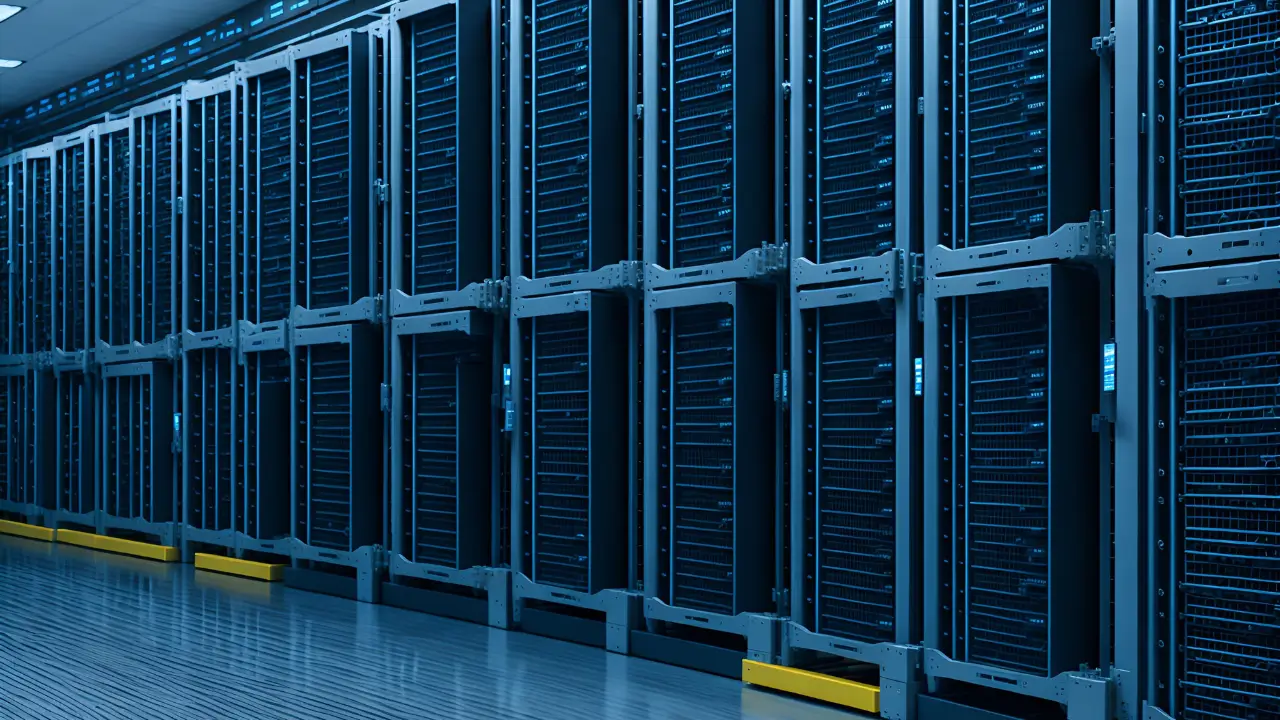
The architecture of the digital world is undergoing a seismic shift. It is moving away from borderless cloud efficiency and toward an era defined by digital sovereignty and localized infrastructure. For decades, the internet’s physical layer followed a centralized logic. Data flowed into a small number of global hubs, chosen for connectivity, business friendliness, and economies of scale. In the Asia-Pacific region, Singapore dominated this model.

However, that era is ending. Today, geopolitical tension, resource constraints, and the rise of sovereign artificial intelligence (AI) are reshaping global infrastructure. As a result, 2026 no longer revolves around a single “Global Hub.” Instead, it marks the rise of “Sovereign Clusters” in cities such as Mumbai, Johor, Jakarta, and Ho Chi Minh City.
Most importantly, this shift reflects a deeper geopolitical reality. Data is no longer an abstract flow. Governments now treat it as a strategic national asset. Therefore, nations increasingly insist that data be stored, processed, and protected within their borders.
The Geopolitics of the Sovereign Cloud
The transformation of the Asia-Pacific (APAC) data center landscape did not begin with new technology. Instead, it began with a physical constraint. The “Singapore Moratorium,” which lasted from 2019 to 2022, triggered the decentralization of regional data infrastructure.

During this period, the Singaporean government halted approvals for new data center projects. The pause addressed rising concerns over land scarcity, power consumption, and water usage. By 2020, data centers consumed roughly 7% of Singapore’s total electricity supply. For a city-state with aggressive net-zero goals and limited renewable capacity, this level proved unsustainable.
As a result, the moratorium sent a clear message to global hyperscalers. Companies such as Amazon Web Services (AWS), Microsoft Azure, and Google Cloud could no longer rely on Singapore as an unlimited growth hub. Although authorities lifted the moratorium in 2022, they replaced it with a restrictive pilot tender system. This system favors only the most energy-efficient projects. It requires a Power Usage Effectiveness (PUE) of 1.3 or lower and prioritizes high-density AI and machine-learning workloads.
The Rise of Regional Sovereign Clusters
Because Singapore could no longer absorb new demand, workloads quickly moved elsewhere. Capital that once flowed into Jurong or Loyang began shifting into neighboring territories. However, proximity alone did not drive this change. Instead, it reflected a strategic response to the growing demand for sovereign cloud infrastructure.
Across Southeast Asia and India, governments began marketing themselves as “safe harbors” for data. They offered geopolitical neutrality as a competitive advantage. In an era of intensifying U.S.–China tech rivalry, countries such as Malaysia, Indonesia, and India struck a careful balance. They welcomed U.S.-based providers like AWS and Azure while also supporting Chinese players such as Alibaba Cloud and Huawei.
By hosting both ecosystems, these nations reduce dependency on any single power bloc. Consequently, they protect their digital economies from the extraterritorial reach of foreign laws. These include the U.S. CLOUD Act and China’s national security regulations.
Data as a National Resource
At the core of this shift lies a powerful idea: data is the new oil. Governments across the region now treat citizen-generated data as a national resource. They expect it to generate local economic value rather than flow offshore.
To enforce this vision, regulators increasingly mandate local data residency and infrastructure investment. These policies create tangible benefits. They drive high-value job creation, expand tax bases, and accelerate domestic high-tech industries.
At the same time, this approach challenges the old extractive model of global technology. In that model, companies harvested data locally but processed and monetized it in distant hubs. By contrast, sovereign data policies force capital, compute, and expertise to remain onshore. As a result, governments are physically reshaping the infrastructure of the 21st-century digital economy.
APAC Data Center Capacity Projections (2024–2030)
Across the Asia-Pacific region, data center capacity is expanding at an unprecedented pace. However, growth remains uneven and closely tied to AI adoption, regulatory pressure, and national sovereignty goals.
India: The Fastest-Growing Sovereign Market
India’s data center capacity is expected to grow fivefold by 2030 to over 8GW. AI workloads and compliance with the Digital Personal Data Protection Act (DPDPA) are the primary drivers.
As a result, India is on track to become the second-largest market for data center electricity demand in APAC by 2026. It is expected to surpass both Japan and Australia within that timeframe.
Malaysia: Beneficiary of Singapore Spillover
Malaysia is expected to grow from 1.0 GW in 2024 to 4.5 GW by 2030. This growth also implies a 32% CAGR. Most new capacity is concentrated in Johor, where operators benefit from proximity to Singapore without its infrastructure constraints.
Consequently, Malaysia has emerged as a core node in the regional sovereign cluster strategy.
Indonesia: Public Sector and Fintech Demand
Indonesia’s capacity is projected to rise from 0.6 GW in 2024 to 1.5 GW by 2030. This represents a CAGR of 31%. Growth is driven largely by public sector digitization and financial technology platforms that require local cloud infrastructure.
At the same time, evolving data protection rules are reinforcing the need for domestic capacity.
Japan: High-Density AI and Robotics
Japan is expected to expand from 2.8 GW in 2024 to more than 6.5 GW by 2030. The projected CAGR of 30% reflects strong demand from robotics, advanced manufacturing, and high-density AI workloads.
Unlike Southeast Asia, Japan’s growth is less about localization mandates and more about compute intensity.
Singapore: Growth Constrained by Sustainability
Singapore’s data center capacity is forecast to increase modestly from 1.4 GW in 2024 to 1.8 GW by 2030. This translates into a lower CAGR of 8%.
Green data center roadmaps, land scarcity, and strict energy-efficiency requirements continue to cap expansion.
Vietnam: Small Base, Rapid Acceleration
Vietnam currently operates approximately 0.22 GW of data center capacity. By 2030, capacity is expected to exceed 0.6 GW.
This rapid growth is driven by Decree 13, Decree 147, and the Ho Chi Minh City Task Force, which together prioritize domestic data storage and enforcement.
The Legislative “Stick”: Localization Laws as Infrastructure Drivers
While market demand matters, legislation increasingly dictates where infrastructure gets built. Governments across APAC are deploying what can be described as a “legislative stick.” These data protection and localization laws introduce regulatory friction that discourages cross-border data flows.
Although most frameworks stop short of outright bans on offshore storage, they impose compliance burdens so severe that local infrastructure becomes the only practical option for foreign firms.
India’s DPDPA: The Centerpiece of Nuanced Localization
India’s Digital Personal Data Protection Act (DPDPA), enacted in August 2023, exemplifies this strategy. Phased implementation will continue through 2026.
The Act replaces fragmented legacy rules with a unified, principle-based framework. More importantly, it introduces a model of “nuanced localization.” Unlike earlier drafts, the final law allows cross-border data transfers except to jurisdictions explicitly blacklisted by the central government.
However, the DPDPA also creates a powerful enforcement mechanism. It designates certain entities as “Significant Data Fiduciaries” (SDFs) based on data volume, sensitivity, and national security risk.
Once designated, SDFs must comply with heightened obligations. These include appointing an India-based Data Protection Officer, conducting mandatory audits, and maintaining local data retention for law enforcement access. In addition, the 2025 DPDPA Rules allow the government to restrict the export of specific categories of personal and traffic data.
As a result, multinational corporations increasingly treat large-scale Indian data centers as non-negotiable. Infrastructure investment has become a prerequisite for market access.
Regional Data Localization Frameworks at a Glance
Across APAC, localization frameworks vary in form but share a common objective: domestic control.
- India (DPDPA 2023–2026): Applies storage mandates to Significant Data Fiduciaries under the oversight of the Data Protection Board of India.
- Vietnam (Decree 13 & 147): Requires local storage for defined user data and mandates local offices for high-traffic foreign platforms.
- Indonesia (GR 71 / PDP Law): Distinguishes between public and private data, requiring public sector data to remain onshore.
- Singapore (Digital Infrastructure Act): Prioritizes sustainability and efficiency through a selective pilot tender system managed by IMDA and EDB.
Vietnam’s National Security-Driven Localization Model
Vietnam enforces one of the region’s strictest localization regimes. Decree No. 13/2023 directly links data protection to national security considerations.
The regulation applies to all organizations processing Vietnamese personal data, regardless of physical presence. It mandates local storage and requires detailed data protection impact assessments. The 2025 Law on Personal Data Protection further extends these obligations to offshore entities.
Decree 147 intensifies enforcement for digital platforms. Offshore providers of social media, gaming, and internet services must store Vietnamese user data domestically. This includes full names, dates of birth, and national ID numbers.
Furthermore, platforms exceeding 100,000 monthly Vietnamese users must establish local branch offices. By March 2025, they must also authenticate the identities of active users. Non-compliance carries penalties of up to 5% of the previous fiscal year’s revenue.
Taken together, these measures give the Vietnamese government direct oversight of digital activity. They also ensure that infrastructure investment follows regulatory authority.
Indonesia’s Public vs. Private Data Divide: GR 71
Indonesia’s localization strategy rests on a clear regulatory split. Government Regulation No. 71 of 2019 (GR 71) distinguishes sharply between “Public Scope” and “Private Scope” Electronic System Operators (ESOs).
Public Scope ESOs include government agencies and entities acting on their behalf. These organizations must process and store data entirely within Indonesia. The goal is explicit: protect the sovereignty of state data.
By contrast, Private Scope ESOs historically enjoyed greater flexibility. They could store data offshore with user consent. However, that flexibility is narrowing. In practice, Indonesia is moving toward de facto localization.
This shift accelerated with the 2022 Personal Data Protection (PDP) Law. The law introduced formal roles for “data controllers” and “data processors” and mandated the creation of a centralized Data Protection Authority. Although the PDP Law allows a two-year transition period ending in late 2024, enforcement pressure is already reshaping infrastructure decisions.
Moreover, sector-specific rules often override general permissions. In finance and e-commerce, regulators increasingly require local data storage for supervision and consumer protection. At the same time, ESOs must provide law enforcement with system access. This requirement effectively demands a physical presence.
As a result, enterprise and government-focused data centers are rapidly expanding across Jakarta and West Java. In Bekasi, Digital Edge is investing $4.5 billion to build one of Indonesia’s largest AI-ready hyperscale campuses.
The Hardware Frontier: From Sovereign Cloud to Sovereign AI
As regulatory debates move beyond residency, attention is shifting to intelligence. The Sovereign Cloud is evolving into a Sovereign AI factory.
By 2026, Southeast Asian nations and India no longer want to merely store data. Instead, they want to train models, fine-tune algorithms, and run inference locally. This ambition has fueled the rise of GPU-as-a-Service (GPUaaS).
In this model, operators build high-density, liquid-cooled data centers to host massive clusters of specialized AI chips. These facilities prioritize power density, cooling efficiency, and network throughput.
The Rise of Sovereign AI in APAC
By 2026, AI sovereignty is expected to drive digital infrastructure decisions for nearly 50% of APAC enterprises. This shift reflects growing concern over reliance on foreign technology stacks.
Equally important, governments want AI models aligned with local languages, cultural norms, and regulatory frameworks. Sovereign AI offers that control.
However, sovereign AI demands enormous compute capacity. As a result, operators are developing “AI Data Platforms” optimized for high-performance storage and ultra-low-latency networking. These platforms reduce GPU idle time and maximize capital efficiency.
The GPUaaS market reflects this urgency. Globally, it is projected to grow at a CAGR of 28.74% through 2031, reaching nearly $26 billion. In APAC, growth is even faster, with a projected CAGR of 36.8%.
This expansion is driven by the convergence of generative AI workloads and “sovereign-by-design” execution. For example, in 2025, SK Telecom launched a sovereign GPUaaS platform in South Korea. The platform runs on an NVIDIA B200 cluster named Haein and supports autonomous driving and healthcare R&D while complying with local regulations.
India’s GPU Boom and the 2026 Union Budget
India has emerged as the epicenter of Asia’s AI infrastructure buildout. The Union Budget 2026–27 introduced sweeping incentives to position the country as a global hub for “AI Exports.”
The most significant measure is a tax holiday extending until 2047. Foreign companies qualify if they deliver cloud services to global customers using data centers located in India. After the holiday, firms transition into a concessional tax regime.
This policy targets long-term capital and high-value digital services. In addition, the budget introduced safe harbor provisions of 15% on costs for related entities. These measures further encourage hyperscalers to anchor their AI operations in India.
Major players have already responded:
- Google: $15 billion for an AI hub with the Adani Group
- Microsoft: $17.5 billion focused on AI-ready infrastructure
- Amazon: $35 billion through 2030, including major AWS expansions
- Tata Consultancy Services (TCS): $6.5 billion for 1 GW of AI-ready capacity
By the end of FY26, private investment in India’s AI infrastructure is expected to reach $140 billion. This capital influx is transforming Mumbai, Navi Mumbai, and Chennai into full-scale AI factories. Mumbai alone accounts for roughly 53% of India’s operational data center capacity.
Johor and Ho Chi Minh City: Emerging Sovereign AI Clusters
Johor, Malaysia, has become the world’s fastest-growing data center market by positioning itself as “Singapore’s backyard.” The Singapore moratorium exposed hard limits. The city-state’s 735 km² footprint and constrained power grid could not support the next wave of hyperscale growth.
Johor filled that gap. It offers abundant land and power while preserving the low-latency connectivity needed for synchronized regional operations. By 2030, Johor is expected to host 48 data centers with total potential capacity exceeding 5 GW.
At the same time, Ho Chi Minh City is executing a parallel strategy. The city has formed a 15-member inter-agency task force to accelerate a nearly $2 billion AI data center project. Located in Tan Phu Trung Industrial Park, the facility is designed for 200 MW of power and up to 100,000 GPUs.
Together, these developments signal Vietnam’s entry into the high-end sovereign compute market.
The “Thirsty” Infrastructure: Navigating Physical Scarcity
The re-mapping of the physical world through digital sovereignty has hit a “resource wall.” Data centers, especially the high-density AI clusters of 2026, are incredibly resource-intensive, consuming massive amounts of electricity and water. In the tropical humidity of Southeast Asia and the varied climates of India, these facilities face unique technical and environmental challenges.
The Power Gap and the Rise of “Behind-the-Meter” Generation
The electricity demand for data centers in the APAC region is expected to rise from 320 TWh in 2024 to 780 TWh by 2030, but only $32\%$ of this demand is projected to be met by renewable energy. Many regional grids, particularly in Vietnam and Indonesia, are struggling to keep up with this exponential growth, with wait times for grid connections in primary markets often exceeding four years.
This “power gap” has led to the rise of “Behind-the-Meter” (BTM) power solutions. Data center operators are increasingly building their own power infrastructure, such as dedicated solar farms or gas-fired generation, to ensure round-the-clock reliability with redundancy. In Vietnam, industrial rooftop solar now accounts for approximately $71\%$ of the country’s $6.93$ GW of rooftop capacity. In Malaysia, the government has tightened rules to prevent “phantom” power demand by requiring data centers to declare their annual demand and meet an $85\%$ utilization threshold within four years.
Water Stress and the Conflict with Local Resources
The conflict between data center cooling needs and local agriculture is reaching a breaking point in 2026. Data centers using traditional evaporative cooling can consume up to 50 million liters of water a day, which is up to 200 times the consumption of higher-tiered facilities. In Johor, frequent supply disruptions have led to intense public pressure, prompting the state to rush the construction of new treatment plants like Semanggar and Layang 2.
In response, the Johor government announced a moratorium on new Tier 1 and Tier 2 data centers until mid-2027. For projects that are approved, the state is mandating stricter ESG standards, with a focus on “Circular Water” usage. By 2026, many projects are being rejected unless they can prove they recycle over $90\%$ of their cooling water through on-site water reclamation plants. Bridge Data Centres has taken the lead by building a multimillion-dollar reclamation plant in Johor that converts effluent into industrial cooling water using reverse osmosis technology.
Comparative Cooling Technologies for Tropical Data Centers
- Evaporative (Open Loop): Requires extreme water usage with a $PUE$ potential of $1.4$ to $1.6$; not ready for high-density workloads and carries low suitability for current tropical markets due to moratorium risks.
- Air Cooled (Closed): Requires moderate water usage with a $PUE$ potential of $1.3$ to $1.5$; limited for high-density workloads and carries medium suitability.
- Liquid-to-Chip: Requires low water usage with a $PUE$ potential of $1.1$ to $1.2$; high-density ready and highly suitable for AI clusters.
- Immersion Cooling: Requires minimal water usage with a $PUE$ potential below $1.1$; high-density ready and highly suitable for emerging GPU-as-a-Service workloads.
- Circular Water Plant: Requires low net water usage with a $PUE$ potential of $1.2$ to $1.3$; high-density ready and carries high suitability, often required for new projects in Johor.
Economic & Social Impact: The “Multiplier Effect” of Localized Infra
The physical re-mapping of the digital world is not just an infrastructure project; it is a catalyst for economic and social transformation. The shift toward sovereign clusters is creating a “multiplier effect” that extends from high-value job markets to the democratization of technology for small businesses.
High-Value Job Creation and the 2030 Talent Gap
The operation of localized data centers is driving a massive demand for specialized talent. The APAC region is estimated to require over 200,000 specialized AI and cloud technicians by 2030 to manage these facilities. Singapore’s National AI Strategy 2.0 aims to triple its AI practitioners to 15,000 by 2029. In Vietnam, despite a projected surge in AI startups, the country faces a severe talent gap, with only around 300 deep AI experts estimated as of 2021.
The SME Leapfrog: Democratizing Enterprise AI
Localized data infrastructure is a powerful equalizer for Small and Medium Enterprises (SMEs). The rise of local “Sovereign Clusters” allows regional startups to access high-density GPU compute with “pay-per-use” pricing models that lower the barrier to entry. In India, this is evident in the adoption of AI-driven tools for agricultural yield prediction by organizations like Wadhwani AI, which leverage local GPU-powered platforms.
Digital Decolonization: A Philosophical Re-Mapping
The rise of localized infrastructure has prompted a philosophical look at whether this trend represents “digital decolonization.” The historical dominance of Silicon Valley and Chinese tech giants is increasingly viewed as a form of “digital colonialism,” where identities and economies are shaped through data extraction and Western-centric algorithmic biases. Digital sovereignty initiatives, such as the ‘No-Facebook’ movement in India’s Khasi Hills, are attempts to reclaim online spaces from corporate control.
However, while this shift reduces dependency on global tech firms, it also transfers the power of surveillance from those global firms to local governments. In markets like Vietnam and Indonesia, the “sovereign cloud” provides the state with unimpeded access to citizen data for monitoring and law enforcement. The question for 2030 is whether localized infrastructure will truly empower the individual citizen or simply create a new regime of localized control, where digital borders are as rigid as physical ones.
The Sovereign Future of 2030
By 2030, the physical world will have been fundamentally re-mapped by the logic of digital sovereignty. The era of the single “Global Hub” is over, replaced by a network of “Sovereign Clusters” that are physically and legally distinct. This transition, fueled by the Singapore Moratorium and accelerated by the AI compute race, has turned countries like India and Malaysia into the new engines of global digital growth. The success of these clusters will depend on their ability to overcome the physical limits of power and water scarcity. The rise of “Behind-the-Meter” power and “Circular Water” systems signals a new stage of maturity for the industry, where data centers are integrated components of a nation’s energy and environmental strategy.