
Iris Energy, now rebranded as IREN Limited is repositioning its business model to include artificial intelligence (AI) compute services in addition to Bitcoin mining, reflecting how infrastructure companies can adapt as demand for high‑performance computing grows. This evolution marks more than a buzzword shift; it stems from real operational changes documented in company reports.

IREN operates two principal segments: Bitcoin mining and AI/cloud computing services. While Bitcoin mining remains a core part of its business, the company has explicitly scaled AI cloud services by installing GPUs and optimizing data center capacity for workloads like training and inferencing AI models using high‑performance hardware.
This dual‑engine model illustrates a broader industry trend where companies leverage physical data center assets for emerging compute demands rather than relying solely on a single revenue stream like mining.
From Renewable‑Powered Mining to AI‑Ready Compute
IREN’s facilities were designed around high‑capacity power infrastructure, land, and cooling optimized for Bitcoin mining. The same core requirements: abundant power and efficient cooling are prerequisites for many AI compute workloads. Therefore, adapting part of this infrastructure to host AI workloads is an extension of its original design philosophy rather than an unrelated venture.
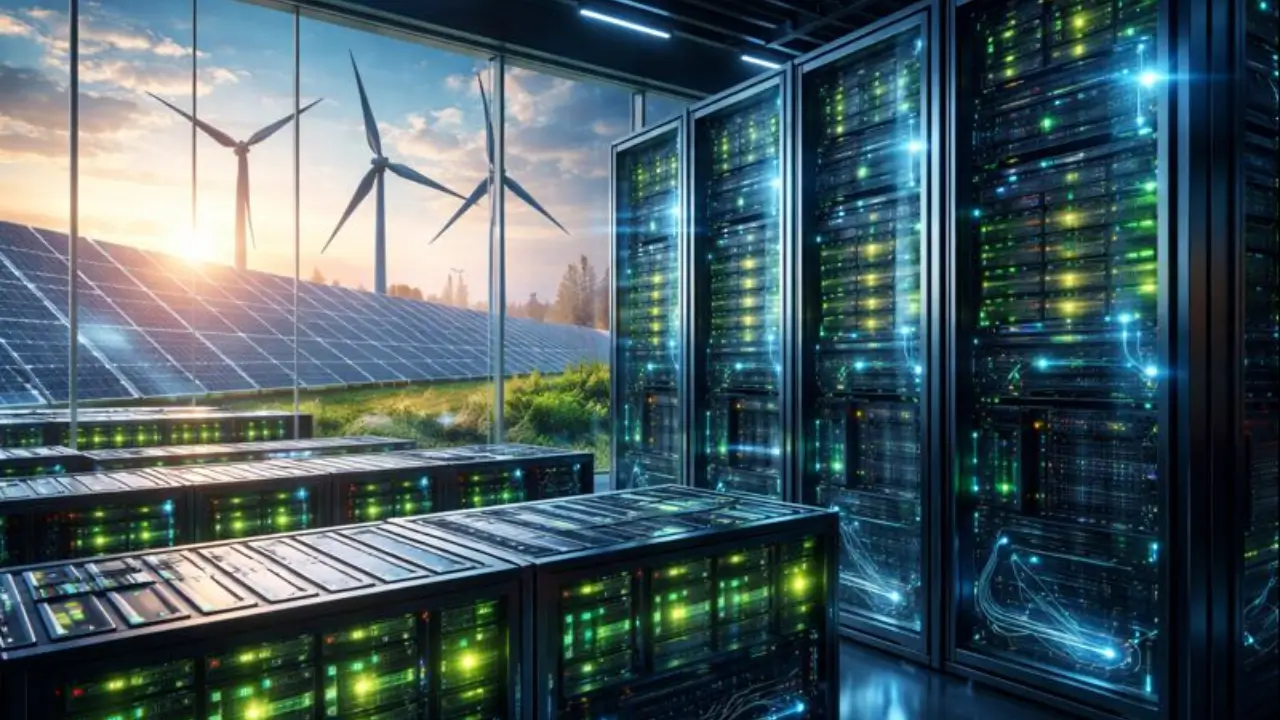
Crucially, IREN’s existing renewable energy strategy, powering operations with 100% clean or renewable energy sources supports sustainability goals that matter to some customers and markets, especially those balancing compute capacity with environmental commitments.
Concrete Steps Toward AI Compute
The company has publicly reported that it began AI cloud services with the deployment of GPUs, initially including NVIDIA H100 and H200 hardware, enabling it to offer AI compute capacity to customers. These services have grown from a modest starting point into a recognized business segment with increasing client activity.

IREN also paused expansion of its Bitcoin mining capacity beyond existing levels to focus capital on scaling AI data center initiatives. This move indicates a strategic prioritization rather than abandonment of mining operations.
External market reporting confirms that IREN has engaged in expanding GPU inventory, including ordered shipments of Blackwell and other next‑generation chips, and aims to support higher performance workloads. This reflects a step‑wise expansion into areas that align with industry demand for AI‑oriented hardware.
While adoption lags behind large hyperscale cloud providers, IREN’s incremental positioning in AI compute aligns with broader infrastructure demand trends that place power, networking, and physical space at a premium.
Economic Role of AI Compute in Infrastructure Strategy
AI compute workloads often deliver higher incremental revenue for infrastructure operators because they require more specialized hardware and service coordination than traditional hosting or mining operations. IREN’s decision to invest in GPU capacity and associated data center systems reflects an effort to capture this higher value segment of computing demand.
This strategy is not about making a speculative bet on AI alone; it’s about expanding the use cases for existing physical assets in response to customers who are actively seeking GPU capacity for large‑scale machine learning workloads.
IREN’s renewable‑powered infrastructure provides a comparative advantage in cost and sustainability, which matter for compute environments that run continuously at high power draw. Renewable sources help mitigate cost volatility and align with environmental, social, and governance (ESG) expectations in some enterprise and cloud customer contracts. This emphasis on clean energy remained consistent in public filings and company disclosures as it expanded capacity in both Bitcoin mining and AI cloud services.
Physical Infrastructure as Core Competitive Asset
Long‑term competitive positioning in data center markets rests on assets, land, power, connectivity, and cooling that can support a range of workloads from mining to AI. IREN’s land bank, secured grid power, and multi‑gigawatt development pipeline position it to pivot capacity where demand is strongest while maintaining operational fundamentals.
These physical assets are not ephemeral; they represent decades of engineering and capital investment, which can be optimized over time for various compute workloads.
Across the industry, data center operators are increasingly considering AI compute demand as central to long‑term infrastructure planning, drawing on existing power and capacity resources where possible. IREN’s strategic focus on scaling its AI services segment mirrors this larger infrastructure evolution without disconnecting from its Bitcoin mining roots.
This mirrors an industry pattern where infrastructure operators broaden compute offerings to meet demand for AI workloads, addressing market signals rather than speculative narratives.
Maintaining Mining Operations During Transition
While AI compute has become a strategic focus, IREN has not exited Bitcoin mining. Current operations continue to provide base revenue and operational stability while infrastructure investments are deployed incrementally to support AI workloads.
This balanced approach suggests that mining still plays a role in funding and sustaining operations while the company builds out complementary services. The pivot toward supporting AI compute workloads is about leveraging physical assets, not abandoning core competencies while aligning with broader technological demand drivers. Over time, this dual approach may represent a more multi‑faceted infrastructure offering.
As the ecosystem for AI continues to mature, the ability of data center operators to adapt and optimize physical infrastructure for diverse compute workloads will define competitive positioning.
A Strategic Continuum, Not a Departure
IREN’s AI computing pivot demonstrates a strategic continuum where renewable‑powered infrastructure originally built for Bitcoin mining evolves to support additional compute workloads. This is not a sharp break from its legacy business but a methodical extension of its capabilities to meet expanding market demand for AI compute.
The move is grounded in documented infrastructure investments, GPU deployments, and expanding services, not speculation reflecting how modern digital infrastructure companies adjust to changing compute needs.











