
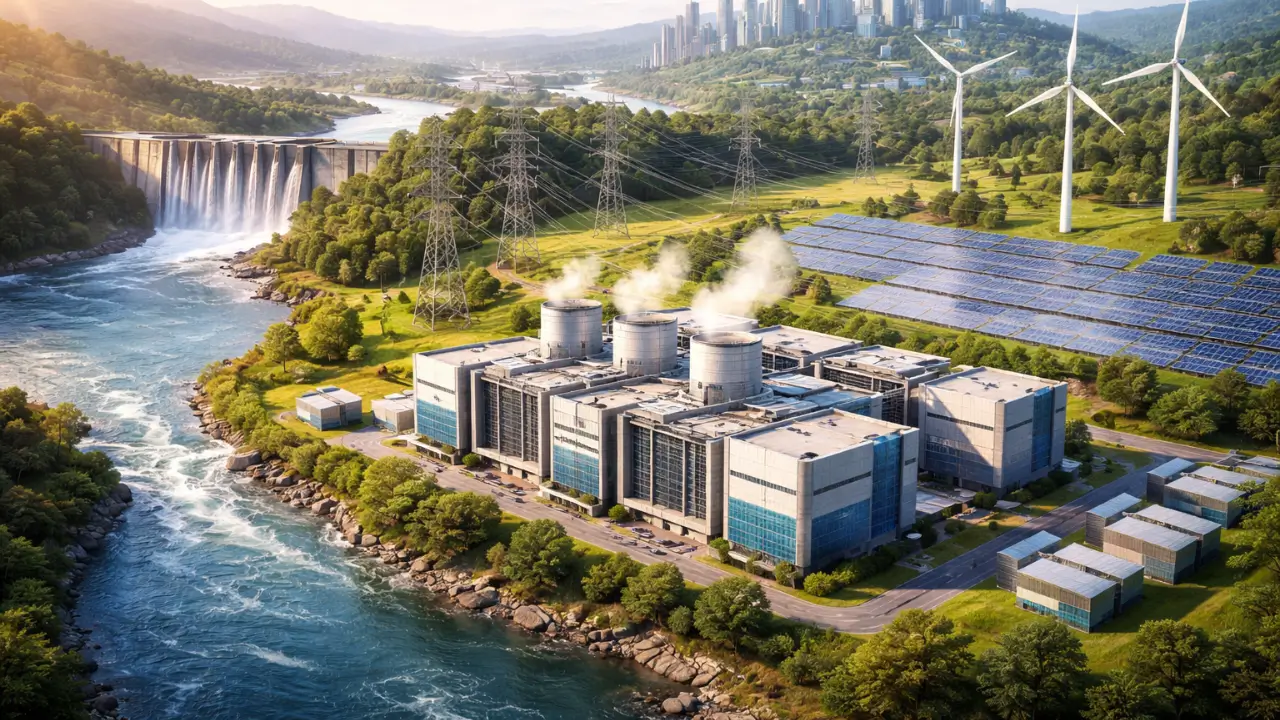
Digital infrastructure expansion increasingly depends on a complex relationship between energy production, thermal management, and water availability. Modern computing environments generate massive heat loads that require efficient cooling architectures capable of maintaining stable operating conditions. Operators historically prioritized reliable electricity supply and network connectivity when selecting infrastructure locations, but resource planning now includes water availability as a fundamental constraint. Large facilities rely on thermal rejection systems that frequently depend on evaporative or liquid-based cooling methods. Those systems require access to consistent water supplies to maintain operational efficiency and equipment reliability. Infrastructure developers therefore treat water as a strategic resource that influences design decisions across site selection, cooling technologies, and long-term operational sustainability.

The rise of artificial intelligence workloads and high-density compute clusters intensifies the interdependence between thermal management and environmental resources. GPU-accelerated computing platforms can generate far greater heat density than traditional enterprise servers, forcing designers to rethink heat rejection systems. Cooling infrastructure must remove large thermal loads without compromising efficiency or environmental performance. Water-based cooling technologies provide strong thermal conductivity and operational stability, which explains their continued presence in large facilities. At the same time, increased water demand has raised concerns among regulators and local communities hosting large computing campuses. Infrastructure planners now evaluate water consumption metrics alongside traditional efficiency indicators such as power usage effectiveness. This emerging resource balance increasingly shapes long-term deployment strategies across the global digital infrastructure sector.
Water Risk Is Now Part of Infrastructure Site Selection
Infrastructure developers increasingly incorporate formal water-availability assessments and regional water-stress indicators into early-stage site planning processes for large computing facilities, reflecting guidance from environmental risk frameworks and sustainability reporting standards that encourage operators to evaluate drought exposure, long-term supply reliability, and watershed conditions before approving large infrastructure investments. Long-term water availability affects the ability of cooling systems to operate consistently during seasonal temperature extremes. Engineers evaluate regional hydrology, drought frequency, groundwater capacity, and municipal supply limits before approving infrastructure investments. Many projects also assess competing industrial demand because agriculture, manufacturing, and population growth can place pressure on local water systems. Environmental permitting authorities in several jurisdictions have introduced stricter reporting requirements for industrial water use. Project developers must therefore demonstrate that new infrastructure will not compromise local water resilience or community supply stability. This broader evaluation framework has expanded infrastructure planning beyond conventional power and connectivity considerations.
Infrastructure planning teams increasingly rely on environmental impact assessments, regional hydrological studies, and water-stress datasets from organizations such as the World Resources Institute to evaluate long-term water availability at proposed development sites before committing to large infrastructure deployments. Climate projections, regional water storage capacity, and seasonal consumption patterns influence investment decisions for large digital facilities. Many operators prioritize locations with reliable freshwater supplies or access to reclaimed water networks that can support industrial cooling systems. Urban planning authorities in some regions have introduced water allocation caps that directly affect infrastructure expansion. Developers often respond by designing facilities capable of using non-potable water sources such as treated wastewater or recycled municipal supply. These adaptations allow projects to proceed in regions where potable water resources face long-term pressure. However, water security considerations continue to shape where large computing clusters can expand sustainably.

Cooling Architectures and Their Hidden Water Footprint
Cooling infrastructure represents one of the most significant operational resource demands within large computing facilities. Thermal management systems remove heat from servers, networking equipment, and power distribution hardware that operate continuously under heavy workloads. Evaporative cooling technologies remain widely used because they deliver strong energy efficiency under suitable climatic conditions. These systems rely on water evaporation to absorb heat and transfer thermal energy away from the facility. Research indicates that a one-megawatt facility using traditional evaporative cooling can consume tens of millions of liters of water annually depending on climate and operating conditions. Such consumption patterns demonstrate how cooling architecture choices influence the environmental footprint of digital infrastructure operations. Engineers must therefore evaluate cooling technologies through both energy and water efficiency metrics.
Designers increasingly compare several cooling architectures when planning high-capacity infrastructure deployments. Liquid cooling loops circulate coolant directly through heat exchangers connected to computing hardware, allowing efficient heat transfer with lower airflow requirements. Immersion cooling places servers directly in dielectric fluids that absorb thermal energy and transport heat to external cooling systems. Hybrid cooling systems combine mechanical chillers with evaporative assistance to balance energy performance and water consumption. Each design approach creates a distinct operational profile that influences infrastructure sustainability metrics. Evaporative cooling can improve energy efficiency by reducing compressor workload, yet it increases water consumption through evaporation losses. Infrastructure planners therefore evaluate both power usage effectiveness and water usage effectiveness to determine the most balanced cooling strategy for a given deployment environment.
Thermal Management at Extreme Compute Densities
High-performance computing clusters generate thermal loads that significantly exceed those produced by conventional enterprise servers. Modern accelerator hardware operates at power levels measured in hundreds or thousands of watts per processor package. Concentrated compute density within server racks amplifies the challenge of removing heat quickly enough to maintain stable operating temperatures. Engineers must therefore deploy thermal management systems capable of handling localized heat concentrations without compromising system reliability. Liquid cooling technologies increasingly support these environments because fluids transport heat more efficiently than air-based cooling systems. Direct-to-chip cooling systems circulate coolant through cold plates attached directly to processors and graphics accelerators. This architecture enables precise thermal control while reducing airflow requirements inside the data hall.
Closed-loop cooling architectures play an important role in reducing dependency on continuous water consumption. These systems circulate coolant through sealed loops where heat exchangers transfer thermal energy to external cooling systems without evaporative loss. Designers often combine closed-loop cooling with dry coolers or air-cooled heat rejection equipment to eliminate freshwater consumption. Facilities that rely on these systems may require greater electrical energy for mechanical cooling equipment. Engineers must therefore balance water conservation with overall energy efficiency when designing large computing installations. Cooling strategies that minimize freshwater demand often shift a greater portion of operational load toward electricity consumption. Therefore infrastructure designers increasingly evaluate both water and energy trade-offs when selecting thermal management solutions for high-density computing environments.
Geographic Constraints: How Water Availability Shapes Infrastructure Location
Geographic resource conditions strongly influence where large digital infrastructure campuses can be deployed. Regions with reliable freshwater resources and supportive environmental permitting frameworks can offer operational advantages for facilities that depend on evaporative or hybrid cooling systems, particularly in jurisdictions where water allocations are sufficient to support large industrial cooling infrastructure. Cooler climates can also reduce cooling demand by allowing free-air cooling or economization during large portions of the year. Northern Europe and certain parts of North America have historically attracted hyperscale development partly because of favorable climatic conditions. These environments allow operators to reduce cooling energy consumption and maintain efficient thermal management. Reliable water availability also supports large cooling towers and heat rejection systems that operate continuously during peak computing workloads. Resource stability therefore provides strategic advantages for regions seeking to attract large infrastructure investments.
Water scarcity has begun to constrain infrastructure expansion in regions facing prolonged drought or limited municipal supply capacity. Several major computing hubs operate in water-stressed environments where local authorities now monitor industrial water consumption closely. Facilities located in arid regions often transition toward air-cooled or hybrid thermal management systems that require minimal water. These designs reduce freshwater dependence but frequently increase electricity consumption during high-temperature periods. Operators sometimes deploy reclaimed wastewater pipelines or on-site treatment plants to maintain cooling capacity without drawing from potable water supplies. Infrastructure planners must weigh these engineering adaptations against operational cost implications and long-term sustainability goals. Meanwhile, water availability continues to influence global patterns of infrastructure deployment.
Waste Heat and Water Recycling: Closing the Resource Loop
Infrastructure designers increasingly explore strategies that integrate water reuse and heat recovery into facility operations. Waste heat generated by computing equipment represents a large reservoir of thermal energy that often dissipates unused into the atmosphere. Engineers have begun connecting computing facilities to district heating systems that distribute recovered heat to nearby residential or industrial buildings, with several European projects, including deployments in Stockholm and Helsinki demonstrating how large data centers can integrate with municipal heating networks to supply recovered thermal energy to urban heating infrastructure. Such systems allow infrastructure operators to convert thermal waste into a productive energy resource. Water recycling technologies also support more efficient cooling operations by treating and recirculating process water. Advanced filtration, reverse osmosis, and ultraviolet treatment systems enable facilities to reuse water multiple times before discharge. These integrated systems reduce freshwater demand while improving overall infrastructure sustainability.
Circular resource strategies also extend to thermal network integration and industrial energy exchange. Some infrastructure campuses transfer excess heat to nearby manufacturing facilities that require stable process heat for industrial production. Municipal authorities in several European cities have integrated computing facilities into urban heating networks that support residential energy demand during winter months. These projects demonstrate how infrastructure systems can participate in broader urban energy ecosystems. Water recycling systems similarly enable facilities to operate with minimal freshwater withdrawals by using treated municipal wastewater. Designers continue to refine closed-loop cooling technologies that maintain thermal efficiency while minimizing environmental impact. Resource recovery approaches increasingly shape next-generation infrastructure design strategies.
The Future of Infrastructure Will Be Designed Around Resource Balance
Digital infrastructure development increasingly reflects the interaction between energy supply, cooling technology, and water resource management. Large computing environments require reliable thermal control systems that can dissipate substantial heat loads produced by modern processors and accelerators. Engineers must design these systems while accounting for environmental constraints that influence long-term operational sustainability. Water availability now stands alongside electricity supply as a key determinant of infrastructure deployment strategy. Meanwhile, regulators and local communities continue to demand greater transparency regarding industrial water consumption. Operators must therefore balance efficiency, environmental stewardship, and operational resilience when planning large infrastructure projects. This evolving framework reshapes how infrastructure ecosystems expand across global markets.
The next generation of infrastructure design will depend on integrated resource planning that aligns cooling architecture with regional environmental conditions. High-density computing will continue to push thermal management systems toward more advanced liquid cooling and closed-loop technologies. Resource recovery systems that reuse water and capture waste heat will likely become standard components of large computing campuses. Infrastructure planners increasingly collaborate with urban utilities and environmental regulators to ensure responsible resource usage. However, sustainable infrastructure expansion requires continued innovation across cooling engineering, water management, and energy integration. Long-term success will depend on maintaining a careful balance between computational growth and environmental resource stewardship.











