Skip to content
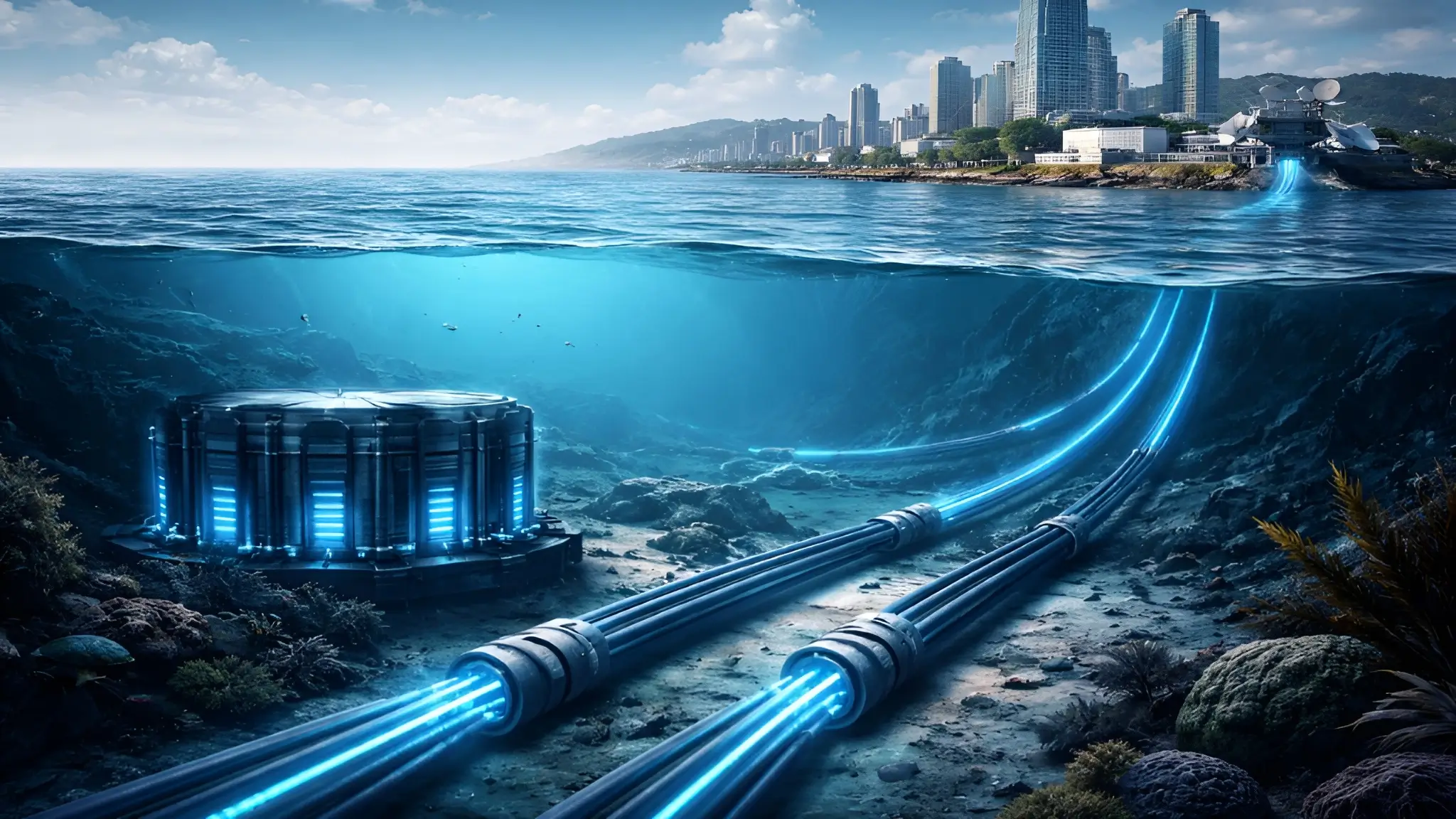
Ocean infrastructure is entering a new phase where computing systems no longer remain confined to terrestrial facilities. Coastal waters increasingly host experimental and conceptual infrastructure that places computing resources closer to population centers and renewable energy sources. Engineers exploring underwater computing environments quickly encounter a fundamental requirement: reliable connectivity to the global internet backbone. Subsea fiber networks provide that foundation, forming a vast optical grid stretched across the ocean floor. These cables silently move data between continents while supporting the digital services that modern societies rely upon every day. Any future architecture that situates compute resources beneath the ocean surface must ultimately integrate with this invisible yet indispensable infrastructure.

Underwater computing concepts depend on this infrastructure because isolated compute nodes cannot operate without global connectivity. Ocean-based facilities must exchange application data, synchronize distributed workloads, and connect to cloud services that exist across multiple regions. Subsea fiber networks provide the only medium capable of supporting these requirements across continental distances with minimal delay. Wireless systems lack the throughput and reliability required for large-scale digital traffic, particularly for compute workloads that move vast volumes of information between data centers. Engineers designing underwater computing systems therefore treat submarine cables not as optional infrastructure but as the central nervous system of the digital ocean. Connectivity determines whether offshore compute remains experimental or evolves into a practical extension of global infrastructure.
The idea of underwater computing already moved from theory into experimental deployment during the past decade. Research initiatives explored the feasibility of placing sealed server modules on the seabed where natural ocean cooling stabilizes operating conditions. Engineers connected these underwater modules to shore networks using fiber links that integrated with terrestrial infrastructure. Experiments demonstrated that underwater facilities could operate reliably while maintaining network connectivity to the broader internet ecosystem. These experiments did not establish a permanent deployment model, yet they revealed how ocean compute systems could interact with global networks through subsea connectivity. Such findings reinforced the importance of submarine fiber as the structural backbone of any future ocean-based digital infrastructure.
The Invisible Infrastructure Beneath the Internet
Most people imagine the internet as a cloud of wireless signals traveling through satellites and radio networks. The reality looks very different beneath the ocean surface, where thousands of kilometers of optical cables carry digital traffic between continents. These submarine systems form the primary transport layer for international communications and global data exchange. Optical signals transmitted through these cables travel between landing stations located along coastlines around the world. From these stations, terrestrial networks distribute traffic deeper into national and regional infrastructure. The result is a globally interconnected optical grid that enables real-time communication across continents and oceans.

The physical construction of submarine cables reflects decades of engineering refinement. Optical fibers sit at the core of the cable where they transmit data using light signals. Surrounding layers of protective materials shield the fibers from pressure, corrosion, and mechanical stress. Additional steel armoring protects cables in shallow waters where human activity such as fishing or anchoring can damage infrastructure. Engineers design different cable structures for deep ocean environments and coastal seabeds where risks vary significantly. These protective layers allow cables to remain operational on the seafloor for long operational lifecycles.
Optical transmission technologies transformed submarine connectivity over the past several decades. Engineers introduced wavelength division multiplexing to allow multiple signals to travel through a single optical fiber simultaneously. Later innovations introduced dense wavelength multiplexing, which expanded the number of optical channels and dramatically increased transmission capacity. Optical amplifiers positioned along the cable regenerate signals to maintain performance across vast ocean distances. These technologies allow modern cables to transport enormous volumes of digital traffic through relatively compact infrastructure. Continuous improvements in optical engineering continue to push the limits of subsea network capacity.
Submarine cables remain largely invisible despite their importance to everyday digital life. The routes lie across ocean floors where they remain out of sight from most human activity. Specialized cable ships deploy these systems by carefully laying optical cables along mapped seabed routes. In shallow water zones engineers often bury the cable beneath sediment to protect it from damage. Deep ocean sections generally rest directly on the seabed where environmental risks remain relatively low. Maintenance vessels periodically inspect cable routes to ensure that the infrastructure remains secure and operational.
From Transoceanic Links to Digital Infrastructure Platforms
Submarine cables originally served a single purpose: transporting communication signals between distant locations. Early transoceanic systems focused primarily on telegraph and voice transmission before evolving into modern optical internet infrastructure. Today the function of submarine networks continues to expand as digital ecosystems demand greater connectivity capacity and resilience. Optical pathways across oceans increasingly support cloud infrastructure, international enterprise networks, and large-scale digital services. These cables therefore operate not merely as communication links but as foundational infrastructure for the global digital economy. Their presence shapes the geography of connectivity between regions and continents.
Coastal landing locations often evolve into strategic digital infrastructure hubs. Cable landing stations connect subsea fiber systems with terrestrial networks that distribute traffic into regional infrastructure and, in some locations, into metropolitan areas where data center clusters have developed near major connectivity gateways. Telecommunications operators, cloud providers, and internet exchange platforms frequently establish facilities near these landing points to access high-capacity international connectivity. The concentration of infrastructure around these coastal gateways reflects the central role of submarine networks in digital architecture. These environments already resemble interconnected ecosystems where multiple layers of infrastructure converge. Ocean-based compute facilities could naturally integrate into these environments as additional nodes within the same network landscape.
Subsea infrastructure also benefits from the geographic distribution of landing points along different coastlines. Each landing location connects to terrestrial fiber networks that extend across regions and countries. The distributed nature of these landing points creates multiple entry routes into global internet infrastructure. This topology strengthens connectivity resilience because data can travel across several independent routes between regions. Ocean-based computing nodes connected through these networks could therefore participate in highly resilient global connectivity architectures. Such resilience would prove essential for large-scale distributed computing systems deployed across multiple geographic environments.
The transformation of submarine connectivity into a broader infrastructure platform reflects the growing complexity of digital ecosystems. Modern infrastructure planners now treat connectivity as a foundational layer that supports many types of digital services. Ocean compute concepts fit naturally into this emerging architecture because they extend computing capacity closer to network pathways. As subsea infrastructure evolves, the boundary between communication networks and computing environments continues to blur. Fiber pathways that once carried only data signals may eventually support entire ecosystems of distributed digital infrastructure. The ocean floor could therefore become an active layer of global computing architecture connected by vast networks of optical fiber.
Connecting Underwater Data Centers to the Global Internet
Underwater data centers require a robust connection to terrestrial networks in order to participate in global digital ecosystems. Engineers achieve this integration by linking subsea facilities directly to submarine fiber systems that terminate at nearby coastal landing stations. Optical transmission pathways then carry data between underwater compute modules and global internet backbones without interruption. These connections enable underwater servers to exchange workloads with conventional data centers located on land. Applications running within subsea facilities therefore interact with users and services through the same global network infrastructure used by terrestrial cloud platforms. Such architectural continuity ensures that underwater compute nodes remain fully interoperable with the broader internet ecosystem.
The physical link between underwater compute infrastructure and submarine cables requires carefully engineered subsea branching units. These components allow new fiber routes to split from the main cable system and connect to additional infrastructure nodes located along the seabed. Engineers design branching units to operate reliably under intense ocean pressure and extreme environmental conditions. Optical pathways within these devices route signals between multiple fiber directions without degrading transmission performance. Subsea compute installations can therefore attach to existing cable systems while maintaining high-quality connectivity. This approach enables underwater facilities to integrate with established submarine network corridors without requiring entirely new transoceanic cable deployments.
Landing stations serve as the terrestrial interface for subsea connectivity systems. Optical signals arriving from the ocean floor reach these facilities where they pass through power feed equipment, monitoring systems, and optical transmission infrastructure. Network operators then route traffic into terrestrial fiber networks that extend across regional and international digital infrastructure. Underwater computing systems connected to these stations would therefore gain access to the same global connectivity routes used by conventional internet infrastructure. Traffic originating from subsea servers could move through internet exchange points, metropolitan fiber networks, and cloud interconnection hubs. Such integration allows underwater compute platforms to operate seamlessly within existing internet routing architectures.
Designing Landing Stations for Ocean Compute
Cable landing stations form the bridge between subsea communication systems and terrestrial digital networks. These facilities sit near coastlines where submarine cables reach land after traveling across the ocean floor. Engineers construct landing stations with specialized infrastructure that manages optical transmission equipment and power feed systems for subsea cables. Environmental protection and physical security also shape the design of these facilities because they host critical international communications infrastructure. Signals arriving from submarine cables enter the station where network equipment prepares them for distribution into terrestrial fiber networks. This transition point represents one of the most critical interfaces within the global internet architecture.
Ocean compute infrastructure would require landing stations capable of supporting new connectivity requirements. Traditional landing stations primarily manage traffic passing between submarine systems and terrestrial networks. Future facilities may also support direct connectivity to offshore computing clusters positioned near coastal waters. Engineers could design landing stations with additional switching capacity, optical routing systems, and network management platforms to support these new workloads. Such capabilities would allow subsea compute nodes to exchange data with terrestrial infrastructure through highly efficient network pathways. The evolution of landing station design therefore plays a key role in enabling the integration of ocean-based computing systems.
Landing station infrastructure also supports power feed equipment required by submarine cable systems. Electrical power travels through conductors within the cable to supply optical repeaters located along the seabed. These repeaters regenerate optical signals so that communication remains stable across vast ocean distances. Engineers carefully manage power systems within landing stations to maintain consistent electrical supply to the cable network. Monitoring platforms track voltage conditions and operational status along the entire cable route. Such capabilities ensure reliable operation of the submarine connectivity systems that support underwater compute infrastructure.
Network operators sometimes position landing stations near coastal metropolitan regions where digital infrastructure already concentrates, although many facilities are also intentionally located in less populated coastal areas for security, environmental, or operational considerations. Internet exchange points, cloud connectivity hubs, and major data center campuses frequently emerge near these facilities. This geographic clustering allows digital traffic arriving from submarine cables to distribute quickly into regional networks. Underwater compute systems connected near these hubs would therefore benefit from proximity to established digital ecosystems. Applications hosted in subsea environments could exchange traffic with global services through minimal network distance. Such proximity strengthens the operational viability of offshore computing infrastructure.
Latency Advantages of Coastal Compute Deployments
The geographic placement of computing infrastructure influences how quickly digital services respond to users. Data traveling across long network distances requires additional routing steps before reaching its destination. These additional steps increase the time required for information to move between users and computing systems. Engineers often refer to this delay as network latency. Infrastructure planners therefore seek locations that minimize distance between compute resources and large population centers. Coastal environments provide unique opportunities for achieving this goal because many major cities developed along coastlines.
Subsea computing deployments positioned near coastal regions may shorten network pathways between users and infrastructure when connectivity routes align efficiently with nearby metropolitan network systems.Optical fiber routes from nearby landing stations could connect underwater servers directly to metropolitan networks. Digital services delivered from these facilities would therefore reach nearby users through shorter network paths. Reduced network distance often improves responsiveness for applications that rely on rapid data exchange. Real-time collaboration platforms, cloud services, and streaming systems all benefit from low-latency connectivity environments. Coastal subsea compute deployments therefore align closely with performance requirements for modern digital applications.
Population distribution across the world reinforces the potential advantages of coastal compute deployments. Many major metropolitan regions developed near coastlines due to historical trade routes and maritime transportation networks. These cities now host dense concentrations of digital activity ranging from financial markets to media platforms and cloud infrastructure. Underwater computing systems located just offshore could position processing resources near these population hubs. Network traffic could travel quickly between metropolitan users and subsea compute environments through local fiber infrastructure. This architectural arrangement allows compute capacity to expand without competing for scarce land resources in urban areas.
Ocean environments also offer unique environmental conditions that complement coastal computing strategies. The thermal stability of deep water may provide environmental conditions that support engineered cooling approaches for computing hardware deployed within sealed underwater modules. Engineers exploring ocean compute architectures consider these environmental characteristics when evaluating deployment locations. Combining natural cooling with proximity to coastal connectivity infrastructure creates an attractive operational model. Underwater compute systems could benefit from both environmental efficiency and network performance advantages. These factors contribute to growing interest in subsea computing concepts among infrastructure researchers and technology developers.
Network Redundancy in Subsea Infrastructure
Submarine cable systems rely on redundancy to maintain reliable connectivity across global networks. Engineers design cable routes with multiple pathways that allow traffic to move across alternative routes when disruptions occur along a specific segment. Optical switching systems and routing protocols automatically redirect traffic across these alternate routes without interrupting service. Such resilience proves essential because submarine infrastructure spans vast geographic areas that experience environmental and operational risks. Redundant pathways therefore ensure that international connectivity remains stable even when individual cables require repair or maintenance. Underwater computing infrastructure would rely heavily on these resilient network architectures to maintain continuous operation.
Cable landing stations play a crucial role in enabling redundancy across submarine network systems. Each landing point connects submarine cables with terrestrial fiber networks that distribute traffic across regional infrastructure. Multiple landing stations along a coastline create several entry points into the global internet backbone. Network operators use these distributed landing sites to design resilient connectivity architectures across continents. If one landing station experiences an operational disruption, traffic can route through alternative landing points connected to other submarine cables. This distributed topology strengthens the stability of global connectivity systems that support modern digital services.
Underwater compute deployments would benefit significantly from integration with redundant submarine cable routes. Facilities connected to more than one cable pathway could maintain connectivity even if a single fiber link becomes unavailable. Engineers designing subsea infrastructure would therefore prioritize locations where multiple cable systems converge near coastal landing points. These regions may provide stronger connectivity resilience compared with isolated cable landing areas because multiple independent fiber routes can improve network path diversity.Network diversity reduces the operational risk associated with offshore computing environments. The architecture of subsea connectivity therefore becomes a key factor in determining where underwater computing infrastructure can operate reliably.
Optical routing technologies further enhance redundancy within submarine network systems. Modern network management platforms constantly monitor the operational status of fiber routes and automatically adjust traffic flows when network conditions change. Dynamic routing ensures that data packets move through the most efficient and available pathways across the network. This adaptive behavior allows submarine cable infrastructure to respond quickly to disruptions caused by natural events or technical faults. Underwater computing platforms integrated with these systems would inherit the same adaptive connectivity advantages. Such capabilities strengthen the feasibility of large-scale ocean-based digital infrastructure.
High-Capacity Fiber Systems for AI Workloads
Artificial intelligence workloads depend heavily on large-scale data movement between computing nodes. Machine learning training systems exchange massive volumes of information during model development and inference processes. These operations require high-throughput network connections capable of transporting data efficiently between distributed compute environments. Optical fiber networks provide the performance characteristics necessary for supporting such demanding workloads. Submarine cables therefore play an important role in enabling international data movement for advanced computing applications. The growth of AI-driven infrastructure places increasing importance on high-capacity optical connectivity systems.
Modern submarine fiber systems incorporate advanced optical technologies that support extremely high transmission capacity. Dense wavelength multiplexing enables multiple optical signals to travel simultaneously through a single fiber strand. Each wavelength carries independent data streams that combine to create high-capacity communication channels. Optical amplifiers placed along the cable route maintain signal strength across long distances beneath the ocean. Engineers continuously refine these technologies to improve transmission efficiency and network scalability. These innovations ensure that submarine cable systems remain capable of supporting evolving digital workloads.
Underwater data centers connected through high-capacity fiber systems could participate directly in distributed AI computing architectures. Training workloads often distribute tasks across multiple computing nodes located in different geographic regions. Subsea compute nodes integrated into submarine cable networks could contribute processing resources to these distributed environments. Optical fiber connectivity ensures that large datasets move efficiently between these nodes during training operations. This connectivity enables underwater computing infrastructure to operate as part of the global AI research and development ecosystem. Fiber-based connectivity therefore becomes essential for enabling large-scale distributed computing environments across ocean infrastructure.
AI workloads also require reliable network performance in addition to raw bandwidth capacity. Distributed training processes depend on predictable data transmission behavior across compute nodes. Optical fiber networks provide stable and low-interference communication pathways that support consistent performance across long distances. Submarine cable infrastructure therefore offers a suitable environment for transporting data associated with advanced computing workloads. Integrating underwater computing systems into these fiber networks would extend the global computing fabric into ocean environments. The relationship between optical connectivity and advanced computing will continue to strengthen as AI infrastructure expands worldwide.
Integrating Offshore Compute with Global Cloud Networks
Cloud computing infrastructure forms the operational backbone of many modern digital services. Global cloud providers operate large networks of interconnected data centers distributed across multiple geographic regions. These facilities communicate with one another through high-capacity fiber networks that synchronize workloads and store replicated data. Ocean-based computing infrastructure would need to integrate into these global cloud connectivity frameworks in order to operate effectively. Submarine fiber networks provide the primary pathway for linking offshore computing resources with cloud infrastructure located on land. Such integration would allow underwater compute nodes to function as additional regions within distributed cloud architectures.
Connectivity between subsea compute systems and cloud networks would occur through terrestrial fiber infrastructure connected to cable landing stations. Traffic arriving from underwater facilities would enter metropolitan fiber networks that link directly with data center campuses and internet exchange points. These interconnection hubs allow multiple network providers and cloud platforms to exchange data efficiently. Underwater computing infrastructure integrated into these environments could interact seamlessly with global cloud ecosystems. Workloads running within subsea environments could synchronize with terrestrial compute clusters without significant architectural changes. This compatibility ensures that ocean-based infrastructure complements rather than disrupts existing cloud computing frameworks.
Edge computing architectures further illustrate how offshore compute resources could integrate with cloud ecosystems. Edge computing places processing resources closer to users in order to improve application responsiveness and reduce network congestion. Underwater compute facilities located near coastal population centers could function as offshore edge nodes within broader distributed architectures. Applications could process certain workloads locally while synchronizing with larger cloud environments located deeper within the network. Optical fiber connectivity between subsea facilities and terrestrial networks enables this distributed processing model. Such architectures reflect the growing shift toward geographically distributed computing infrastructure.
Global cloud networks already depend on submarine fiber systems to connect regional data center clusters across continents. Integrating underwater compute infrastructure into this connectivity framework would extend the geographic reach of distributed cloud architectures. Ocean-based facilities could provide additional computing capacity near coastal regions where digital demand continues to grow. Optical fiber connectivity ensures that these facilities remain fully integrated with global cloud networks. This architecture would create a seamless computing environment that spans both terrestrial and ocean-based infrastructure. The cloud ecosystem could therefore expand beyond traditional data center environments into new physical domains.
The Engineering Challenges of Subsea Network Expansion
Deploying submarine fiber infrastructure requires extensive planning and technical expertise. Engineers conduct detailed seabed surveys before laying cables in order to identify stable routes across ocean terrain. These surveys evaluate seabed composition, geological features, and environmental conditions that could affect cable installation. Specialized mapping technologies help planners determine safe pathways for subsea cable deployment. Cable routes must avoid areas prone to geological instability or intense human maritime activity. This careful planning ensures that submarine cable systems operate reliably for long operational lifecycles.
Installing submarine cables involves highly specialized vessels equipped with cable storage tanks and deployment equipment. Cable ships carefully release fiber cables along predetermined routes while maintaining precise control over tension and placement. Engineers monitor deployment conditions continuously to ensure that cables settle safely along the seabed. In shallow coastal waters, installation teams often bury cables beneath sediment to protect them from damage caused by fishing gear or anchors. Deep ocean sections usually rest directly on the seabed where environmental risks remain relatively low. These procedures require significant coordination between marine engineers, survey teams, and network planners.
Connecting underwater compute infrastructure to existing cable systems introduces additional engineering considerations. Branching units must integrate subsea facilities into existing fiber routes without disrupting ongoing network traffic. Engineers must design these connections to maintain optical signal integrity across the entire cable system. Environmental sealing becomes essential because subsea equipment operates under extreme pressure conditions. Network planners also evaluate potential interference with marine ecosystems and shipping routes during infrastructure expansion. These technical and environmental factors shape how submarine networks evolve to support new offshore computing deployments.
Cable protection remains a critical concern during subsea network expansion. Human activities such as fishing, anchoring, and offshore construction represent common causes of cable damage in coastal regions. Engineers mitigate these risks through protective burial techniques and route planning that avoids high-traffic maritime zones. Monitoring systems installed within cable infrastructure also help detect anomalies that could indicate physical disturbances along the cable route. Rapid detection allows operators to respond quickly and minimize potential disruptions. These protective strategies help maintain the operational stability of submarine connectivity infrastructure.
Protecting Submarine Cables in a Strategic Infrastructure Era
Submarine fiber cables now represent one of the most critical components of global digital infrastructure. Governments, technology companies, and telecommunications operators increasingly recognize the strategic importance of maintaining reliable connectivity across ocean networks. Subsea cables carry financial transactions, international communications, cloud workloads, and digital services that underpin modern economies. Infrastructure planners therefore treat submarine cable security as a matter of national and economic resilience. Monitoring and protection mechanisms have become central to the long-term sustainability of these networks. Ocean-based computing infrastructure connected to submarine fiber systems would inherit the same strategic importance.
Physical protection remains the first line of defense for submarine cable infrastructure. Engineers design cable routes carefully to avoid areas of intense maritime activity where damage risks increase significantly. Cable burial techniques protect fiber systems in shallow waters where fishing equipment and anchors often disturb seabed infrastructure. Specialized materials and armoring layers shield cables from mechanical stress and environmental exposure. These protective measures reduce the likelihood of accidental disruptions along critical network pathways. Maintaining physical integrity across cable systems ensures stable connectivity for global digital networks.
Network monitoring technologies also play a crucial role in protecting submarine connectivity systems. Operators deploy advanced monitoring platforms that continuously track signal performance across fiber routes. Anomalies in optical transmission can reveal potential disruptions or physical disturbances along the cable pathway. Real-time monitoring enables network operators to respond quickly when abnormal conditions appear within the system. Maintenance vessels and repair teams can then investigate and restore affected sections of the cable infrastructure. These monitoring capabilities strengthen the operational resilience of global submarine network systems.
International cooperation also supports the protection of submarine cable infrastructure. Cable systems frequently connect multiple countries across long transoceanic routes. Governments collaborate with infrastructure operators to develop policies that protect these critical systems from accidental damage or malicious interference. Maritime regulations often restrict certain activities near cable routes in order to minimize operational risks. Such cooperative frameworks reflect the shared importance of submarine infrastructure for global digital connectivity. As ocean compute systems emerge, similar cooperation may extend to protecting offshore digital infrastructure as well.
The strategic significance of submarine cables continues to grow alongside the expansion of digital infrastructure worldwide. Cloud computing, artificial intelligence, and distributed applications all depend on reliable international connectivity. Ocean-based computing environments connected to submarine networks would become part of this global infrastructure ecosystem. Protecting subsea fiber networks therefore supports not only communication systems but also the future development of ocean-based digital architecture. Security, monitoring, and international coordination will remain essential elements of submarine infrastructure management. These safeguards ensure that the ocean floor continues to support the digital connectivity systems that modern societies depend upon.
Building Regional Subsea Connectivity Hubs
Certain coastal regions already function as major connectivity hubs within the global internet infrastructure. These locations host multiple submarine cable landing stations where international fiber routes converge. Terrestrial fiber networks extend from these landing points into metropolitan areas and digital infrastructure campuses. Internet exchange points, cloud facilities, and telecommunications hubs often cluster near these connectivity gateways. The resulting environment forms a dense ecosystem of interconnected digital infrastructure. Such regions naturally attract new technology deployments that benefit from proximity to global network connectivity.
Subsea computing infrastructure could integrate directly into these regional connectivity hubs. Offshore facilities located near major landing points could connect quickly to international fiber routes. Data processed within underwater compute nodes could travel efficiently into regional digital ecosystems through nearby terrestrial networks. This proximity reduces network distance between subsea infrastructure and existing data center clusters. Infrastructure planners may therefore identify coastal connectivity hubs as ideal deployment zones for ocean-based computing systems. Such alignment between subsea infrastructure and terrestrial networks strengthens the viability of offshore digital infrastructure.
Regional connectivity hubs also benefit from the presence of multiple independent submarine cable systems. These systems provide diverse network routes between continents and regions. Network diversity increases resilience by allowing traffic to travel through alternative pathways if disruptions occur. Underwater compute infrastructure integrated into these environments would benefit from the same redundant connectivity architecture. Applications operating within subsea environments could maintain stable connectivity across multiple international routes. This resilience improves the reliability of distributed computing architectures deployed near coastal regions.
Infrastructure clustering around cable landing regions continues to evolve as digital demand increases. Technology companies often establish data center campuses near these hubs to access high-capacity connectivity infrastructure. Telecommunications providers deploy network exchange facilities that allow multiple operators to exchange traffic efficiently. Cloud platforms also establish connectivity nodes in these locations to strengthen global infrastructure integration. Ocean-based computing facilities positioned offshore could become an additional layer within these infrastructure ecosystems. The convergence of subsea cables, terrestrial networks, and compute infrastructure could therefore shape the next generation of digital connectivity hubs.
Maintenance and Lifecycle Management of Subsea Networks
Submarine cable systems operate for long lifecycles that often extend across several decades. Engineers design these networks to remain reliable under extreme ocean conditions for extended operational periods. Continuous monitoring ensures that network performance remains stable throughout the cable’s lifespan. Optical transmission systems provide real-time data that allows operators to detect potential performance anomalies. Maintenance teams use this information to plan inspection and repair operations when necessary. Long-term reliability therefore depends on a combination of monitoring technology and proactive infrastructure management.
Repair operations for submarine cables require specialized vessels equipped with cable retrieval equipment. When monitoring systems detect disruptions, maintenance ships travel to the affected section of the cable route. Engineers use remotely operated equipment to retrieve damaged cable segments from the seabed. Technicians then repair or replace the affected section before carefully redeploying the cable along its original route. These operations require precise coordination because ocean conditions and seabed characteristics vary significantly across different regions. The ability to repair subsea cables efficiently ensures that global connectivity systems remain resilient over time.
Lifecycle management also involves upgrading optical transmission equipment located at cable landing stations. Advances in optical technology allow network operators to increase capacity through improved signal processing systems. Engineers upgrade terminal equipment to enable more efficient use of existing fiber infrastructure. These upgrades extend the useful lifespan of submarine cable systems without requiring new cable installations. Continuous technological improvement therefore supports long-term infrastructure sustainability. Subsea networks evolve gradually through equipment upgrades that enhance transmission performance over time.
Ocean-based computing infrastructure connected to submarine networks would rely on these established maintenance frameworks. Monitoring platforms could track the operational status of both fiber connectivity and underwater compute modules simultaneously. Maintenance vessels servicing cable infrastructure might also support inspection of nearby subsea compute facilities. Integrating monitoring systems across these infrastructures could improve operational efficiency across offshore environments. Coordinated maintenance strategies would therefore become an important element of ocean-based digital infrastructure management. Effective lifecycle management ensures that subsea infrastructure remains reliable for long-term computing deployments.
Long-term infrastructure planning also considers the eventual replacement of aging cable systems. Telecommunications operators periodically deploy new submarine cables that incorporate improved optical technologies and expanded connectivity routes. These deployments ensure that global infrastructure continues evolving alongside digital demand. Underwater computing systems connected to these networks would benefit from improved connectivity performance over time. Infrastructure renewal cycles therefore support the continued expansion of global digital ecosystems. The lifecycle management of submarine networks plays a vital role in sustaining the infrastructure foundation that enables ocean-based computing environments.
Future Network Architectures for Ocean-Based Infrastructure
Future ocean-based computing infrastructure will likely depend on distributed optical networking architectures that extend across both land and sea environments. Subsea fiber networks already form the backbone of global digital connectivity, yet emerging infrastructure concepts may integrate computing resources directly within these network corridors. Engineers exploring ocean compute architectures envision clusters of underwater servers connected through branching fiber routes. These clusters could exchange data directly across subsea networks without routing every workload through terrestrial facilities. Such architectures would create distributed computing fabrics spanning ocean environments and coastal infrastructure. Optical fiber connectivity provides the foundation for enabling these new network topologies.
Advances in optical networking technologies may also support more flexible subsea connectivity architectures. Software-defined optical networking platforms allow operators to dynamically allocate network capacity across fiber routes. These capabilities enable traffic to adapt quickly to changing workload requirements across distributed infrastructure environments. Underwater compute clusters integrated into these systems could receive connectivity resources dynamically based on operational demand. Such flexibility strengthens the efficiency of large-scale distributed computing architectures. Optical network programmability therefore represents a key capability for future ocean-based digital infrastructure systems.
Distributed infrastructure architectures also emphasize geographic diversity across computing resources. Cloud platforms already distribute workloads across multiple regions in order to improve resilience and performance. Ocean-based computing systems could extend this geographic diversity by adding new compute nodes located beneath coastal waters. Applications could distribute workloads across terrestrial data centers and subsea infrastructure depending on network conditions and resource availability. This hybrid architecture would create a highly distributed computing environment connected through global fiber networks. Optical connectivity therefore remains the central mechanism that binds these distributed infrastructure layers together.
The long-term architecture of ocean compute infrastructure will depend heavily on how submarine networks continue evolving. Improvements in optical transmission technology, network programmability, and infrastructure integration will shape future deployment strategies. Engineers must design these systems carefully to ensure reliability, environmental compatibility, and operational efficiency. The success of ocean-based digital ecosystems will ultimately depend on how effectively they integrate with the global fiber network that already spans the ocean floor. Subsea fiber connectivity therefore forms the structural foundation upon which future ocean infrastructure will develop. Distributed optical networks beneath the sea may eventually become a permanent extension of the global computing landscape.
Fiber Networks as the Foundation of Ocean Compute
Ocean-based computing concepts continue to attract attention as infrastructure planners explore new ways to expand digital capacity. The ocean offers environmental conditions and geographic positioning that could complement traditional terrestrial data center deployments. Yet these computing systems cannot function independently from the global connectivity infrastructure that enables digital communication. Submarine fiber networks provide the only practical medium capable of linking underwater computing environments with global internet systems. These optical networks already connect continents, cloud platforms, and digital infrastructure across vast ocean distances. Ocean compute architectures will therefore depend on seamless integration with this existing connectivity framework.
Subsea connectivity infrastructure supports more than simple communication between distant locations. Cable landing stations, optical transmission systems, and distributed fiber routes form an intricate network architecture that supports the global digital ecosystem. Underwater computing systems connected to these networks could function as additional nodes within this infrastructure environment. Applications running in subsea facilities could interact with cloud platforms, metropolitan networks, and global services through the same connectivity pathways used by terrestrial data centers. This architectural compatibility ensures that ocean compute deployments integrate smoothly with existing digital infrastructure. Submarine fiber networks therefore enable the expansion of computing environments into ocean domains.
Engineering challenges remain as researchers and infrastructure developers explore the feasibility of large-scale subsea computing deployments. Network connectivity must remain reliable despite environmental pressures, seabed conditions, and long operational distances. Infrastructure planners must also design effective monitoring and protection systems that safeguard submarine cables and connected compute infrastructure. Collaboration between telecommunications operators, marine engineers, and digital infrastructure developers will remain essential for overcoming these challenges. Careful planning ensures that connectivity systems remain resilient as digital infrastructure expands offshore. Subsea fiber networks will therefore continue evolving alongside the computing environments they support.
Regional connectivity hubs along coastlines may eventually serve as gateways into ocean-based digital ecosystems. These locations already host cable landing stations, internet exchange points, and major data center clusters. Offshore compute deployments positioned near these hubs could integrate directly into established digital infrastructure corridors. The convergence of terrestrial networks, subsea cables, and offshore compute infrastructure may shape the next phase of digital connectivity architecture. Fiber connectivity ensures that data flows efficiently across these interconnected environments. Ocean infrastructure could therefore become a natural extension of global digital ecosystems rather than an isolated experimental concept.
Submarine fiber networks ultimately represent the structural backbone of any future ocean computing environment. These optical systems carry digital traffic across the ocean floor while connecting continents, cloud platforms, and digital infrastructure worldwide. Underwater data centers and offshore compute clusters will rely on these networks to exchange data with the broader internet ecosystem. As digital demand continues expanding, the integration of subsea connectivity with computing infrastructure may reshape how digital systems interact with the physical environment. Ocean-based infrastructure may one day operate as a seamless extension of global computing architecture. Fiber networks beneath the sea will remain the invisible yet indispensable foundation supporting that transformation.