
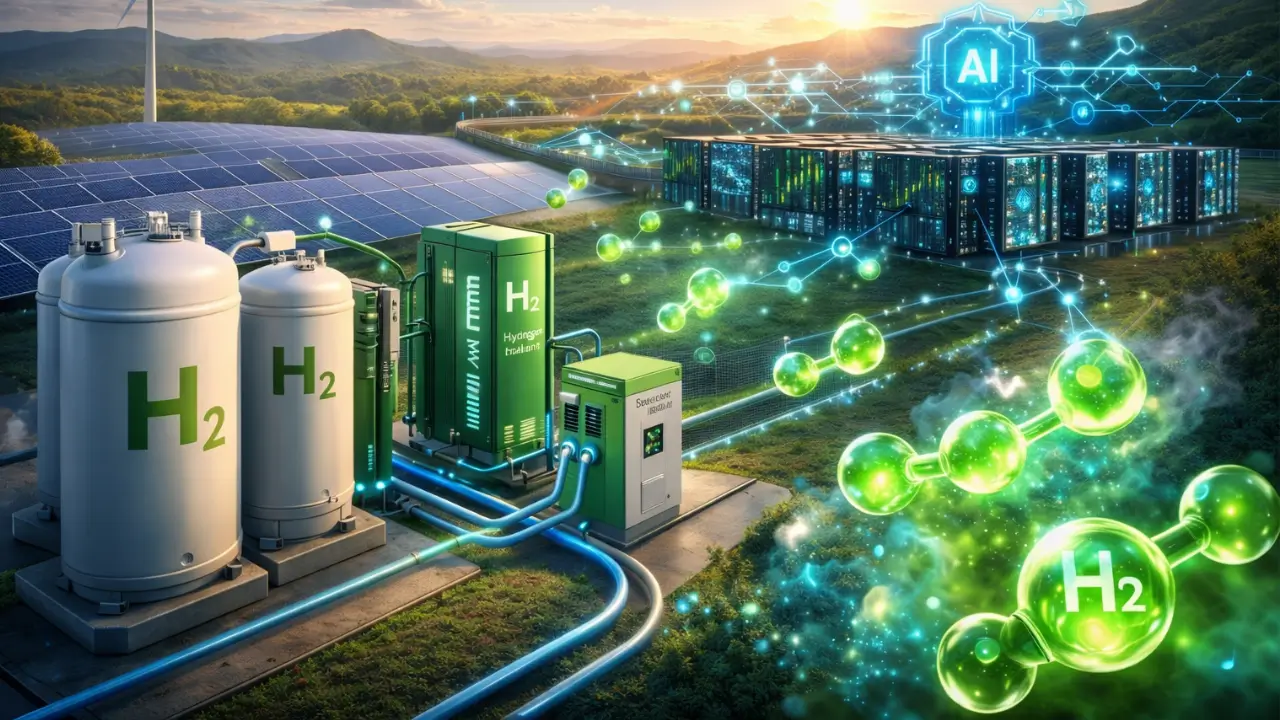
Artificial intelligence infrastructure now scales at a pace that reshapes the global electricity landscape and forces operators to reconsider how power systems support compute demand. Hyperscale training clusters require sustained electricity loads that often exceed the capacity of traditional data center energy strategies built around grid stability assumptions. Large language model training workloads can generate variable power demand at the cluster level during intensive compute phases, although hyperscale data center operators often smooth overall facility consumption through workload scheduling and power management systems. Operators therefore encounter difficulty aligning these compute spikes with renewable energy supply that fluctuates according to weather patterns. Renewable power remains central to decarbonization goals for technology firms, yet its intermittent output complicates operational planning for AI clusters that demand uninterrupted power delivery. Data center architects now treat energy volatility as a structural constraint rather than a temporary grid condition.

Rapid deployment of AI infrastructure amplifies the mismatch between renewable generation cycles and the constant availability requirements of digital compute environments. Training clusters often operate continuously for days or weeks, which creates electricity demand profiles that exceed the variability tolerance of most renewable-heavy grids. Solar generation peaks during midday hours, while wind output depends on meteorological patterns that rarely align with compute scheduling. Energy operators must therefore secure power systems that absorb fluctuations without compromising workload reliability. Grid operators increasingly highlight the importance of flexible energy layers capable of storing electricity when generation exceeds demand. These dynamics push AI infrastructure planners to investigate alternative storage mechanisms that operate at longer durations than lithium-ion batteries.
The volatility challenge extends beyond technical grid management and reaches the economic planning models that support hyperscale infrastructure investments. Data center developers must secure long-term energy procurement contracts that guarantee both price stability and environmental compliance. Renewable energy procurement strategies succeed when supply aligns with predictable demand, yet AI compute workloads introduce operational variability that complicates those agreements. Power purchase agreements tied to solar and wind installations cannot always ensure continuous supply during extended training cycles. Infrastructure operators therefore search for complementary energy storage technologies that stabilize supply without increasing carbon intensity. Hydrogen energy systems have entered this discussion because they offer long-duration storage capacity that scales with renewable generation expansion.
Converting Excess Renewable Power into a Dispatchable Hydrogen Reserve
Electrolysis technology provides a mechanism for converting surplus renewable electricity into hydrogen fuel that can store energy for extended periods. Electrolyzers split water molecules into hydrogen and oxygen using electricity generated from renewable resources such as wind or solar farms. Operators often deploy these systems in regions where renewable production exceeds immediate grid demand. Instead of curtailing excess electricity output, infrastructure operators convert that surplus energy into hydrogen molecules that retain the original energy content in chemical form. Storage facilities then preserve the hydrogen until energy demand increases or renewable output declines. This process creates a dispatchable energy reserve that can support high-reliability power systems for digital infrastructure.

Renewable energy curtailment currently represents a persistent inefficiency in several electricity markets that host significant wind and solar installations. Grid operators sometimes reduce renewable output because transmission capacity cannot absorb all generated electricity during peak production periods. Electrolysis infrastructure offers an alternative path by redirecting excess renewable generation into hydrogen production, although this approach currently operates mainly in pilot projects and early commercial deployments. Hydrogen molecules can later fuel turbines or fuel cells that generate electricity on demand for data center campuses. This approach allows energy planners to capture renewable output that would otherwise remain unused within the grid system. Hydrogen production facilities therefore transform intermittent generation into a stored energy commodity that operators can dispatch whenever compute demand rises.
Electrolytic hydrogen systems also align with long-term decarbonization strategies pursued by technology companies operating large compute infrastructure. Many hyperscale operators commit to operating their facilities on carbon-free energy around the clock, which requires solutions that extend beyond traditional renewable procurement. Hydrogen produced from renewable electricity retains a near-zero carbon footprint when used in energy generation systems. Fuel cells or hydrogen turbines can convert that stored energy back into electricity without direct carbon emissions during operation. However, energy planners must carefully evaluate system efficiency because electrolysis and reconversion introduce energy losses across the storage cycle. Even with those conversion penalties, hydrogen storage can provide strategic resilience that complements renewable energy generation.
Hybrid Energy Architectures: Integrating Hydrogen with Battery Systems
Energy storage strategies for AI infrastructure increasingly rely on hybrid architectures that combine multiple storage technologies with distinct performance characteristics. Lithium-ion battery systems deliver rapid response capabilities that stabilize short-duration power fluctuations across data center power distribution networks. Batteries respond within milliseconds and therefore protect compute hardware from voltage irregularities that might interrupt workloads. Operators frequently deploy these systems as part of uninterruptible power supply architectures inside modern hyperscale facilities. Yet batteries alone rarely sustain multi-day energy shortages in a cost-effective manner, since lithium-ion storage systems typically become economically challenging when designed for durations beyond roughly eight to twelve hours. Hydrogen storage introduces a complementary long-duration capability that extends energy availability beyond the operational limits of battery technologies.
Hybrid systems create layered resilience across energy infrastructure that supports AI compute environments operating at extreme scale. Batteries manage immediate power balancing tasks while hydrogen reserves provide backup electricity during extended renewable generation deficits. Infrastructure planners can therefore size battery systems for high-frequency response rather than long-duration energy delivery. Hydrogen fuel cells or turbines can activate when renewable output drops for prolonged periods, maintaining continuous electricity supply to compute clusters. Moreover, these hybrid architectures distribute operational risk across multiple technologies rather than relying on a single storage mechanism. Energy planners increasingly consider such layered systems essential for facilities that operate critical digital infrastructure at global scale.
Hydrogen integration also enables energy infrastructure designs that scale alongside the rapid growth of AI computing capacity. Data center campuses can expand hydrogen storage volumes as compute clusters grow and electricity demand rises. Battery installations typically require large capital investments when operators attempt to extend storage duration beyond several hours. Hydrogen systems instead scale through additional storage tanks or expanded electrolysis capacity connected to renewable energy sources. Engineers therefore gain flexibility in planning energy capacity expansions that match infrastructure deployment timelines. Hybrid storage systems can evolve gradually as operators refine their energy management strategies for emerging AI workloads.
Storage at Scale: From Hydrogen Tanks to Subsurface Caverns
Hydrogen storage infrastructure plays a critical role in determining whether the technology can support large digital infrastructure facilities that consume enormous quantities of electricity. Compressed hydrogen tanks currently represent the most common storage method used in industrial hydrogen supply chains. These tanks store hydrogen gas under high pressure and allow controlled release into fuel cells or turbines when energy demand increases. Industrial facilities have used similar storage systems for decades in chemical production and refining sectors. Data center energy planners now evaluate whether comparable storage systems can operate safely and economically near hyperscale infrastructure campuses. Engineering standards already exist to guide hydrogen storage design and operational safety practices.
Liquid hydrogen storage offers another pathway for increasing energy density within hydrogen energy systems. Cooling hydrogen gas to extremely low temperatures converts it into a liquid that occupies significantly less volume than compressed gas. Liquid hydrogen storage therefore allows operators to store larger quantities of energy within constrained physical spaces near data center campuses. Aerospace industries have relied on liquid hydrogen technologies for decades to support rocket propulsion systems. Data center energy developers now examine whether similar cryogenic storage infrastructure can support stationary energy systems connected to renewable generation networks. Meanwhile, engineering teams must address insulation requirements and boil-off losses associated with extremely low storage temperatures.
Geological storage options provide an even larger scale solution for hydrogen energy reserves that support regional energy infrastructure. Salt caverns and depleted gas reservoirs can store vast quantities of hydrogen underground under controlled pressure conditions. Energy companies already use salt cavern storage to maintain strategic reserves of natural gas in several regions. Hydrogen developers now investigate whether similar geological structures can safely contain hydrogen molecules for long-duration energy storage. These subsurface systems could support regional hydrogen supply networks that distribute stored energy to clusters of industrial facilities and digital infrastructure, although most projects remain in planning or early development stages. Large-scale underground storage could therefore anchor hydrogen energy systems capable of stabilizing entire compute regions.
Competing Long-Duration Energy Solutions for AI Infrastructure
Long-duration energy storage technologies compete to provide the flexibility required by renewable-heavy power systems supporting digital infrastructure. Grid-scale battery technologies continue to evolve and have achieved widespread adoption across many electricity markets. Lithium-ion batteries dominate current deployments because they provide high efficiency and fast response times. Yet battery systems experience cost escalation when operators attempt to extend storage duration beyond several hours. Engineers therefore search for complementary technologies capable of delivering energy across multi-day timescales. Hydrogen energy systems have entered that competitive landscape as a potential long-duration storage candidate.
Pumped hydroelectric storage represents one of the oldest and most established forms of long-duration energy storage available today. These systems pump water into elevated reservoirs during periods of excess electricity generation and release that water through turbines when energy demand increases. Pumped hydro installations provide high efficiency and reliable operation across decades of service life. Geographic constraints limit deployment opportunities because suitable terrain and water resources must exist near electricity demand centers. Data center campuses located near urban or coastal regions rarely have access to such infrastructure. Hydrogen storage systems offer greater geographic flexibility because developers can construct them wherever renewable generation and storage facilities can operate safely.
Thermal energy storage systems also present an emerging alternative for storing electricity generated by renewable resources. These technologies convert electricity into heat stored within materials such as molten salts or specialized ceramic media. Operators later convert that stored heat back into electricity through turbines or thermodynamic cycles. Thermal systems often target industrial applications that require large quantities of heat rather than electricity alone. Therefore, their integration with digital infrastructure requires additional energy conversion steps that may reduce overall system efficiency. Hydrogen systems continue to attract attention because they can produce electricity directly through fuel cells or combustion turbines designed for hydrogen fuel.
Hydrogen’s Potential Role in the Future Energy Stack of AI
The rapid expansion of AI infrastructure is reshaping electricity demand patterns across the global energy system and pushing operators to adopt more flexible energy strategies. Renewable energy remains central to decarbonization commitments pursued by technology companies operating hyperscale data centers. Intermittent generation profiles from wind and solar resources introduce reliability challenges for compute clusters that must operate continuously. Energy planners therefore seek storage solutions that extend renewable electricity availability beyond immediate production cycles. Hydrogen energy systems provide one potential pathway for achieving that objective through chemical energy storage derived from renewable power. Continued research and infrastructure investment will determine how large a role hydrogen ultimately plays in powering the next generation of AI infrastructure.











