
The Comforting Narrative of Human Control
Military officials and policymakers often repeat a familiar assurance: humans remain in control of the decision to use force. The phrase appears in defense doctrines, AI governance discussions, and public briefings. It conveys responsibility, restraint, and oversight.

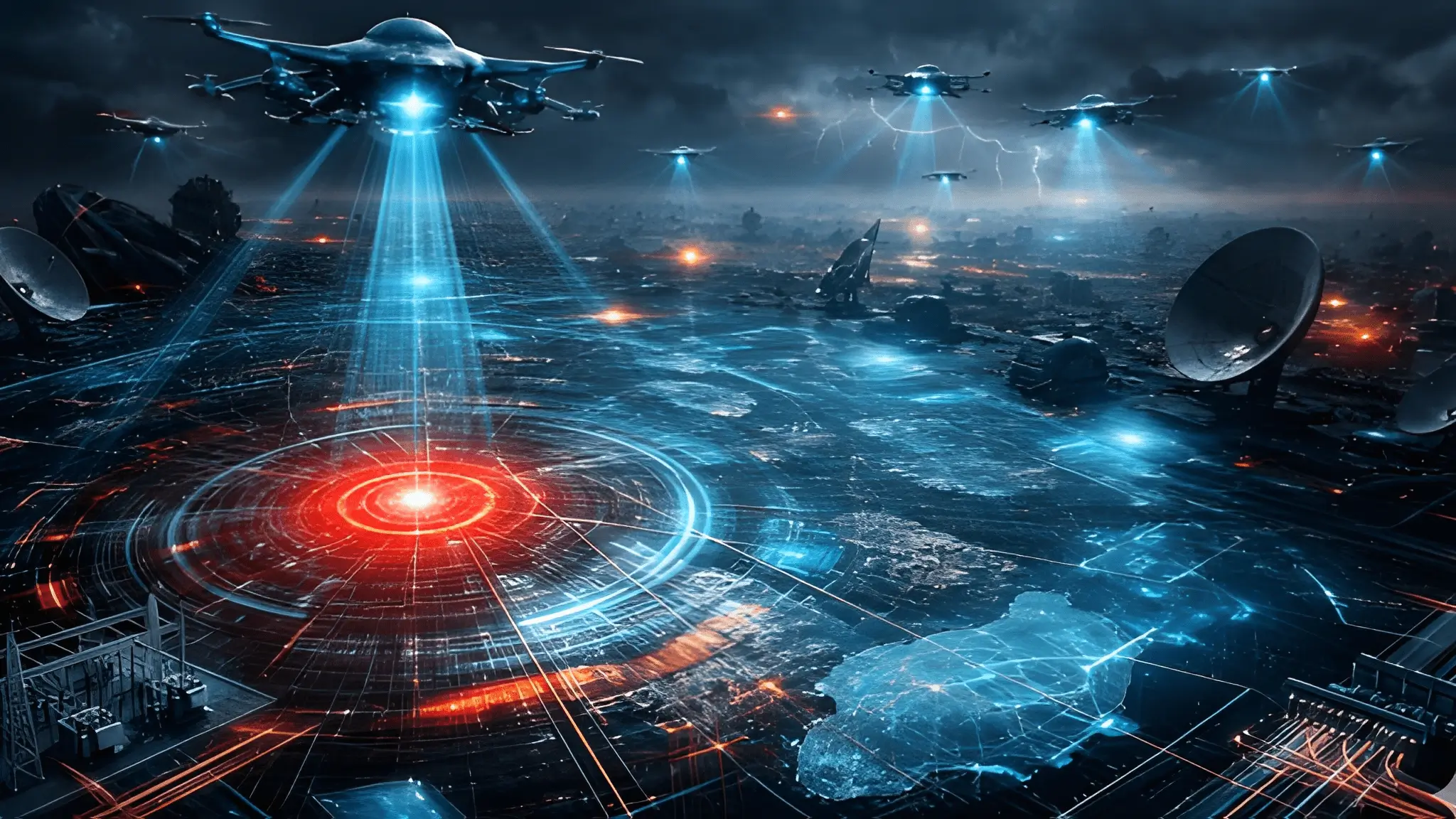
Yet the reality unfolding inside modern command systems feels more complicated. Artificial intelligence increasingly performs the analytical groundwork that shapes battlefield decisions. Algorithms sift through surveillance data, classify threats, prioritize targets, and propose operational responses. Human commanders still approve actions. However, the structure of those choices frequently originates from machine-generated analysis.
That distinction matters. Decision authority may remain human, but the decision architecture increasingly belongs to software. In other words, humans may still press the button, but machines often determine which button appears worth pressing.
Speed Is Quietly Redefining Authority
AI’s most powerful impact on warfare is not autonomy. It is speed. Modern AI systems can process satellite imagery, radar signals, drone footage, and intelligence streams in seconds. This capability compresses the traditional military “kill chain,” the process that moves from detecting a threat to acting on it.

Historically, that chain unfolded through layers of human analysis and debate. Today, algorithmic systems can rapidly detect patterns and recommend responses. Analysts have warned that AI-assisted targeting can accelerate operations faster than human cognition comfortably allows. Consequently, commanders increasingly operate within timeframes defined by software.
This shift does not remove humans from the loop. Instead, it subtly changes their role. Decision-makers move from independent analysts to reviewers of machine-generated conclusions. When seconds matter, few operators will challenge a system that already processed thousands of data points.
The concept of “human-in-the-loop” has become the cornerstone of AI ethics in warfare. Military policies frequently require that a human authorize any lethal action. The United States Department of Defense, for instance, emphasizes appropriate levels of human judgment in autonomous systems.On paper, the principle appears clear. However, real-world decision systems rarely operate in such simple terms. Humans do not interact with raw battlefield information. Instead, they engage with filtered, prioritized, and interpreted data. That filtering increasingly occurs through AI.
If an algorithm identifies potential threats, ranks targets, and recommends responses, then the human decision takes place inside a machine-defined framework. The operator can approve or reject an option. Yet the broader analytical process has already occurred. Thus, the debate about human control may focus on the wrong moment in the decision chain. The crucial influence happens before the final authorization.
When Machines Shape the Decision Space
Modern military AI systems function less like autonomous actors and more like strategic advisors at machine speed. They identify anomalies in intelligence feeds, flag suspicious patterns, and predict likely adversary behavior. These capabilities allow militaries to manage massive volumes of data that human analysts alone could never process. However, the influence of these systems extends beyond efficiency.
Algorithms determine which signals deserve attention. They decide which targets appear urgent. They highlight some possibilities while ignoring others. That filtering shapes the cognitive environment of commanders. Over time, human decision-making can begin to rely heavily on algorithmic recommendations. Researchers describe this dynamic as automation bias, where operators tend to trust machine outputs even when uncertainties remain.
The risk is not that machines will suddenly wage war independently. The risk is that humans will gradually outsource judgment without fully recognizing the shift.
The Strategic Implications of Algorithmic Warfare
The growing integration of AI into military systems introduces several strategic dilemmas. First, algorithmic systems often function as complex neural networks whose internal logic remains difficult to interpret. Researchers continue to examine how such “black box” models influence high-stakes decisions.
Second, rapid automation may compress the time available for diplomacy or de-escalation during crises. AI-assisted targeting and response systems could accelerate conflicts faster than traditional decision processes allow. Third, responsibility becomes harder to assign when machines contribute heavily to operational judgments. Engineers design the algorithms, analysts configure the systems, and commanders authorize actions. Each layer shares part of the decision.
None of these challenges imply that AI should remain absent from military systems. The scale of modern data environments makes automation unavoidable. Nevertheless, acknowledging these dynamics remains essential. Otherwise, policymakers may regulate autonomous weapons while overlooking the far more influential realm of algorithmically guided decision-making.
Technology Firms and the New Defense Ecosystem
Another notable development is the expanding role of technology companies in defense innovation. Artificial intelligence research now occurs largely within private technology firms and academic laboratories rather than government institutions alone. Governments therefore increasingly collaborate with commercial AI developers to build military tools.
These partnerships have triggered debate within the technology sector about ethical boundaries and responsible deployment. However, the broader strategic trend appears unlikely to reverse. AI capabilities have become central to national security competition.
From intelligence analysis to autonomous navigation systems, private innovation now shapes the technological foundation of defense systems. Consequently, the governance of AI warfare will require cooperation not only between states but also between governments and technology ecosystems.
International governance has struggled to keep pace with AI’s rapid evolution. Multilateral discussions under the United Nations Convention on Certain Conventional Weapons continue to examine the legal implications of autonomous weapons systems.
Yet consensus remains elusive. Some states support strict regulation of lethal autonomous weapons. Others argue that existing international humanitarian law already provides sufficient oversight.
Meanwhile, AI capabilities continue to advance across fields ranging from predictive analytics to strategic simulation. The gap between technological progress and regulatory frameworks continues to widen. As a result, the world may soon face military decision systems that operate faster and more autonomously than existing governance models anticipated.
A Different Question About Control
Public discussions often frame AI warfare around a simple binary: Are humans still in control? That framing may obscure the deeper transformation underway. Control does not depend solely on who authorizes an action. It also depends on who shapes the information environment surrounding that decision.
When algorithms determine what commanders see, evaluate, and prioritize, they influence the outcome long before a human issues an order.
Therefore, the critical question is not whether humans remain “in the loop.” The real question is whether humans remain intellectually central to the decision process. That distinction may define the future of military governance.
Recognizing the Quiet Transformation
Artificial intelligence will continue transforming warfare. It will improve intelligence analysis, optimize logistics, and accelerate operational planning. Military institutions will rely on these systems because the scale and complexity of modern conflict demand them.
Yet this transformation also reshapes the nature of decision-making.
Humans may continue to authorize force. However, machines increasingly determine how those decisions emerge. Algorithms analyze the data, frame the options, and compress the time available for judgment. Therefore, the reassuring phrase “humans decide” may soon require a more precise interpretation.
Humans still decide. But increasingly, machines determine how those decisions take shape. Recognizing that shift represents the first step toward responsible governance in an era of AI-accelerated warfare.











