 Skip to content
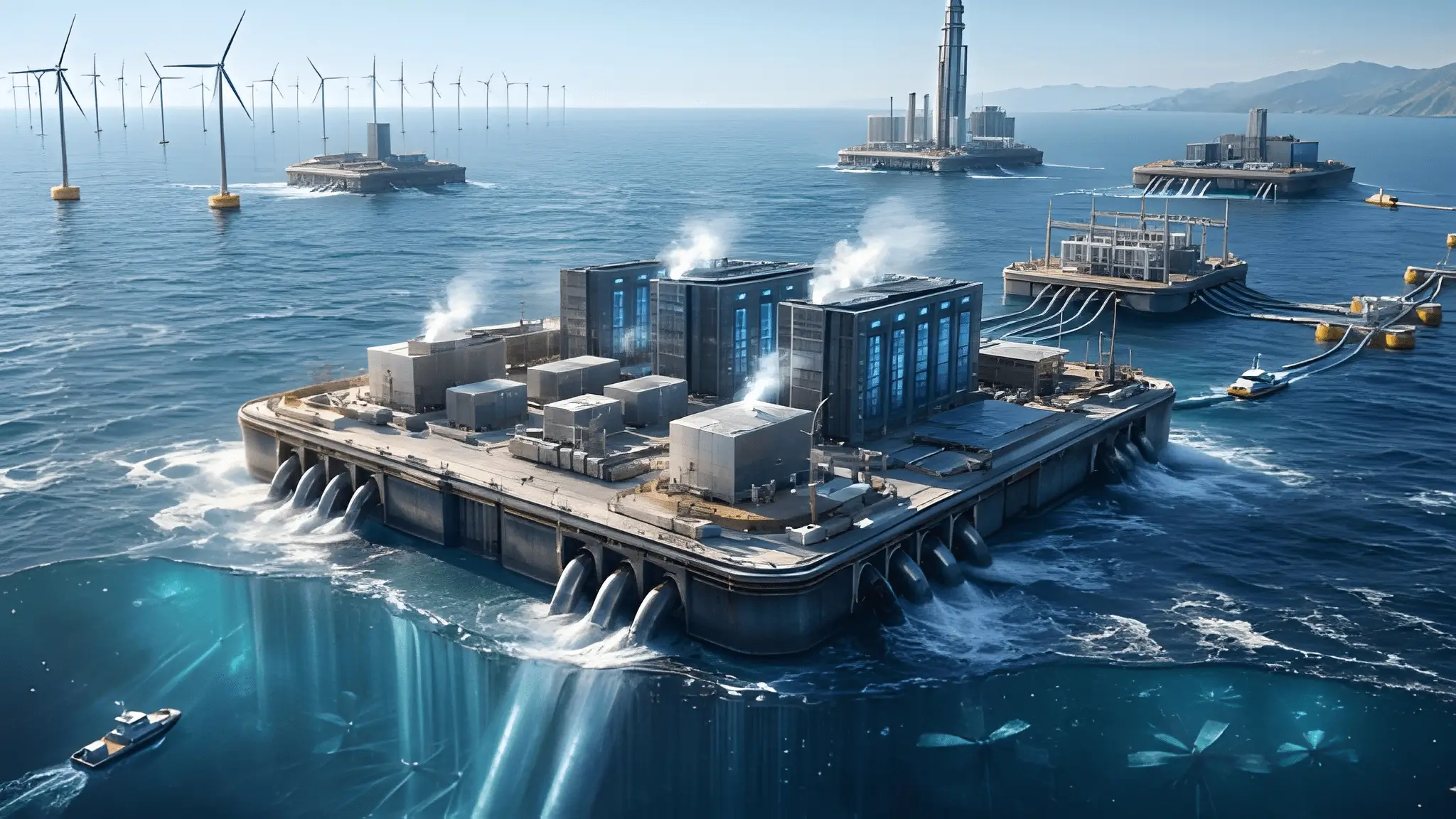
Oceans have long supported subsea cable networks, and recent experimental deployments suggest their potential to extend beyond connectivity into early-stage compute and energy integration domains.This shift begins to reframe offshore environments as emerging infrastructure surfaces rather than purely passive cooling reservoirs used solely for heat dissipation.Engineers now evaluate marine environments as integrated systems where thermal regulation, spatial flexibility, and energy harvesting coexist within a unified architecture. This shift reframes offshore environments as programmable infrastructure surfaces rather than passive cooling reservoirs used solely for heat dissipation. Seawater cooling remains an enabling factor, but its role now integrates with deployment logistics and energy availability at scale. Infrastructure planners are beginning to explore environmental and marine data inputs to better understand thermal and structural performance conditions for offshore deployments.

Traditional land-based data centers face increasing pressure from zoning limitations and environmental constraints, which has led operators to explore alternative geographies for expansion. Offshore environments introduce a spatial abstraction where compute infrastructure no longer depends on terrestrial boundaries or regional land economics. Marine-based systems also allow dynamic placement strategies that align with energy availability and network topology requirements. Platform mobility enables redeployment based on demand shifts, which introduces flexibility rarely seen in fixed hyperscale campuses. Saltwater immersion and direct heat exchange systems contribute to efficiency improvements, yet they also demand new engineering standards for corrosion resistance and lifecycle management.
Developers increasingly treat the ocean as a multi-layered infrastructure stack that includes compute nodes, power generation systems, and connectivity pathways within a single operational domain. This perspective aligns with broader trends in distributed infrastructure, where physical systems operate closer to resource inputs rather than centralized hubs. Offshore deployment reduces reliance on long-distance energy transmission while enabling localized energy consumption models. Marine environments also provide natural cooling gradients that support high-density compute clusters without extensive mechanical cooling overhead. Infrastructure planners now integrate oceanographic data into site selection models to optimize thermal and structural performance.
Co-Locating Compute with Offshore Energy Generation Nodes
Offshore wind farms and tidal energy systems have expanded rapidly, creating new opportunities for direct integration with compute infrastructure. Co-locating data centers with these energy sources reduces transmission losses and improves energy utilization efficiency at the point of generation. Floating compute platforms are being explored for direct connection to offshore wind energy nodes, enabling localized power consumption without routing through terrestrial grids in early deployment scenarios.This approach shifts infrastructure design toward energy-proximate architectures where compute follows power availability rather than demand centers. Integration with ocean thermal energy conversion systems remains conceptual, with ongoing research evaluating its feasibility for continuous baseload generation in specific geographies.
Energy-proximate deployment reduces grid dependency, which has become a critical concern as hyperscale demand continues to rise. Offshore systems enable localized power balancing where compute workloads align with intermittent energy generation patterns. Operators can theoretically implement workload scheduling strategies that align with renewable variability, although large-scale offshore implementations remain limited at present.Floating data centers also allow hybrid energy integration, combining multiple generation sources within a single platform. This configuration supports resilience by diversifying energy inputs while maintaining operational continuity.
Infrastructure design increasingly incorporates power electronics and storage systems directly into offshore platforms, enabling more efficient energy management.Battery storage and hydrogen-based systems are being evaluated to buffer fluctuations in renewable output, though their integration into offshore compute platforms is still developing.These systems reduce reliance on external grid stabilization mechanisms, which often introduce latency and inefficiency. Offshore deployment also allows experimentation with closed-loop energy systems that integrate generation, storage, and consumption within a confined architecture. As a result, compute infrastructure evolves into an active participant in energy ecosystems rather than a passive consumer.

Subsea fiber networks form the backbone of global internet infrastructure, and offshore data centers introduce new dynamics into this established ecosystem. Moving compute closer to subsea cable junctions reduces latency for transcontinental data flows while enabling more efficient routing strategies. Marine edge zones emerge as critical nodes where compute, connectivity, and energy converge within a single operational boundary. These zones redefine edge computing by extending it beyond terrestrial endpoints into ocean-based infrastructure layers. As a result, network topology evolves to accommodate distributed offshore compute clusters.
Latency considerations drive deployment decisions, particularly for applications requiring real-time data processing across continents. Offshore platforms positioned near major cable routes can serve as intermediary processing hubs, reducing the distance data must travel to reach compute resources. This architecture supports emerging workloads such as AI inference, financial trading systems, and global content delivery networks. Cable landing stations may evolve into hybrid nodes that integrate offshore compute extensions within their operational frameworks. Therefore, connectivity infrastructure becomes more tightly coupled with compute deployment strategies.
Subsea connectivity also introduces new engineering challenges related to redundancy, maintenance, and security. Offshore data centers must integrate robust network architectures that account for potential cable disruptions and environmental risks. Redundant pathways and mesh network designs ensure continuity even under adverse conditions. Operators must also address cybersecurity concerns specific to distributed marine environments, where physical access and monitoring differ from terrestrial systems. These considerations highlight the complexity of integrating compute infrastructure into subsea connectivity frameworks.
Floating data centers operate in dynamic marine environments where structural stability and durability become critical design parameters. Engineers must account for wave dynamics, buoyancy variations, and long-term exposure to saltwater conditions. Platform design often incorporates advanced materials and modular construction techniques to withstand environmental stresses. Stability systems, including ballast control and dynamic positioning, ensure consistent operational performance despite external forces. These requirements position floating data centers as complex marine engineering systems that must integrate closely with IT and energy infrastructure considerations.
Saltwater exposure introduces corrosion risks that affect both structural components and electronic systems. Protective coatings, sealed enclosures, and specialized materials mitigate these risks while maintaining system reliability. Maintenance logistics also differ significantly from land-based facilities, requiring remote monitoring and autonomous repair capabilities. Engineers design systems with redundancy and fault tolerance to minimize the need for physical intervention. Consequently, operational strategies emphasize resilience and self-sufficiency in challenging environments.
Wave motion and environmental variability impact not only structural integrity but also internal system performance. Vibration control and shock absorption mechanisms protect sensitive equipment from mechanical disturbances. Cooling systems must also adapt to fluctuating external conditions while maintaining consistent thermal performance. Platform design integrates multiple engineering disciplines, including naval architecture, materials science, and electrical engineering. This interdisciplinary approach defines the complexity of offshore compute infrastructure development.
Offshore data centers present a strategic decision between full energy autonomy and partial grid integration. Fully autonomous systems rely entirely on local energy generation, which enhances resilience but introduces scalability constraints. Grid-connected models provide additional capacity and stability, yet they depend on existing infrastructure and regulatory frameworks. Operators must evaluate trade-offs based on deployment location, energy availability, and workload requirements. This decision shapes the long-term viability of offshore compute strategies.
Energy autonomy supports isolated operation by reducing exposure to grid disruptions, although variability in renewable generation introduces additional reliability considerations that must be managed.However, it requires robust energy storage and management systems to handle variability in renewable generation. Grid integration, on the other hand, enables flexible scaling by supplementing local generation with external supply. Hybrid models combine both approaches, allowing operators to balance resilience with operational efficiency. These configurations reflect evolving strategies in distributed energy systems.
Cost considerations also influence the choice between autonomy and integration, as offshore infrastructure involves significant capital investment. Autonomous systems may reduce operational costs over time but require higher upfront expenditure. Grid-connected models benefit from existing infrastructure, lowering initial costs while introducing dependency risks. Financial models must account for energy pricing, maintenance logistics, and system longevity. This economic dimension plays a critical role in determining deployment strategies.
From Land-Constrained to Ocean-Distributed Compute Economies
Offshore data centers represent a potential structural shift in how compute infrastructure may align with energy and geography as deployments evolve beyond pilot-scale implementations. The transition from land-based to ocean-distributed systems reflects broader changes in resource availability and technological capability. Marine environments enable new deployment models that integrate compute, cooling, and energy within unified systems. This approach reduces reliance on traditional infrastructure while introducing new engineering and operational challenges. The evolution of offshore compute infrastructure will likely influence global data center strategies in the coming decades.
The convergence of energy generation and compute deployment creates opportunities for more efficient and sustainable infrastructure systems. Offshore platforms can serve as hubs where multiple resource streams intersect, enabling optimized utilization. This model aligns with emerging trends in distributed systems and localized resource management. Infrastructure planners must consider environmental, economic, and technological factors when evaluating offshore deployment strategies. These considerations will shape the future trajectory of global compute infrastructure.
Oceans may redefine the spatial logic of digital infrastructure by enabling distributed, flexible, and energy-aligned compute systems. This transformation extends beyond cooling innovations into broader questions of infrastructure design and resource integration. Offshore data centers illustrate how technological systems adapt to environmental constraints and opportunities. The shift toward ocean-based infrastructure highlights the evolving relationship between compute and physical geography. Future developments will determine the scale and impact of this transition across global networks.












