
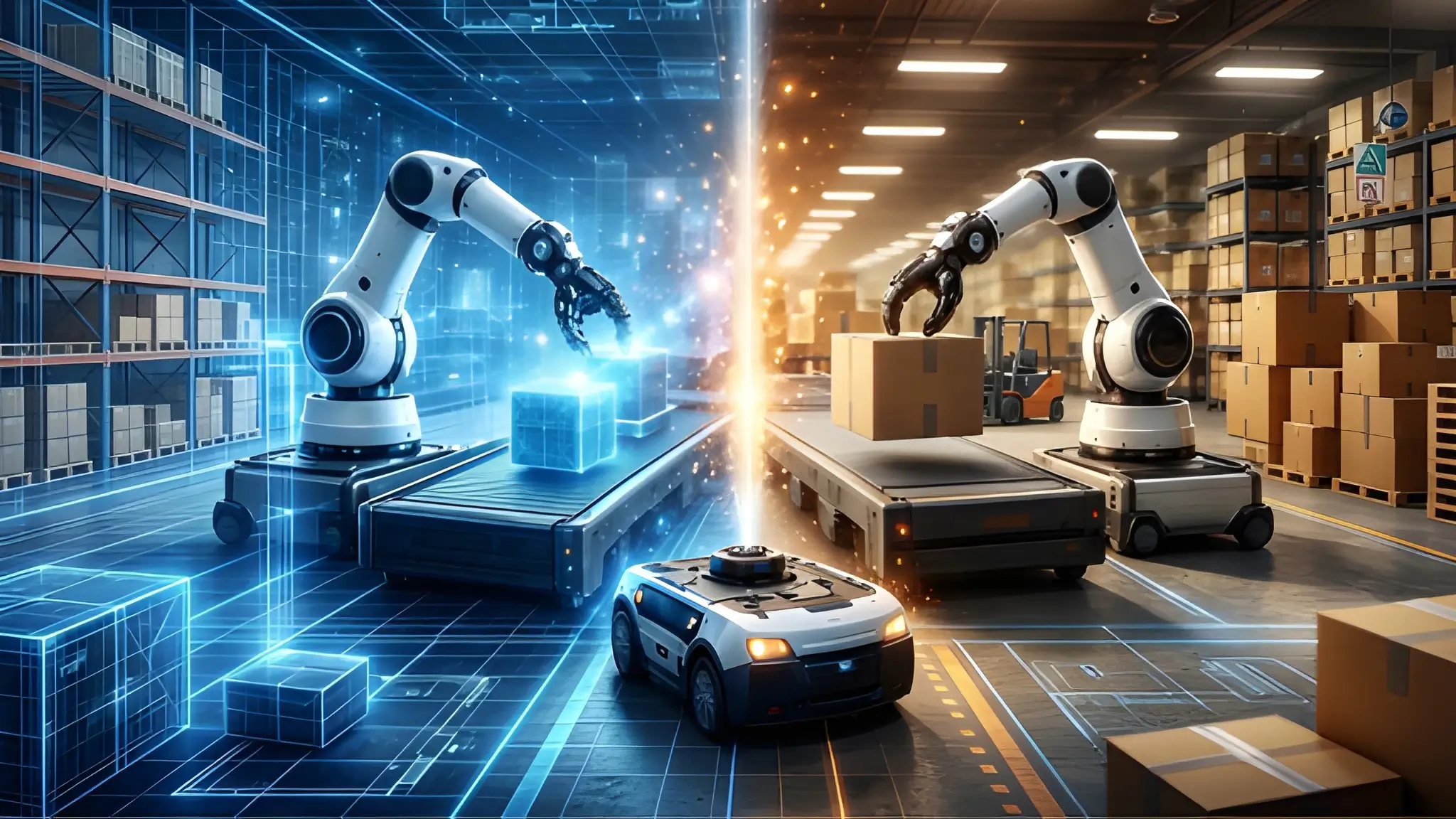
Robotics simulation environments aim to approximate physical reality, yet they often rely on simplified assumptions that cannot fully capture environmental complexity. These abstractions reduce computational cost but introduce discrepancies in how objects behave under real-world forces such as friction, deformation, and micro-collisions. A robot trained in such an environment may perform accurately in controlled virtual scenarios but encounter unexpected outcomes when interacting with real materials. Surface irregularities, temperature variations, and wear-and-tear conditions create subtle differences that compound over time. Engineers frequently observe that even minor deviations in contact dynamics can cause manipulation failures or navigation drift. These inconsistencies highlight a fundamental limitation in translating simulated training into physical reliability.

Real-world environments introduce a level of unpredictability that simulation frameworks struggle to encode effectively. Lighting conditions shift dynamically throughout the day, casting shadows and reflections that alter perception inputs for vision-based systems. Object variability further complicates execution, as real items rarely match the uniform geometry assumed in synthetic datasets. Texture, weight distribution, and material compliance introduce variations that influence robotic grasping and manipulation tasks. Environmental noise, including vibrations and airflow, also affects precision in ways that simulations typically ignore. These factors collectively create failure modes that remain invisible during training phases. As a result, robots often exhibit brittle behavior when deployed outside curated environments.
Simulation environments also lack the entropy present in real-world systems, which limits their ability to prepare robots for edge cases. Entropy in this context refers to the diversity and randomness of environmental states that influence system behavior. Virtual environments tend to operate within bounded parameters, restricting exposure to rare but critical scenarios. Robots trained under such constraints may overfit to predictable patterns rather than develop robust generalization capabilities. This limitation becomes evident when systems encounter novel configurations that fall outside their training distribution. Engineers have identified that even advanced physics engines fail to model chaotic interactions with sufficient fidelity. Consequently, simulation alone cannot guarantee reliability in open-world deployments.
Domain Randomization Is Not Reality: The Limits of Synthetic Diversity
Domain randomization emerged as a practical strategy to address simulation shortcomings by introducing variability into training environments. Engineers randomize parameters such as lighting, textures, object positions, and physical properties to expose models to a broader distribution of scenarios. This approach aims to improve generalization by preventing overfitting to narrow simulation conditions. Robots trained with domain randomization often demonstrate improved adaptability compared to those trained in static environments. However, the technique relies on synthetic approximations of variability rather than true environmental complexity. These approximations cannot fully capture the structured unpredictability found in real-world systems. Therefore, domain randomization functions as a partial mitigation rather than a complete solution.

Synthetic diversity generated through randomization lacks the contextual coherence present in real environments. Random combinations of parameters may produce unrealistic scenarios that do not align with physical constraints or real-world correlations. For example, lighting conditions may vary independently of environmental context, which rarely occurs outside simulation. This disconnect can lead to models learning patterns that do not translate effectively into deployment settings. Additionally, excessive randomization can introduce noise that degrades learning efficiency and slows convergence. Engineers must carefully balance variability with realism to maintain training effectiveness. Even with careful tuning, synthetic diversity cannot replicate the full spectrum of environmental interactions.
Another limitation of domain randomization lies in its inability to model long-tail events that occur infrequently but carry significant operational impact. Rare scenarios such as unexpected object failure, human interference, or environmental anomalies require specific contextual understanding. Randomization techniques struggle to generate these events in meaningful ways due to their low probability and high complexity. Robots trained without exposure to such scenarios may fail catastrophically when they occur in real deployments. This gap highlights the need for complementary approaches that incorporate real-world data into training pipelines. Domain randomization, while useful, cannot replace the need for empirical learning from actual environments.
Simulated environments often provide idealized sensor inputs that do not reflect the imperfections of real-world sensing systems. Cameras in simulation produce clean images without motion blur, exposure issues, or lens distortion. LiDAR systems generate precise point clouds without noise, occlusion artifacts, or interference from reflective surfaces. These ideal conditions create a gap between training data and deployment inputs. When robots operate in physical environments, they must process degraded signals that introduce uncertainty into perception pipelines. This discrepancy can lead to incorrect object detection, localization errors, and unstable control decisions. Accurate modeling of sensor imperfections remains a significant challenge in simulation design.
Latency introduces another critical factor that simulation environments often underestimate or ignore entirely. Real-world systems must process data streams in real time, which involves delays in sensing, computation, and actuation. These delays can accumulate and affect control loop stability, particularly in dynamic environments. Simulation frameworks typically operate with synchronized and instantaneous updates, masking the impact of latency on system performance. Robots trained under such assumptions may fail to respond appropriately when delays occur in deployment. Engineers must account for latency effects to ensure reliable real-world performance.
Edge computing constraints further complicate the transition from simulation to deployment. Robots often operate with limited onboard computational resources, which restricts the complexity of models they can run in real time. Simulation environments, by contrast, leverage high-performance computing infrastructure that supports large-scale models and extensive data processing. This disparity forces engineers to optimize models for efficiency, often at the cost of accuracy. Compression techniques such as quantization and pruning introduce additional trade-offs that affect system behavior. The gap between simulated and deployed compute environments creates challenges in maintaining consistent performance. These constraints highlight the importance of designing systems with deployment limitations in mind.
Data Feedback Loops: Learning from Deployment, Not Just Design
Robotics systems require continuous learning from real-world data to overcome the limitations of simulation-based training. Deployment environments generate valuable data that reflects actual operating conditions, including edge cases and rare events. Engineers can use this data to refine models and improve performance over time. This approach shifts the focus from static training pipelines to dynamic learning systems that evolve with deployment experience. Feedback loops enable robots to adapt to changing environments and maintain reliability. The integration of real-world data into training processes represents a critical step toward scalable robotics deployment.
Closed-loop learning systems create a continuous cycle of data collection, model training, and redeployment. Robots capture operational data during execution, which then feeds into centralized training pipelines for analysis and improvement. Updated models are subsequently deployed back to the robots, creating an iterative improvement process. This cycle allows systems to adapt to new scenarios and refine their behavior over time. Feedback loops also enable the identification of failure modes that may not have been anticipated during initial design. Engineers can address these issues through targeted updates and retraining. This iterative approach enhances robustness and resilience in real-world applications.
Data management plays a crucial role in enabling effective feedback loops within robotics systems. Large volumes of deployment data require efficient storage, processing, and annotation to support model training. Engineers must implement pipelines that can handle diverse data types, including sensor readings, images, and control signals. Data quality also becomes a critical factor, as noisy or mislabeled data can degrade model performance. Techniques such as active learning and automated labeling help improve data efficiency and reduce manual effort. These systems ensure that robots learn from meaningful and representative data. Effective data management underpins the success of continuous learning frameworks.
Cloud-based training systems enable robots to leverage large-scale computational resources for model development and refinement. Robots can offload data to cloud infrastructure, where centralized pipelines process and analyze information at scale. This approach allows engineers to train more sophisticated models than would be possible on edge devices alone. Cloud integration also facilitates collaboration across distributed teams and systems. The combination of edge deployment and cloud training creates a hybrid architecture that enhances system capabilities.
Co-training architectures establish a connection between deployed robots and centralized AI infrastructure, enabling continuous model updates. Robots operate in real environments while periodically synchronizing with cloud systems to receive improved models. This process allows systems to incorporate new data and adapt to evolving conditions. Engineers can deploy updates incrementally, reducing the risk of system instability. Cloud-robot integration also supports fleet-level learning, where insights from multiple robots contribute to shared model improvements. This collective learning approach accelerates development and enhances scalability. The architecture represents a shift toward interconnected robotics ecosystems.
However, cloud integration introduces challenges related to bandwidth, latency, and data security that must be carefully managed. Robots operating in remote or bandwidth-constrained environments may face difficulties in transmitting large volumes of data. Latency in communication can also affect the timeliness of updates and synchronization process. Engineers must design systems that balance local autonomy with cloud dependency to ensure reliable operation. Security considerations become critical when transmitting sensitive data across networks. Encryption, access control, and data governance mechanisms play a key role in mitigating risks. These challenges require robust infrastructure design to support effective cloud-robot collaboration.
Sim-to-Real Is Not a Gap—It’s an Ongoing System Lifecycle
The robotics industry increasingly recognizes that the sim-to-real challenge does not represent a one-time problem to solve but an ongoing lifecycle to manage. Systems that rely solely on pre-deployment training often fail to maintain performance as environmental conditions evolve over time. Real-world variability introduces continuous shifts in operating contexts, which require adaptive learning mechanisms. Engineers now frame deployment as an extension of the training process rather than its endpoint. This perspective emphasizes the need for persistent integration between simulation, real-world data, and system updates. Consequently, scalable robotics depends on architectures that support continuous adaptation rather than static optimization.
A lifecycle approach integrates simulation, deployment, and feedback into a unified system that evolves alongside its environment. Simulation remains valuable for initial training and scenario exploration, yet it must operate in tandem with real-world data pipelines. Deployment generates empirical insights that refine models and improve system robustness over time. Feedback loops ensure that learning does not stagnate but instead adapts to new situations and edge cases. Engineers design systems that continuously incorporate new data while maintaining operational stability. This integration creates a dynamic ecosystem where learning persists throughout the system’s lifecycle. Such an approach addresses the limitations of isolated training methodologies.
The convergence of robotics with cloud infrastructure and AI systems further reinforces the lifecycle model. Distributed computing resources enable large-scale training, while edge systems ensure real-time responsiveness during deployment. This hybrid architecture supports continuous model updates without disrupting operational workflows. Fleet-level learning allows multiple robots to contribute to shared improvements, accelerating system evolution. Engineers leverage centralized platforms to manage data, training, and deployment processes across distributed systems. This convergence transforms robotics into a data-driven discipline that depends on infrastructure as much as hardware design. The result is a more resilient and scalable deployment model.
Industry progress now depends on shifting priorities from closing gaps to sustaining adaptive systems that operate reliably over time. Engineers focus on building pipelines that integrate simulation fidelity, real-world validation, and continuous retraining. Systems must handle uncertainty, variability, and evolving circumstances without requiring complete redesigns. This shift reflects a broader understanding that real-world deployment introduces challenges that static models cannot fully anticipate. Continuous learning frameworks provide a path toward addressing these challenges through iterative improvement. The emphasis on lifecycle management aligns with the requirements of large-scale robotics deployment. It also establishes a foundation for long-term system reliability.
Robotics deployment at scale requires coordination across multiple layers, including hardware, software, data infrastructure, and operational processes. Each layer contributes to the system’s ability to adapt and maintain performance in diverse environments. Engineers must ensure that these components work together seamlessly to support continuous learning and deployment. Integration challenges arise when systems operate across different platforms, requiring standardized interfaces and protocols. Collaborative ecosystems enable organizations to share insights and accelerate innovation across the industry. These interconnected systems form the backbone of scalable robotics deployment strategies. The lifecycle approach ensures that each component evolves in alignment with the broader system.
Ultimately, the path forward for robotics lies in embracing continuous adaptation as a core design principle rather than an afterthought. Systems that integrate simulation, real-world data, and cloud-based learning can achieve higher levels of robustness and scalability. Engineers prioritize resilience and adaptability to ensure that robots operate effectively in dynamic environments. This approach acknowledges that uncertainty cannot be eliminated but must be managed through ongoing learning. The lifecycle model provides a structured framework for addressing the complexities of real-world deployment. It also positions the industry to unlock the full potential of robotics across sectors. The transition toward adaptive systems defines the next phase of robotics innovation.











