
NVIDIA H200 shipments delayed to Q3  · BREAKING: Microsoft confirms 3GW data centre expansion in Asia-Pacific ·  AWS announces new sovereign cloud regions in India and UAE  · Arm-based servers now 24% of hyperscale deployments ·  EU AI Act enforcement enters phase two  · Global data centre investment hits $612B in 2026 ·  TSMC Arizona yields improve to 68% on 3nm process  · OpenAI valuation reaches $400B after latest funding round ·  NVIDIA H200 shipments delayed to Q3  · BREAKING: Microsoft confirms 3GW data centre expansion in Asia-Pacific ·  AWS announces new sovereign cloud regions in India and UAE  · Arm-based servers now 24% of hyperscale deployments ·  EU AI Act enforcement enters phase two  · Global data centre investment hits $612B in 2026

High Bandwidth Memory Is Now the Bottleneck Nobody Saw Coming

Three years ago, the conversation about AI infrastructure constraints was almost entirely about compute. Get enough GPUs, connect them fast

Share
High bandwidth memory AI infrastructure GPU accelerator HBM constraint 2026

Three years ago, the conversation about AI infrastructure constraints was almost entirely about compute. Get enough GPUs, connect them fast enough, and you could scale AI training and inference to whatever level the model required. Memory was a supporting consideration, not a primary constraint. That framing has not survived contact with the current generation of AI hardware.

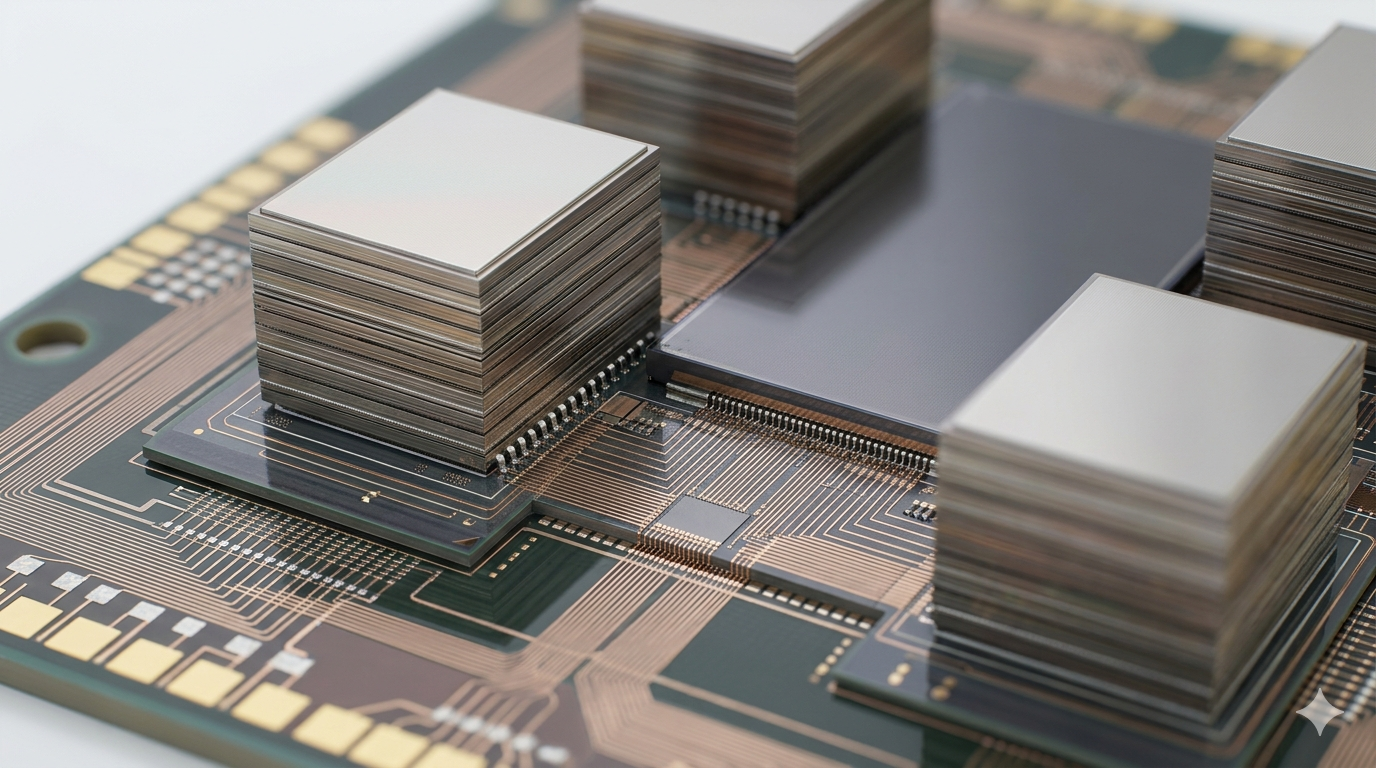
High Bandwidth Memory, the specialised DRAM stacked directly on top of AI accelerators using advanced packaging, has become the binding constraint on how fast AI compute can actually scale. The supply of capable AI accelerators is increasingly limited not by the GPU logic itself but by how many HBM stacks can be manufactured, tested, and packaged in the timeframes the market demands. Understanding why HBM matters, why it is in short supply, and what that means for AI infrastructure planning is no longer a technical deep dive for hardware engineers. It is a business planning requirement for anyone making AI infrastructure decisions.

What High Bandwidth Memory Actually Does

Memory has become the new battleground in GPU evolution, and the reason is fundamental to how AI models work. Large language models and other AI systems do not just need raw compute. They need to move vast amounts of data between compute units and memory at extremely high speed. The bottleneck in AI inference is frequently not the arithmetic capability of the GPU. It is the speed at which the model’s weights can be loaded from memory into the compute units fast enough to keep them busy.

Standard DRAM, which connects to the processor over a conventional memory bus, cannot deliver data fast enough to saturate the compute capacity of modern AI accelerators. HBM solves this by stacking multiple DRAM dies vertically and connecting them to the processor through thousands of tiny connections called through-silicon vias. The result is memory bandwidth that is ten to fifteen times higher than conventional DRAM, delivered in a form factor that sits directly alongside the processor in the same package.

Why Each GPU Generation Raises the HBM Requirement

Nvidia’s H100 uses HBM3, delivering around 3.35 terabytes per second of memory bandwidth. The Blackwell B200 uses HBM3e, pushing that further still. The Vera Rubin generation will use HBM4, with bandwidth increases that compound the memory advantage of each hardware cycle. Without corresponding increases in HBM supply and performance, each new GPU generation would be delivering more compute capacity than the memory system could actually feed, producing diminishing returns on the compute investment.

Why Supply Is the Real Problem

HBM is extraordinarily difficult to manufacture. It requires stacking multiple DRAM dies with extremely precise alignment and connecting them through micro-scale vias that must be fabricated without defects. The packaging process that bonds HBM stacks to GPU logic through TSMC’s CoWoS platform adds another layer of complexity. Only three companies, SK Hynix, Samsung, and Micron, currently produce HBM at commercial scale, and each faces its own yield and capacity constraints.

SK Hynix has been the dominant HBM supplier for Nvidia’s most recent GPU generations, capturing the majority of the HBM market for AI applications partly through early technology leadership and partly through deep partnership with TSMC on the packaging integration. Samsung has been catching up but has faced yield challenges on HBM3e that delayed its qualification for Blackwell at scale. Micron entered the HBM market later and is ramping capacity, but the combined output of all three suppliers is still insufficient to meet the demand the AI infrastructure buildout is generating.

How HBM Costs Feed Into AI Service Pricing

The supply constraint manifests in two ways. First, HBM scarcity limits how many finished AI accelerators can ship, creating the capacity shortages that hyperscalers have been flagging in their earnings calls. Second, HBM costs represent a significant fraction of the total bill of materials for an AI accelerator, with HBM components for a single Blackwell NVL72 rack estimated at close to $50,000. That cost component feeds directly into the per-unit economics of AI compute and therefore into the pricing of cloud AI services.

What This Means for Infrastructure Planning

Beyond GPUs, the hidden architecture powering the AI revolution is precisely the kind of supply chain complexity that operators need to understand before committing to hardware deployment timelines. The HBM constraint creates planning implications that go beyond simply accepting that AI hardware is expensive and hard to get. The constraint is structural enough that it will shape hardware availability, pricing, and the economics of AI deployment for the next two to three hardware generations.

Operators planning significant AI infrastructure investments need to understand that the delivery timelines for AI accelerator orders are driven as much by HBM production ramp schedules as by GPU fab capacity. An order for Vera Rubin systems placed today is subject to when HBM4 production can supply enough stacks to build the ordered quantity. TSMC’s CoWoS packaging capacity is a second constraint in the same supply chain. Both of these constraints operate on timelines measured in quarters, not weeks, and are not responsive to price signals in the way that commodity supply chains are.

Why Geopolitics Adds a Layer of Risk to HBM Supply

The HBM supply chain is also a geopolitical variable in ways that conventional DRAM is not. The concentration of HBM production in South Korea, combined with the packaging concentration at TSMC in Taiwan, creates a supply chain geography sensitive to the same geopolitical pressures affecting other critical semiconductor supply chains. Operators building multi-year infrastructure strategies need to account for HBM supply security as a risk variable alongside GPU allocation and power availability.

The Architectural Response Taking Shape

The industry is not standing still in the face of HBM constraints. Several architectural responses are emerging that will change the memory landscape over the next hardware cycle. Compute-in-memory approaches, which perform calculations directly within the memory array rather than moving data to a separate compute unit, could reduce memory bandwidth requirements for certain AI workloads by orders of magnitude. These approaches are still largely in research and early commercial stages, but several startups and established semiconductor companies are investing in them as a longer-term architectural alternative.

Near-memory compute, which places processing elements physically close to but not inside the memory, is a middle-ground approach that several companies are pursuing for AI inference applications. The goal is to reduce the data movement distance and therefore the energy and latency of the memory access, without requiring the full redesign of memory architecture that compute-in-memory demands.

The HBM supply constraint, like other infrastructure constraints in the AI buildout, will eventually ease as capacity investments come online and as architectural innovations reduce memory bandwidth requirements per unit of AI compute. Getting there will take several years and multiple hardware generations. The operators and enterprises who understand the constraint and plan around it, rather than assuming hardware availability will match their demand on their preferred timeline, are the ones who will navigate this phase of the AI buildout most effectively.


[simple-author-box]

More from AI Infrastructure

Power negotiations often conclude long before operational constraints reveal themselves inside a live facility.

Artificial intelligence infrastructure has compressed deployment timelines to the point where electrical capacity is

Boards increasingly expect organizations to support sustainability reporting with evidence that aligns with governance

COMPUTE WEEKLY

The briefing that 40,000+ tech leaders read every Monday. Sharp, fast, essential.

Great! We’ve received your information.

We couldn’t process your submission. Please retry

Building an AI Startup Without Owning GPUs

Not owning GPUs has become the default, deliberate strategy for building an AI company — not a compromise founders accept reluctantly. H100 rental rates fell 64-75% in fifteen months, a dense ecosystem of neoclouds and inference-as-a-service providers now lets startups skip infrastructure entirely, and credit programs can fund a company’s first year before a founder writes a check
Most Read

Infrastructure planning discussions often prioritize engineering, construction, and utility considerations before examining how end

AI infrastructure deployment schedules depend on coordinated progress across hardware availability, electrical infrastructure, cooling

Artificial intelligence has transformed the economics of digital infrastructure. Every new AI model requires

Data centers do not visibly smoke. They have no smokestacks, no visible exhaust, and

Artificial intelligence has transformed the economics of digital infrastructure. Companies once competed by acquiring

Disruptor Spotlight

Cerebras Systems

The chip that makes Nvidia nervous. Cerebras’ Wafer Scale Engine is rewriting the rules of AI inference at scale.
Faster
0 x
YoY Revenue
0 x
Transistors
0 T
Market Pulse
NVDA
$924.60
-2.11%
MSFT
$421.30
-2.94%
AMZN
$192.80
-4.87%
AMD
$924.60
-2.40%
TSMC
$924.60
-2.32%
Indicative only · Not financial advice
Upcoming Events
SEP
The AI Infrastructure Race (India)
WEBINAR · ONLINE
The AI Infrastructure Race: Won on Power, Land and Trust — Not Capital
MAY
0
AI Infrastructure Summit
DUBAI · IN PERSON
MEA’s premier AI infrastructure event.
JUN
0 0
Compute Forecast Summit
SINGAPORE · IN PERSON
Our flagship APAC event. Early bird open.
Latest Moves
Live
ecolab
Ecolab Deepens Cooling Strategy With $4.75B CoolIT Acquisition
Ecolab is making one of its biggest moves yet into AI infrastructure after completing its $4.75 billion acquisition of liquid cooling specialist CoolIT Systems
Pure DC AVK Europe data center microgrid Dublin 110MW AI infrastructure Ireland 2026
Pure DC and AVK Deploy Europe’s First 110 MW Data Center Microgrid in Dublin
The Pure DC Dublin microgrid has made history as Europe’s first large-scale on-site data center microgrid, launched in partnership with power solutions provider AVK at Pure DC’s campus in Ireland.
Pace Digitek
Pace Digitek Partners With MEGMEET to Expand AI Data Center Power Business
India’s AI infrastructure ecosystem continues to mature as domestic technology manufacturers move beyond traditional telecommunications and industrial markets toward high-growth digital infrastructure opportunities
Follow Compute Forecast
11K followers
1200 followers
Companies to Watch
CW
CoreWeave
Neo Cloud · $19B · IPO Watch
CB
Cerebras Systems
AI Hardware · $4.25B · Pre-IPO
G42
G42
Sovereign AI · Abu Dhabi
H
Humain
Saudi AI · $40B Fund
Latest Podcast
AI Capex, Cloud Margins & the Nuclear Bet
48 MIN · 25 APR 2026

High Bandwidth Memory Is Now the Bottleneck Nobody Saw Coming

Three years ago, the conversation about AI infrastructure constraints was almost entirely about compute. Get enough GPUs, connect them fast

Share
High bandwidth memory AI infrastructure GPU accelerator HBM constraint 2026
24
847 SHARES

0
SHARES

[simple-author-box]

More from AI Infrastructure

Infrastructure planning discussions often prioritize engineering, construction, and utility considerations before examining how end

AI infrastructure deployment schedules depend on coordinated progress across hardware availability, electrical infrastructure, cooling

Artificial intelligence has transformed the economics of digital infrastructure. Every new AI model requires

Data centers do not visibly smoke. They have no smokestacks, no visible exhaust, and

COMPUTE WEEKLY

The briefing that 40,000+ tech leaders read every Monday. Sharp, fast, essential.

Great! We’ve received your information.

We couldn’t process your submission. Please retry

Global AI Infrastructure Outlook 2026

The briefing that 40,000+ tech leaders read every Monday. Sharp, fast, essential.
Download Free
Most Read

Infrastructure planning discussions often prioritize engineering, construction, and utility considerations before examining how end

AI infrastructure deployment schedules depend on coordinated progress across hardware availability, electrical infrastructure, cooling

Artificial intelligence has transformed the economics of digital infrastructure. Every new AI model requires

Data centers do not visibly smoke. They have no smokestacks, no visible exhaust, and

Artificial intelligence has transformed the economics of digital infrastructure. Companies once competed by acquiring

Disruptor Spotlight

Cerebras Systems

The chip that makes Nvidia nervous. Cerebras’ Wafer Scale Engine is rewriting the rules of AI inference at scale.
Faster
0 x
YoY Revenue
0 x
Transistors
0 T
Market Pulse
NVDA
$924.60
+2.4%
MSFT
$421.30
+1.1%
AMZN
$192.80
-0.6%
NVDA
$924.60
+2.4%
NVDA
$924.60
+2.4%
Indicative only · Not financial advice
Upcoming Events
MAY
0 0
DCD Global — London
LONDON · IN PERSON
World’s largest DC event. CF is media partner.
MAY
0
AI Infrastructure Summit
DUBAI · IN PERSON
MEA’s premier AI infrastructure event.
JUN
0 0

Compute Forecast Summit

SINGAPORE · IN PERSON
Our flagship APAC event. Early bird open.
Latest Moves
  • Live
Sam Altman
OpenAI appoints new Chief Infrastructure Officer to lead $100B DC programme
27 APR · OPENAI
Sam Altman
OpenAI appoints new Chief Infrastructure Officer to lead $100B DC programme
27 APR · OPENAI
Sam Altman
OpenAI appoints new Chief Infrastructure Officer to lead $100B DC programme
27 APR · OPENAI
Follow Compute Forecast
18.4K followers
12.1K followers
9.3K subscribers
41 episodes
Companies to Watch
CW
CoreWeave
Neo Cloud · $19B · IPO Watch
CB
Cerebras Systems
AI Hardware · $4.25B · Pre-IPO
G42
G42
Sovereign AI · Abu Dhabi
CW
Humain
Saudi AI · $40B Fund
Latest Podcast
AI Capex, Cloud Margins & the Nuclear Bet
48 MIN · 25 APR 2026
Scroll to Top








