
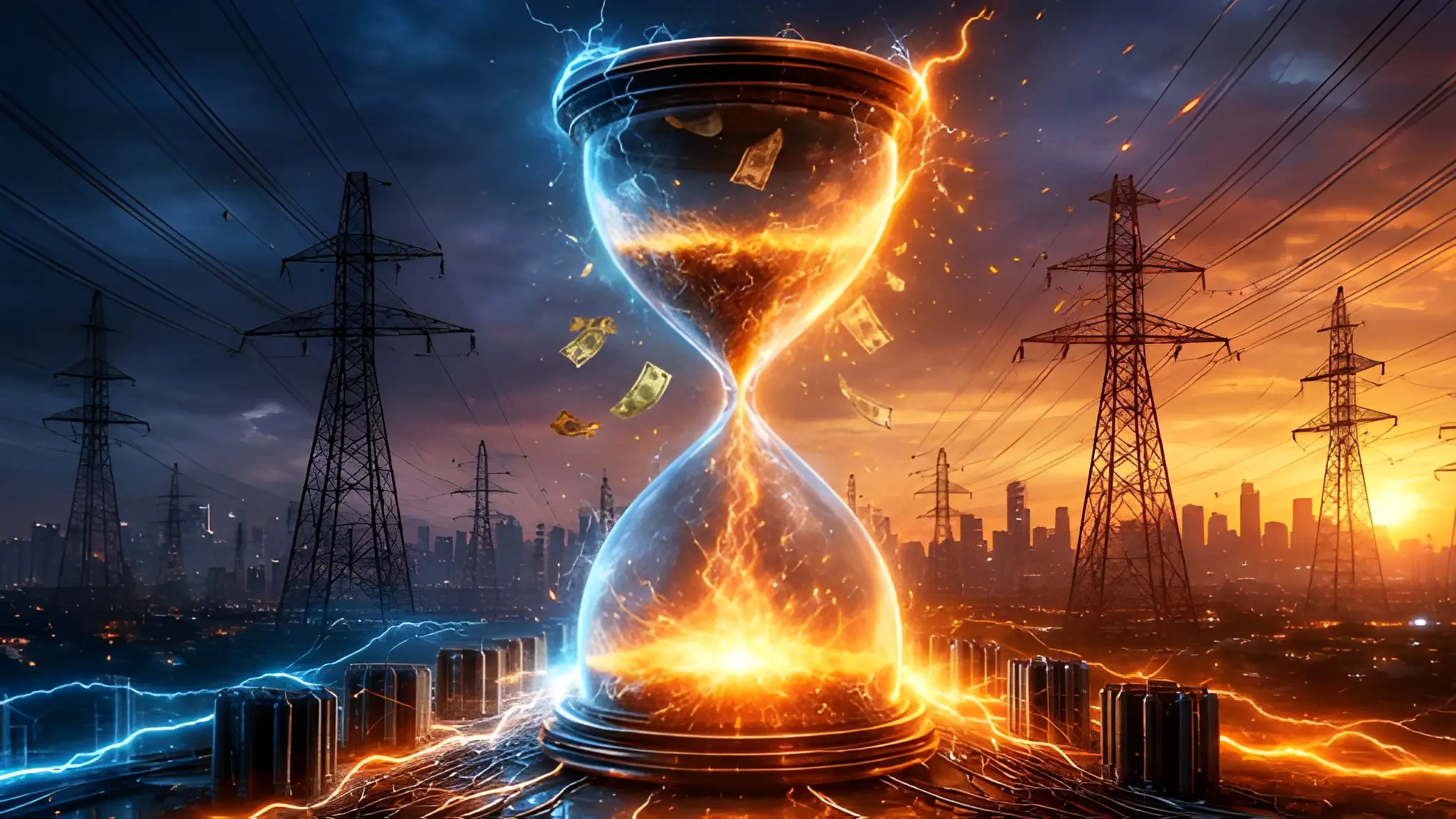
The expansion of artificial intelligence infrastructure no longer follows a simple supply-demand curve; it behaves more like a financial system quietly accumulating liabilities. Data centers, hyperscale clusters, and accelerated compute environments are deploying capacity at a pace that power systems were never designed to match. Energy, once treated as a stable input, now acts as a constrained variable that introduces latency into scaling decisions. Grid operators, utilities, and regulators face mounting pressure as demand forecasts shift from incremental to exponential within a few planning cycles. This disconnect is not immediately visible in quarterly reports or deployment announcements, yet it is structurally embedded in how AI infrastructure is financed and deployed. The result is an emerging form of “energy debt,” where present growth borrows from future grid stability without fully accounting for repayment timelines.

Borrowed Power, Delayed Consequences
AI infrastructure continues to scale on the assumption that electricity supply will remain elastic, even when grid interconnections and capacity additions lag behind demand curves. Developers often secure land, capital, and hardware ahead of finalized timelines for transmission upgrades or substation expansions, reflecting the lag between infrastructure planning and deployment readiness. This sequencing can create a backlog of projected energy demand that is not always fully reflected in infrastructure readiness or pricing at the time of deployment. Power purchase agreements often rely on projected availability rather than guaranteed delivery under peak load conditions. As clusters go live, they begin drawing against a system that has not yet caught up to their consumption profile. Consequently, the imbalance accumulates quietly until it manifests as congestion, curtailment, or delayed commissioning timelines.
Grid operators face increasing difficulty aligning real-time demand with infrastructure readiness because AI workloads introduce sustained, high-density consumption patterns. Traditional demand models accounted for industrial or residential growth, which evolved gradually over decades. AI workloads compress similar demand increases into months, leaving planning cycles structurally behind. Utilities often respond with interim measures such as load management agreements or temporary capacity allocations. These solutions address immediate constraints but do not resolve the underlying infrastructure gap. The system effectively shifts the burden forward, allowing current expansion to proceed at the expense of future reliability margins.
The Grid Upgrade Gap No One Is Pricing In
Some investment models for data center expansion do not fully incorporate the cost of upstream grid reinforcement, often treating energy access primarily as an operational expense rather than a capital-intensive dependency. Transmission lines, substations, and generation assets require multi-year development timelines, regulatory approvals, and significant capital allocation. However, project financials often assume that these upgrades will materialize within deployment schedules. This mismatch introduces hidden costs that surface later as connection delays, higher tariffs, or infrastructure bottlenecks. Developers may secure initial capacity but face escalating expenses as demand scales beyond baseline allocations. Meanwhile, utilities absorb planning complexity without immediate cost recovery, creating systemic inefficiencies.

The absence of integrated cost modeling distorts investment decisions across the ecosystem. Hyperscale operators prioritize speed-to-deployment, while grid infrastructure evolves through regulated and often slower processes. This divergence creates a structural blind spot where energy constraints remain external to core financial calculations. Projects that appear viable under current assumptions may encounter significant friction once grid limitations become binding. Furthermore, delayed upgrades compound costs due to inflation, supply chain constraints, and regulatory adjustments. Investors rarely price these factors at the outset, leading to underestimation of long-term capital requirements.
Time-Shifted Risk: When Capacity Turns Constraint
Infrastructure built to support current AI workloads may become constrained if demand trajectories accelerate beyond initial projections over time. Data centers designed with specific power envelopes may find themselves limited by grid capacity rather than compute capability. This dynamic can shift the bottleneck from silicon to electricity in certain regions, altering the economics of scaling under constrained grid conditions. Operators may need to throttle workloads, delay expansions, or renegotiate energy contracts under less favorable conditions. The risk does not emerge immediately but develops as cumulative demand approaches system limits. However, once constraints materialize, they tend to propagate quickly across interconnected networks.
Time-shifted risk introduces a strategic challenge for infrastructure planning because decisions made today determine operational flexibility years later. Capacity that appears sufficient under current conditions may prove inadequate under future load scenarios. This dynamic creates stranded optimization, where compute assets cannot operate at intended utilization levels due to external constraints. Additionally, grid congestion can lead to price volatility, further complicating operational planning. Operators must balance performance targets with energy availability, often sacrificing efficiency to maintain continuity. The delayed nature of this risk makes it difficult to quantify but critical to address.
Deferring grid upgrades does not simply postpone challenges; it amplifies them across multiple dimensions of system performance. As demand continues to rise, the gap between required and available capacity widens, increasing the scale of necessary interventions. Each delay introduces additional complexity, as new infrastructure must accommodate both existing deficits and future growth. This compounding effect elevates costs, extends timelines, and reduces system resilience. Utilities may need to implement more aggressive measures, including accelerated buildouts or emergency capacity procurement. The cumulative impact transforms manageable issues into systemic risks that affect reliability and scalability simultaneously.
Reliability becomes particularly vulnerable under deferred investment scenarios because grid systems operate within tightly balanced parameters. Overloaded networks can increase the likelihood of voltage instability, equipment stress, and in certain conditions, a higher risk of outages. AI workloads, which often require continuous operation, exacerbate these risks by maintaining consistent high demand. Operators may introduce redundancy within data centers, but external grid constraints remain a limiting factor. This disconnect creates a false sense of security, where internal resilience does not translate to system-wide stability. The longer upgrades are postponed, the more difficult it becomes to restore equilibrium without significant disruption.
The Illusion of Scalable Power
The narrative of infinite scalability in AI infrastructure often assumes that energy supply can expand in parallel with compute capacity. In reality, electricity systems grow through incremental additions constrained by physical, regulatory, and economic factors. Generation projects require site development, environmental assessments, and grid integration, all of which extend timelines. Transmission expansion faces similar hurdles, including land acquisition and permitting challenges. As a result, power availability tends to expand incrementally while compute demand can grow at significantly higher rates over shorter timeframes. This divergence undermines assumptions about seamless scaling and introduces structural limits that cannot be bypassed through capital alone.
The illusion persists because early-stage deployments rarely encounter immediate constraints, creating a perception of abundant capacity. As clusters scale, however, localized shortages begin to emerge, revealing the underlying limitations of the system. Operators may shift workloads geographically to access available capacity, but this strategy introduces latency, cost, and complexity. Energy markets respond with price adjustments, signaling scarcity that was previously unaccounted for. Meanwhile, long-term solutions remain constrained by development timelines, reinforcing the gap between demand and supply. This dynamic challenges the assumption that scaling compute automatically implies scalable power.
The Bill Always Arrives, Just Not Immediately
Energy debt represents a structural consequence of misaligned timelines between AI infrastructure deployment and grid development. The system allows expansion to proceed by implicitly borrowing against future capacity, deferring costs and constraints. This approach enables rapid growth in the short term but introduces vulnerabilities that accumulate over time. Eventually, the gap between demand and infrastructure becomes too large to ignore, forcing corrective action under less favorable conditions. Organizations that recognize this dynamic early can integrate energy considerations into strategic planning. Those that do not may encounter escalating costs, constrained operations, and reduced competitiveness as the energy bill finally comes due.











