 Skip to content
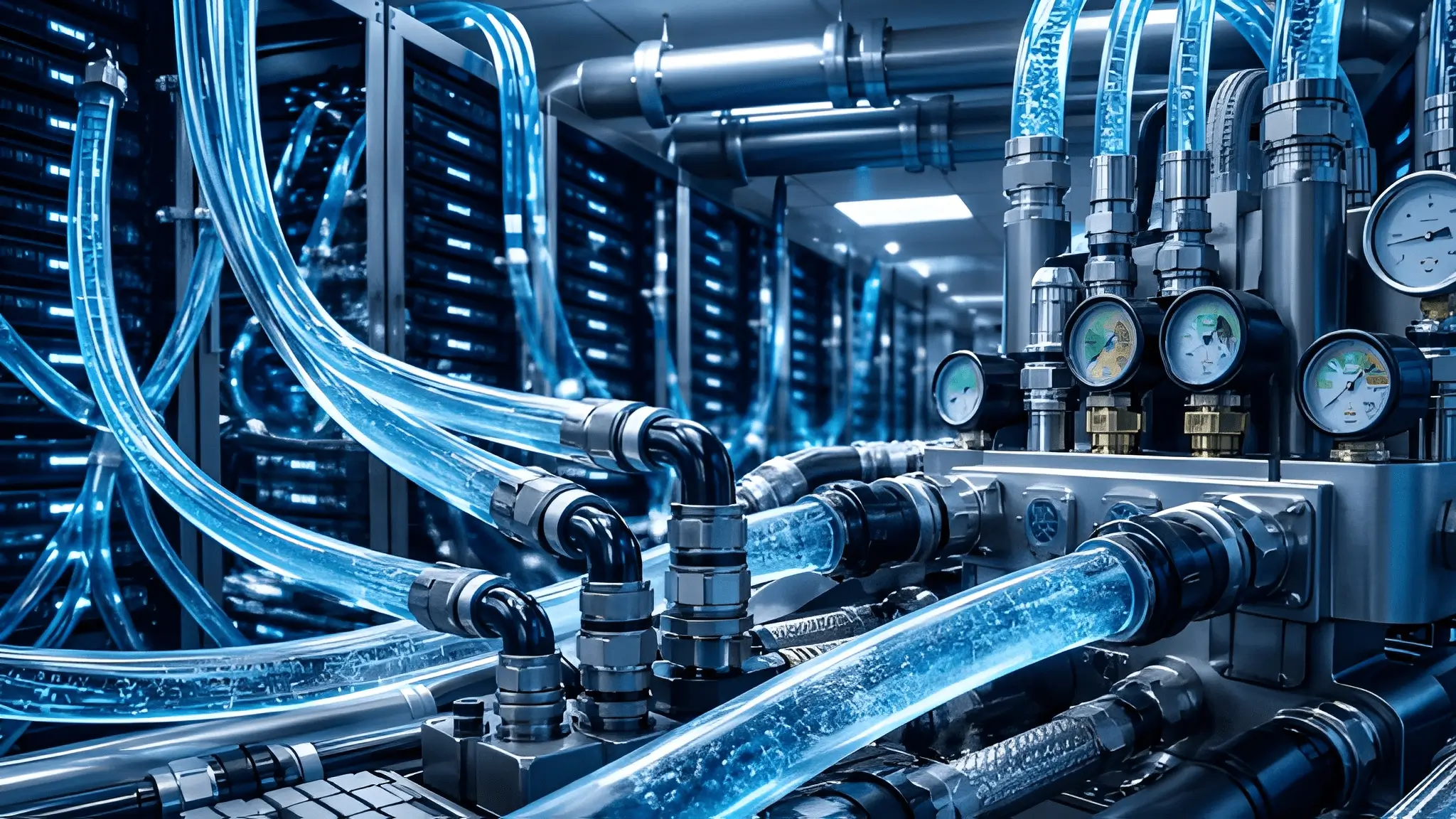
Modern AI infrastructure no longer struggles with compute density; it struggles with keeping that density stable under sustained operational stress. Liquid cooling emerged as the most viable solution to dissipate extreme thermal loads generated by high-performance accelerators and tightly packed racks. However, the conversation around cooling efficiency often overshadows a more fundamental issue; long-term system reliability under real-world conditions. The shift from air to liquid introduces a new class of failure modes that behave differently, propagate faster, and remain harder to detect in early stages. Engineers often optimize for thermal performance metrics while underestimating the compounding risks embedded within physical interfaces and flow systems. As deployments scale, minor imperfections begin to behave less like isolated defects and more like systemic vulnerabilities.

The industry currently frames liquid cooling as a necessary evolution rather than a calculated trade-off, which creates blind spots in infrastructure planning. Every sealed loop, connector, and joint represents not just a point of assembly but a potential point of failure under pressure and time. These risks do not manifest immediately, which allows systems to pass initial validation while quietly accumulating structural stress. Reliability, therefore, becomes less about component quality and more about how the entire system responds to prolonged operational strain. The challenge intensifies in hyperscale environments where thousands of identical systems amplify even the smallest design inefficiency. Failures no longer remain confined to individual components; they increasingly reflect interactions across system interfaces at scale.
Cooling systems rarely fail at their most visible or engineered components; instead, they fail at their smallest and most overlooked interfaces. Joints, seals, and connectors experience continuous mechanical and thermal stress, which gradually alters their structural integrity over time. These elements operate under dynamic conditions where expansion, contraction, and vibration create micro-level distortions that accumulate silently. A single compromised seal may not immediately disrupt system performance, but it introduces instability that spreads across the cooling loop. As systems scale, the probability of such micro failures increases in proportion to the number of connection points. The risk therefore multiplies not linearly but combinatorially across large deployments.
Failure propagation in liquid cooling systems follows a cascading pattern rather than an isolated breakdown model. A minor leak at one joint can reduce pressure stability, which in turn affects flow consistency across adjacent components. This imbalance forces pumps to compensate, increasing mechanical stress across the entire loop and accelerating wear in other vulnerable areas. Over time, localized issues begin to influence system-wide behavior, turning minor defects into operational disruptions. Detection systems may not consistently identify early-stage leaks, as sensitivity thresholds and monitoring approaches vary across implementations. By the time anomalies become measurable, the system has already absorbed structural degradation.
Scaling AI, Scaling Risk: The Hidden Cost of Connection Density
Scaling intensifies this problem because uniform design does not guarantee uniform performance under variable conditions. Manufacturing tolerances, installation variability, and environmental factors introduce subtle differences across identical systems. These differences determine which connection fails first and how quickly that failure propagates. The architecture of the cooling network dictates whether a failure remains localized or spreads across multiple nodes. Systems designed without redundancy or isolation mechanisms expose themselves to disproportionate risk from minor defects. Reliability, in this context, depends less on preventing failure and more on containing its impact.
The expansion of AI infrastructure directly increases the complexity of liquid cooling networks, particularly in the number of required connections. Each additional node, rack, or loop introduces new joints, valves, and interfaces that must maintain integrity under continuous operation. Connection density becomes a critical variable because it defines the total number of potential failure points within the system. Even with high-quality components, statistical probability ensures that some connections will degrade faster than others. This creates uneven reliability across the network, which complicates maintenance and monitoring strategies. The system increasingly reflects statistical failure behavior as scale and connection density grow.

Moreover, increased connection density complicates system diagnostics and fault isolation. When multiple loops interconnect across racks, identifying the origin of a leak becomes significantly more challenging. Fluid pathways overlap, pressure zones interact, and flow variations mask the initial point of failure. Operators must rely on indirect indicators such as pressure drops or temperature inconsistencies, which do not always provide precise localization. This diagnostic ambiguity increases response time and allows minor issues to escalate before intervention occurs. Consequently, operational complexity becomes a direct contributor to system fragility.
Connection density also impacts installation quality, which introduces variability that cannot be fully standardized. Human involvement during assembly can introduce torque inconsistencies, sealing variation, or alignment deviations that influence reliability outcomes. These imperfections may remain dormant during initial operation but emerge under prolonged stress conditions. Systems that rely on extensive manual assembly inherently carry higher variability in reliability outcomes. Automation can reduce this risk but does not eliminate it entirely due to material and environmental factors. The cost of scaling therefore includes not just infrastructure investment but increased exposure to failure probabilities.
Beyond Heat: Why Pressure Dynamics Are the Real Stress Test
Thermal management dominates discussions around liquid cooling, yet pressure dynamics define the long-term stability of these systems. Fluid flow introduces continuous mechanical stress on pipes, joints, and seals, which differs fundamentally from static thermal exposure. Pressure fluctuations occur due to workload variability, pump performance, and system design inefficiencies. These fluctuations create cyclical stress patterns that accelerate material fatigue and weaken structural integrity. Over time, even well-designed systems begin to show signs of degradation under repeated pressure cycles. Long-term reliability depends on both effective heat dissipation and the system’s ability to maintain stable pressure conditions under varying loads.
Flow turbulence further complicates the behavior of liquid cooling systems under operational load. High-density AI workloads generate uneven heat distribution, which forces dynamic adjustments in coolant flow rates. These adjustments create localized turbulence that increases stress on internal surfaces and connection points. Turbulent flow can introduce localized mechanical effects that may influence joint and seal stability under sustained operating conditions. Such effects remain difficult to measure directly but significantly influence long-term performance. Engineers must therefore consider fluid dynamics as a primary design constraint rather than a secondary factor.
Pressure imbalances across interconnected loops can trigger cascading instability within the cooling network. When one segment experiences reduced flow or increased resistance, adjacent segments compensate by altering pressure distribution. This redistribution places additional strain on components that were not designed for such load variations. Systems lacking pressure regulation mechanisms become vulnerable to uneven stress accumulation. As a result, failures emerge in unexpected locations rather than at the original point of imbalance. Reliability depends on maintaining equilibrium across the entire system rather than optimizing individual components.
The Delayed Breakdown: Why Cooling Failures Don’t Show Up in Year One
Liquid cooling systems often pass initial deployment phases without visible issues, which creates a false sense of reliability. Early-stage performance metrics focus on thermal efficiency and operational stability rather than long-term material behavior. Components such as seals and gaskets undergo gradual chemical and mechanical changes when exposed to coolant fluids and temperature cycles. These changes reduce elasticity and compromise sealing effectiveness over time. The degradation process remains slow and often undetectable during standard monitoring cycles. Failures therefore appear delayed rather than sudden.
Material fatigue plays a central role in delayed system breakdowns, particularly in high-pressure environments. Repeated stress cycles weaken structural bonds within materials, leading to micro-cracks and eventual leakage paths. These micro-cracks expand gradually, which allows systems to continue operating while accumulating hidden damage. Detection mechanisms typically identify issues only after leakage surpasses measurable thresholds. By that stage, the system may already require extensive maintenance or component replacement. Preventive strategies must therefore account for time-dependent degradation rather than immediate performance indicators.
Chemical interaction between coolant fluids and system materials introduces another layer of long-term risk. Certain coolants may react with polymers or metals, accelerating corrosion or material breakdown under specific conditions. These reactions depend on temperature, pressure, and fluid composition, which vary across operational scenarios. Systems designed without accounting for these interactions may experience uneven degradation across components. This variability complicates maintenance planning and increases uncertainty in system lifespan predictions. Reliability becomes a function of material compatibility as much as mechanical design.
Operational Fragility: When Maintenance Becomes a Risk Layer
Maintenance procedures introduce controlled disruption into liquid cooling systems, yet they also create opportunities for new failure modes. Technicians must interact with joints, valves, and connectors during servicing, which increases the likelihood of human-induced errors. Even minor deviations in reassembly can compromise sealing integrity or alter pressure dynamics within the system. These changes may not produce immediate effects but can accelerate degradation over time. Maintenance therefore acts as both a safeguard and a potential risk multiplier.
System complexity directly influences the difficulty and risk associated with maintenance operations. Highly interconnected cooling networks require precise coordination during servicing to avoid unintended pressure imbalances. Technicians must understand the interaction between multiple loops, pumps, and control systems before making adjustments. Any oversight can introduce instability that propagates across the network. Training and procedural rigor become critical factors in maintaining system reliability. However, increasing complexity makes perfect execution increasingly difficult to achieve consistently.
Additionally, maintenance frequency impacts the overall risk profile of liquid cooling systems. Frequent interventions increase exposure to human error, while infrequent maintenance allows undetected issues to escalate. Striking an effective balance depends on monitoring accuracy and the implementation of predictive maintenance strategies. Systems that lack real-time diagnostics depend heavily on manual inspection, which introduces subjectivity and inconsistency. Automation can reduce some risks but requires robust design and implementation. Ultimately, operational discipline determines whether maintenance strengthens or weakens system reliability.
Reliability Is an Infrastructure Decision, Not a Component Choice
Reliability in liquid cooling systems does not emerge from individual component quality alone; it results from disciplined system-level design and operational strategy. Each connection, pressure pathway, and maintenance procedure contributes to the overall stability of the infrastructure. Decisions made during design phases determine how systems respond to stress, scale, and time-dependent degradation. Organizations that treat cooling as a modular add-on rather than an integrated system expose themselves to compounded risks. The success of liquid cooling depends on anticipating failure modes rather than reacting to them. Infrastructure resilience begins with acknowledging that efficiency and reliability must evolve together.
Engineering discipline must extend beyond performance optimization to include failure containment and recovery planning. Systems designed with redundancy, isolation, and monitoring capabilities can mitigate the impact of inevitable failures. These design choices require upfront investment but reduce long-term operational risk and downtime. Scaling AI infrastructure without addressing these factors leads to fragile systems that struggle under sustained demand. Reliability becomes a strategic decision rather than a technical afterthought. The future of liquid cooling will depend on how effectively organizations integrate these principles into their infrastructure planning.
Finally, the narrative around liquid cooling must shift from technological adoption to engineering accountability. The industry cannot afford to treat leakage risk as a secondary concern while scaling high-density compute environments. Every design decision carries implications that extend beyond immediate performance metrics. Systems must prove their resilience over time, under pressure, and across varying operational conditions. The path forward involves aligning efficiency goals with durability considerations based on system design and operational requirements. Only then can liquid cooling fulfill its role as a reliable foundation for next-generation AI infrastructure.












