 Skip to content
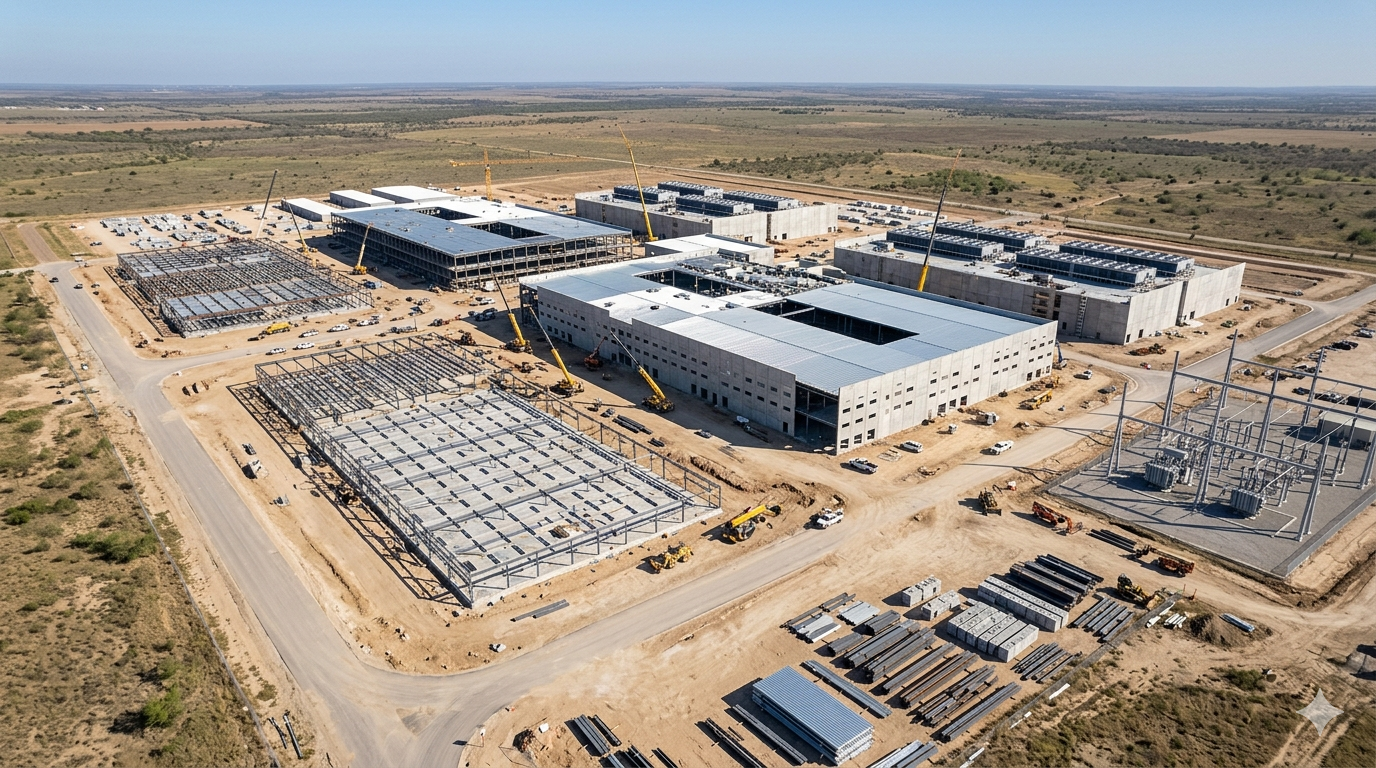
Anthropic has announced a $50 billion investment in American computing infrastructure, partnering with AI infrastructure provider Fluidstack to build custom data centers in Texas and New York, with additional sites to follow. The investment marks one of the largest single infrastructure commitments by an AI lab and signals a clear shift from Anthropic’s historically capital-light model toward direct ownership of the compute it depends on. CEO Dario Amodei said the company is approaching a point where AI could accelerate scientific discovery in ways not previously possible, and that realising that potential requires infrastructure built specifically for the task.

Anthropic designed the facilities around Claude’s workloads, with efficiency as the primary constraint rather than general-purpose flexibility. Anthropic chose Fluidstack for its ability to move at gigawatt-scale speed, a capability few infrastructure providers can credibly demonstrate. CEO Gary Wu called it the moment the company was built for. The project will create approximately 800 permanent jobs and 2,400 construction jobs, with sites coming online throughout 2026, and ties directly into the Trump administration’s AI Action Plan targeting domestic AI infrastructure as a national strategic priority.
Why Anthropic Is Building Rather Than Leasing
This move puts Anthropic alongside Microsoft, Google, and Amazon as a company that owns significant compute infrastructure rather than simply consuming it from third-party cloud providers. Custom-built facilities allow Anthropic to optimise power delivery, cooling architecture, and network topology specifically for Claude’s training and inference workloads, reducing cost per token at scale in ways that shared infrastructure cannot match. For a lab that has historically depended on third-party capacity, removing that dependency matters at the volume Anthropic now operates. Anthropic’s $30 billion Series G closed earlier this year, providing the capital base that makes a commitment at this scale credible and executable within the 2026 timeline.
What It Signals for the AI Infrastructure Race
The $50 billion commitment confirms that frontier AI labs are no longer content to treat compute as a utility they consume. They are treating it as a strategic asset they control. As demand for Claude scales across enterprise customers globally, owning the infrastructure eliminates a supply chain dependency that becomes increasingly expensive to manage through third parties at this level. The announcement also validates Fluidstack’s positioning as a serious player in gigawatt-scale infrastructure delivery alongside better-known names in the space. For the broader market, it reinforces what hyperscaler capex cycles have already shown: the companies building the most capable AI are the ones investing most aggressively in the physical layer underneath it.












