 Skip to content
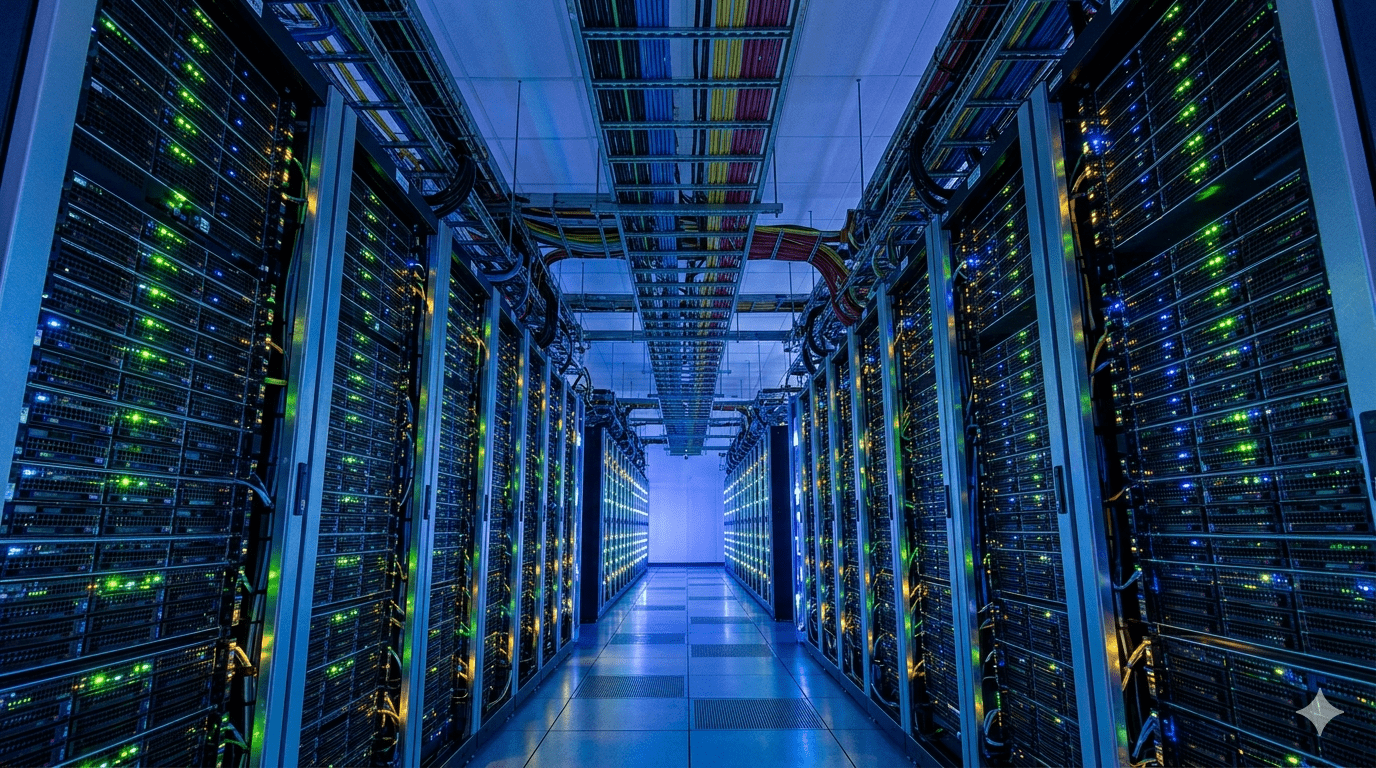
The neocloud value proposition has been tested hard in 2026. Hyperscalers have closed the gap on GPU availability. Spot pricing has fallen. Enterprise procurement teams have become more sophisticated. In that environment, the generic pitch of purpose-built GPU infrastructure is no longer enough to justify the premium that neocloud operators need to sustain their economics. Something more specific has to do the work. Increasingly, the argument that is landing with the customers who matter most is not about which hardware the neocloud operates. It is about how that hardware is accessed: bare metal, without the virtualisation overhead that hyperscaler cloud instances impose.

Bare metal GPU access means the customer’s workloads run directly on the physical hardware, with no hypervisor layer between the application and the GPU. That distinction sounds technical, and it is. But the practical implications for AI training and inference performance are significant enough that they have become a primary evaluation criterion for enterprises and AI labs choosing between neocloud and hyperscaler infrastructure for their most demanding workloads.
What Virtualisation Actually Costs at GPU Scale
Public cloud GPU instances run on virtualised infrastructure. The hypervisor that enables multi-tenancy and elastic scaling introduces overhead that affects GPU performance in ways that matter for serious AI workloads. For inference serving at moderate concurrency, that overhead is often acceptable. For large-scale distributed training, where the GPU cluster needs to operate at maximum efficiency for weeks at a time, the performance gap between virtualised and bare metal access compounds meaningfully. A training job that runs 5 percent slower due to virtualisation overhead on a 30-day training run adds 1.5 days of compute time at full cluster cost. At the scale hyperscalers charge for high-end GPU instances, that overhead cost is not trivial.
The networking implications of virtualisation are equally significant for distributed AI workloads. GPU-to-GPU communication in large training clusters requires very low latency and very high bandwidth between nodes. Virtualisation layers introduce additional network hops and software-defined networking overhead that increase latency relative to bare metal configurations. The hidden cost curve inside neocloud power identified how seemingly small inefficiencies compound at cluster scale. Networking latency introduced by virtualisation is exactly that kind of compounding inefficiency: small per operation, but significant when multiplied across billions of GPU-to-GPU communications over the lifetime of a training run.

Why the Performance Gap Matters More for Some Workloads Than Others
The bare metal advantage is not uniform across AI workload types. Batch inference workloads that can tolerate variable latency and are not sensitive to GPU-to-GPU communication overhead see limited benefit from bare metal access over well-optimised virtualised infrastructure. Large-scale distributed training, latency-sensitive inference, and emerging agentic workloads that require persistent GPU memory benefit most from bare metal GPU access. Those happen to be the highest-value workloads in the market, the ones that frontier AI labs and well-funded enterprises are willing to pay a premium to run optimally. That alignment between where bare metal matters most and where customers are willing to pay the most is what makes bare metal GPU access a commercially significant differentiator rather than a technical curiosity.
Why Hyperscalers Cannot Easily Match This
The reason hyperscalers have not neutralised the bare metal advantage is architectural. Public cloud platforms are built around multi-tenancy as a fundamental design principle. The virtualisation layer that enables a hyperscaler to serve thousands of customers on shared physical infrastructure is the same layer that introduces overhead for individual customers running dedicated workloads. Offering bare metal GPU access at the scale hyperscalers operate would require rebuilding significant portions of their infrastructure management stack, and it would undermine the operational efficiency that makes hyperscaler economics work at scale.
Hyperscalers offer bare metal compute, but neocloud operators deliver broader, more capable GPU configurations. Neocloud redefines competition beyond hyperscalers identified the structural reasons why neoclouds can offer differentiated infrastructure that hyperscalers find difficult to match. Bare metal GPU access at scale is the clearest current example of that differentiation in practice. The neocloud that has built its entire infrastructure stack around dedicated bare metal GPU access, with the networking fabric, storage architecture, and operational tooling optimised for that delivery model, offers something that a hyperscaler retrofitting bare metal options onto a multi-tenant platform cannot easily replicate.
What Bare Metal Access Actually Requires to Deliver Its Promise
Bare metal GPU access is only as valuable as the infrastructure stack it sits on. A customer with direct hardware access but poor networking fabric between nodes, inadequate storage bandwidth for dataset loading, or unreliable cluster management tooling does not benefit from the theoretical performance advantages of bare metal access. The neocloud operators who have made bare metal GPU access a genuine differentiator are those who have built the complete infrastructure stack to match the delivery model, not just removed the virtualisation layer and called it done.
NeoCloud infrastructure from silicon to software stack described how the full stack matters in neocloud competitive positioning. For bare metal deployments specifically, the cluster networking fabric is the most critical complementary component. InfiniBand or high-performance Ethernet connecting GPU nodes at full bandwidth with minimal latency is what converts bare metal access from a configuration option into a performance advantage. A bare metal deployment on a networking fabric with inadequate bandwidth or excessive latency delivers worse effective performance than a well-optimised virtualised deployment on a superior fabric. The neoclouds that have invested in the networking layer alongside the bare metal access model are the ones delivering on the promise rather than just the marketing claim.
Why This Is a Window, Not a Permanent Advantage
The bare metal GPU advantage is real today, but it is not permanent. Virtualisation overhead is a software problem, and software problems get solved. Hyperscalers are investing in reducing the performance gap between virtualised and bare metal GPU access, and over successive hardware generations that gap will narrow. The neocloud software stack and where differentiation really happens makes the point that hardware-level advantages erode faster than software-layer advantages.
Neoclouds using bare metal GPU access as the anchor of their differentiation story today need to be building the software capabilities, workload specialisation, and operational depth that will sustain their competitive position after that gap narrows. The operators who treat bare metal access as the end of their differentiation strategy are building on a foundation that will need to be rebuilt. Those who treat it as the entry point to deeper customer relationships and workload specialisation are building something more durable.












