
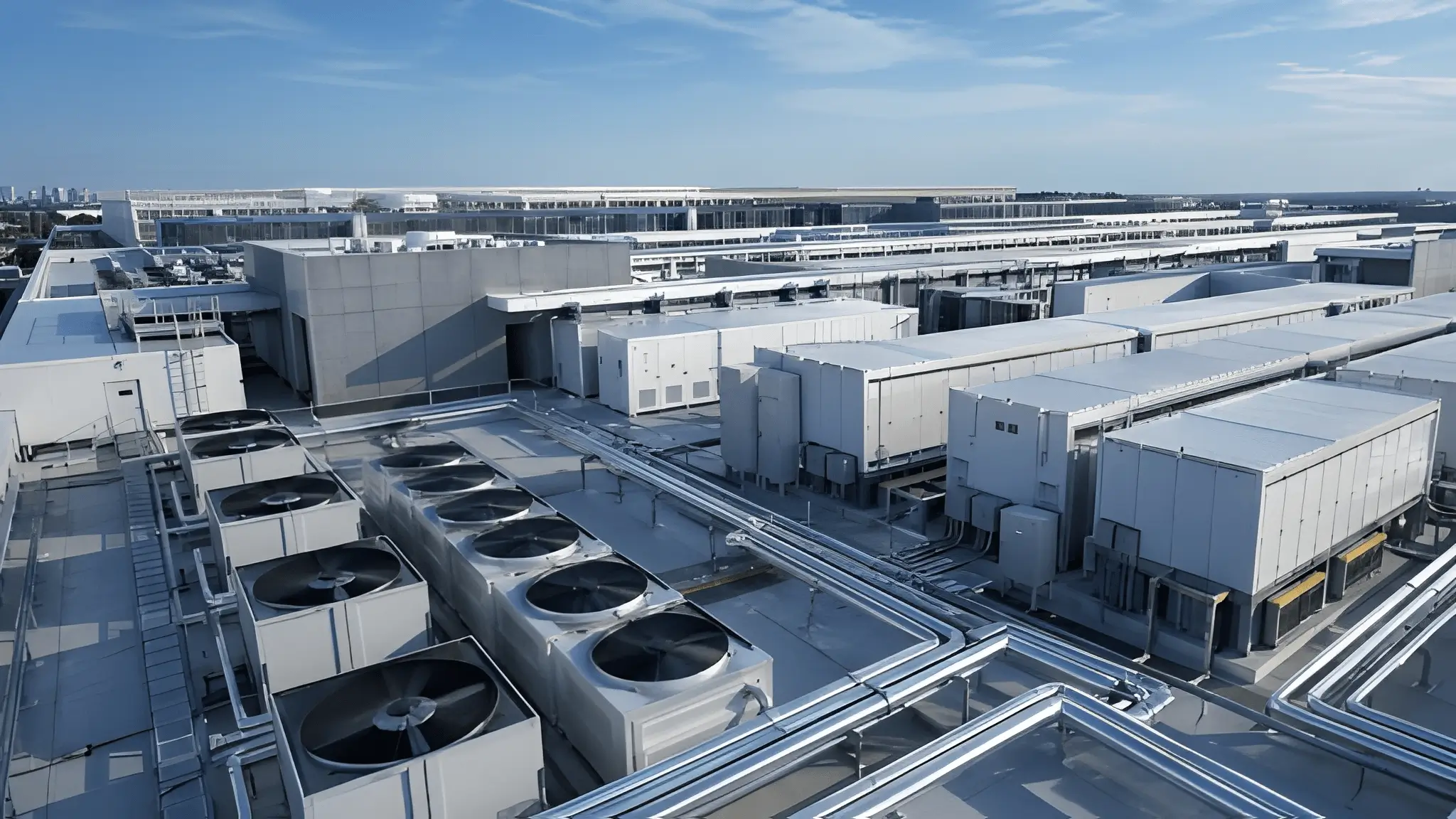
Modern data centers rarely fail in dramatic ways, yet they consistently lose efficiency in subtle, compounding increments that escape immediate detection. Operators often assume that stable dashboards reflect stable systems, but the underlying infrastructure tells a more complex story shaped by physics, workload variability, and incremental wear. Efficiency does not collapse overnight; it erodes through small, interconnected deviations that remain invisible until they manifest as significant cost or performance impacts. Engineering teams tend to focus on uptime and redundancy, which unintentionally shifts attention away from slow inefficiency accumulation. These gradual shifts operate below typical alert thresholds, allowing them to persist unchecked across months or even years. As a result, organizations face a silent but continuous drift that undermines both sustainability goals and operational predictability.

The Slow Leak No One Sees
Micro-inefficiencies form the foundation of long-term energy drift within data centers, often originating from minor inconsistencies in airflow management and thermal containment. Small air leaks around rack enclosures or cable cutouts disrupt controlled cooling pathways, forcing cooling systems to compensate with increased energy output. Thermal inconsistencies develop when hot and cold air streams mix unpredictably, reducing the effectiveness of precision cooling strategies. Idle overhead from underutilized servers continues to draw power, contributing to baseline consumption that scales with infrastructure size. These issues rarely trigger alarms because they fall within acceptable operating thresholds, yet their cumulative effect becomes significant over time. Engineers often underestimate how these marginal inefficiencies aggregate into measurable increases in power usage effectiveness.
Operational teams typically address visible inefficiencies such as equipment failure or overheating events, but subtle losses remain embedded within normal system behavior. Rack-level airflow imbalances create localized hotspots that require additional cooling input without appearing as critical anomalies. Power distribution units may operate below optimal efficiency levels when loads fluctuate slightly, leading to incremental energy waste. Over time, these small deviations compound across thousands of components, creating a systemic inefficiency that cannot be traced to a single source. Monitoring systems often lack the granularity required to isolate these micro-level issues, which allows them to persist undetected. The result is a slow, continuous leakage of efficiency that remains invisible until energy costs reveal the underlying problem.
Stable Metrics, Unstable Systems
Data centers rely heavily on key performance indicators such as power usage effectiveness and uptime, yet these metrics often fail to capture underlying inefficiencies. Stable KPIs can create a false sense of operational consistency, masking the dynamic interactions between cooling systems, power distribution, and compute workloads. Thermodynamic processes within the facility continue to evolve even when external metrics appear unchanged, leading to gradual performance divergence. Load variation introduces additional complexity, as fluctuating demand alters the balance between power consumption and cooling requirements. Systems adjust automatically to maintain stability, but these adjustments often involve increased energy expenditure that remains hidden from high-level dashboards. Consequently, operators may overlook inefficiencies that accumulate beneath the surface of stable metrics.

The reliance on aggregated data further obscures the detection of inefficiency drift, as it smooths out localized variations that could indicate emerging issues. High-level monitoring tools prioritize simplicity and clarity, which reduces their ability to capture nuanced system behavior. Cooling systems may operate slightly above optimal thresholds to maintain consistent temperatures, gradually increasing energy consumption without triggering alerts. Power systems compensate for minor imbalances in load distribution, introducing inefficiencies that remain within acceptable ranges. Meanwhile, workload distribution algorithms optimize for performance rather than energy efficiency, contributing to hidden energy costs. As a result, stable metrics often reflect operational success while concealing the gradual degradation of efficiency.
The Drift Between Design and Reality
Data centers are designed based on specific assumptions about workload patterns, environmental conditions, and equipment performance, yet real-world operations rarely align perfectly with these assumptions. Over time, workloads evolve as applications change, leading to shifts in compute density and resource utilization. Aging hardware introduces additional variability, as components lose efficiency and require more energy to perform the same tasks. Environmental factors such as ambient temperature and humidity fluctuate beyond initial design parameters, affecting cooling system performance. These changes create a divergence between the intended design and actual operating conditions, which gradually reduces overall efficiency. Engineers must continuously adapt to these deviations, yet many systems lack the flexibility required to maintain optimal performance.
Design specifications often assume uniform distribution of workloads and consistent thermal behavior across the facility, but real-world conditions introduce asymmetry that disrupts these assumptions. Hotspots develop in areas with higher compute density, forcing localized cooling adjustments that increase energy consumption. Cooling infrastructure may struggle to adapt to uneven load distribution, leading to inefficiencies in airflow and temperature control. Power systems also experience imbalances as workloads shift, reducing their operational efficiency. These discrepancies accumulate over time, creating a widening gap between design expectations and operational reality. Consequently, data centers operate in a state of continuous adaptation, which inherently introduces inefficiency.
Invisible Imbalance Inside the Stack
Efficiency within a data center depends on the precise alignment of compute, cooling, and power systems, yet small mismatches between these layers can create cascading inefficiencies. Compute workloads may demand rapid scaling, while cooling systems respond with slower adjustments that lag behind real-time requirements. Power distribution networks must accommodate fluctuating loads, which introduces inefficiencies when operating outside optimal ranges. These mismatches remain subtle at first, but they compound as each layer compensates for the others. The result is a system that appears stable while operating below peak efficiency. Operators often focus on individual components rather than the interactions between them, which limits their ability to detect these imbalances.
As the stack becomes more complex, the potential for misalignment increases, particularly in environments that integrate diverse hardware and software systems. Cooling strategies designed for traditional workloads may struggle to adapt to high-density compute environments, leading to overcooling or undercooling scenarios. Power systems may operate inefficiently when supporting mixed workloads with varying energy profiles. Compute resources may remain underutilized due to scheduling inefficiencies, further contributing to energy waste. These interactions create a feedback loop in which inefficiencies in one layer amplify inefficiencies in others. Consequently, the entire system experiences a gradual decline in efficiency that remains difficult to isolate and address.
Too Much Data, Not Enough Signal
Modern data centers generate vast amounts of telemetry data, yet the abundance of information does not guarantee actionable insights. Monitoring systems collect data across thousands of sensors, capturing metrics related to temperature, power consumption, and workload performance. However, the sheer volume of data can overwhelm analysis tools, making it difficult to identify meaningful patterns. Noise within the data often obscures subtle indicators of efficiency drift, which may require advanced analytics to detect under certain operational conditions. Traditional monitoring approaches focus on threshold-based alerts, which can overlook gradual changes that occur within acceptable operating ranges. As a result, organizations may possess extensive data while lacking the ability to interpret it effectively.
Advanced analytics and machine learning offer potential solutions, but their implementation remains inconsistent across the industry. Many organizations struggle to integrate these technologies into existing infrastructure, limiting their ability to extract value from telemetry data. Data quality issues further complicate analysis, as inconsistent or incomplete data reduces the accuracy of insights. Systems may generate conflicting signals, making it difficult to distinguish between normal variation and emerging inefficiencies. Meanwhile, operators rely on simplified dashboards that prioritize clarity over depth, which can reduce visibility into subtle operational trends.Therefore, the gap between data collection and meaningful insight can hinder efforts to consistently identify and address efficiency drift.
Efficiency degradation within data centers does not announce itself through immediate failures or dramatic performance drops, but rather through a steady accumulation of small inefficiencies that remain unnoticed. These inefficiencies originate from micro-level deviations, masked metrics, evolving operational conditions, and complex system interactions. Over time, they converge into measurable impacts on energy consumption, operational cost, and sustainability performance. Organizations that treat efficiency as a static achievement risk overlooking the dynamic nature of their infrastructure. Continuous monitoring, adaptive design strategies, and deeper analytical capabilities become essential for maintaining long-term efficiency. Ultimately, preventing drift requires a proactive approach that recognizes efficiency as an ongoing operational state rather than a one-time optimization milestone.











