 Skip to content
The clean energy conversation in AI infrastructure has spent three years circling the same two technologies. Solar and wind dominate the power purchase agreement market. Hyperscalers announce gigawatts of renewable procurement. Carbon targets get reaffirmed on earnings calls. Meanwhile, the fundamental problem with solar and wind for AI infrastructure remains unresolved. Neither generates power when the grid needs it most. Neither provides the firm, dispatchable, around-the-clock power that GPU clusters running inference workloads demand continuously. The industry has been papering over that gap with carbon certificates and grid supplementation. That approach is running out of road.

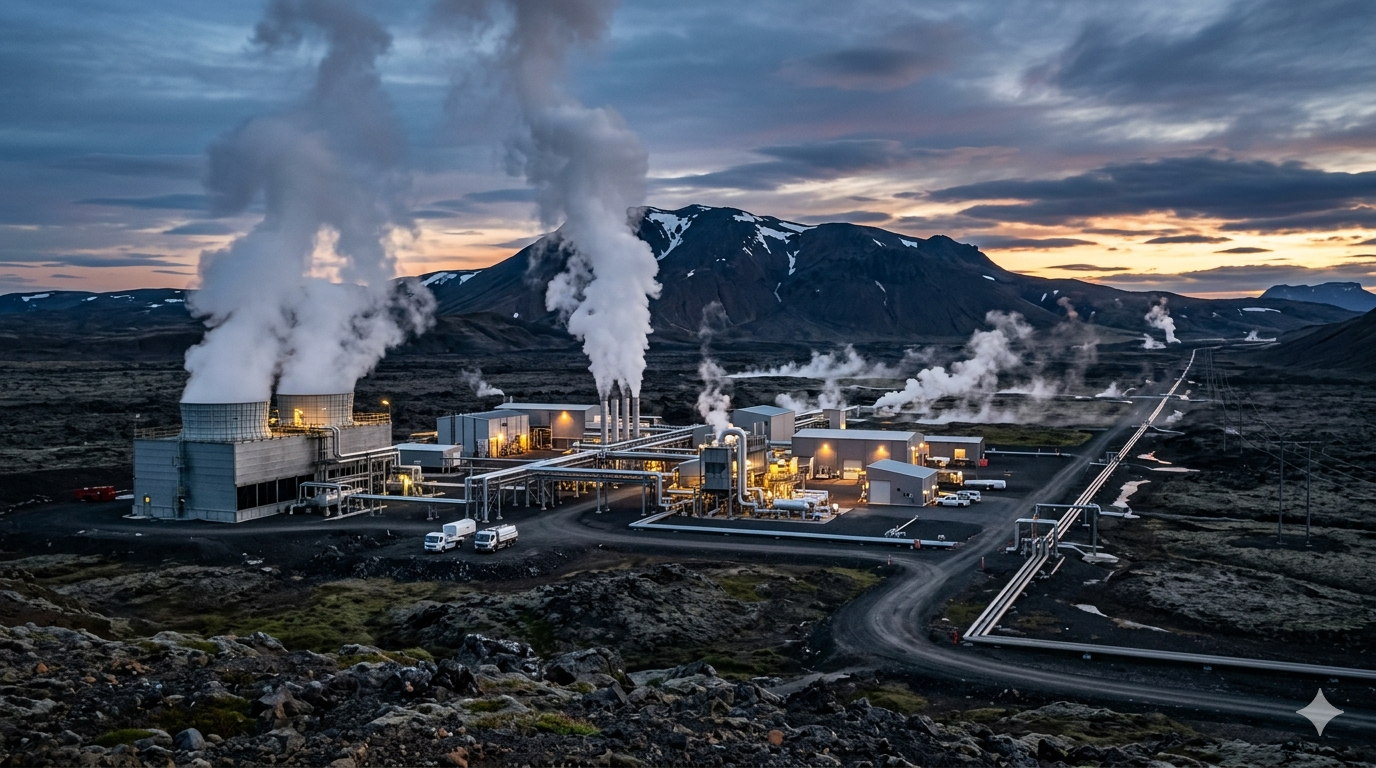
Two technologies are moving into the conversation with genuine momentum. Geothermal power and long-duration energy storage are advancing from pilot programs toward commercial viability at the scale and cost points that AI infrastructure economics require. Neither is a complete solution on its own. Together, they represent the most credible path the industry has toward clean firm power that does not depend on favorable weather conditions or short-duration battery systems that can only bridge hours rather than days. The transition from announcement to execution is still in its early stages. However, the signals coming out of Data Center World 2026 and the procurement conversations happening between hyperscalers and energy developers suggest the transition is real.
Why Solar and Wind Are Not Enough for AI Infrastructure
AI data centers do not run on a schedule that accommodates renewable energy variability. A GPU cluster training a large model or serving inference requests at scale draws power continuously, around the clock, at densities that leave no room for load shedding or demand response. The power has to be there when the compute needs it. Solar stops generating at night. Wind stops generating when the air is calm. In both cases, the grid or a backup source has to fill the gap.
For years, hyperscalers managed this mismatch through a combination of grid supplementation and renewable energy certificates. The certificates allowed them to claim renewable energy consumption without requiring that the renewable electrons actually power their facilities in real time. That model satisfied corporate sustainability reporting requirements but did not address the physical reality that their data centers ran on whatever mix of generation the grid happened to be dispatching at any given moment. As AI load growth strains grids in the markets where data centers concentrate most heavily, the supplementation model is becoming increasingly difficult to sustain without driving up costs for other grid users. The time-to-power crisis that is already reshaping where AI infrastructure gets built is making the clean firm power question impossible to defer any longer.

What Geothermal Brings to the Table
Geothermal power is fundamentally different from solar and wind in the characteristic that matters most for AI infrastructure. It generates electricity continuously, regardless of time of day or weather conditions, from heat that the earth produces without interruption. A geothermal plant running at capacity produces the same output at midnight in a storm that it produces at noon on a clear day. For an AI data center operator seeking clean firm power, that consistency is worth a significant premium over intermittent alternatives that require expensive storage or grid backup to deliver reliable capacity.
The challenge with geothermal has historically been geographic constraint. Conventional geothermal development requires proximity to naturally occurring hydrothermal resources, which concentrate in specific geologically active regions. That constraint limited the technology’s applicability for data center siting because operators could not simply choose geothermal power regardless of where their facilities needed to be located. Enhanced geothermal systems change that calculus. By drilling into hot dry rock formations that exist across a much wider geographic range and injecting water to create the steam that drives generation, enhanced geothermal systems can develop clean firm power in locations that conventional geothermal cannot reach.
Long-Duration Storage as the Complementary Layer
Long-duration energy storage addresses the intermittency problem from a different angle. Rather than replacing variable renewable generation with firm generation, long-duration storage allows operators to capture surplus renewable energy during periods of high generation and low demand and dispatch it during periods of low generation and high demand. A storage system that can hold energy for ten, twenty, or forty hours rather than the two to four hours that lithium-ion batteries typically provide can bridge the gap between renewable generation cycles in ways that short-duration storage cannot.
Several long-duration storage technologies are advancing toward commercial deployment at scales relevant for AI infrastructure. Iron-air batteries store energy through a reversible rust reaction and can hold charge for extended periods at significantly lower cost per kilowatt-hour than lithium-ion systems. Compressed air energy storage, pumped hydro variants designed for sites without natural elevation differences, and thermal storage systems that capture and release heat rather than electricity are all advancing along similar trajectories. As covered in our analysis of transformer and substation supply chains, the broader electrical infrastructure supporting these storage deployments faces its own lead time constraints that operators need to factor into their planning timelines.
The Portfolio Approach Hyperscalers Are Evaluating
The most sophisticated energy procurement teams at the major hyperscalers are not choosing between geothermal, long-duration storage, solar, and wind. They are evaluating portfolio combinations that use each technology for what it does best. Solar and wind provide low-cost energy during favorable conditions. Long-duration storage captures that energy and dispatches it during unfavorable conditions. Geothermal provides the firm baseload that anchors the portfolio and ensures that the combined system can meet data center demand regardless of weather or time of day without relying on the grid as a primary backup.
That portfolio approach is more expensive than a simple renewable energy certificate strategy. However, it is also more honest about the physical reality of what AI data centers require and more defensible as regulatory frameworks evolve to scrutinize the gap between claimed and actual renewable energy consumption. The hyperscalers moving toward genuine around-the-clock clean power are doing so partly out of sustainability conviction and partly out of recognition that the regulatory and reputational risks of the certificate model are growing faster than the cost premium for real clean firm power is declining.












