 Skip to content
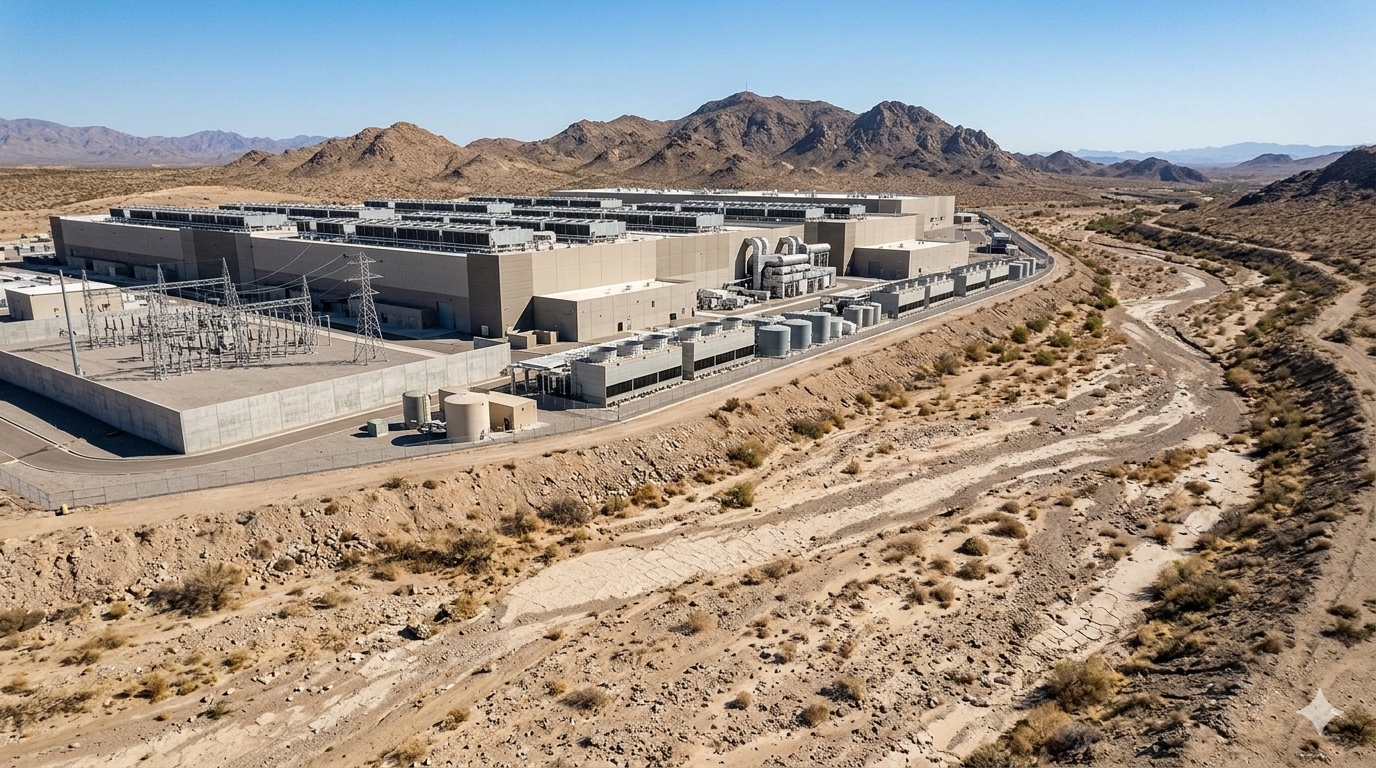
The first phase of AI infrastructure geography was determined by power and connectivity. Data centers concentrated in markets with access to cheap, reliable electricity and dense fiber networks. Northern Virginia, Silicon Valley, Phoenix, Dallas, Dublin, Singapore, and Amsterdam emerged as primary data center markets because they offered the combination of grid access, connectivity infrastructure, and operational expertise that the industry needed at a cost point that made sense. Water was a consideration but rarely the determining factor. Cooling water availability was sufficient in most primary markets, and where it was not, air cooling or water recycling provided adequate alternatives.

Different constraints are now determining the second phase of AI infrastructure geography. Power availability has replaced cost as the primary driver because interconnection queue backlogs and grid capacity limitations now determine which markets can absorb new data center load on commercially viable timelines. Water constraints have emerged as the third major factor, and they are arriving at a moment when primary markets are already strained by power limitations they cannot resolve quickly. Together, power and water constraints are reshaping where developers build the next generation of AI infrastructure, and these decisions will define the competitive geography of AI compute for the next decade.
How Cooling Water Became a Strategic Variable
The cooling water requirements of AI data centers have grown with GPU density in ways that planners did not fully model in the early phase of the buildout. Air-cooled data centers consume water primarily through evaporative cooling towers that reject heat to the atmosphere. A conventional enterprise data center drawing five megawatts of power may consume one to two million gallons of water annually through its cooling tower operations. An AI data center drawing one hundred megawatts of power, running dense GPU clusters at high utilization, can consume twenty to forty million gallons annually. The largest proposed AI campuses targeting five hundred megawatts or more could consume one hundred million gallons or more.
In water-abundant markets, these volumes are manageable within local water supply systems that have capacity to absorb large industrial users without affecting other consumers. In water-stressed markets, the same volumes represent a material fraction of available supply and create genuine conflicts with agricultural, residential, and other industrial users who have prior claims on the same water sources. The western United States, where much of the most attractive AI data center land exists in terms of power cost and available acreage, is also where water stress is most severe and where the legal frameworks governing water rights are most complex and contentious. As we covered in our analysis of transformer and substation supply chains, the physical resource constraints governing AI infrastructure development interact in ways that make it impossible to resolve any single constraint without understanding the others.

The Western Water Rights Conflict
Water law in the western United States operates under the prior appropriation doctrine, which establishes water rights through historical use rather than property ownership. The entity that has used water the longest holds the strongest legal claim during times of shortage. Agricultural users, many of whom have held water rights for more than a century, therefore have senior priority over newer industrial users, including data centers. When drought conditions reduce available water supply, utilities cut off junior rights holders before senior rights holders, regardless of how economically significant their water use is or how much they are willing to pay.
This legal framework creates a structural problem for data center development in water-stressed western markets that no amount of capital can resolve through bilateral negotiation alone. A data center operator that secures a water supply agreement with a local utility is not insulated from the prior appropriation system if the utility itself has junior water rights. The water security that a data center operator needs to justify capital investment in a large facility requires either a senior water rights position not available in most desirable markets or a water supply technology approach that eliminates dependence on local water sources entirely. Neither option is straightforward or inexpensive.
Liquid Cooling’s Paradoxical Effect
The rapid adoption of liquid cooling in AI data centers has a paradoxical relationship with the water constraint. Direct-to-chip liquid cooling dramatically reduces air conditioning and evaporative cooling requirements, which can reduce a facility’s water consumption relative to an air-cooled facility drawing the same power. However, liquid cooling systems that use water as the primary coolant medium require water supply for the cooling loop itself. Depending on the cooling system design, they can also create water quality requirements and discharge challenges that add complexity to the water supply picture.
Closed-loop liquid cooling systems that recirculate the same water throughout the facility with minimal evaporative loss represent the most water-efficient approach. However, these systems require coolant chemistry management, corrosion control, and periodic water replacement that create continuous operational water demand. Open-loop systems that use fresh water and discharge heated water create larger water demands and potential discharge permitting issues. The water efficiency of liquid cooling relative to air cooling is real but depends heavily on the specific system design and the local water supply and discharge conditions. Blanket claims about liquid cooling as a water conservation technology are therefore misleading in many operational contexts.
The Markets Being Reshaped Right Now
The water constraint is not a future risk. It is actively reshaping data center siting decisions in multiple markets right now. Phoenix, which emerged as one of the fastest-growing data center markets in the US during the 2020-to-2023 period, is experiencing water-related friction that is changing how operators evaluate new developments there. The greater Phoenix metropolitan area relies heavily on the Colorado River and the Salt River Project for its water supply. Both sources are under stress from a combination of climate-driven drought and competing demands from agricultural, residential, and growing industrial users across multiple states.
Maricopa County has implemented stricter water assessment requirements for large new developments including data centers. Several major data center projects in the Phoenix market have faced delays or modifications in response to water availability concerns that were not part of the original development calculus when the land was acquired. The market remains active because its power infrastructure advantages and established operational ecosystem are difficult to replicate quickly. However, the water constraint is adding cost, complexity, and uncertainty to Phoenix developments that were not present when the market first emerged as an AI infrastructure destination.
The Texas Situation
Texas presents a different version of the water constraint problem. The state has abundant land, improving power infrastructure, and an established data center ecosystem in Austin, Dallas, and San Antonio. It also has a water supply picture that varies dramatically by region and is increasingly stressed in the areas where AI data center development is most active. The Edwards Aquifer, which supplies much of the San Antonio region’s water, is subject to conservation measures that limit extraction in drought conditions. The Trinity Aquifer serving the Dallas-Fort Worth region is under increasing pressure from population growth and industrial demand.
The state’s groundwater law, which has historically allowed landowners to pump groundwater from under their property without restriction, is under increasing scrutiny as large industrial users draw groundwater at rates that affect neighboring wells and aquifer levels. Several counties have implemented groundwater conservation district rules that constrain extraction for large industrial users. As AI data center development accelerates in Texas markets where groundwater is the primary water supply, the legal and regulatory framework governing that water is becoming a material development risk that operators must assess before committing capital to specific sites.
The Virginia Pressure Point
Northern Virginia remains the largest data center market in the world by installed capacity, and it is also facing water-related constraints that most market coverage does not adequately address. The Potomac River and its tributaries supply water to the region, but interstate compact arrangements govern how much water each jurisdiction can draw. Loudoun County and Prince William County, which together host most of Northern Virginia’s data center capacity, are both operating close to the limits of their water allocation entitlements under these agreements.
New large-scale data center developments in these counties therefore face water supply constraints that compound the power constraints that have already been extensively documented. A developer seeking to build a new hundred-megawatt AI campus in Northern Virginia must navigate both an interconnection queue measured in years and a water supply picture that provides limited headroom for large new industrial users. The combination makes the already expensive Northern Virginia market even more challenging for new entrants, while simultaneously advantaging incumbents who secured power and water access before both became constrained.
International Markets Moving to the Front
The water constraint in primary US markets is accelerating the evaluation of international markets where water supply is more abundant and the legal frameworks governing its use are less restrictive. The Nordic countries, which have historically offered natural cooling from cold climates and abundant fresh water from snowmelt and precipitation, are attractive from a water perspective as well as from a renewable energy perspective. Finland, Norway, and Sweden are all experiencing increased interest from operators who are discovering that the combination of water abundance, renewable energy, and political stability offsets the higher labor costs and longer development timelines relative to US markets.
Northern Ireland, Scotland, and parts of Canada represent similar water-abundant alternatives to water-stressed US primary markets. The Canadian market in particular is beginning to attract serious attention from AI infrastructure operators who view its combination of abundant water, hydroelectric power, and political stability as a compelling alternative to the resource-constrained primary markets. Quebec’s hydroelectric power and cold climate represent a combination of water abundance and cooling efficiency that is genuinely differentiating in a market where those resources are increasingly scarce.
The Southeast Asia Picture
Southeast Asia presents a more complex water picture than the Nordic alternatives. Singapore, which has been the dominant data center market in the region, has implemented a moratorium on new data center construction that reflects in part the island state’s limited water resources and the competition between data center cooling demand and other water uses. The moratorium has redirected development interest toward neighboring markets including Malaysia, Indonesia, and Thailand, all of which have larger water resources but more variable regulatory environments and less developed grid infrastructure.
Malaysia’s Johor state, immediately north of Singapore, has attracted significant data center investment partly because its water resources are substantially larger than Singapore’s. However, Johor’s water supply is itself a matter of bilateral political sensitivity with Singapore, which purchases a significant portion of its water from Malaysia under long-standing agreements. Data center operators choosing Malaysian locations for their proximity to Singapore customers and their more abundant water supply are therefore entering a water supply picture that carries geopolitical dimensions that purely commercial water supply analysis does not capture.
The Middle East Contradiction
The Middle East presents the most acute contradiction between data center ambition and water reality. Saudi Arabia, the UAE, and Qatar are all investing heavily in AI infrastructure as part of their national digital transformation strategies. They are doing so in among the most water-stressed environments on earth. These countries desalinate the vast majority of their fresh water at enormous energy cost. Their data center cooling needs in extreme summer heat, where ambient temperatures regularly exceed forty-five degrees Celsius, are among the highest of any market globally.
Operators building AI data centers in the Gulf are therefore simultaneously consuming desalinated water at scale for cooling, operating in extreme ambient temperatures that increase cooling requirements, and drawing power from grids where a significant fraction of generation capacity is itself used for desalination. The water-energy nexus in Gulf data center operations creates a sustainability profile that is genuinely challenging to decarbonize, regardless of how aggressively operators pursue renewable energy procurement. The sovereign AI infrastructure strategies of Gulf states are driving investment into these markets regardless of the water constraint, but the long-term operational economics of data centers in extreme water-stressed environments will shape the competitiveness of those investments as water and energy costs evolve.
The Regulatory Response Is Accelerating
Water consumption by data centers is attracting regulatory attention that is moving faster than most operators anticipated. Local governments and water authorities are implementing disclosure requirements, consumption limits, and environmental review processes that add time and cost to data center development in ways that did not exist two years ago. The communities that have experienced the largest concentrations of data center development are leading this regulatory response, but the frameworks they develop are being adopted by communities that have not yet experienced significant data center development but are evaluating how to manage the applications they are receiving.
Nevada has implemented reporting requirements for large water users including data centers. Arizona’s county-level water assessment requirements are expanding. European markets are advancing sustainability disclosure requirements that include water consumption metrics as a mandatory component. The SEC’s climate disclosure rules, while facing legal challenges, include water as a material resource risk that public companies must assess and disclose. The regulatory environment governing data center water use is moving from voluntary disclosure toward mandatory reporting and in some jurisdictions toward consumption limits that will constrain development in water-stressed markets regardless of operator willingness to pay for water access.
The Water Purchase Agreement Model
Some operators are responding to water supply constraints by securing long-term water purchase agreements with utilities and water districts that provide supply certainty at committed volumes. These agreements, modeled on the power purchase agreement structures that the industry uses for electricity, provide operators with the water supply predictability needed to justify capital commitments while providing water utilities with the demand certainty needed to justify infrastructure investment. However, water purchase agreements carry the same prior appropriation risk as direct water rights in markets where the utility’s own rights are junior to agricultural or other senior users.
The most sophisticated water supply strategies being implemented by leading operators combine multiple approaches. Waterless cooling technologies, including air cooling optimized for specific climate conditions and certain liquid cooling approaches that use dielectric fluid rather than water, are being deployed to reduce dependence on local water sources for the cooling function. Rainwater harvesting and greywater recycling are being incorporated into facility designs to reduce municipal water demand. Partnerships with agricultural water rights holders are being explored in some markets as a mechanism for accessing senior water rights that the operators themselves cannot establish. None of these approaches fully resolves the water constraint, but their combination can reduce the risk to levels that allow development to proceed in markets where pure dependence on local water supply would be prohibitive.
The Technology Response
Beyond procurement and legal strategies, a technology response to the water constraint is emerging that could meaningfully change the water economics of AI data center operations over the next five years. Adiabatic cooling systems that use minimal water during mild weather conditions and increase water consumption only during peak heat events reduce annual water consumption substantially relative to conventional evaporative cooling while maintaining cooling capacity during the hottest periods when alternative approaches fail. Atmospheric water generation technology, which extracts water vapor from air, is being evaluated for data center applications in humid climates where the technology’s yield is commercially viable.
The most transformative technology response would be the widespread adoption of fully waterless cooling approaches that eliminate water consumption from the cooling function entirely. Air-cooled systems in mild climates, dielectric fluid immersion cooling that uses no water, and thermoelectric cooling approaches that reject heat through solid-state mechanisms rather than evaporative processes all represent paths toward waterless AI data center operations. None of these technologies currently provides the cooling density and cost economics required for the highest-density GPU deployments at commercial scale. However, the pace of development in cooling technology is accelerating in response to the water constraint, and the economics of waterless cooling at high GPU density will look different in five years than they do today.
The Water-Energy Nexus and Its Infrastructure Implications
The relationship between water and energy in AI data center operations runs deeper than the cooling function alone. Water and energy are co-dependent inputs in ways that create compound constraints when both are under stress simultaneously. The electricity that powers AI GPU clusters generates heat that requires water to manage. The water treatment processes that make municipal water suitable for cooling systems require energy. The pumping infrastructure that circulates cooling water through a large facility requires electricity. These interdependencies mean that optimizing for water efficiency without accounting for energy impacts, or vice versa, produces solutions that solve one constraint while worsening the other.
The compound nature of the water-energy nexus is most visible in markets where both resources are constrained. A Phoenix data center operator reducing water consumption by shifting from evaporative cooling to air cooling during peak summer months faces a tradeoff: lower water consumption at the cost of higher electricity consumption for mechanical cooling systems that work less efficiently in extreme heat than evaporative alternatives. The energy penalty of waterless cooling in hot climates is real and significant. In a market where electricity is already constrained and expensive, accepting that penalty to reduce water consumption may not improve the overall resource position of the facility.
How Waste Heat Recovery Changes the Equation
One approach that can reduce both water and energy consumption at the same time is waste heat recovery, where operators capture the heat rejected by data center cooling systems and use it productively instead of discharging it to the atmosphere or a water body. A data center that supplies heat to a district heating network, an industrial process that requires low-grade heat, or an agricultural facility that uses heat for controlled-environment growing converts what was previously a waste stream into a valuable output. The cooling system still consumes energy and may still consume water, but the productive use of recovered heat offsets the energy consumption required for alternative heat sources, improving the net resource economics of the facility.
Waste heat recovery at meaningful scale requires proximity to heat consumers and the infrastructure to transfer heat between the data center and its customers. These requirements constrain where waste heat recovery is commercially viable. Northern European markets offer the best near-term conditions for data center waste heat recovery because they already have well-developed district heating networks and cold ambient temperatures that make low-grade heat commercially valuable. The Nordic data centers that supply heat to municipal district heating networks are demonstrating a model that reduces the environmental footprint of AI data center operations while creating a revenue stream or cost offset that improves facility economics.
The Agricultural Water Partnership Model
The conflict between data center cooling water demand and agricultural water rights that characterizes western US markets creates an adversarial dynamic that serves neither party well. Agricultural users who hold senior water rights face an industrial competitor seeking to acquire or contract for water supply. Data center operators seeking water security face a legal system that prioritizes agricultural rights regardless of economic value differences. The adversarial framing misses an opportunity for a partnership model that can serve both parties better than the competitive alternative.
An agricultural water rights holder whose farming operation is becoming marginal due to soil degradation, commodity price pressure, or generational transition has an asset whose value to a data center operator substantially exceeds its value in agricultural use. A structured long-term water supply agreement between a data center operator and an agricultural water rights holder can convert that agricultural asset into a reliable income stream while providing the data center with the water security that junior water rights cannot offer. Several organisations in Arizona and California have structured these arrangements because the combination of agricultural stress and data center demand has created conditions where both parties prefer partnership models over adversarial alternatives.. The operators who develop expertise in agricultural water rights partnerships will access a supply of senior water rights that their competitors cannot reach through conventional water procurement approaches.
The Infrastructure Planning Imperative
The water constraint is arriving at a moment when the AI infrastructure industry is already managing multiple simultaneous constraints on development pace and capital allocation. Adding water to the list of factors that site selection must optimize creates genuine complexity in planning processes that were already more demanding than those of any previous infrastructure buildout cycle. Operators who will navigate this complexity most effectively treat water as a planning input from the earliest stage of site evaluation rather than as a permitting detail they address after selecting a site.
Integrating water supply analysis into site selection from the outset requires capabilities that most data center development organizations have not historically maintained internally. Hydrology expertise, water rights legal analysis, water utility relationship management, and water technology assessment are all specialized disciplines that sit outside the core competencies of most real estate and infrastructure development organizations. Building these capabilities requires investment in personnel and process that takes time to produce results. However, the alternative—conducting water analysis as a late-stage permitting exercise and discovering material constraints after committing significant capital to a site—creates costs that far exceed the investment required for upfront planning capability.
The Site Selection Framework for the Multi-Constraint Era
The site selection framework that the AI infrastructure industry needs for the multi-constraint era integrates power, water, grid interconnection, permitting, workforce, and community relations as simultaneous inputs evaluated in parallel from the earliest stage of site identification. Each constraint has its own assessment methodology and its own timeline for resolution, and the interactions between constraints mean that resolving one without accounting for the others can create new problems. A site may successfully meet power and water requirements, but if permitting opposition consumes years of management attention, it may be less attractive than a site with slightly weaker power and water characteristics that developers can build faster and with less regulatory friction.
Operators who develop this multi-constraint site selection capability and apply it systematically across their development pipelines will build portfolios of development sites they can actually execute. Those who continue to evaluate sites against individual constraints sequentially, discovering new problems at each stage of the development process, will continue to experience the delays and capital inefficiency that have characterized too much of the AI infrastructure buildout to date. The water constraint is the most recent addition to the list of factors that make this integrated approach necessary. It will not be the last.
What the Water-Aware Infrastructure Map Looks Like
The geography of AI infrastructure will look meaningfully different in 2030 from how it looks today, and a significant part of that difference will reflect the water constraint operating alongside the power constraint to direct development toward markets where both resources are available at adequate scale and under legally secure terms. The markets that will grow fastest are those offering the combination of renewable power access, water abundance, grid interconnection capacity, and political stability that large-scale AI infrastructure investment requires. The markets that will grow more slowly than their power and connectivity advantages would otherwise suggest are those where water constraints are adding complexity, cost, and risk to development that operators can avoid by choosing alternative locations.
Phoenix will continue to grow but more slowly than its power and real estate advantages would imply. Northern Virginia will add capacity but face increasingly difficult site selection as both power and water headroom shrinks. Texas will bifurcate between water-rich eastern markets where development can proceed and water-stressed western and central markets where constraints are tightening. The Nordic markets, Canada, and select European locations with water abundance and renewable power will attract disproportionate investment from operators who are planning for the full resource picture rather than optimizing for individual constraints.
The Competitive Advantage of Water-Rich Development
The operators who identify and secure positions in water-rich markets before the competition for those positions intensifies will hold development advantages that compound over time. A portfolio of permitted, powered, and water-secure development sites in markets that meet all the constraints that the next generation of AI infrastructure requires is a strategic asset whose value grows as the industry discovers how rare such sites actually are. In AI data center development, site selection is evolving from a real estate optimisation exercise into a multi-constraint strategic planning problem where developers must optimise power, water, grid interconnection, permitting, and operational workforce considerations at the same time.
Operators, investors, and developers who apply this multi-constraint framework from the outset will build development pipelines they can execute on commercially viable timelines. Those who continue to optimise for individual constraints without accounting for the full resource picture will discover that they cannot develop the sites they selected, permitted, and planned for because a constraint they failed to evaluate properly is blocking execution.
The water constraint will define the next phase of AI infrastructure geography not because it is the most important resource constraint in isolation, but because it is the constraint that the industry has been slowest to internalize and that will therefore create the largest differential between operators who planned for it and those who did not. The geography of AI compute is being redrawn right now. The operators making site decisions today are making decisions whose consequences will be visible for a decade.












