 Skip to content
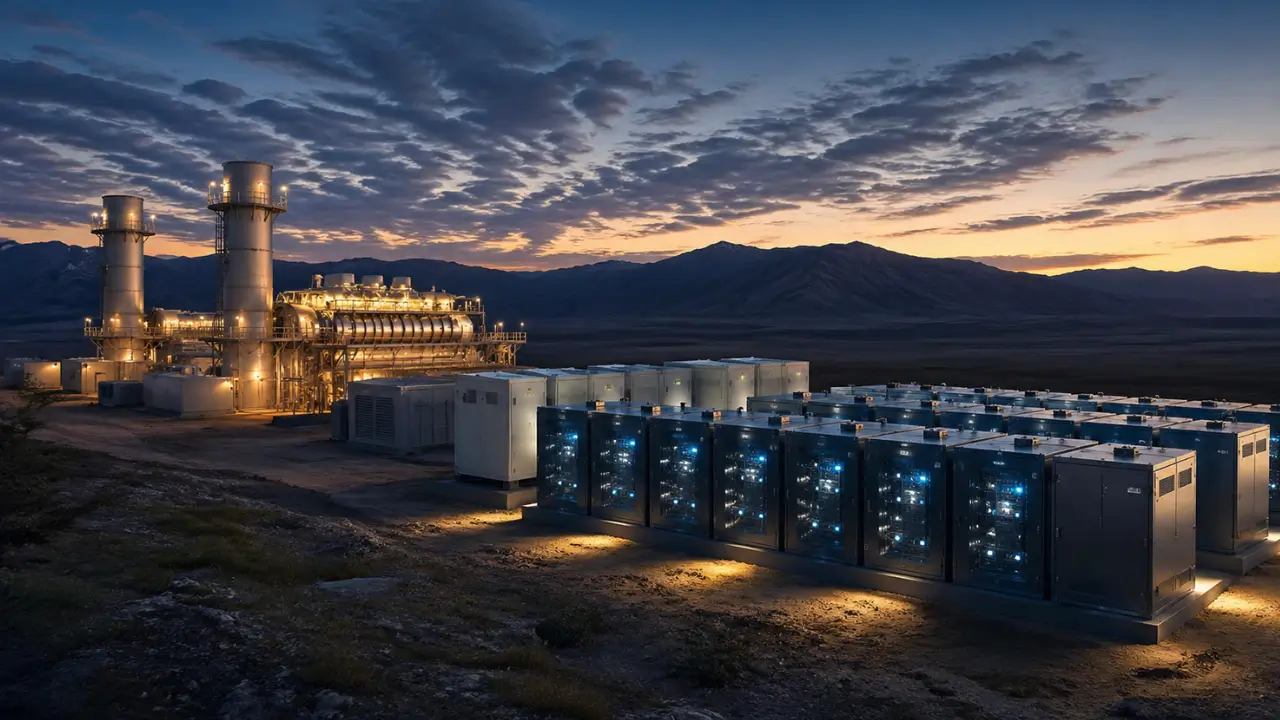
The narrative around energy storage has taken on a tone of inevitability, as if batteries alone can accelerate a clean transition without structural friction. That narrative breaks down under closer inspection of how modern grids actually operate under rising demand pressure. Storage does not exist in isolation, and its deployment aligns tightly with existing generation assets rather than replacing them outright. Operators optimize for reliability first, and they use every available tool to reduce volatility rather than eliminate legacy systems. That optimization logic often leads to hybrid architectures where gas generation remains central but operates more efficiently. The result in many current grid configurations is not full displacement, but a more resilient fossil-integrated system that adapts rather than retreats.

Battery systems reduce volatility in supply by absorbing excess generation and releasing it during deficits, which directly complements gas-fired plants rather than competing with them. Grid operators rely on fast-ramping gas turbines to respond to sudden demand spikes, and storage enhances that responsiveness by smoothing the load profile. This interaction reduces wear on gas assets while extending their operational lifespan through more controlled dispatch cycles. Storage also lowers the need for constant spinning reserves, which improves overall system efficiency without removing fossil dependency. As a result, gas plants operate less erratically but remain structurally necessary within the grid framework. This dynamic reinforces the role of gas as a stabilizing backbone rather than pushing it out of the system.
Energy markets further reinforce this pattern through pricing mechanisms that reward flexibility and availability over pure cleanliness. Batteries capture value through arbitrage and ancillary services, yet gas plants still secure capacity payments that guarantee their presence. This creates a layered system where storage optimizes the economics of fossil generation instead of replacing it. Grid reliability standards also mandate dispatchable power sources, and storage alone cannot yet meet long-duration requirements at scale. Consequently, operators design systems where batteries handle short-term fluctuations while gas fills structural gaps. The combined architecture in several markets results in a more efficient fossil system in the near term rather than an immediately declining one.
The Illusion of Transition: Cleaner, But Not Clean
Hybrid energy systems often present a cleaner profile in emissions reporting, yet in many cases they do not fundamentally alter the near-term dependency on fossil inputs. Batteries reduce peak emissions intensity by shifting when gas plants operate, but they do not eliminate the need for combustion-based generation. This creates a perception of progress that aligns with policy narratives while maintaining underlying infrastructure continuity. Emissions accounting frameworks sometimes emphasize marginal improvements rather than systemic transformation. That emphasis allows hybrid systems to appear transitional while effectively preserving fossil reliance. The distinction between optimization and replacement becomes blurred in public discourse.
However, the structural lock-in emerges from capital allocation decisions that favor incremental upgrades over full system replacement. Utilities invest in storage to enhance existing assets because it offers faster returns and lower risk compared to building entirely new renewable infrastructure. This investment pattern can reinforce medium-term dependency on gas by embedding it deeper into existing system design under current market conditions. Storage becomes an accessory that improves performance metrics without challenging foundational energy sources. The system evolves toward efficiency rather than transformation, which delays meaningful decarbonization. That delay reflects economic rationality rather than technological limitation.
From Backup to Bridge Fuel Infrastructure
Battery systems initially entered the grid as backup solutions, designed to provide short-duration support during outages or peak demand periods. Their role has expanded into a continuous balancing layer that interacts dynamically with gas generation. This shift transforms storage into a bridge that connects intermittent renewables with dispatchable fossil assets. Gas plants benefit from reduced cycling stress, which extends their maintenance intervals and operational viability. Storage effectively absorbs variability, allowing gas infrastructure to operate under more stable conditions. The system evolves into a coordinated network rather than a sequence of replacements.

Meanwhile, infrastructure planning increasingly integrates storage as a permanent feature rather than a transitional tool. Developers design new projects with co-located batteries and gas turbines to maximize flexibility and revenue streams. This integrated approach can create medium- to long-term dependencies that may be difficult to unwind without significant financial disruption, depending on future policy and market shifts. Storage enhances the value proposition of gas by making it more adaptable to fluctuating demand patterns. The combination becomes more attractive than standalone renewable systems in many regions. This evolution positions storage as an enabler of continuity rather than a catalyst for disruption.
Why Intermittency Is Fossil Fuel’s Second Chance
Renewable energy introduces variability that challenges grid stability, particularly during periods of low generation or sudden demand increases. Storage mitigates short-term fluctuations, yet it cannot fully address extended periods of low renewable output. Gas generation fills that gap by providing consistent and controllable power when needed. This relationship can give fossil fuels a renewed strategic role within certain renewable-heavy grid configurations, particularly where long-duration storage remains limited. Batteries act as the intermediary that makes this hybrid model operationally viable. The system relies on both technologies to maintain reliability under uncertain conditions.
Intermittency also influences market behavior by increasing the value of dispatchable resources that can respond quickly to changing conditions. Gas plants benefit from this dynamic because they can ramp output rapidly when storage reaches its limits. Batteries enhance this capability by reducing the frequency and intensity of ramping events. The combined effect creates a system where gas operates more efficiently and remains indispensable. This synergy does not immediately eliminate fossil fuels but can redefine their role within the energy mix during transitional phases. The interaction between variability and flexibility becomes the defining characteristic of modern grids.
The Economics of Delay: Why Gas Refuses to Die
Cost considerations play a decisive role in shaping energy infrastructure decisions, particularly under rising demand pressures from digital systems and industrial expansion. Gas plants offer relatively low capital costs and rapid deployment timelines compared to large-scale renewable projects. Storage enhances their economic viability by improving efficiency and reducing operational costs. This combination can create a financially attractive solution for meeting immediate demand without extensive grid upgrades in regions facing infrastructure or permitting constraints. Investors prioritize returns and risk mitigation, which favors hybrid systems over complete transitions. The economics of delay become embedded in the structure of energy markets.
However, grid constraints and permitting challenges further reinforce reliance on gas and storage combinations. Renewable projects often face delays due to land use conflicts, transmission limitations, and regulatory hurdles. Gas plants can bypass many of these barriers, making them a more practical option in the short term. Storage complements this approach by addressing variability without requiring extensive infrastructure changes. The result in some regions is a system that prioritizes speed and reliability over long-term sustainability in the near term. This economic logic sustains fossil fuel relevance despite growing environmental concerns.
The Future Isn’t Fossil-Free, It’s Fossil-Extended
Energy storage represents a significant technological advancement, yet its impact depends entirely on how systems integrate it into existing infrastructure. Current deployment patterns in several markets show a trend toward optimization alongside, rather than immediate replacement of, fossil fuels. Gas remains central because it provides the reliability that storage cannot yet guarantee at scale. Batteries enhance that reliability by smoothing variability and improving operational efficiency. This interaction can extend the functional lifespan of some fossil assets in the near term instead of immediately accelerating their decline. The trajectory of energy systems reflects pragmatic decision-making rather than idealized transition models.
The broader implication lies in how policy, economics, and technology converge to shape long-term outcomes. Storage enables a more flexible and resilient grid, but it can also reinforce existing dependencies when paired with fossil generation under current system designs. This dual effect complicates narratives about rapid decarbonization and highlights the importance of structural change. Systems evolve based on constraints and incentives, not just technological potential. The path forward will depend on whether future investments prioritize transformation over incremental improvement. Until that shift occurs, storage may in some cases extend rather than fully replace the role of fossil fuels, depending on regional deployment pathways.












