...
NVIDIA H200 shipments delayed to Q3  · BREAKING: Microsoft confirms 3GW data centre expansion in Asia-Pacific ·  AWS announces new sovereign cloud regions in India and UAE  · Arm-based servers now 24% of hyperscale deployments ·  EU AI Act enforcement enters phase two  · Global data centre investment hits $612B in 2026 ·  TSMC Arizona yields improve to 68% on 3nm process  · OpenAI valuation reaches $400B after latest funding round ·  NVIDIA H200 shipments delayed to Q3  · BREAKING: Microsoft confirms 3GW data centre expansion in Asia-Pacific ·  AWS announces new sovereign cloud regions in India and UAE  · Arm-based servers now 24% of hyperscale deployments ·  EU AI Act enforcement enters phase two  · Global data centre investment hits $612B in 2026

Google and the Pentagon Are in Talks to Run Custom AI Chips Inside Classified Environments

The Google Pentagon discussions over classified AI compute infrastructure have moved into serious territory. Google and the United States Department

Share
Google Pentagon classified AI TPU chips secure environment 2026

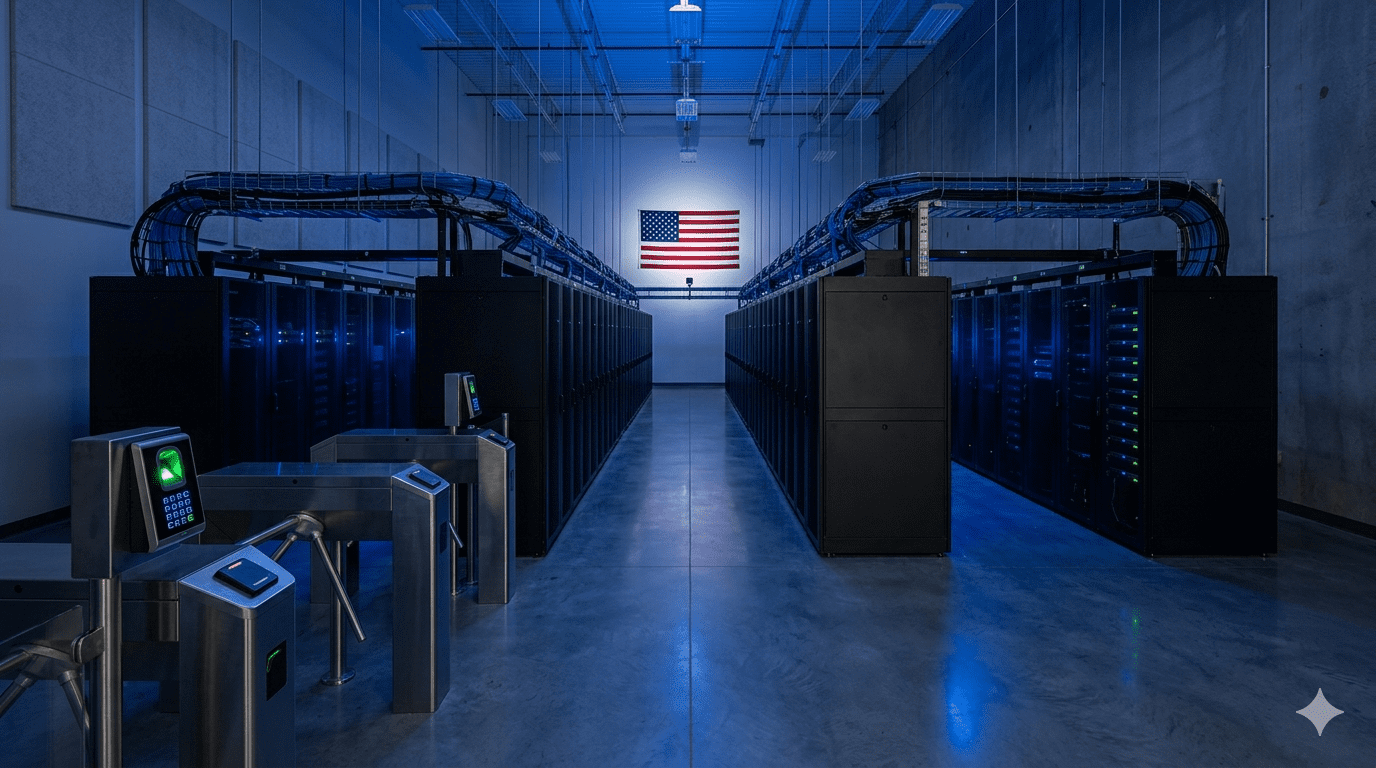
The Google Pentagon discussions over classified AI compute infrastructure have moved into serious territory. Google and the United States Department of Defense are in active discussions to deploy Google’s custom tensor processing units inside classified computing environments, according to reporting from Bloomberg and TechCrunch confirmed on April 28. The arrangement would, specifically, extend Google’s existing relationship with the Pentagon under its Google Distributed Cloud air-gapped product. That product allows government agencies to run Google infrastructure on premises and fully disconnected from the public internet.

The discussions represent a significant escalation in the integration of commercial AI hardware into classified defence computing. Google’s TPUs are the same custom silicon the company uses to train and serve its largest AI models at hyperscale. Deploying them inside Impact Level 6 and Top Secret environments would make Google’s most advanced AI inference available to defence and intelligence agencies on infrastructure they physically control. The implications for Google’s defence business and the broader sovereign AI compute market are, consequently, material.

What Google Distributed Cloud Air-Gapped Actually Is

Google Distributed Cloud air-gapped is a product line that physically isolates Google infrastructure from any network connection, including Google’s own. The hardware runs Google’s full software stack including AI and machine learning services. It operates, however, entirely within the customer’s facility under the customer’s physical security controls. It has been available to US government customers since 2022 and has been accredited for use in environments handling classified information.

The product exists, in part, because of the limitations of conventional government cloud contracts. Agencies handling Top Secret or SCI data cannot route workloads through public cloud infrastructure regardless of encryption or compliance posture. Air-gapped deployments solve that problem by bringing the cloud to the classified environment rather than routing the workload outward. As we have covered in our analysis of sovereign AI infrastructure becoming a nation-state competition, the ability to run advanced AI inside physically controlled, network-isolated infrastructure has become a strategic priority for governments that cannot tolerate dependency on public cloud architecture for sensitive workloads.

Why TPUs Change the Calculus

The specific significance of this arrangement is the inclusion of custom TPU hardware. Software alone does not explain the interest. Previous government deployments of Google Distributed Cloud have run on commodity server hardware. TPUs are purpose-built silicon designed to accelerate matrix operations at the heart of large AI model training and inference. They are, specifically, the hardware reason Google’s AI inference outperforms commodity GPU-based alternatives for transformer workloads.

Deploying TPUs inside a classified environment gives defence agencies inference performance that commodity hardware cannot match. The operational implication is that agencies running intelligence analysis, imagery processing, or natural language workloads on classified networks could run them at significantly higher throughput and lower latency than current infrastructure allows. For intelligence applications, processing speed determines whether actionable information arrives before or after a decision window closes. The difference is, therefore, operationally significant. As we have covered in our analysis of Google’s TPU strategy at Cloud Next, the TPU roadmap has been accelerating rapidly and the performance gap for inference workloads is widening with each generation.

The Competitive Landscape This Creates

Google is not, however, the only company pursuing classified AI compute contracts. Microsoft has been the dominant provider of classified cloud infrastructure through its Azure Government Secret and Top Secret products, which received IL6 accreditation ahead of Google’s equivalent offering. Amazon Web Services operates AWS GovCloud and has classified environment contracts through its C2S and SC2S programmes for the intelligence community. The Google Pentagon TPU discussions represent Google’s most direct challenge to Microsoft’s lead in the classified AI compute market.

The competition matters, however, beyond the defence contracts themselves. The classified AI compute market is relatively small in revenue terms. It is, however, strategically significant for several reasons. First, it establishes which company’s AI stack becomes the reference platform for government AI workflows. Procurement implications extend, in turn, well beyond the initial contracts. Second, it creates a feedback loop between commercial AI capabilities and defence requirements that influences roadmap priorities on both sides. As we have covered in our analysis of the rise of controlled AI clouds for defence and critical infrastructure, the boundary between commercial and defence AI infrastructure is dissolving faster than either the technology industry or the defence establishment had anticipated.

The Infrastructure Requirements Are Substantial

Running TPUs inside a classified environment is not, in other words, simply a question of shipping hardware to a government facility. The air-gapped architecture requires a complete Google infrastructure stack. That means cooling systems designed for TPU thermal profiles, power delivery sized for TPU power density, network fabric connecting TPU pods, and a software management layer that operates without Google’s standard cloud management plane.

Each component must be certified for classified environments. That adds procurement timeline and cost complexity that commodity hardware does not carry. The cooling requirements for TPU pods at the density required for meaningful AI inference performance are, in particular, non-trivial. As we have covered in our analysis of how AI compute has moved beyond chips to controlling the full stack, the infrastructure required to run modern AI hardware at performance cannot be separated from the hardware itself. Deploying TPUs in a classified environment consequently means deploying the entire supporting infrastructure stack in that environment. That requirement shapes the economics and timeline of the arrangement in ways not yet fully visible in the reporting.

The Google Pentagon discussions are ongoing and no contract has been confirmed publicly. The fact that they have reached the stage of Bloomberg and TechCrunch reporting, however, suggests the arrangement is substantive rather than exploratory. If concluded, it would represent the most significant integration of commercial custom AI silicon into classified US government computing infrastructure to date. The outcome will, ultimately, reshape the classified AI compute market.


[simple-author-box]

More from AI Infrastructure

The procurement challenge behind artificial intelligence infrastructure is becoming more complex. Earlier data center

A 202-acre parcel off President Donald J. Trump Highway in western Palm Beach County

President Donald Trump is asking the artificial intelligence industry to make a stronger public

COMPUTE WEEKLY

The briefing that 40,000+ tech leaders read every Monday. Sharp, fast, essential.

Great! We’ve received your information.

Building an AI Startup Without Owning GPUs

Not owning GPUs has become the default, deliberate strategy for building an AI company — not a compromise founders accept reluctantly. H100 rental rates fell 64-75% in fifteen months, a dense ecosystem of neoclouds and inference-as-a-service providers now lets startups skip infrastructure entirely, and credit programs can fund a company’s first year before a founder writes a check
Most Read

Demand is broadening across enterprise workloads APAC’s infrastructure story is changing in ways that

AI infrastructure decisions increasingly influence what enterprises can build, test, and deliver. They also

Why Infrastructure Planning Now Starts With Availability A data center project can have a

A property can look enormous from the site entrance and still offer almost no

As rack power rises toward the megawatt range, the physical footprint of power-delivery equipment

Disruptor Spotlight

Cerebras Systems

The chip that makes Nvidia nervous. Cerebras’ Wafer Scale Engine is rewriting the rules of AI inference at scale.
Faster
0 x
YoY Revenue
0 x
Transistors
0 T
Market Pulse
MSFT
+1.02%
NVDA
+0.66%
AMZN
-0.078%
AMD
-6.95%
TSMC
-2.98%
Indicative only · Not financial advice
Upcoming Events
SEP
The AI Infrastructure Race (India)
WEBINAR · ONLINE
The AI Infrastructure Race: Won on Power, Land and Trust — Not Capital
MAY
0
AI Infrastructure Summit
DUBAI · IN PERSON
MEA’s premier AI infrastructure event.
JUN
0 0
Compute Forecast Summit
SINGAPORE · IN PERSON
Our flagship APAC event. Early bird open.
Latest Moves
Live
ecolab
Ecolab Deepens Cooling Strategy With $4.75B CoolIT Acquisition
Ecolab is making one of its biggest moves yet into AI infrastructure after completing its $4.75 billion acquisition of liquid cooling specialist CoolIT Systems
Pure DC AVK Europe data center microgrid Dublin 110MW AI infrastructure Ireland 2026
Pure DC and AVK Deploy Europe’s First 110 MW Data Center Microgrid in Dublin
The Pure DC Dublin microgrid has made history as Europe’s first large-scale on-site data center microgrid, launched in partnership with power solutions provider AVK at Pure DC’s campus in Ireland.
Pace Digitek
Pace Digitek Partners With MEGMEET to Expand AI Data Center Power Business
India’s AI infrastructure ecosystem continues to mature as domestic technology manufacturers move beyond traditional telecommunications and industrial markets toward high-growth digital infrastructure opportunities
Follow Compute Forecast
11K followers
1200 followers
Companies to Watch
CW
CoreWeave
Neo Cloud · $19B · IPO Watch
CB
Cerebras Systems
AI Hardware · $4.25B · Pre-IPO
G42
G42
Sovereign AI · Abu Dhabi
H
Humain
Saudi AI · $40B Fund
Latest Podcast
AI Capex, Cloud Margins & the Nuclear Bet
48 MIN · 25 APR 2026

Google and the Pentagon Are in Talks to Run Custom AI Chips Inside Classified Environments

The Google Pentagon discussions over classified AI compute infrastructure have moved into serious territory. Google and the United States Department

Share
Google Pentagon classified AI TPU chips secure environment 2026
29
847 SHARES

0
SHARES

[simple-author-box]

More from AI Infrastructure

Demand is broadening across enterprise workloads APAC’s infrastructure story is changing in ways that

AI infrastructure decisions increasingly influence what enterprises can build, test, and deliver. They also

Why Infrastructure Planning Now Starts With Availability A data center project can have a

A property can look enormous from the site entrance and still offer almost no

COMPUTE WEEKLY

The briefing that 40,000+ tech leaders read every Monday. Sharp, fast, essential.

Great! We’ve received your information.

Global AI Infrastructure Outlook 2026

The briefing that 40,000+ tech leaders read every Monday. Sharp, fast, essential.
Download Free
Most Read

Demand is broadening across enterprise workloads APAC’s infrastructure story is changing in ways that

AI infrastructure decisions increasingly influence what enterprises can build, test, and deliver. They also

Why Infrastructure Planning Now Starts With Availability A data center project can have a

A property can look enormous from the site entrance and still offer almost no

As rack power rises toward the megawatt range, the physical footprint of power-delivery equipment

Disruptor Spotlight

Cerebras Systems

The chip that makes Nvidia nervous. Cerebras’ Wafer Scale Engine is rewriting the rules of AI inference at scale.
Faster
0 x
YoY Revenue
0 x
Transistors
0 T
Market Pulse
NVDA
$924.60
+2.4%
MSFT
$421.30
+1.1%
AMZN
$192.80
-0.6%
NVDA
$924.60
+2.4%
NVDA
$924.60
+2.4%
Indicative only · Not financial advice
Upcoming Events
MAY
0 0
DCD Global — London
LONDON · IN PERSON
World’s largest DC event. CF is media partner.
MAY
0
AI Infrastructure Summit
DUBAI · IN PERSON
MEA’s premier AI infrastructure event.
JUN
0 0

Compute Forecast Summit

SINGAPORE · IN PERSON
Our flagship APAC event. Early bird open.
Latest Moves
  • Live
Sam Altman
OpenAI appoints new Chief Infrastructure Officer to lead $100B DC programme
27 APR · OPENAI
Sam Altman
OpenAI appoints new Chief Infrastructure Officer to lead $100B DC programme
27 APR · OPENAI
Sam Altman
OpenAI appoints new Chief Infrastructure Officer to lead $100B DC programme
27 APR · OPENAI
Follow Compute Forecast
18.4K followers
12.1K followers
9.3K subscribers
41 episodes
Companies to Watch
CW
CoreWeave
Neo Cloud · $19B · IPO Watch
CB
Cerebras Systems
AI Hardware · $4.25B · Pre-IPO
G42
G42
Sovereign AI · Abu Dhabi
CW
Humain
Saudi AI · $40B Fund
Latest Podcast
AI Capex, Cloud Margins & the Nuclear Bet
48 MIN · 25 APR 2026
Scroll to Top
Seraphinite AcceleratorOptimized by Seraphinite Accelerator
Turns on site high speed to be attractive for people and search engines.