
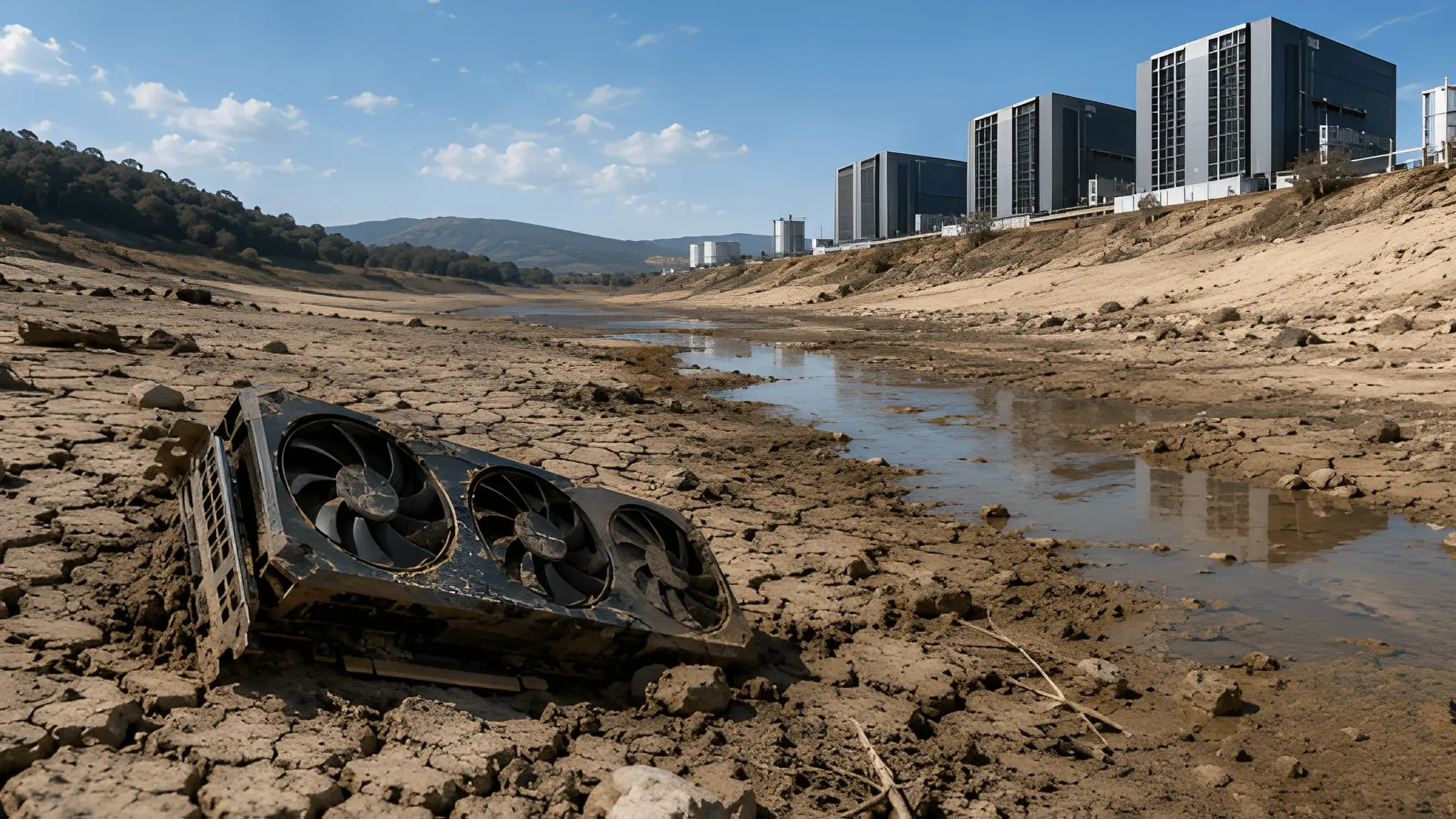
Infrastructure teams rarely lose sleep over processor availability anymore. They worry about power interconnection schedules, supply chain delays, and network access because those constraints appear directly in deployment models. Water availability has become an increasingly important site-selection variable because cooling systems, permitting decisions, and long-term operational planning can be affected by regional water availability and drought conditions. AI infrastructure now concentrates unprecedented compute density in locations where cooling, permitting, and community acceptance increasingly depend on local water conditions. A facility can secure land, power, and equipment yet still encounter operational restrictions if regional water stress changes faster than expected.

The financial implications extend beyond utility costs and environmental reporting obligations. When infrastructure planners assume stable access to water throughout a facility lifecycle, they effectively assume stable access to computing output, revenue generation, and asset utilization. That assumption becomes difficult to defend in regions experiencing groundwater depletion, prolonged drought cycles, competing municipal demand, and growing public scrutiny of industrial consumption. Recent industry debates have shifted from how much water facilities use toward whether communities will continue supporting those usage levels during future shortages. Boardrooms evaluating long-term AI programs increasingly need to treat basin resilience as a core infrastructure variable rather than a sustainability footnote.
The Reservoir Clock: Forecasting Basin Depletion Before Your Depreciation Ends
Most infrastructure models evaluate site economics across seven-to-fifteen-year depreciation schedules while evaluating water conditions through much shorter planning horizons. That mismatch creates blind spots because hydrological systems change gradually before reaching operational tipping points. Groundwater depletion often develops through years of sustained extraction that exceeds recharge rates, making future constraints difficult to identify through annual utility reviews alone. CIOs should establish basin-level forecasting frameworks that examine recharge rates, storage trends, drought recurrence patterns, and projected industrial demand across the entire economic life of the facility. Because data center assets are commonly planned around multi-year operating horizons, several water-management agencies and basin authorities publish long-range supply forecasts that can be incorporated into infrastructure risk assessments alongside power and land availability.
Long-term hydrological forecasting provides a practical framework for executive decision making by incorporating groundwater trends, reservoir conditions, drought frequency, and projected demand growth into infrastructure planning. Rather than asking whether water remains available today, planners evaluate how rapidly a basin loses resilience under current extraction patterns and future demand assumptions. That approach converts environmental uncertainty into a measurable infrastructure risk category that can enter capital allocation models alongside power pricing and network latency. Scenario analysis should include severe drought conditions, accelerated industrial growth, and municipal demand expansion because each variable affects long-term site viability differently. Consequently, facilities located in apparently stable regions may carry higher future constraints than sites with stronger recharge characteristics and more diversified water sources.

Permit Roulette in Arid Zips
Water permits often create a false sense of permanence for infrastructure investors. Approval documents generally reflect assumptions about future availability, projected growth, and expected resource management outcomes at the time of issuance. Those assumptions can change materially when drought conditions intensify, population growth accelerates, or political priorities shift toward residential protection. Municipalities frequently maintain reserve capacity allocations intended to support future development, yet those reserves may become politically difficult to preserve during extended scarcity periods. Permit approvals are typically issued within broader municipal and basin-management frameworks that can evolve as water availability, conservation requirements, and population growth projections change over time.
Reading a water master plan should resemble reviewing a zoning risk map rather than reviewing a utility contract. Executive teams need visibility into planned residential expansion, agricultural demand trends, groundwater management targets, and long-term conservation requirements that could influence future allocations. Documents that appear unrelated to technology infrastructure often reveal where political pressure may emerge during future shortages. Municipal growth projections, conservation mandates, and basin-management objectives provide insight into how local authorities plan to balance residential, agricultural, industrial, and environmental water demands during future supply constraints. Site selection therefore becomes less about present-day entitlement and more about understanding the hierarchy of future demand claims within a stressed watershed.
The Downstream Lawsuit You Didn’t Model
Infrastructure risk models often emphasize regulatory compliance while underestimating litigation exposure arising from competing water claims. Water rights frameworks in many regions involve complex historical agreements, agricultural allocations, tribal interests, environmental obligations, and municipal priorities that evolved over decades. These relationships create layers of legal dependency that may not appear in conventional site diligence reviews. Industrial users can find themselves operating within watersheds where unresolved disputes continue long after facilities begin commercial operations. Legal challenges therefore become operational risks rather than merely legal department concerns.
Retrospective changes in allocation priorities can alter assumptions that originally supported infrastructure investments. Agricultural stakeholders facing drought losses, tribal authorities protecting established rights, and municipalities responding to public pressure may pursue remedies that reshape water distribution frameworks. Even when facilities retain access, prolonged litigation can delay expansion plans, complicate financing discussions, and increase compliance obligations. Meanwhile, unresolved resource disputes can increase uncertainty around future operating conditions, permitting outcomes, expansion timelines, and long-term infrastructure planning assumptions. Effective diligence should therefore map legal claim structures throughout a watershed rather than focusing exclusively on direct contractual access.
Hydrological Hedging: Trading Water Futures Against Model Training Windows
Financial markets increasingly provide tools that help organizations manage exposure to resource volatility. Water-linked financial instruments emerged to improve price discovery and risk management in regions where water availability directly affects economic outcomes. The Nasdaq Veles California Water Index and associated futures contracts were created to help commercial, municipal, and agricultural participants manage water-related price uncertainty through regulated financial markets. These instruments do not deliver physical water, but they provide mechanisms for managing exposure to changing resource economics. Infrastructure planners can learn from these approaches even when direct participation remains limited.
The broader lesson involves aligning resource risk management with compute scheduling decisions. Large training programs often operate within defined windows that create concentrated infrastructure demand and predictable revenue expectations. Organizations can evaluate how future resource scarcity scenarios may affect infrastructure operations and can assess whether contractual arrangements, alternative sourcing strategies, or geographic diversification improve operational resilience. Reclaimed-water agreements, diversified sourcing strategies, and geographically distributed infrastructure portfolios are commonly cited approaches for reducing exposure to localized water-supply disruptions.. Furthermore, executives that connect resource planning with workload planning gain a more realistic view of infrastructure resilience under adverse conditions.
Municipal Morale and the Politics of Thirst
Permits establish legal authority to operate, but community acceptance often determines operational flexibility during periods of stress. Public discussions surrounding infrastructure projects often focus on local outcomes such as water availability, utility reliability, environmental impacts, and quality of life alongside technical efficiency considerations. Public perception can shift rapidly when communities believe industrial growth receives preferential treatment during shortages. Several recent controversies surrounding infrastructure projects have demonstrated how concerns over resource consumption can become highly visible political issues. Public opposition can influence permitting reviews, regulatory scrutiny, public hearings, and policy discussions before formal operating restrictions are introduced.
Infrastructure scorecards should therefore include measures of social resilience alongside technical resilience. Community trust, transparency practices, alternative water sourcing, and demonstrated conservation investments all influence how stakeholders respond during future shortages. Public officials facing constituent pressure may impose emergency measures that technically compliant facilities never expected to encounter. A site that performs well across engineering metrics can still experience operational constraints if local confidence erodes. Nevertheless, industry studies and infrastructure governance frameworks increasingly identify stakeholder engagement, transparency, and community relations as factors that can support long-term project stability and risk management.
Underwriting Compute Like Farmland
Compute capacity is increasingly influenced by local resource availability alongside equipment availability, electrical interconnection timelines, permitting requirements, and community acceptance. Basin conditions, legal structures, political dynamics, and community acceptance now influence the long-term productivity of infrastructure assets. Organizations that continue evaluating sites through traditional colocation frameworks risk overlooking variables that directly affect future utilization. Site selection increasingly requires evaluation of long-term resource availability, environmental conditions, regulatory frameworks, and operational resilience in addition to traditional technology procurement criteria.
Leading CIOs should approach infrastructure diligence with methods borrowed from agribusiness, energy development, and resource-intensive industries. Every major site decision should include watershed analysis, legal exposure mapping, contingency sourcing plans, insurance reviews, and clearly defined exit strategies. Capital commitments become stronger when executives understand not only where processors will operate but also whether supporting resources can sustain those operations throughout the asset lifecycle. Resource resilience increasingly shapes infrastructure economics in the same way that power availability shaped earlier generations of digital expansion. Ultimately, protecting long-term compute value requires understanding the physical systems that support digital growth long before constraints appear on an operational dashboard.











