
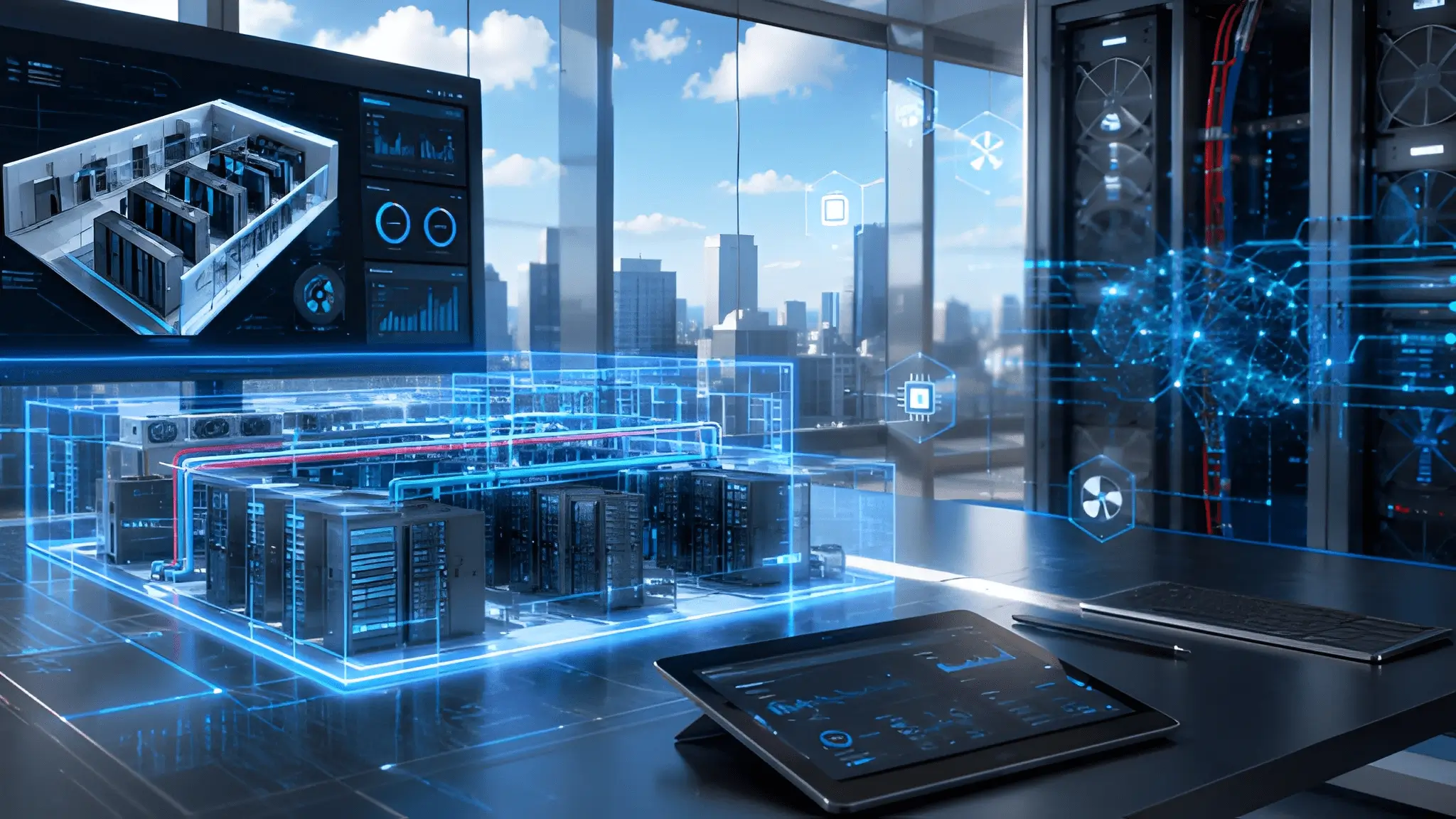
As AI deployments accelerate across enterprise and hyperscale environments, infrastructure operators face mounting pressure to optimize power, cooling, capacity, and sustainability simultaneously. Cadence Design Systems and HPE have expanded their collaboration to address those challenges through digital twin technology designed specifically for AI and high-performance computing (HPC) environments. The initiative combines advanced simulation, operational intelligence, and infrastructure engineering to help organizations modernize data centers with greater confidence. The move reflects a broader industry shift toward predictive infrastructure management as AI workloads become increasingly complex and power-intensive.

At the center of the collaboration is the Cadence Reality Digital Twin Platform, which creates virtual replicas of data center environments using AI, HPC, and physics-based simulation technologies. The platform integrates with HPE’s data center modernization expertise and services to help operators evaluate infrastructure decisions before deploying physical assets. As organizations invest billions in AI infrastructure, the ability to model performance, energy consumption, and cooling behavior before construction has become a strategic advantage. The companies believe digital twins can significantly improve planning accuracy while reducing operational risk.
The collaboration also extends into HPE’s AI-focused modular infrastructure offerings. Cadence’s platform has been standardized within HPE’s AI Mod POD environment, allowing customers to streamline deployment planning while improving operational efficiency. This approach aims to reduce total cost of ownership and shorten implementation timelines for AI-ready facilities. The integration creates a framework where infrastructure performance can be continuously optimized throughout its lifecycle rather than only during the design phase.
“As AI reshapes data center requirements, digital twins provide a powerful foundation for designing and operating high-performing infrastructure. Working with HPE, we aim to help customers model and optimize complex environments using AI, HPC, and physics-based simulation—reducing risk while improving energy efficiency and supporting customers’ sustainability ambitions,” said Sherman Ikemoto, Group Director, Cadence.
Digital Twins Move From Design Tool to Strategic Infrastructure Layer
The announcement comes as operators confront new infrastructure realities driven by AI training and inference workloads. Higher rack densities, advanced liquid cooling systems, and stricter sustainability expectations have increased the complexity of facility planning. Traditional infrastructure modeling methods often struggle to capture the dynamic interactions between power systems, cooling architectures, and compute workloads. Digital twins offer a more comprehensive way to evaluate these variables before capital is committed.
Cadence, HPE, and NVIDIA are positioning the expanded collaboration as a framework for building scalable AI infrastructure from edge deployments to large cloud environments. The companies plan to deliver blueprints that allow operators to test deployment strategies virtually before implementing them in production environments. This capability can help identify inefficiencies, uncover unused infrastructure capacity, and improve long-term operational performance. Consequently, organizations can reduce uncertainty while accelerating infrastructure expansion programs.

The approach also addresses a growing concern among enterprise operators: stranded capacity. Many facilities possess available infrastructure resources that remain inaccessible because operators lack clear visibility into power and cooling interactions. Through predictive modeling, digital twins can reveal opportunities to increase utilization without compromising reliability. The result is a more efficient path toward supporting growing AI demand without immediately expanding physical footprints.
Focus Areas Span Design, Deployment, and Operations
Cadence outlined several modernization priorities that will be supported through the expanded partnership. One major objective involves helping customers design AI- and HPC-ready facilities that meet demanding requirements for power availability, cooling performance, floor space efficiency, and sustainability. High-fidelity simulations allow operators to validate architectural decisions before investing in physical infrastructure. The process supports optimization efforts aimed at maximizing tokens-per-watt performance across AI deployments.
Another focus area involves accelerating deployment planning for HPE Data Center Services and AI Mod POD environments. Customers can use the Cadence Reality DC Elements Design Library to evaluate infrastructure configurations and deployment scenarios in advance. The digital model library includes support for the NVIDIA GB300 NVL72 platform and will expand to include the upcoming NVIDIA Vera Rubin NVL72 architecture. These capabilities allow infrastructure teams to simulate future deployments before equipment arrives on-site.
The companies also aim to improve operational efficiency through predictive analysis of power and cooling systems. By modeling infrastructure behavior before configuration changes occur, operators can better manage workload transitions and capacity expansions. This approach reduces the likelihood of performance bottlenecks and helps maintain service-level objectives. Furthermore, it enables more informed decision-making when balancing performance, resiliency, and energy consumption.
Sustainability and Capacity Optimization Become Core Priorities
Energy efficiency remains a central theme in the expanded collaboration. AI facilities continue to drive unprecedented increases in power demand, making optimization essential for both economic and environmental reasons. Digital twin technology enables operators to evaluate “what-if” scenarios involving workload placement, cooling strategies, equipment upgrades, and long-term expansion plans. Those insights can help organizations identify opportunities to reduce energy consumption while maintaining performance targets.
The platform also supports broader sustainability initiatives by giving operators a clearer understanding of how infrastructure choices affect resource utilization. Instead of relying on static assumptions, teams can continuously test operational changes against real-world constraints. This capability helps organizations align infrastructure growth with corporate sustainability objectives and regulatory expectations. The result is a more adaptive operating model for increasingly dynamic AI environments.
“HPE is focused on helping customers modernize data centers for the AI era with solutions that are scalable, secure, and more sustainable. By deepening the collaboration with Cadence, we bring engineering-grade digital twin capabilities to customers so they can optimize capacity, energy efficiency, and operational decisions across the data center lifecycle,” said Paul Nelson, Global Director, IT Sustainability & Data Center Services, HPE.
Engineering-Grade Simulation Becomes a Competitive Advantage
The Cadence Reality Digital Twin Platform creates detailed digital replicas of entire data centers and campus environments through vendor-supplied digital models that mirror real-world physical behavior. Operators can assemble infrastructure environments through drag-and-drop workflows while preserving engineering-level accuracy. The resulting simulations provide visibility into energy performance, capacity utilization, resiliency, and operational efficiency throughout the facility lifecycle. This allows organizations to move from reactive infrastructure management toward predictive operations.
HPE’s data center design and engineering teams are incorporating the platform into modernization engagements to help customers evaluate infrastructure tradeoffs earlier in the planning process. The addition of a physics-based simulation layer provides deeper insight into how design choices affect long-term operational outcomes. Teams can continuously refine infrastructure strategies as workloads evolve and business requirements change. The capability becomes increasingly valuable as AI deployments introduce new variables into facility operations.
Digital Infrastructure Enters a Predictive Era
The expanded Cadence-HPE partnership signals a broader transformation in how AI-era data centers will be designed and operated. Infrastructure operators are no longer focused solely on deploying capacity; they must also optimize every watt, cooling resource, and square foot available. Digital twins are emerging as a critical decision-making platform that bridges infrastructure planning, deployment, and operations. As AI demand continues to rise, predictive infrastructure modeling may become as important to data center strategy as the hardware itself.











