 Skip to content
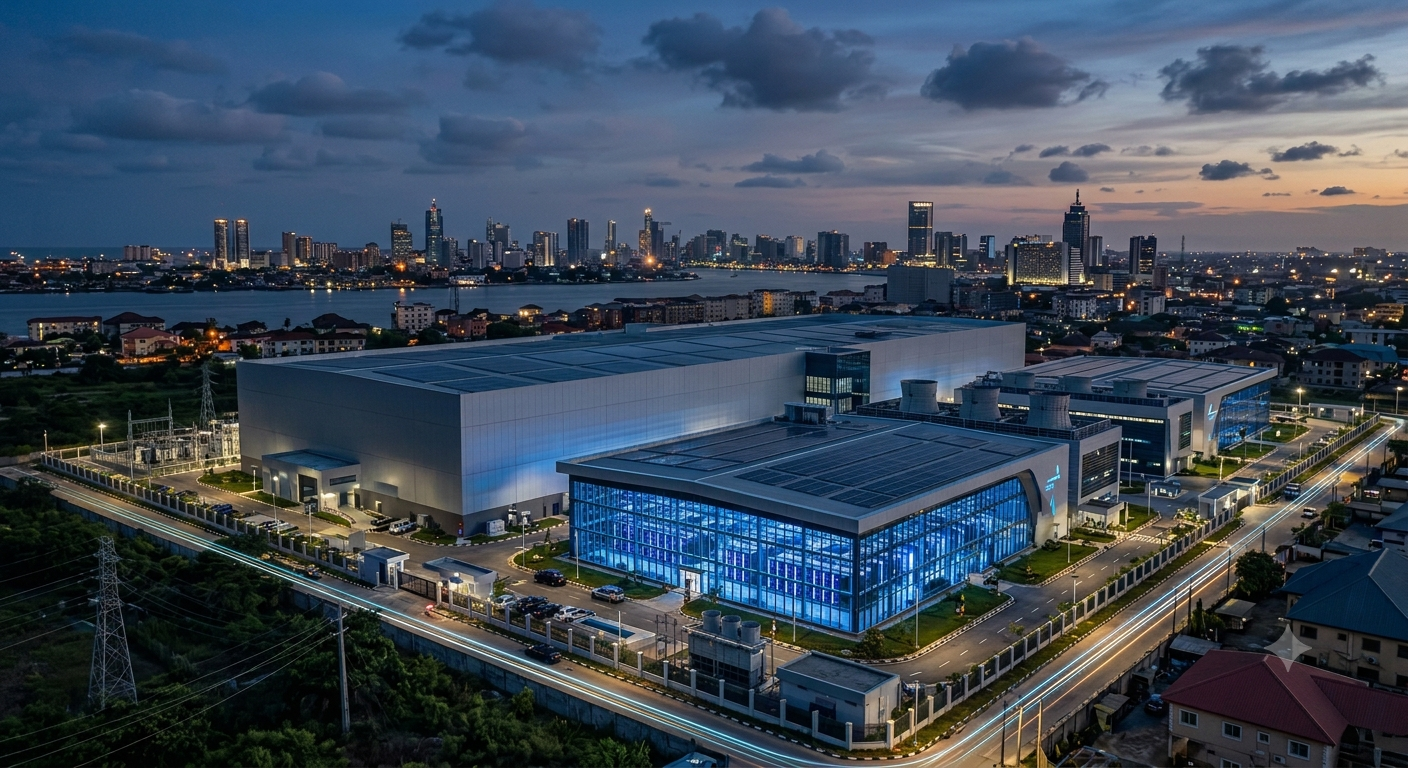
The global race to build artificial intelligence infrastructure is expanding beyond traditional technology hubs. Nigeria is emerging as a key destination for next-generation digital infrastructure investment. West Africa’s first hyperscale-ready, AI-capable data center campus has officially launched in Lagos. The project marks a significant milestone for Nigeria’s digital economy and the broader African data center market. The project underscores how demand for cloud computing, AI workloads is driving infrastructure development across emerging markets. As hyperscale operators, cloud providers, and AI companies search for new regions capable of supporting future compute demand, Africa is increasingly moving from a long-term opportunity to an active infrastructure growth market.

Africa’s Data Center Market Reaches a New Growth Phase
Africa has long been viewed as one of the world’s most promising digital growth regions. Rapid urbanization, expanding internet penetration, mobile adoption, and growing enterprise digitization have steadily increased demand for cloud and data infrastructure. Now, those trends are translating into large-scale physical investments.
Organizations across the continent are accelerating adoption of cloud services, digital platforms, AI-powered applications, and enterprise technologies. The launch of a hyperscale-ready campus in Lagos reflects the increasing maturity of Africa’s digital ecosystem and highlights growing confidence among infrastructure investors in the region’s long-term growth prospects.
Lagos Strengthens Its Position as a Regional Connectivity Hub
Lagos has become one of Africa’s most important technology and telecommunications centers. The city serves as a critical gateway for internet connectivity, enterprise services, cloud deployments, and regional digital commerce. Its strategic location within West Africa’s communications network has helped establish Lagos as a natural destination for infrastructure investment.

As demand for digital services expands across the continent, operators increasingly view Lagos as a platform for supporting regional cloud deployments, enterprise workloads, AI infrastructure, and future digital innovation. The emergence of hyperscale-ready infrastructure further strengthens the city’s role within Africa’s growing technology ecosystem and positions Nigeria as a more significant player in global digital infrastructure development.
AI Is Reshaping Infrastructure Requirements
Artificial intelligence is rapidly changing how data centers are designed and deployed. Modern AI workloads require higher compute density, advanced networking capabilities, scalable power infrastructure, and room for future expansion. As organizations prepare for larger AI deployments, infrastructure operators are increasingly designing facilities capable of supporting next-generation compute requirements from the outset.
The Lagos campus reflects this broader shift. Rather than focusing solely on current cloud demand, the facility has been designed to support future AI-related workloads. This highlights how operators are increasingly planning infrastructure around long-term artificial intelligence adoption. This trend mirrors developments across North America, Europe, the Middle East, and Asia, where AI has become one of the primary drivers of new data center construction.
Global Infrastructure Growth Is Becoming More Distributed
One of the defining trends of the AI infrastructure era is geographic diversification. Historically, hyperscale infrastructure development concentrated heavily in a limited number of markets, including Northern Virginia, Frankfurt, London, Singapore, and major Chinese technology hubs. That pattern is beginning to change.
Operators are increasingly investing in regions that offer growing digital demand, improving connectivity, and favorable long-term growth prospects. Markets across Africa, Southeast Asia, Latin America, and the Middle East are attracting increasing attention as infrastructure providers seek to build more distributed digital ecosystems. The Lagos development reflects this broader industry shift toward a more geographically diverse infrastructure landscape.
Connectivity Investments Continue to Support Expansion
The growth of large-scale data center infrastructure is closely tied to improvements in connectivity. Across Africa, ongoing investments in fiber networks, international subsea cable systems, telecommunications infrastructure, and regional internet exchanges have strengthened the foundation needed to support hyperscale deployments.
These investments have gradually improved network performance, reduced latency, and increased digital accessibility across key markets. The launch of a hyperscale-capable campus in Lagos demonstrates how years of connectivity investment are now translating into larger-scale infrastructure projects designed to support cloud computing and AI-driven growth.
What the Lagos Launch Means for the Industry
The opening of West Africa’s first hyperscale AI-ready data center campus signals several broader shifts taking place across the global infrastructure sector. AI infrastructure expansion is becoming increasingly global, extending beyond traditional technology markets into emerging regions. At the same time, digital infrastructure ecosystems in developing economies continue to mature, creating new opportunities for investment and innovation.
For hyperscalers, cloud providers, and AI companies, emerging markets are becoming increasingly important destinations for future growth. For Africa, the project represents another step toward building the infrastructure needed to support long-term digital transformation. As AI adoption accelerates worldwide, infrastructure demand will continue expanding across a wider range of markets. The launch in Lagos highlights how the global data centre growth may emerge from regions that received limited attention. West Africa’s first hyperscale AI-capable campus is therefore more than a regional milestone. It is another sign that the geography of AI infrastructure is rapidly evolving.










