
NVIDIA H200 shipments delayed to Q3  · BREAKING: Microsoft confirms 3GW data centre expansion in Asia-Pacific ·  AWS announces new sovereign cloud regions in India and UAE  · Arm-based servers now 24% of hyperscale deployments ·  EU AI Act enforcement enters phase two  · Global data centre investment hits $612B in 2026 ·  TSMC Arizona yields improve to 68% on 3nm process  · OpenAI valuation reaches $400B after latest funding round ·  NVIDIA H200 shipments delayed to Q3  · BREAKING: Microsoft confirms 3GW data centre expansion in Asia-Pacific ·  AWS announces new sovereign cloud regions in India and UAE  · Arm-based servers now 24% of hyperscale deployments ·  EU AI Act enforcement enters phase two  · Global data centre investment hits $612B in 2026

Optical Module MCUs Become AI Infrastructure’s Next Semiconductor Bottleneck

The rapid expansion of AI data centers is creating an unexpected winner in the semiconductor supply chain: optical module microcontroller

Share
Optical Module MCUs

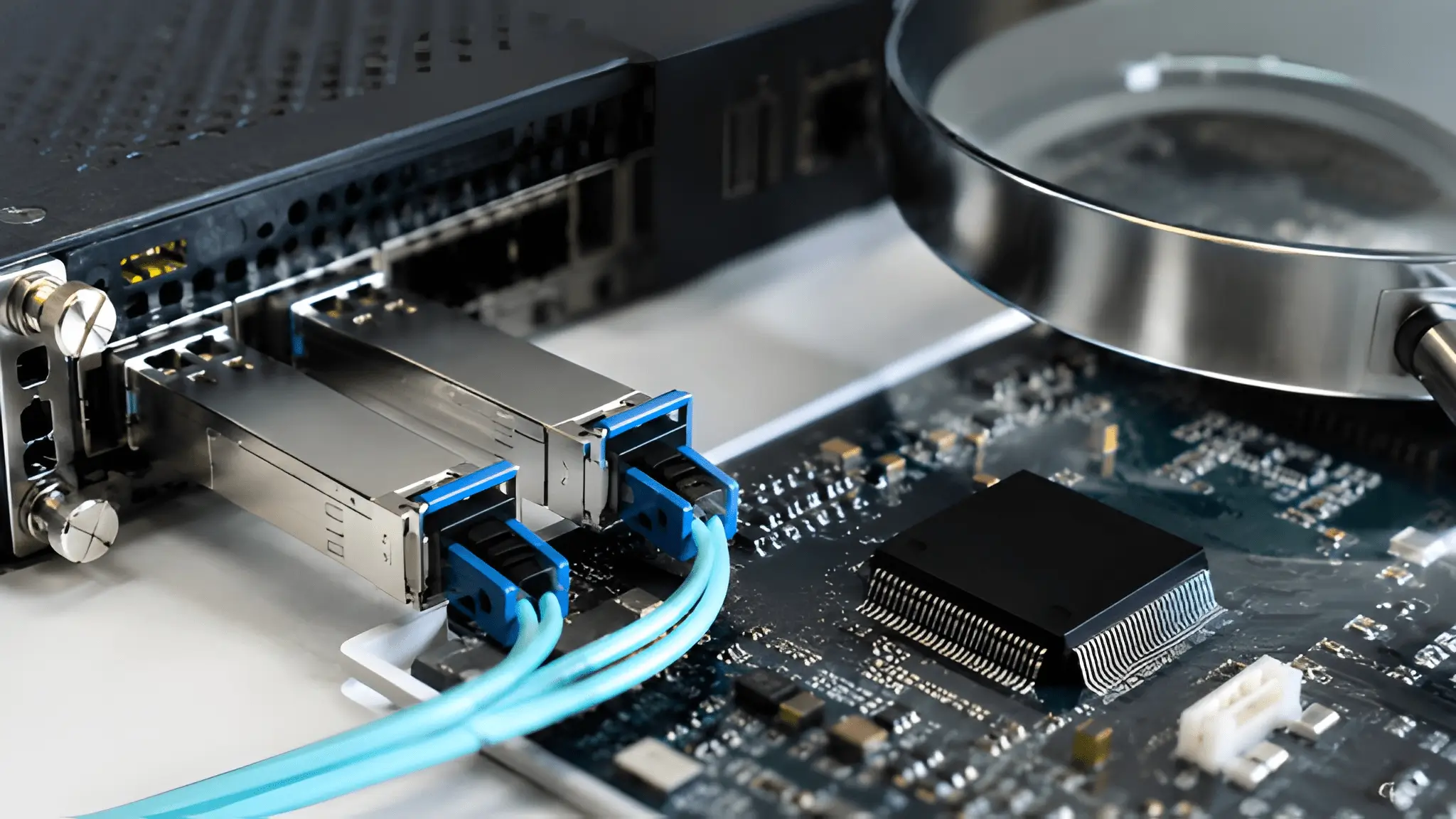
The rapid expansion of AI data centers is creating an unexpected winner in the semiconductor supply chain: optical module microcontroller units (MCUs). As hyperscale operators accelerate deployments of 800G networking while preparing for 1.6-terabit architectures, these management chips have evolved from supporting components into strategic infrastructure silicon that enables reliable optical communications at scale. The shift has translated directly into pricing power. Optical module MCU prices have climbed about 40% since the beginning of the year as AI infrastructure spending pushes component demand beyond available supply. Overseas AI power equipment providers and optical communication vendors have also started purchasing Chinese-developed MCU products in larger volumes, reflecting a broader change in sourcing strategies across the networking ecosystem.

The tightening supply environment extends beyond pricing. Several domestic MCU suppliers introduced fresh price increases during 2025, with communication-focused products rising between 15% and 20%, while specialized MCU products recorded increases exceeding 50%. Those adjustments mirror strong AI server deployment activity, where every additional rack of accelerated computing requires increasingly sophisticated optical interconnects. Although optical modules primarily move data between servers and switches, the MCU operates as the intelligent management controller that keeps those modules functioning continuously. It oversees operating conditions including internal temperature, voltage, laser bias current, and optical transmit and receive power while controlling laser activation, shutdown, reset procedures, power sequencing, and low-power operating modes.

Optical Modules Require More Than High-Speed Data Transport

The controller also manages communication between the host system and optical module using standards including SFF-8472, SFF-8636, and the increasingly important CMIS specification used in high-speed QSFP-DD and OSFP platforms. In addition, the MCU handles firmware updates, dual-bank recovery, secure boot, authentication, and fault logging, capabilities that have become essential for AI data centers operating around the clock with minimal maintenance windows. Those functions are no longer considered optional. As AI clusters continue growing in scale, operators increasingly depend on intelligent module management to maximize uptime while maintaining performance across thousands of optical links. The industry’s migration toward 800G optical modules, followed by emerging 1.6T platforms, has significantly increased technical requirements for MCU designs.

Firmware has become considerably larger and more sophisticated, requiring expanded Flash memory, higher SRAM capacity, dual-bank architectures, and online upgrade functionality that minimizes service interruptions. Hardware requirements have also evolved. Beyond conventional I2C connectivity, modern optical module MCUs increasingly require interfaces such as MDIO, SPI, I3C, and native support for 1.8-volt input and output configurations. Analog performance has become equally important as higher-density optical modules demand greater precision from analog-to-digital converters, digital-to-analog converters, temperature monitoring systems, and high-speed comparators. These improvements allow optical modules to maintain accurate monitoring and stable operation despite rising thermal loads and higher power densities inside AI networking equipment.

GigaDevice Broadens Product Portfolio for High-Speed Optical Modules

Chinese semiconductor supplier GigaDevice has established one of the country’s broadest optical module MCU portfolios through its GD32 product family. The company began developing dedicated optical module controllers in 2018 and reached cumulative shipments of approximately 10 million units by 2022, providing a foundation for its expansion into higher-speed networking platforms. Its latest GD32E512 family targets next-generation high-speed optical modules using an Arm Cortex-M33 processor operating at 120 MHz. The devices integrate I3C connectivity and compact 3×3-millimeter packaging designed for increasingly space-constrained networking hardware. GigaDevice has also introduced the GD32E252 series to address low- and medium-speed optical module applications. Meanwhile, Nations Technologies has expanded its presence in the market with the N32H493 optical module MCU. The processor supports multiple voltage domains while integrating analog peripherals intended to improve monitoring accuracy and operational stability in communication modules.

Industry analysts increasingly view optical module MCUs as a localized semiconductor category within China’s communications supply chain. Domestic manufacturers have substantially expanded design capabilities over recent years, enabling them to compete more directly with established international suppliers serving the optical networking market. The competitive landscape is also evolving alongside network technology. As AI infrastructure advances beyond today’s 800G deployments toward 1.6T systems and eventually 3.2T co-packaged optics, MCU suppliers are expected to focus on larger memory resources, richer peripheral integration, and more sophisticated firmware architectures that support increasingly intelligent optical modules. For AI infrastructure providers, the development signals that networking innovation now depends on far more than faster optical engines. The intelligence embedded inside each optical module has become a critical differentiator, positioning MCU suppliers as increasingly important participants in the broader AI semiconductor ecosystem.


[simple-author-box]

More from AI Infrastructure

Italy’s ambition to become one of Europe’s leading artificial intelligence infrastructure markets is gaining

India’s sovereign artificial intelligence ambitions are entering a new phase as HCLTech expands beyond

OpenAI is preparing one of the largest artificial intelligence infrastructure projects ever proposed in

COMPUTE WEEKLY

The briefing that 40,000+ tech leaders read every Monday. Sharp, fast, essential.

Great! We’ve received your information.

We couldn’t process your submission. Please retry

Building an AI Startup Without Owning GPUs

Not owning GPUs has become the default, deliberate strategy for building an AI company — not a compromise founders accept reluctantly. H100 rental rates fell 64-75% in fifteen months, a dense ecosystem of neoclouds and inference-as-a-service providers now lets startups skip infrastructure entirely, and credit programs can fund a company’s first year before a founder writes a check
Most Read

Infrastructure planning discussions often prioritize engineering, construction, and utility considerations before examining how end

AI infrastructure deployment schedules depend on coordinated progress across hardware availability, electrical infrastructure, cooling

Artificial intelligence has transformed the economics of digital infrastructure. Every new AI model requires

Data centers do not visibly smoke. They have no smokestacks, no visible exhaust, and

Artificial intelligence has transformed the economics of digital infrastructure. Companies once competed by acquiring

Disruptor Spotlight

Cerebras Systems

The chip that makes Nvidia nervous. Cerebras’ Wafer Scale Engine is rewriting the rules of AI inference at scale.
Faster
0 x
YoY Revenue
0 x
Transistors
0 T
Market Pulse
NVDA
$924.60
-2.11%
MSFT
$421.30
-2.94%
AMZN
$192.80
-4.87%
AMD
$924.60
-2.40%
TSMC
$924.60
-2.32%
Indicative only · Not financial advice
Upcoming Events
SEP
The AI Infrastructure Race (India)
WEBINAR · ONLINE
The AI Infrastructure Race: Won on Power, Land and Trust — Not Capital
MAY
0
AI Infrastructure Summit
DUBAI · IN PERSON
MEA’s premier AI infrastructure event.
JUN
0 0
Compute Forecast Summit
SINGAPORE · IN PERSON
Our flagship APAC event. Early bird open.
Latest Moves
Live
ecolab
Ecolab Deepens Cooling Strategy With $4.75B CoolIT Acquisition
Ecolab is making one of its biggest moves yet into AI infrastructure after completing its $4.75 billion acquisition of liquid cooling specialist CoolIT Systems
Pure DC AVK Europe data center microgrid Dublin 110MW AI infrastructure Ireland 2026
Pure DC and AVK Deploy Europe’s First 110 MW Data Center Microgrid in Dublin
The Pure DC Dublin microgrid has made history as Europe’s first large-scale on-site data center microgrid, launched in partnership with power solutions provider AVK at Pure DC’s campus in Ireland.
Pace Digitek
Pace Digitek Partners With MEGMEET to Expand AI Data Center Power Business
India’s AI infrastructure ecosystem continues to mature as domestic technology manufacturers move beyond traditional telecommunications and industrial markets toward high-growth digital infrastructure opportunities
Follow Compute Forecast
11K followers
1200 followers
Companies to Watch
CW
CoreWeave
Neo Cloud · $19B · IPO Watch
CB
Cerebras Systems
AI Hardware · $4.25B · Pre-IPO
G42
G42
Sovereign AI · Abu Dhabi
H
Humain
Saudi AI · $40B Fund
Latest Podcast
AI Capex, Cloud Margins & the Nuclear Bet
48 MIN · 25 APR 2026

Optical Module MCUs Become AI Infrastructure’s Next Semiconductor Bottleneck

The rapid expansion of AI data centers is creating an unexpected winner in the semiconductor supply chain: optical module microcontroller

Share
Optical Module MCUs
21
847 SHARES

0
SHARES

[simple-author-box]

More from AI Infrastructure

Infrastructure planning discussions often prioritize engineering, construction, and utility considerations before examining how end

AI infrastructure deployment schedules depend on coordinated progress across hardware availability, electrical infrastructure, cooling

Artificial intelligence has transformed the economics of digital infrastructure. Every new AI model requires

Data centers do not visibly smoke. They have no smokestacks, no visible exhaust, and

COMPUTE WEEKLY

The briefing that 40,000+ tech leaders read every Monday. Sharp, fast, essential.

Great! We’ve received your information.

We couldn’t process your submission. Please retry

Global AI Infrastructure Outlook 2026

The briefing that 40,000+ tech leaders read every Monday. Sharp, fast, essential.
Download Free
Most Read

Infrastructure planning discussions often prioritize engineering, construction, and utility considerations before examining how end

AI infrastructure deployment schedules depend on coordinated progress across hardware availability, electrical infrastructure, cooling

Artificial intelligence has transformed the economics of digital infrastructure. Every new AI model requires

Data centers do not visibly smoke. They have no smokestacks, no visible exhaust, and

Artificial intelligence has transformed the economics of digital infrastructure. Companies once competed by acquiring

Disruptor Spotlight

Cerebras Systems

The chip that makes Nvidia nervous. Cerebras’ Wafer Scale Engine is rewriting the rules of AI inference at scale.
Faster
0 x
YoY Revenue
0 x
Transistors
0 T
Market Pulse
NVDA
$924.60
+2.4%
MSFT
$421.30
+1.1%
AMZN
$192.80
-0.6%
NVDA
$924.60
+2.4%
NVDA
$924.60
+2.4%
Indicative only · Not financial advice
Upcoming Events
MAY
0 0
DCD Global — London
LONDON · IN PERSON
World’s largest DC event. CF is media partner.
MAY
0
AI Infrastructure Summit
DUBAI · IN PERSON
MEA’s premier AI infrastructure event.
JUN
0 0

Compute Forecast Summit

SINGAPORE · IN PERSON
Our flagship APAC event. Early bird open.
Latest Moves
  • Live
Sam Altman
OpenAI appoints new Chief Infrastructure Officer to lead $100B DC programme
27 APR · OPENAI
Sam Altman
OpenAI appoints new Chief Infrastructure Officer to lead $100B DC programme
27 APR · OPENAI
Sam Altman
OpenAI appoints new Chief Infrastructure Officer to lead $100B DC programme
27 APR · OPENAI
Follow Compute Forecast
18.4K followers
12.1K followers
9.3K subscribers
41 episodes
Companies to Watch
CW
CoreWeave
Neo Cloud · $19B · IPO Watch
CB
Cerebras Systems
AI Hardware · $4.25B · Pre-IPO
G42
G42
Sovereign AI · Abu Dhabi
CW
Humain
Saudi AI · $40B Fund
Latest Podcast
AI Capex, Cloud Margins & the Nuclear Bet
48 MIN · 25 APR 2026
Scroll to Top








