
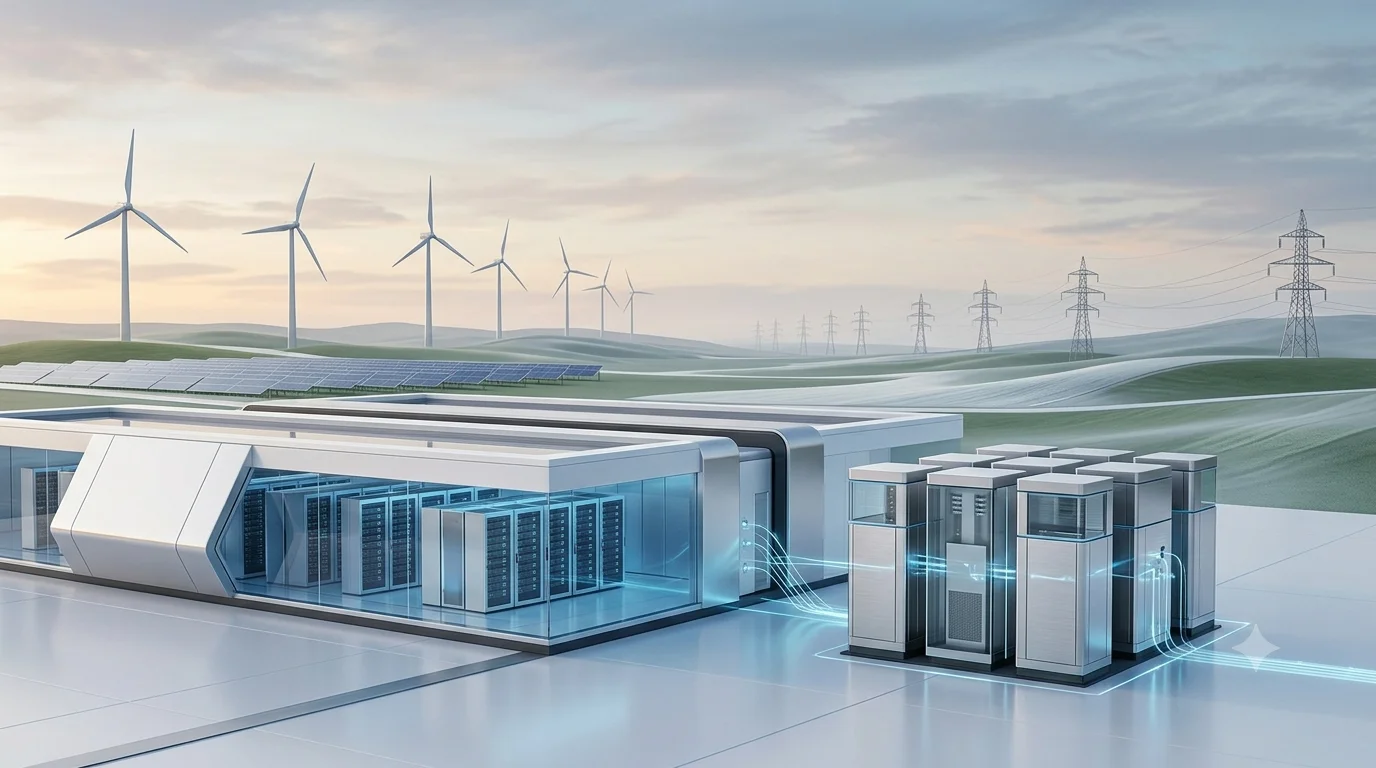
The artificial intelligence infrastructure race continues to reshape the global energy market. As hyperscale data centers expand, reliable power has become one of the industry’s most valuable assets. Consequently, energy providers capable of supporting AI workloads are attracting increasing attention from investors and infrastructure developers. Bloom Energy has strengthened its position in this rapidly evolving market by expanding its strategic partnership with Brookfield. The agreement significantly increases the companies’ joint AI infrastructure ambitions. It also reinforces growing confidence that distributed power generation will play a critical role in supporting next-generation AI campuses. The announcement pushed Bloom Energy shares higher as investors welcomed the larger opportunity. More importantly, the expansion reflects a broader shift across the AI infrastructure ecosystem. Cloud providers now seek dependable power solutions alongside computing capacity. As a result, electricity has become just as important as GPUs in determining where AI infrastructure can grow.

AI Infrastructure Is Reshaping Power Markets
Artificial intelligence has transformed the economics of data center development. Modern AI facilities consume substantially more electricity than traditional enterprise data centers. Training and inference workloads require thousands of high-performance processors operating continuously, creating unprecedented energy demand. Meanwhile, utilities often struggle to deliver new grid capacity quickly enough. Transmission upgrades frequently require years of planning and regulatory approval. Consequently, developers increasingly explore alternative power strategies that reduce dependence on traditional grid expansion. Bloom Energy specializes in on-site power generation using fuel cell technology. These systems allow customers to deploy electricity closer to computing infrastructure while reducing delays associated with new transmission projects. That capability has become increasingly valuable as hyperscalers race to build additional AI capacity. Furthermore, companies want infrastructure that can scale rapidly without compromising reliability.
Brookfield Expands a Growing Partnership
The expanded agreement builds on an existing collaboration between Bloom Energy and Brookfield. Together, both companies aim to accelerate power deployment for AI infrastructure projects across multiple markets. Brookfield continues investing heavily in digital infrastructure, renewable energy, and large-scale power assets. Combining those investments with Bloom Energy’s fuel cell technology creates a broader platform capable of supporting hyperscale AI customers. Rather than relying exclusively on centralized utilities, developers increasingly combine renewable generation, battery storage, and distributed power systems. This diversified approach improves resilience while helping projects move forward despite grid limitations. Additionally, the partnership demonstrates growing confidence that AI infrastructure will remain a long-term investment theme. Instead of responding only to current demand, both companies are preparing for years of continued expansion. The agreement also highlights how infrastructure partnerships are becoming increasingly important. Energy companies, investment firms, and cloud providers now collaborate more closely than ever before to deliver integrated AI ecosystems.
Power Has Become AI’s Biggest Bottleneck
Although demand for AI continues rising, electricity availability increasingly determines where new data centers can operate. Across North America and other major markets, developers often secure land before confirming adequate power access. Grid congestion has become a recurring challenge. Several established data center regions now face extended waiting periods before new facilities receive sufficient electricity. Those delays have encouraged operators to evaluate alternative energy strategies much earlier during project planning. Bloom Energy’s technology addresses part of that challenge by providing localized electricity generation. Customers can supplement existing utility connections while reducing dependence on lengthy transmission upgrades. This approach may also improve deployment timelines for large AI campuses. Moreover, enterprise customers increasingly prioritize operational resilience. Unexpected outages or power shortages can interrupt AI services supporting millions of users. Reliable on-site generation therefore provides both operational and commercial advantages.
Distributed Energy Gains Momentum
Traditional utility models remain essential for long-term infrastructure growth. However, distributed energy systems are becoming an increasingly important complement rather than a replacement. Fuel cells offer predictable power generation with relatively small physical footprints. They also integrate alongside renewable resources and battery storage systems, creating more flexible infrastructure architectures. That flexibility appeals to operators managing complex AI environments. Meanwhile, sustainability remains a major consideration for hyperscale customers. Many organizations continue pursuing carbon reduction goals while expanding compute capacity. Combining distributed generation with cleaner energy sources supports those objectives without slowing infrastructure deployment. Investment firms also recognize this opportunity. Capital increasingly flows toward companies supporting AI infrastructure beyond computing hardware alone. Power generation, electrical equipment, cooling technologies, and transmission networks all benefit from expanding AI investments.
Investors See Long-Term Opportunity
The market reacted positively to Bloom Energy’s announcement because it reinforces a growing investment narrative. AI infrastructure requires far more than processors and servers. Every new data center also depends on dependable electricity, advanced networking, and resilient supporting infrastructure. Consequently, companies solving power challenges may experience sustained demand throughout the AI expansion cycle. Bloom Energy’s strengthened relationship with Brookfield positions both organizations to participate in that long-term growth. Nevertheless, competition across the infrastructure market continues intensifying. Energy providers, utilities, equipment manufacturers, and infrastructure investors all seek larger roles within the expanding AI economy. Success will depend on execution, scalability, and reliable project delivery.

Market Outlook
Bloom Energy’s expanded AI infrastructure partnership signals an important shift within the broader data center industry. Power availability now shapes infrastructure strategy as much as computing performance. Companies that can deliver dependable electricity will likely become increasingly valuable partners for hyperscale operators. Looking ahead, AI adoption should continue driving unprecedented infrastructure investment. However, electricity constraints will remain a defining challenge. Partnerships between energy providers and infrastructure investors could therefore become standard across future AI developments. For Bloom Energy, the expanded agreement represents more than a single commercial milestone. It reflects how energy infrastructure is becoming a foundational pillar of the global AI economy. As demand for AI compute accelerates, the companies powering that growth may emerge among the industry’s biggest winners.











