
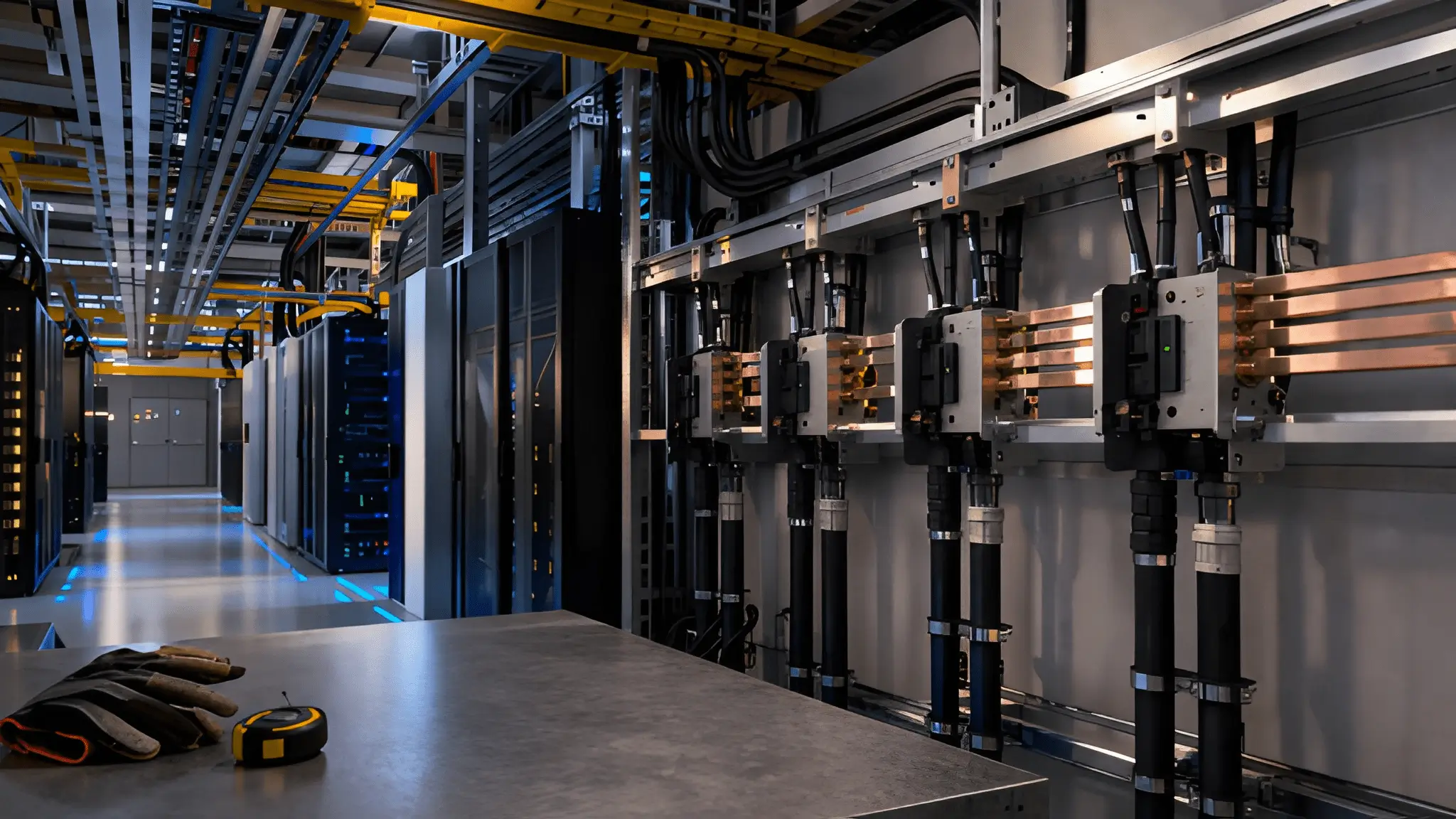
Electrical infrastructure commonly becomes a primary constraint during capacity expansion because successive compute generations introduce higher power densities and changing electrical requirements more rapidly than buildings are typically renovated. Boards approve large capital programs with operating horizons measured in decades, yet accelerator platforms continue redefining electrical assumptions within only a few product cycles. That mismatch forces operators to choose between expensive reconstruction and compromised deployments that never reach intended utilization. Industry guidance for scalable critical facilities emphasizes designing electrical infrastructure with sufficient flexibility to accommodate future technology changes without requiring major operational disruption. Electrical planning becomes an exercise in preserving optionality rather than maximizing today’s specification alone.

Infrastructure decisions made during early design often determine whether future upgrades resemble routine maintenance or full-scale reconstruction projects. Cable routes, breaker coordination, transformer layouts, and distribution pathways quietly establish limits that remain hidden until equipment density suddenly doubles. Buildings are commonly planned over multi-decade service lives, while electrical distribution systems often require earlier modernization to support increasing compute density and evolving equipment requirements. Engineering best practices recommend evaluating infrastructure flexibility alongside capacity, reliability, maintainability, and scalability during facility planning. Every component should support multiple upgrade paths without forcing neighboring systems into simultaneous replacement. That philosophy transforms electrical rooms from static utility spaces into adaptable assets that continue supporting changing computational requirements.
The 3-Gen Test: Building for Silicon You Haven’t Seen Yet
Electrical room planning increasingly incorporates future technology scenarios alongside current equipment requirements to support long-term infrastructure scalability. Designers can estimate future loading patterns by examining publicly available processor roadmaps, evolving rack power trajectories, and industry migration toward higher voltage distribution architectures. Planning teams then compare those scenarios against conduit fill, busway ratings, breaker interrupting capacity, transformer margins, and available physical expansion zones before construction begins. Consequently, each design decision reflects an anticipated operating envelope rather than a fixed equipment list frozen during procurement. Planning for future expansion capacity helps reduce the likelihood that individual electrical components become constraints during later infrastructure upgrades. Capacity planning becomes a structured engineering discipline built around uncertainty instead of optimistic forecasting.
Power demand now changes through steeper transient profiles because advanced accelerators reach peak utilization much faster than earlier enterprise workloads. Distribution equipment must therefore tolerate changing ramp characteristics without introducing unnecessary protection trips or coordination conflicts during dynamic load transitions. Engineers increasingly evaluate short-circuit performance, thermal limits, selective coordination, and voltage stability together because these parameters interact under rapidly changing computational demand. Spare conduits, expandable switchboards, accessible cable pathways, and modular protection schemes provide practical flexibility without requiring speculative overbuilding across every subsystem. Meanwhile, procurement teams gain additional resilience because future equipment substitutions remain possible within an infrastructure framework already prepared for multiple electrical scenarios. Designing electrical infrastructure around scalable operating requirements supports multiple technology refresh cycles without requiring complete redesign of the power distribution architecture.

Busway as Firmware: When Your Copper Becomes Upgradeable
Electrical distribution increasingly benefits from modular thinking because permanent installations now face changing compute requirements throughout their operational lifespan. Overhead busway systems allow power capacity to evolve through configurable tap-off units instead of repeated demolition across occupied technical spaces. Engineers can introduce additional connection points, relocate distribution locations, and rebalance electrical loads while preserving the primary backbone already supporting the facility. Modular joints also simplify staged expansion because qualified teams replace or extend defined sections without disturbing unrelated electrical pathways. Distribution flexibility depends on maintaining sufficient mechanical strength, thermal performance, and fault tolerance across every planned configuration rather than only the initial installation. Modular busway systems allow installed power distribution infrastructure to support future expansion and reconfiguration throughout the facility lifecycle.
Electrical infrastructure gains long-term usefulness when designers reserve physical and electrical headroom for future connection density instead of maximizing present occupancy. Standardized interfaces across busway segments reduce upgrade complexity because replacement components integrate with existing distribution architecture through compatible mechanical and electrical specifications. Documented expansion plans that define reserved capacity, installation sequencing, and protection coordination support safer and more predictable future infrastructure upgrades.. Spare tap locations, accessible inspection clearances, and scalable monitoring systems support controlled growth without introducing unnecessary operational disruption during equipment refresh programs. Accordingly, maintenance planning shifts from reactive reconstruction toward predictable infrastructure evolution that aligns with scheduled technology investments. Incrementally expandable electrical distribution allows infrastructure upgrades to be completed without requiring full replacement of the existing power distribution system.
Clearance for Chaos: Aisle Math That Outlives Your Current Vendor
Physical geometry often determines upgrade feasibility long after electrical calculations satisfy design requirements on paper. Ceiling height influences lifting operations, cable routing flexibility, and overhead distribution modifications that become necessary as equipment dimensions continue changing across hardware generations. Row spacing affects technician access, maintenance safety, temporary equipment placement, and the practical ability to exchange major electrical assemblies without interrupting adjacent infrastructure. Engineers therefore evaluate working clearances, egress routes, equipment removal paths, and structural loading together because every physical constraint influences future modernization options. Clearly defined maintenance work zones help limit the operational impact of electrical servicing while supporting safe access to energized infrastructure in accordance with established maintenance practices. Infrastructure resilience ultimately depends on whether people can safely replace critical equipment under realistic operating conditions rather than ideal construction assumptions.
Vendor transitions introduce another dimension of uncertainty because future power equipment rarely matches the footprint, connection orientation, or service envelope of current installations. Electrical rooms that preserve generous maneuvering space allow replacement projects to accommodate different cabinet geometries without requiring structural modification or extended operational shutdowns. Crane access points, removable wall sections, transport corridors, and floor loading capacity all influence whether large electrical assets can enter or leave the building efficiently. Design teams also coordinate these physical pathways with cable management strategies so replacement activities avoid unnecessary disturbance to energized distribution systems. Finally, adaptable room geometry protects investment because infrastructure remains compatible with evolving supplier ecosystems instead of becoming constrained by one manufacturer’s historical dimensions.Maintaining adequate spatial flexibility alongside electrical capacity supports future equipment replacement, expansion, and modernization without unnecessary structural modifications.
The Win Is in the Interactions: Why Electrical Rooms Don’t Age Alone
Electrical infrastructure never operates independently because every distribution decision influences thermal management, network architecture, operational resilience, and long-term financial performance. Higher power density changes cooling requirements, while equipment placement alters cable routing, airflow strategies, maintenance sequencing, and monitoring architecture across the entire facility. Industry guidance for mission-critical facilities recommends coordinated planning across electrical, mechanical, structural, and digital infrastructure to support reliable long-term operation and future expansion. Investment planning also becomes more predictable because each modernization project builds upon existing flexibility rather than introducing cascading redesign across interconnected infrastructure. Lifecycle value emerges from coordinated engineering choices that preserve multiple adaptation paths without creating unnecessary complexity or stranded capacity. Organizations that recognize these interactions typically position infrastructure to accommodate technology evolution through planned modification instead of disruptive replacement.
Long-term electrical room performance depends on scalable design, maintainability, and coordinated infrastructure planning rather than reserve capacity alone. Enduring designs instead combine scalable distribution, accessible physical layouts, coordinated protection strategies, modular expansion capability, and disciplined lifecycle planning within one coherent engineering framework. Executive teams evaluating major infrastructure investments increasingly benefit from measuring flexibility alongside reliability, efficiency, and capital utilization because those attributes reinforce one another throughout the facility lifecycle. Future accelerator platforms will almost certainly introduce electrical characteristics that differ from current planning assumptions, yet adaptable infrastructure reduces the operational consequences of that uncertainty. Buildings prepared for controlled evolution preserve deployment momentum while avoiding repeated reconstruction that interrupts business objectives and capital planning. The most resilient electrical room therefore reflects careful systems engineering that allows the entire digital infrastructure ecosystem to evolve together rather than forcing each technological advance to begin with another construction project.











