 Skip to content
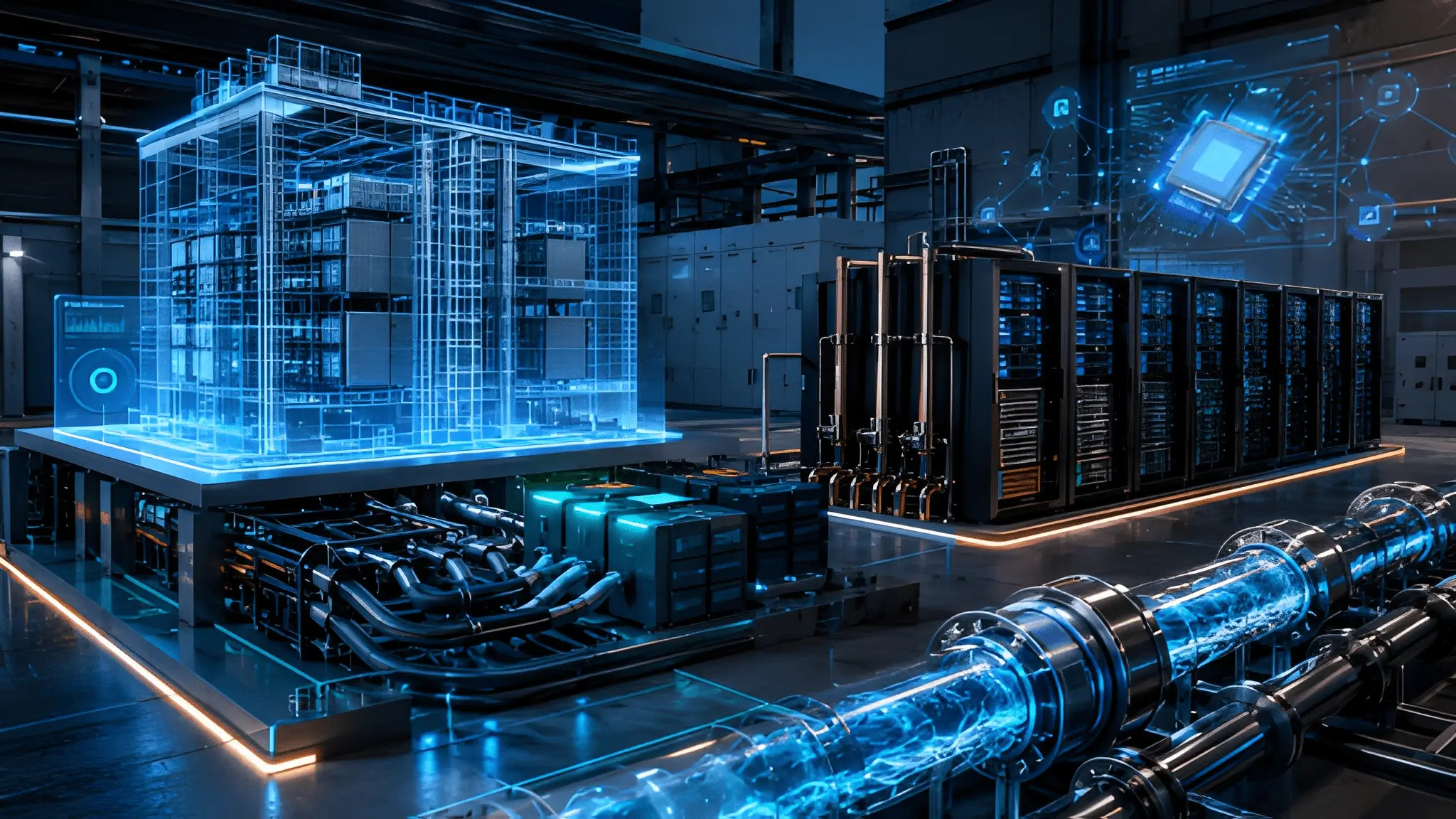
Most infrastructure disruptions begin with a faster processor, a denser server, or a cheaper component that changes purchasing decisions over time. The current AI infrastructure cycle has taken a different path because electrical capacity has become the first constraint instead of computational capability. That shift changes how executives should evaluate investment because the physical environment now determines whether advanced hardware can produce economic value at all. A modern AI rack no longer behaves like a larger version of an existing compute cabinet because it changes structural engineering, electrical distribution, cooling architecture, maintenance practices, and long-term asset planning simultaneously. Traditional total cost of ownership models were developed around conventional server refresh cycles and often require additional infrastructure-specific analysis to reflect the electrical, thermal, and structural requirements introduced by rack-scale AI deployments.

Financial models once assumed that buildings would outlast several generations of compute equipment because electrical and mechanical systems evolved more slowly than processors. Rack-scale AI platforms have disrupted that assumption by integrating compute, networking, storage, and power delivery into tightly engineered systems whose infrastructure requirements advance alongside silicon generations. A facility that appeared technically modern only a few years ago can now require major structural modifications before it can even accept the latest AI hardware. Those modifications often extend beyond cooling upgrades because floor loading, cable pathways, ceiling clearances, and utility distribution increasingly determine deployment feasibility. Capital expenditure therefore shifts toward infrastructure readiness instead of simple equipment replacement. The discussion therefore moves away from GPU pricing alone and toward a broader question of whether an entire data hall remains economically usable after the next generation of rack-scale AI platforms arrives.
Stranded Steel: When Your Raised Floor Becomes a Liability
Data halls traditionally represented durable infrastructure because reinforced floors, cooling systems, and electrical pathways remained serviceable across multiple server generations. Rack-scale AI changes that relationship because concentrated mechanical loads and liquid cooling infrastructure introduce engineering constraints that older facilities never anticipated during design. Structural loading limits now influence revenue potential because unsupported rack densities reduce deployable compute regardless of available floor area. Fire separation distances, emergency access clearances, and equipment distribution pathways can influence rack placement and infrastructure layouts as rack densities and supporting mechanical systems become more complex. A building can therefore possess available square footage while simultaneously lacking deployable AI capacity because structural compatibility has become the limiting factor. Traditional occupancy calculations no longer reflect productive infrastructure because usable space increasingly depends on engineering tolerance instead of empty floor area.
Legacy financial statements usually classify buildings as long-lived assets because structural depreciation progresses much more slowly than information technology depreciation. That accounting treatment becomes increasingly disconnected from operational reality when a structurally compliant facility cannot accommodate modern rack-scale AI systems without extensive reconstruction. Balance sheets may continue recognizing substantial residual value even though practical deployment options continue shrinking with every hardware generation. Asset impairment therefore emerges from technological incompatibility rather than physical deterioration because the building continues functioning exactly as originally designed. Investment committees increasingly benefit from engineering assessments alongside conventional accounting evaluations because structural, electrical, and cooling compatibility can materially influence future infrastructure modernization decisions. The resulting disconnect creates stranded capital whose carrying value exceeds its practical contribution to future computational capacity.

Why Floor Space No Longer Equals Deployable Capacity
Planning teams frequently measure expansion opportunities by counting vacant rack positions across available white space. That method increasingly overstates actual deployment capacity because power delivery, liquid cooling access, structural loading, and service clearances become inseparable design variables at higher rack densities. Empty floor area may therefore represent operational overhead instead of future revenue if supporting infrastructure cannot evolve alongside compute platforms. Real estate valuation consequently shifts toward infrastructure adaptability rather than total square footage because engineering flexibility determines future earning potential. Capacity planning now requires integrated structural, electrical, and thermal modeling instead of isolated rack allocation exercises. The commercial value of a hall increasingly depends on how effectively it can absorb future infrastructure generations without fundamental reconstruction.
Infrastructure flexibility increasingly functions as a financial option rather than a construction feature because adaptable designs preserve future deployment choices. Buildings optimized around narrow operating assumptions often experience accelerated economic decline despite remaining mechanically reliable. Management therefore benefits from evaluating infrastructure through compatibility scenarios instead of traditional utilization percentages because future rack generations will continue redefining engineering thresholds. Capital allocation becomes more resilient when structural adaptability receives the same analytical attention as processor roadmaps or networking evolution. The objective shifts from maximizing today’s rack count toward preserving tomorrow’s deployment optionality across multiple hardware generations. Total cost of ownership therefore begins with structural compatibility long before the first GPU enters the building.
The 18-Month Clock: Depreciation vs. Density Doubling
Conventional depreciation schedules assume that servers lose value gradually while the surrounding infrastructure retains its usefulness for many refresh cycles. Rack-scale AI systems increasingly invalidate that assumption because infrastructure compatibility changes almost as quickly as accelerator architecture. A facility designed around conventional air-cooled racks may still satisfy accounting standards while failing engineering requirements for the next generation of liquid-cooled AI platforms. The financial consequence appears long before the building reaches the end of its physical life because deployable capacity declines with every incompatible technology generation. Organizations therefore face a widening gap between accounting value and operational value as infrastructure ages against an accelerated hardware roadmap. Total cost of ownership models built around fixed depreciation periods increasingly conceal this divergence until capital planning reaches an inflection point.
Traditional depreciation assumes that technological progress follows an incremental curve with manageable increases in power density, thermal output, and infrastructure demand. AI infrastructure now evolves through platform transitions instead of incremental server upgrades because compute, networking, memory, and cooling advance together as integrated systems. Financial planners therefore risk overstating the productive life of supporting assets when depreciation schedules ignore compatibility with future rack designs. Mechanical and electrical systems that remain physically reliable can lose economic value once they prevent deployment of higher-density platforms. Infrastructure managers increasingly require engineering roadmaps alongside accounting schedules because future compatibility determines remaining asset value more accurately than chronological age. Depreciation therefore becomes a forward-looking engineering exercise rather than a historical accounting calculation.
Density-Adjusted Depreciation Creates Better Investment Decisions
A density-adjusted depreciation framework evaluates infrastructure against the highest practical rack density that a hall can support without major reconstruction instead of measuring age alone. Such a model reflects the reality that every generation of AI platforms introduces new electrical, thermal, and structural requirements that directly influence future revenue potential. Financial teams gain earlier visibility into stranded assets because compatibility declines become measurable before complete obsolescence occurs. Engineering groups also benefit because infrastructure limitations enter long-term financial planning instead of appearing only during deployment projects. Boards receive a clearer picture of replacement timing because engineering readiness becomes part of the depreciation discussion rather than a separate technical report. The resulting investment strategy aligns capital allocation with technology roadmaps instead of arbitrary accounting intervals.
Density-adjusted depreciation also changes how organizations evaluate modernization projects because it compares future compatibility instead of present functionality. Extending the useful life of an existing hall may appear financially attractive until engineering analysis shows that the upgraded environment still cannot accommodate emerging rack architectures. Incremental improvements then become accounting extensions rather than genuine capacity investments because they postpone replacement without improving long-term competitiveness. Decision makers therefore benefit from measuring every infrastructure investment against future deployment flexibility instead of current utilization alone. Capital efficiency increasingly depends on preserving optionality across several AI hardware generations rather than maximizing today’s infrastructure lifespan. The depreciation clock effectively begins again only when structural, electrical, and thermal systems regain compatibility with future rack-scale deployments.
Retrofit Regret: The Hidden Cost of Half-Measures
Many modernization projects begin with the assumption that selective improvements will extend the economic life of an existing data hall without requiring comprehensive reconstruction. That approach frequently succeeds when technology advances gradually because electrical distribution, cooling capacity, and structural loading remain within expected design margins. AI infrastructure changes the equation because every subsystem interacts with the others, making isolated upgrades progressively less effective. Extending busbars without increasing upstream electrical capacity creates a bottleneck that simply shifts the constraint instead of removing it. Installing higher-capacity cooling equipment without corresponding structural changes may improve thermal performance while limiting future rack placement. Partial modernization therefore risks consuming capital while preserving the same deployment limitations that originally triggered the upgrade discussion.
Retrofitting also introduces sequencing challenges because mechanical, electrical, structural, and operational modifications rarely occur independently. Every upgrade affects construction schedules, maintenance windows, permitting activities, commissioning procedures, and operational continuity throughout the project lifecycle. Small engineering compromises made early in the project often create disproportionate limitations during later deployment phases because AI infrastructure demands tightly integrated performance. Ceiling clearances, pipe routing, cable trays, and maintenance access require coordinated engineering because modifications to one system can affect installation, serviceability, and future expansion of adjacent infrastructure. Engineering teams therefore spend increasing effort resolving interactions between previous upgrades rather than designing optimal future infrastructure. Total cost of ownership rises not because individual upgrades fail but because cumulative compromises reduce long-term adaptability.
Sunk Costs Can Delay Better Decisions
Investment psychology often encourages organizations to continue upgrading aging infrastructure because previous modernization spending creates pressure to recover historical investment. That mindset becomes increasingly expensive when each additional retrofit extends the life of an environment that still cannot support the next generation of AI platforms. Financial models frequently underestimate this effect because sunk costs appear as completed investments rather than ongoing strategic constraints. Engineering teams may successfully complete every project milestone while the completed facility still remains incompatible with future rack-scale architectures. Incremental modernization therefore benefits from periodic engineering and financial reassessment because successfully completed upgrades may not always provide the infrastructure capabilities required for future AI platform deployments. The most expensive retrofit may ultimately become the final incremental upgrade completed before full reconstruction becomes unavoidable.
A more resilient investment framework evaluates retrofit proposals against long-term infrastructure compatibility rather than immediate operational improvement alone. Every proposed upgrade should demonstrate how it expands future deployment options instead of merely resolving today’s operational bottleneck. Engineering flexibility increasingly represents the strongest predictor of future asset value because AI platform requirements continue evolving rapidly across electrical, thermal, and networking domains. Projects that cannot improve long-term adaptability deserve greater scrutiny regardless of their short-term operational benefits. Infrastructure strategy therefore shifts from extending existing assets toward preserving future deployment freedom through integrated engineering decisions. The hidden cost of half-measures emerges not during construction but during the next hardware generation when compatibility again becomes the limiting factor.
From Useful Life to Usable Space: Redefining Asset Toxicity
The discussion around obsolete AI infrastructure often focuses on accelerators because silicon generations advance rapidly and redefine computational performance with every product cycle. That perspective overlooks a larger financial exposure because the building itself can become the limiting asset even while its electrical and mechanical systems continue operating within their original specifications. A data hall designed for moderate rack densities may satisfy every engineering parameter that existed during commissioning while remaining unsuitable for current rack-scale AI deployments. The resulting mismatch transforms productive real estate into constrained infrastructure because available floor area no longer translates into deployable compute capacity. Asset toxicity therefore reflects the inability to generate future revenue rather than evidence of physical deterioration or engineering failure. Financial planning increasingly benefits from evaluating usable deployment potential instead of relying exclusively on conventional measures of remaining facility life.
Infrastructure toxicity also develops gradually instead of appearing as a single technical event because every new hardware generation raises deployment expectations without changing the existing building. Mechanical systems continue operating, electrical distribution remains stable, and structural components retain their original integrity throughout this transition. Operational teams therefore experience no obvious equipment failure even though future deployment flexibility continues declining over time. The financial impact becomes visible only when expansion projects reveal that modern AI platforms require capabilities beyond the original design envelope. Asset valuation increasingly depends on deployment flexibility because compatibility determines how much future computational capacity the building can support. Organizations that recognize this transition early gain more strategic options than those relying solely on historical utilization metrics.
Revenue Per Square Foot Now Matters More Than Rack Count
Traditional infrastructure planning rewarded higher rack occupancy because additional cabinets generally translated into greater computational capacity and stronger utilization of available space. AI infrastructure changes that relationship because fewer racks can now deliver dramatically greater computational output while demanding substantially higher electrical and cooling resources. The limiting variable therefore shifts away from rack quantity and toward the productive value generated by every square foot of structurally compatible infrastructure. Empty space no longer represents unused opportunity unless it can also accommodate future electrical distribution, liquid cooling networks, maintenance access, and structural loading requirements. Revenue potential increasingly depends on the engineering capabilities of the deployed infrastructure because electrical capacity, cooling architecture, and structural readiness influence how effectively available space can support higher-density AI workloads.
This transition also changes how modernization projects should be evaluated because expanding deployable density often creates greater long-term value than increasing occupied floor area. Investment decisions therefore benefit from measuring improvements in future infrastructure flexibility instead of focusing only on present utilization percentages. Engineering compatibility becomes an appreciating capability because it supports multiple hardware generations without requiring fundamental reconstruction. Buildings that preserve deployment flexibility maintain stronger economic resilience as AI infrastructure continues evolving toward integrated rack-scale systems. Long-term competitiveness increasingly depends on the quality of usable infrastructure rather than the quantity of available space. In practical infrastructure planning, a building may lose strategic value when its engineering characteristics limit future deployment opportunities even though its mechanical systems remain operational.
The Silent Risk Hiding in Your Capacity Plan
Capacity planning assumptions may require more frequent review as AI infrastructure technologies evolve more rapidly than traditional facility planning cycles. AI infrastructure compresses those assumptions because hardware generations now introduce substantial changes across multiple engineering domains within much shorter planning horizons. A maintenance strategy designed around conventional rack densities may become operationally impractical once integrated rack-scale systems require coordinated servicing across power, networking, liquid cooling, and compute components. Spare inventory planning also changes because supporting equipment evolves alongside the primary hardware instead of remaining compatible across several refresh cycles. Capacity forecasts therefore lose accuracy when they assume infrastructure evolves more slowly than computational platforms. Planning discipline increasingly depends on continuous engineering reassessment rather than periodic forecasting exercises.
Operational complexity also increases because every subsystem becomes more tightly integrated with the others as rack densities continue rising. Electrical maintenance affects cooling availability, cooling modifications influence structural access, and networking changes alter deployment sequencing across entire AI clusters. Small planning inaccuracies therefore create larger operational consequences because infrastructure dependencies multiply throughout the environment. Maintenance windows that once accommodated isolated equipment replacement may no longer support integrated rack-scale servicing without broader operational disruption. Long-term planning increasingly requires multidisciplinary engineering coordination instead of independent operational schedules. Infrastructure resilience therefore depends as much on planning architecture as on physical equipment quality.
Hidden TCO Risks Often Originate Outside the Equipment Room
Many organizations evaluate infrastructure risk primarily through equipment specifications because hardware performance remains visible throughout procurement and deployment processes. Long-term ownership costs increasingly originate from planning assumptions that remain invisible until infrastructure expansion or modernization begins. Utility coordination, construction sequencing, commissioning schedules, permitting requirements, supply chain dependencies, and future compatibility all influence economic outcomes without appearing on traditional equipment specifications. These factors rarely generate immediate operational failures, yet they frequently determine whether future AI deployments proceed on schedule or require substantial redesign. Total cost of ownership therefore expands beyond installed equipment because organizational planning quality directly affects infrastructure adaptability. Financial models that ignore these dependencies risk underestimating the long-term cost of constrained deployment flexibility.
Planning maturity increasingly differentiates resilient infrastructure from infrastructure that merely satisfies present operational requirements. Engineering teams that continuously validate future compatibility against evolving hardware roadmaps identify constraints while corrective options remain economically practical. Investment decisions consequently become more deliberate because every infrastructure upgrade contributes toward long-term deployment capability instead of solving isolated operational problems. Capacity planning evolves into an ongoing engineering discipline that extends well beyond procurement schedules or annual budgeting cycles. Organizations capable of aligning infrastructure planning with technology evolution preserve greater optionality across successive AI platform generations. The largest ownership costs increasingly emerge from planning gaps rather than from the hardware itself.
Secondary Markets for Dead Space: Who Buys a 2022-Era Hall?
The secondary market for existing data halls has changed because buyers now evaluate infrastructure compatibility before considering available floor space or remaining building life. Facilities commissioned only a few years ago can still provide dependable electrical service and environmental control while failing to satisfy the engineering requirements of rack-scale AI deployments. Buyers therefore distinguish between operational buildings and future-ready buildings because the difference directly influences redevelopment costs and long-term earning potential. This shift introduces a new valuation framework in which adaptability often outweighs chronological age during acquisition decisions. Market participants increasingly examine electrical topology, structural reserve capacity, liquid cooling readiness, and expansion flexibility before assigning strategic value to an asset. The consequence is a growing separation between infrastructure that can support future AI platforms and infrastructure that serves only narrower deployment scenarios.
Buildings that cannot economically support emerging AI infrastructure do not automatically lose all commercial relevance because alternative workloads continue requiring secure, resilient computing environments. High-density AI represents only one segment of the broader digital infrastructure market, allowing some facilities to remain productive through carefully selected workloads. Buyers often evaluate whether existing electrical and cooling systems align more effectively with enterprise applications, storage environments, content distribution, virtualization platforms, or network-intensive services rather than attempting expensive AI retrofits. Infrastructure owners therefore face a strategic decision between repositioning an existing asset and undertaking comprehensive reconstruction to address future AI demand. The financial outcome depends less on the building itself than on how closely its engineering characteristics match the intended workload profile. Successful repositioning requires technical alignment rather than optimistic assumptions about universal infrastructure compatibility.
Repurposing Economics Depend on Engineering Compatibility
Repurposing an existing hall begins with understanding which infrastructure characteristics retain long-term value instead of assuming every technical asset deserves preservation. Electrical resilience, network connectivity, geographic location, and physical security frequently remain valuable even when rack density expectations change substantially. Mechanical systems, structural layouts, and cooling architectures may require selective modification depending on the computational profile of future occupants. Investment decisions therefore benefit from distinguishing reusable infrastructure from infrastructure whose modernization cost exceeds replacement value. Engineering assessments increasingly guide commercial negotiations because technical compatibility directly influences redevelopment economics. Buyers who understand those relationships often identify value that remains invisible under traditional real estate evaluation methods.
Several workload categories continue matching infrastructure originally designed before the emergence of rack-scale AI, although each presents different operational and financial characteristics. Edge computing environments frequently prioritize geographic proximity, network latency, and distributed resilience rather than extremely high rack densities, making many existing halls technically appropriate for those deployments. Storage-oriented platforms generally emphasize reliable power, efficient cooling, and scalable capacity while avoiding the concentrated thermal demands associated with large AI clusters. Certain blockchain or digital asset computing deployments may also operate within infrastructure designed for lower rack densities because their engineering requirements differ from those of emerging rack-scale AI systems, although demand for these workloads remains subject to changing market conditions. Asset owners therefore achieve stronger outcomes when they align infrastructure capabilities with technically suitable workloads instead of attempting to force compatibility with every emerging computing trend.
Breakeven Is Now a Square-Foot Problem, Not a Silicon One
The economics of AI infrastructure have shifted because computational capability no longer represents the primary constraint on future deployment decisions. Power availability, structural adaptability, liquid cooling readiness, electrical distribution, and long-term engineering flexibility now shape investment outcomes as strongly as processor performance. Organizations that continue evaluating projects through conventional cost-per-rack calculations risk overlooking infrastructure limitations that emerge only after procurement decisions have already been made. Total cost of ownership therefore requires a broader analytical framework that integrates engineering compatibility with financial planning from the earliest stages of capacity development. Buildings increasingly compete on their ability to accommodate future technology generations rather than on their ability to host existing hardware. Long-term infrastructure value consequently depends on preserving optionality across multiple technology cycles instead of maximizing short-term utilization alone.
Board-level investment discussions increasingly benefit from supplementing conventional depreciation schedules with engineering assessments that evaluate future infrastructure compatibility alongside long-term financial planning. Structural capacity, electrical architecture, thermal flexibility, and expansion pathways should become integral components of investment analysis because each directly influences the productive life of AI infrastructure. Financial governance also improves when modernization proposals demonstrate how they preserve deployment flexibility instead of merely extending the service life of existing assets. Capital allocation decisions become more resilient because engineering readiness enters the discussion before procurement commitments limit future options. Infrastructure planning therefore evolves into a strategic discipline that balances technological progress with physical adaptability across multiple generations of AI platforms. The organizations that consistently align these dimensions place themselves in a stronger position to absorb future changes without creating unnecessary stranded capital.
The Next TCO Model Starts With Infrastructure Optionality
Future AI infrastructure strategies will increasingly measure success through the productive use of electrical capacity, structural resilience, cooling flexibility, and deployable floor space rather than through hardware acquisition alone. Silicon performance will continue advancing, yet those improvements will create lasting value only when the surrounding infrastructure can absorb successive platform generations without fundamental redesign. Capacity planning should therefore evaluate construction projects, modernization initiatives, and acquisition opportunities by considering both current operational requirements and future engineering compatibility across successive infrastructure generations. Investment committees can strengthen long-term decision making by asking whether today’s infrastructure choices preserve tomorrow’s deployment options across changing rack architectures and evolving cooling technologies. The most durable AI infrastructure will not necessarily be the newest or the largest, but the infrastructure designed with sufficient adaptability to accommodate continuous technological change without repeated structural reinvention.










