
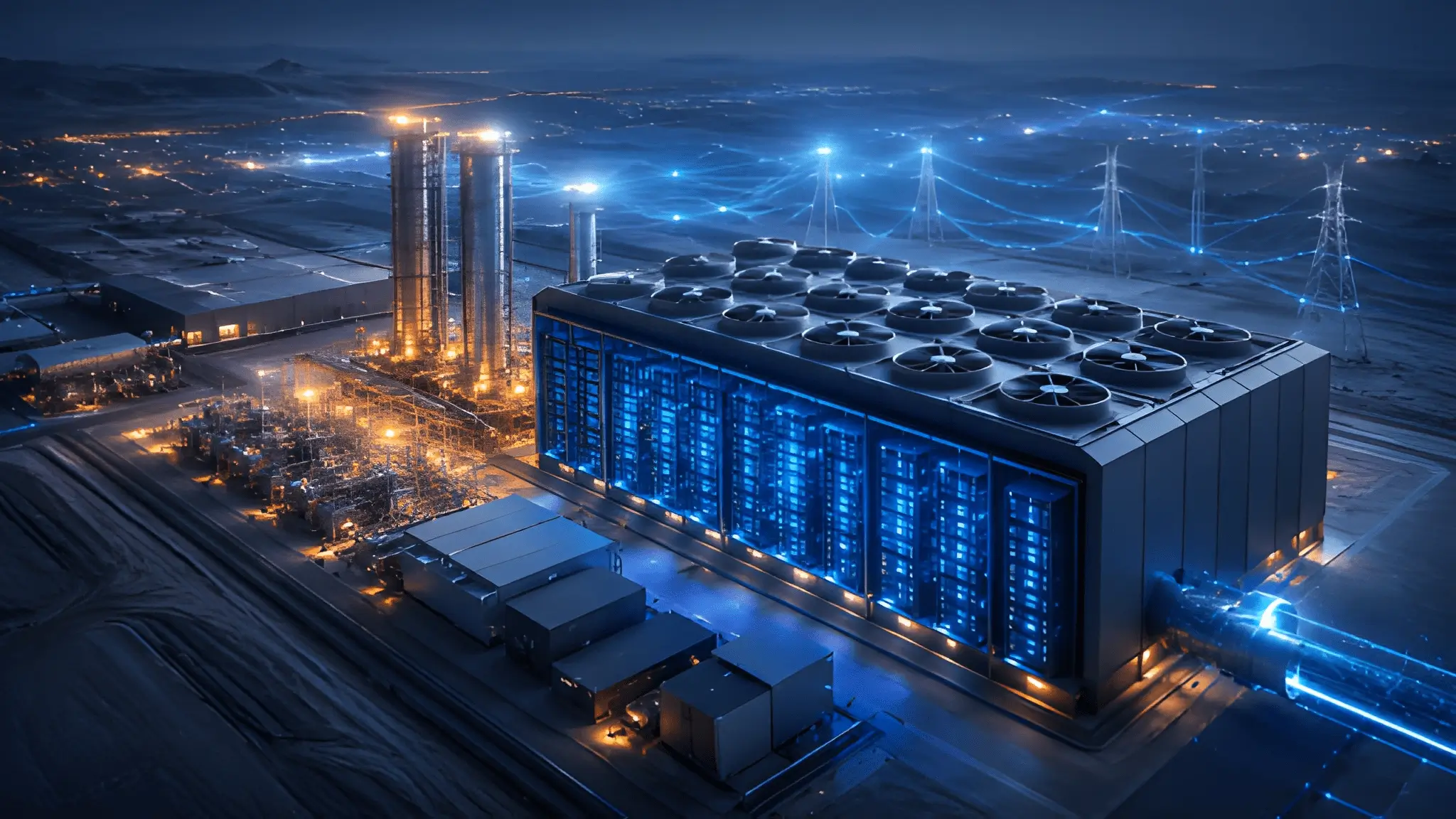
Cloud infrastructure no longer begins with a search for available racks or vacant campuses because the limiting resource has shifted elsewhere. Power availability now shapes project feasibility before architectural layouts, networking strategies, or equipment procurement receive meaningful attention. That change has encouraged a growing group of infrastructure developers to prioritize access to dependable energy resources before designing computing facilities, instead of treating electricity solely as an externally procured utility service. Several infrastructure operators now evaluate gas supply, generation assets, transmission constraints, and permitting timelines before considering server deployment strategies. Their facilities reflect a commercial structure where electricity generation establishes enterprise value while digital infrastructure expands monetization opportunities across the same physical footprint. This evolution introduces an operating model that deserves evaluation on its own commercial and regulatory characteristics rather than through comparisons with conventional colocation or hyperscale development.

Infrastructure investors increasingly recognize that electrical generation, fuel logistics, and grid resilience now influence deployment schedules more directly than construction capacity alone. Large AI clusters consume enough continuous electricity that securing dependable power frequently determines whether projects proceed at commercially acceptable timelines. Capital allocation therefore follows assets capable of producing predictable energy instead of relying exclusively on external utility procurement. Consequently, infrastructure planning now incorporates disciplines traditionally associated with independent power production alongside digital engineering expertise. That convergence has introduced a new investment profile where operational flexibility depends as much upon fuel economics as processor performance or network architecture.
Flipping the Stack: Why Compute Became the Byproduct, Not the Business
Traditional digital infrastructure economics centered on constructing facilities first and attracting computing tenants afterward because real estate represented the principal investment vehicle. Energy-first developers reverse that sequence by identifying underutilized fuel resources or generation opportunities before designing computational capacity around those assets. Revenue generation therefore begins with creating dependable electrical output capable of supporting sustained industrial consumption. Digital infrastructure becomes an additional monetization mechanism layered upon established energy production rather than the initial commercial objective. This inversion changes how capital expenditure, depreciation schedules, and operational risks distribute across the entire infrastructure portfolio. For these integrated infrastructure models, commercial performance depends heavily on the long-term utilization of energy assets alongside efficient deployment of computing infrastructure rather than solely maximizing occupied white space.
Projects following this framework often integrate generation assets, fuel supply arrangements, substations, and computing infrastructure within coordinated development plans rather than sequential procurement stages. Such integration reduces dependence upon uncertain utility expansion schedules while creating greater operational control over electricity availability during periods of elevated demand. Developers also gain flexibility to optimize asset utilization across both energy production and computational workloads according to prevailing market conditions. Infrastructure value therefore emerges from coordinating interconnected industrial systems instead of maximizing individual facility utilization metrics. Investors evaluate these projects through combined assessments of generation reliability, commodity exposure, engineering execution, and computational demand forecasts. That multidimensional valuation differs substantially from historical approaches emphasizing building occupancy, lease duration, and available rack capacity alone.

When a Data Center is Legally a Power Plant
Facilities incorporating substantial onsite generation frequently encounter regulatory obligations extending well beyond conventional digital infrastructure compliance requirements. Environmental agencies may evaluate emissions, combustion equipment, fuel storage practices, hazardous material management, and operating permits under industrial energy regulations instead of traditional commercial building classifications. Air quality approvals, water management obligations, emergency planning standards, and fuel transportation oversight therefore become integral project considerations during early development stages. Land-use authorities may also interpret these campuses differently because electricity generation constitutes a primary operational function rather than a supporting utility service. Meanwhile, legal responsibilities increasingly reflect industrial infrastructure characteristics despite housing advanced computational equipment within the same development footprint. Executive teams must therefore coordinate engineering, environmental compliance, legal strategy, and operational governance from project inception rather than addressing regulatory obligations after construction concludes.
Insurance underwriting also changes because integrated energy assets introduce operational exposures that differ materially from conventional server facilities supplied entirely through external utilities. Fuel handling procedures, combustion equipment maintenance, emissions reporting, environmental liability, and industrial safety protocols expand enterprise risk management requirements across multiple operational disciplines. Lenders likewise examine permitting durability, regulatory enforcement history, and long-term compliance obligations before financing large infrastructure developments with embedded generation assets. Those assessments influence financing costs because regulatory certainty directly affects projected operational continuity throughout asset lifecycles. Infrastructure sponsors therefore require multidisciplinary governance structures capable of managing energy regulation alongside cybersecurity, physical security, and operational resilience. That expanded compliance landscape demonstrates how organizational capabilities increasingly shape infrastructure competitiveness as much as engineering performance or financial resources.
Why Hyperscalers Are Learning to Buy Fuel Economics, Not Just Capacity
Enterprise procurement strategies increasingly extend beyond reserving electrical capacity because long-term operating costs depend upon the underlying economics supporting power generation itself. Commercial negotiations now evaluate fuel availability, commodity price volatility, transportation infrastructure, storage resilience, and contractual flexibility alongside computing specifications. Infrastructure consumers recognize that dependable electricity requires understanding the industrial systems producing continuous generation under varying market conditions. Large infrastructure procurement processes increasingly involve expertise in energy markets alongside technology sourcing and infrastructure planning to evaluate long-term operational resilience. This broader commercial perspective enables organizations to evaluate operational resilience through integrated assessments instead of isolated infrastructure metrics. Long-term agreements increasingly reflect shared understanding of energy availability rather than focusing exclusively upon contracted megawatts or facility expansion options.
Behind-the-meter generation arrangements also introduce commercial considerations extending beyond utility pricing because infrastructure performance depends upon privately managed energy assets operating throughout contractual periods. Organizations therefore examine maintenance obligations, equipment redundancy, operational dispatch strategies, fuel procurement structures, and contingency planning before committing substantial computational workloads. Furthermore, commodity exposure receives greater attention because fluctuations in underlying fuel markets may influence long-term infrastructure economics despite stable computing demand. Financial modeling for integrated energy-powered infrastructure projects incorporates operational assumptions commonly used in energy project finance alongside traditional digital infrastructure analysis. Procurement decisions consequently reflect integrated infrastructure analysis spanning engineering reliability, commercial resilience, regulatory durability, and long-term operating economics. These structural adjustments illustrate how enterprise infrastructure purchasing now incorporates industrial energy expertise alongside traditional digital infrastructure evaluation frameworks.
The Data Center Industry Just Got an Energy Industry
Infrastructure development has entered a distinct commercial category where integrated energy production fundamentally reshapes investment priorities, operational governance, and enterprise valuation methodologies. This evolution should not be interpreted as a temporary response to constrained utility availability because underlying computational demand continues expanding across increasingly power-intensive applications. Projects designed around dedicated generation assets establish business models that differ materially from conventional colocation providers and vertically integrated cloud operators. Projects that combine onsite energy generation with computing infrastructure require investment assessments that evaluate both industrial energy assets and digital infrastructure performance within the same commercial framework. Organizations participating across financing, engineering, procurement, and operations must adapt decision-making processes to reflect these interconnected economic realities. Infrastructure classification increasingly depends upon integrated industrial capabilities rather than physical building characteristics or server density alone.
Emerging infrastructure ecosystems demonstrate that electricity production, fuel strategy, environmental governance, and computational deployment have become commercially inseparable within large-scale AI developments. Capital markets will likely distinguish these integrated operators through valuation metrics reflecting operational resilience across both energy and digital infrastructure assets. Future competitive advantage may therefore depend upon securing dependable industrial energy platforms before expanding computational capacity at meaningful scale. Enterprise customers likewise gain strategic clarity by evaluating infrastructure providers through comprehensive operational capabilities instead of isolated facility specifications. Industry participants increasingly recognize integrated energy-powered computing campuses as a distinct infrastructure model alongside established hyperscale and colocation development approaches. Energy planning has become a strategic component of large-scale AI infrastructure development because dependable electricity increasingly determines deployment timelines, site selection, and long-term operational planning.











