
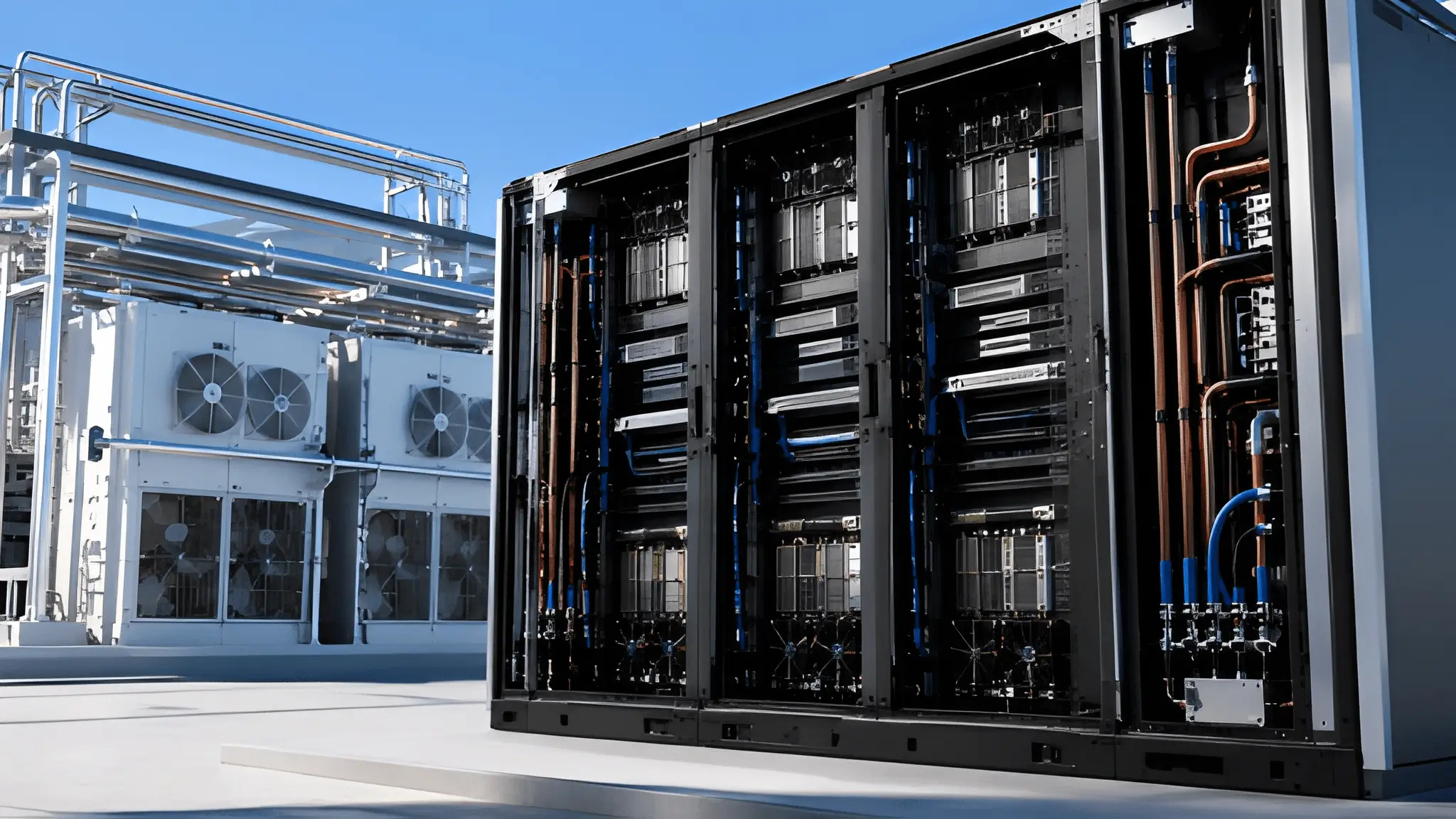
The next phase of AI infrastructure is shifting from standalone hardware innovation toward integrated deployment strategies. AMD and Schneider Electric have introduced a joint reference design intended to simplify how operators build and scale high-density AI environments around AMD’s Helios rack architecture. The framework combines compute, power, cooling and operational guidance into a single engineering blueprint, reducing uncertainty during large-scale AI infrastructure rollouts. The companies unveiled the reference standards during AMD’s Advancing AI 2026 event in San Francisco.
AMD and Schneider Electric Standardize Helios AI Rack Deployment
The joint reference design establishes a deployment framework for AMD’s Helios rack architecture, providing operators with technical guidance for integrating rack-scale AI systems into modern data centers. Rather than focusing solely on compute hardware, the blueprint extends into facility-level engineering requirements, allowing infrastructure teams to coordinate electrical systems, thermal management and operational software before deployment begins. The companies said the approach “provides a scalable blueprint for deploying high-density AI environments faster and with reduced risk and complexity.” As AI clusters continue increasing in both power consumption and density, standardized deployment practices are becoming increasingly important for reducing engineering delays.
Helios first debuted during AMD’s Advancing AI conference in 2025 as a unified rack-scale architecture designed to support both frontier AI model training and large-scale inference workloads. The platform combines AMD’s latest infrastructure technologies into a single integrated system, aiming to maximize compute density, memory bandwidth and scale-out networking performance. The architecture adopts a double-wide rack configuration that integrates AMD Zen 6 EPYC processors, MI400 GPUs and Vulcano network interface cards into one cohesive platform. Consequently, infrastructure planners can design AI deployments around a standardized hardware foundation rather than assembling multiple independent components.
Reference Standards Extend Beyond Compute Hardware
The newly released engineering documentation expands beyond server architecture by addressing how Helios racks interact with surrounding data center infrastructure. The reference standards cover four primary engineering domains: facility power, facility cooling, IT space planning and lifecycle software management. Together, these recommendations provide operators with a validated framework that spans planning, installation and long-term operations instead of focusing exclusively on rack hardware. This broader approach reflects the growing need for coordinated infrastructure design as AI systems place increasing demands on supporting facilities.
The engineering specifications accommodate AI clusters consuming up to 10.4 megawatts at newly constructed facilities while supporting rack power densities reaching 246 kilowatts. Cooling guidance includes advanced liquid cooling technologies supplied through Schneider Electric’s Motivair division, incorporating both coolant distribution unit (CDU)-based systems and hybrid air-liquid cooling configurations. These recommendations acknowledge that higher-density AI infrastructure increasingly depends on liquid cooling to maintain thermal performance while improving energy efficiency. The combined guidance aims to help operators deploy demanding AI workloads without requiring extensive custom engineering for every project.
Schneider Electric Highlights Faster Infrastructure Planning
Speaking about the collaboration, Schneider Electric emphasized the growing need for practical engineering guidance as AI deployments become increasingly complex. “Today organizations require comprehensive, AI-ready reference designs that can take them from planning to deployment faster and with less risk,” said Manish Kumar, EVP for secure power and data centers at Schneider Electric. “Through our collaboration with AMD, we’re delivering an engineering-backed reference design that bridges the gap between advanced AI compute platforms, energy tech, and real-world data center implementation, enabling customers to deploy scalable, high-density AI environments with greater confidence, efficiency, and speed.”
The partnership reflects a broader industry trend in which infrastructure vendors increasingly collaborate across hardware and facility engineering disciplines. AI deployments no longer depend only on processor performance; instead, successful implementation requires coordinated planning across electrical distribution, cooling infrastructure and software management. By combining expertise from both companies, the reference design seeks to shorten deployment timelines while lowering technical integration risks for enterprise customers and hyperscale operators alike.
AMD Positions Helios for Large-Scale AI Factories
AMD framed the collaboration as part of the industry’s transition toward increasingly integrated AI infrastructure designed for factory-scale computing environments. As AI models grow larger and inference workloads expand across industries, infrastructure vendors are placing greater emphasis on rack-level architectures that coordinate compute, networking, cooling and power delivery from the earliest stages of system design. This shift represents a departure from traditional server deployments toward infrastructure built specifically for AI production at scale. Meanwhile, validated deployment frameworks can help organizations standardize implementation across multiple facilities.
Forrest Norrod, EVP and GM in the data center solutions business group at AMD, added: “AI infrastructure is rapidly moving to full-scale AI factories, and that requires compute, networking, power and cooling to be designed together from the start. “AMD Helios provides an open, rack-scale architecture built to deliver the performance, efficiency and flexibility required for next-generation AI workloads. By working with Schneider Electric to create a validated reference design, we are giving customers a practical blueprint to accelerate high-density AI deployments, reduce integration risk and scale with greater confidence and efficiency.”
The Broader Perspective
The collaboration underscores how competitive advantage in AI infrastructure is moving beyond silicon alone. As rack densities approach hundreds of kilowatts and AI campuses exceed multi-megawatt scale, standardized engineering frameworks are becoming as valuable as advances in processors or accelerators. Reference architectures such as the Helios blueprint reduce variability across deployments while helping operators coordinate power systems, liquid cooling and facility planning before construction begins. For data center operators, hyperscalers and enterprise AI builders, the next wave of infrastructure differentiation will increasingly depend on integrated deployment standards that convert advanced hardware into operational AI capacity with greater speed and predictability.











