
NVIDIA H200 shipments delayed to Q3  · BREAKING: Microsoft confirms 3GW data centre expansion in Asia-Pacific ·  AWS announces new sovereign cloud regions in India and UAE  · Arm-based servers now 24% of hyperscale deployments ·  EU AI Act enforcement enters phase two  · Global data centre investment hits $612B in 2026 ·  TSMC Arizona yields improve to 68% on 3nm process  · OpenAI valuation reaches $400B after latest funding round ·  NVIDIA H200 shipments delayed to Q3  · BREAKING: Microsoft confirms 3GW data centre expansion in Asia-Pacific ·  AWS announces new sovereign cloud regions in India and UAE  · Arm-based servers now 24% of hyperscale deployments ·  EU AI Act enforcement enters phase two  · Global data centre investment hits $612B in 2026

Loudoun Just Challenged Data Centers’ Unlimited Growth Assumption

Markets rarely wait for policy to become reality. They react to expectations, probabilities, and perceived shortages long before official decisions

Share
data center land

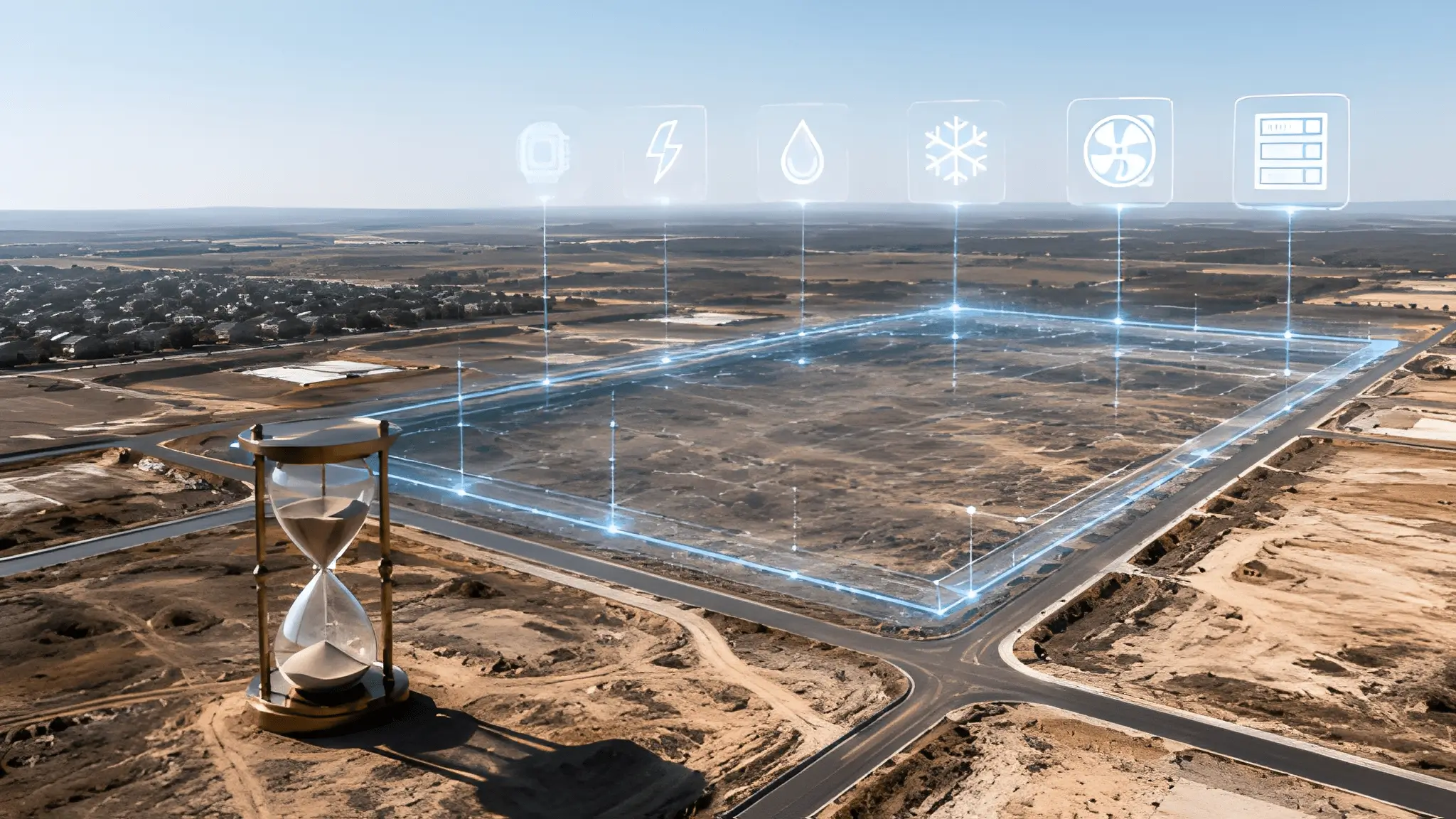
Markets rarely wait for policy to become reality. They react to expectations, probabilities, and perceived shortages long before official decisions reshape the landscape. That dynamic deserves closer attention as Loudoun County weighs a temporary pause on new data center development. The discussion reaches beyond one county’s planning process. It introduces a different variable into AI infrastructure strategy: uncertainty surrounding future access to developable land. Infrastructure markets usually reward execution. Developers identify data center land, secure utility commitments, obtain permits, attract customers, and construct facilities. Every step transforms raw land into productive digital infrastructure. A pause changes that sequence.

Instead of rewarding completed projects, it risks increasing the value of simply controlling land that might become harder to develop later. That distinction matters because infrastructure performs best when capital flows toward productive assets, not toward expectations of future scarcity. The conversation surrounding AI infrastructure often centers on electricity, GPUs, transformers, and transmission capacity. Land receives far less attention despite being the first requirement in every project. If investors begin viewing developable sites as financial assets before they become infrastructure assets, the industry may enter unfamiliar territory. The competitive race could gradually shift from building capacity toward accumulating optionality.

The Competitive Advantage Could Quietly Shift From Construction to Control

Every technology boom creates a resource that suddenly appears limited. During semiconductor shortages, manufacturers competed for chip allocation. During supply-chain disruptions, logistics capacity became strategic. Today, power availability has become one of the defining constraints for hyperscale expansion. Land may quietly become the next one. Not because suitable land is disappearing overnight, but because policy discussions create expectations that future approvals could become more selective across multiple jurisdictions. That perception alone can influence investment behavior.

Developers often evaluate proposed regulatory changes alongside existing market conditions when making long-term investment decisions. As planning policies evolve, companies may reassess where and when they pursue future development opportunities. One possible outcome is that land acquisitions advance more quickly than construction activity, particularly when companies seek flexibility for future expansion. Owning land offers flexibility. Building data centers requires enormous capital commitments, customer demand, utility coordination, environmental review, financing, and years of execution. Those timelines naturally separate acquisition decisions from deployment decisions. As policy uncertainty grows, that gap could widen. The industry would still announce campuses, secure options, and negotiate utility agreements, but actual infrastructure delivery might progress at a slower pace than headlines suggest. That creates an uncomfortable question. How much future capacity exists on paper, and how much will ultimately become operational infrastructure?

Expectations Can Inflate Faster Than Physical Infrastructure

Infrastructure usually operates within measurable limits. Power can be quantified. Cooling capacity can be engineered. Fiber routes can be mapped. Construction schedules can be monitored. Speculative expectations follow different rules. Once investors begin assigning value to future scarcity rather than present utility, pricing often separates from underlying deployment. That separation does not require irrational behavior. It only requires enough participants believing that someone else will eventually pay more for strategically located land.

Data center development has traditionally depended on long investment horizons, disciplined capital allocation, and predictable demand from enterprise and hyperscale customers. Those characteristics have historically reduced speculative behavior compared with many commercial real estate segments. AI demand introduces a different level of urgency. Organizations now compete for inference capacity, training infrastructure, sovereign computing capability, and cloud expansion simultaneously. That urgency creates pressure to secure future options even before immediate construction becomes economically practical. The result may resemble an inventory race rather than a deployment race. Land ownership becomes valuable because future availability appears uncertain—not necessarily because current utilization justifies immediate development. Those are fundamentally different investment motivations.

Local Planning Decisions Now Carry Global Investment Signals

Loudoun County occupies an unusually influential position within the global digital infrastructure ecosystem. Planning decisions there naturally receive attention far beyond local government meetings because they help shape broader assumptions about infrastructure policy. Investors watch leading markets for signals. Developers compare regulatory environments. Governments evaluate competitive positioning. Communities observe how rapidly digital infrastructure changes surrounding landscapes. That visibility means planning discussions in Loudoun County receive close attention from developers, investors, policymakers, and other stakeholders evaluating future infrastructure investment.

A temporary pause does not automatically predict broader regulatory adoption elsewhere. Nor does it indicate widespread restrictions are inevitable. However, markets rarely respond only to confirmed outcomes. They respond to possibilities. If participants conclude similar conversations could emerge in additional high-demand regions, strategic behavior may adjust before comparable policies ever appear. That possibility deserves consideration because infrastructure investment increasingly operates across interconnected global portfolios rather than isolated local projects. One jurisdiction’s planning framework can influence capital allocation decisions thousands of miles away.

Perception Is Becoming an Important Variable in Infrastructure Planning

The AI economy depends on physical infrastructure. Servers occupy buildings. Buildings occupy land. Land requires planning approval. That chain appears straightforward until expectations begin influencing behavior ahead of actual constraints. Markets frequently create shortages through anticipation. Participants compete for future access before present limitations fully materialize. Such behavior does not require widespread speculation to affect pricing dynamics. Even modest shifts in acquisition strategies can influence valuations across premium infrastructure markets.

Developers naturally seek optionality. Investors naturally evaluate scarcity. Communities naturally assess long-term impacts. Those interests do not necessarily conflict. The challenge emerges when expectations begin driving investment faster than infrastructure deployment. Digital infrastructure ultimately succeeds through operational capacity, reliable electricity, resilient networks, and long-term customer demand. Undeveloped land alone cannot process AI workloads. It cannot deliver cloud services. It cannot support enterprise transformation. Only completed infrastructure accomplishes those objectives.

The industry therefore faces a strategic crossroads that extends well beyond permitting debates. The most valuable asset in the next phase of AI expansion may not be the land acquired first, but the projects completed first. If future competition gradually shifts toward controlling increasingly scarce development opportunities instead of delivering operational facilities, the industry’s next bottleneck may emerge not from power shortages or equipment delays, but from expectations that transformed land into an investment thesis before it became digital infrastructure.


[simple-author-box]

More from AI Infrastructure

The commercial space industry has shifted the conversation around orbital infrastructure from science fiction

Every major AI announcement tends to emphasize graphics processors, cloud capacity, or multi-billion-dollar data

The conversation surrounding every major power disruption follows a familiar pattern. Engineers examine protective

COMPUTE WEEKLY

The briefing that 40,000+ tech leaders read every Monday. Sharp, fast, essential.

Great! We’ve received your information.

We couldn’t process your submission. Please retry

Building an AI Startup Without Owning GPUs

Not owning GPUs has become the default, deliberate strategy for building an AI company — not a compromise founders accept reluctantly. H100 rental rates fell 64-75% in fifteen months, a dense ecosystem of neoclouds and inference-as-a-service providers now lets startups skip infrastructure entirely, and credit programs can fund a company’s first year before a founder writes a check
Most Read

Infrastructure planning discussions often prioritize engineering, construction, and utility considerations before examining how end

AI infrastructure deployment schedules depend on coordinated progress across hardware availability, electrical infrastructure, cooling

Artificial intelligence has transformed the economics of digital infrastructure. Every new AI model requires

Data centers do not visibly smoke. They have no smokestacks, no visible exhaust, and

Artificial intelligence has transformed the economics of digital infrastructure. Companies once competed by acquiring

Disruptor Spotlight

Cerebras Systems

The chip that makes Nvidia nervous. Cerebras’ Wafer Scale Engine is rewriting the rules of AI inference at scale.
Faster
0 x
YoY Revenue
0 x
Transistors
0 T
Market Pulse
NVDA
$924.60
-2.11%
MSFT
$421.30
-2.94%
AMZN
$192.80
-4.87%
AMD
$924.60
-2.40%
TSMC
$924.60
-2.32%
Indicative only · Not financial advice
Upcoming Events
SEP
The AI Infrastructure Race (India)
WEBINAR · ONLINE
The AI Infrastructure Race: Won on Power, Land and Trust — Not Capital
MAY
0
AI Infrastructure Summit
DUBAI · IN PERSON
MEA’s premier AI infrastructure event.
JUN
0 0
Compute Forecast Summit
SINGAPORE · IN PERSON
Our flagship APAC event. Early bird open.
Latest Moves
Live
ecolab
Ecolab Deepens Cooling Strategy With $4.75B CoolIT Acquisition
Ecolab is making one of its biggest moves yet into AI infrastructure after completing its $4.75 billion acquisition of liquid cooling specialist CoolIT Systems
Pure DC AVK Europe data center microgrid Dublin 110MW AI infrastructure Ireland 2026
Pure DC and AVK Deploy Europe’s First 110 MW Data Center Microgrid in Dublin
The Pure DC Dublin microgrid has made history as Europe’s first large-scale on-site data center microgrid, launched in partnership with power solutions provider AVK at Pure DC’s campus in Ireland.
Pace Digitek
Pace Digitek Partners With MEGMEET to Expand AI Data Center Power Business
India’s AI infrastructure ecosystem continues to mature as domestic technology manufacturers move beyond traditional telecommunications and industrial markets toward high-growth digital infrastructure opportunities
Follow Compute Forecast
11K followers
1200 followers
Companies to Watch
CW
CoreWeave
Neo Cloud · $19B · IPO Watch
CB
Cerebras Systems
AI Hardware · $4.25B · Pre-IPO
G42
G42
Sovereign AI · Abu Dhabi
H
Humain
Saudi AI · $40B Fund
Latest Podcast
AI Capex, Cloud Margins & the Nuclear Bet
48 MIN · 25 APR 2026

Loudoun Just Challenged Data Centers’ Unlimited Growth Assumption

Markets rarely wait for policy to become reality. They react to expectations, probabilities, and perceived shortages long before official decisions

Share
data center land
2
847 SHARES

0
SHARES

[simple-author-box]

More from AI Infrastructure

Infrastructure planning discussions often prioritize engineering, construction, and utility considerations before examining how end

AI infrastructure deployment schedules depend on coordinated progress across hardware availability, electrical infrastructure, cooling

Artificial intelligence has transformed the economics of digital infrastructure. Every new AI model requires

Data centers do not visibly smoke. They have no smokestacks, no visible exhaust, and

COMPUTE WEEKLY

The briefing that 40,000+ tech leaders read every Monday. Sharp, fast, essential.

Great! We’ve received your information.

We couldn’t process your submission. Please retry

Global AI Infrastructure Outlook 2026

The briefing that 40,000+ tech leaders read every Monday. Sharp, fast, essential.
Download Free
Most Read

Infrastructure planning discussions often prioritize engineering, construction, and utility considerations before examining how end

AI infrastructure deployment schedules depend on coordinated progress across hardware availability, electrical infrastructure, cooling

Artificial intelligence has transformed the economics of digital infrastructure. Every new AI model requires

Data centers do not visibly smoke. They have no smokestacks, no visible exhaust, and

Artificial intelligence has transformed the economics of digital infrastructure. Companies once competed by acquiring

Disruptor Spotlight

Cerebras Systems

The chip that makes Nvidia nervous. Cerebras’ Wafer Scale Engine is rewriting the rules of AI inference at scale.
Faster
0 x
YoY Revenue
0 x
Transistors
0 T
Market Pulse
NVDA
$924.60
+2.4%
MSFT
$421.30
+1.1%
AMZN
$192.80
-0.6%
NVDA
$924.60
+2.4%
NVDA
$924.60
+2.4%
Indicative only · Not financial advice
Upcoming Events
MAY
0 0
DCD Global — London
LONDON · IN PERSON
World’s largest DC event. CF is media partner.
MAY
0
AI Infrastructure Summit
DUBAI · IN PERSON
MEA’s premier AI infrastructure event.
JUN
0 0

Compute Forecast Summit

SINGAPORE · IN PERSON
Our flagship APAC event. Early bird open.
Latest Moves
  • Live
Sam Altman
OpenAI appoints new Chief Infrastructure Officer to lead $100B DC programme
27 APR · OPENAI
Sam Altman
OpenAI appoints new Chief Infrastructure Officer to lead $100B DC programme
27 APR · OPENAI
Sam Altman
OpenAI appoints new Chief Infrastructure Officer to lead $100B DC programme
27 APR · OPENAI
Follow Compute Forecast
18.4K followers
12.1K followers
9.3K subscribers
41 episodes
Companies to Watch
CW
CoreWeave
Neo Cloud · $19B · IPO Watch
CB
Cerebras Systems
AI Hardware · $4.25B · Pre-IPO
G42
G42
Sovereign AI · Abu Dhabi
CW
Humain
Saudi AI · $40B Fund
Latest Podcast
AI Capex, Cloud Margins & the Nuclear Bet
48 MIN · 25 APR 2026
Scroll to Top








