
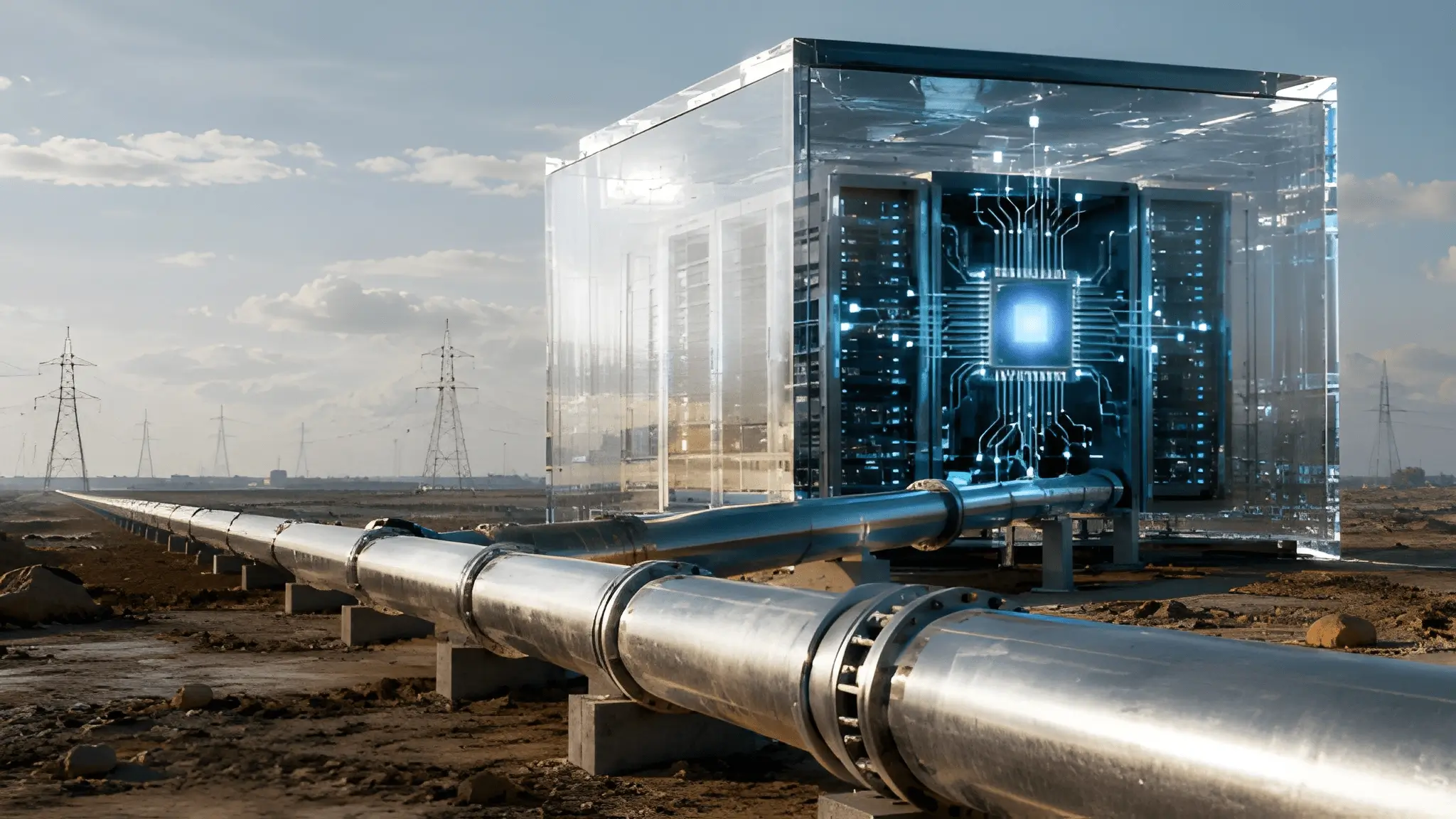
The race to build AI infrastructure is pushing data center developers deeper into the energy business, and Oracle’s Project Jupiter offers a revealing example. Planned for Doña Ana County in southern New Mexico, the campus could deploy up to 2.45 GW of Bloom Energy solid oxide fuel cell capacity. That scale puts the project among the more ambitious attempts to pair large-scale computing with power generation located next to the data center. The emerging lesson is straightforward: moving generation onsite does not remove an energy dependency; it shifts the dependency to another part of the supply chain.
The Green Chile Project sits at the center of that equation. The proposed natural gas pipeline would stretch about 17.8 miles, or 28.6 kilometers, and use a 24-inch line supported by metering and regulation facilities. Its planned capacity stands at roughly 400,000 dekatherms of natural gas per day, providing the fuel needed to generate electricity for the AI and data center campus. A delay in that pipeline therefore matters far beyond a conventional infrastructure timetable because it can affect the fuel pathway behind a multi-gigawatt computing strategy.
Oracle and BorderPlex Digital Assets have designed Project Jupiter around Bloom Energy fuel cells rather than relying solely on conventional grid supply. The current configuration replaced an earlier plan involving gas turbines and diesel generators with solid oxide fuel cell technology. Oracle says the revised approach can materially reduce local nitrogen oxide emissions and water consumption compared with the previous design. The technology also produces electricity through an electrochemical process, avoiding conventional combustion at the point where power generation occurs.
The Pipeline Becomes The New Energy Bottleneck
The shift illustrates how AI data center development is rewriting the traditional relationship between computing and utilities. A large industrial customer historically depended on the electrical grid to deliver its power, while generation remained largely outside the facility’s control. Today, developers increasingly want dedicated generation because grid interconnection timelines can collide with the speed of AI infrastructure expansion. However, that strategy creates a different set of dependencies involving fuel supply, pipelines, generation equipment and regulatory approvals.
Project Jupiter makes those dependencies unusually visible. A 2.45 GW fuel cell system requires a dependable energy input, and the Green Chile pipeline is intended to provide that input at the required scale. The distinction matters because 2.45 GW represents planned installed generation capacity rather than a guarantee that the campus will continuously draw that amount under every operating condition. Still, the figure shows how quickly AI infrastructure can turn an energy project into a critical piece of digital infrastructure.
The project also underscores the limits of treating onsite generation as a complete answer to AI’s power problem. Fuel cells can reduce exposure to some grid constraints, but they cannot operate without an external fuel chain. Meanwhile, the pipeline itself becomes a strategic asset because it connects natural gas supply with the electricity required by the computing environment. That creates a broader infrastructure stack in which servers, generation equipment and fuel logistics must advance together.
AI Infrastructure Is Becoming An Energy System
The Green Chile Project delay offers a useful warning for the wider data center market. Developers can secure land, procure accelerators and design massive campuses, but those investments still depend on physical infrastructure that can move at a different pace. A relatively short gas pipeline can therefore become as consequential to an AI campus as a substation, transmission connection or generation fleet. The bottleneck may sit outside the data center fence, even when the project’s power generation sits inside it.
For Oracle, Project Jupiter demonstrates both the opportunity and complexity of building dedicated power around AI workloads. The campus could combine large-scale computing with onsite generation and reduce some environmental pressures associated with earlier power-generation plans. Yet the project still depends on a continuous and reliable fuel supply, making the Green Chile pipeline an essential link in the architecture. The development shows why AI infrastructure planning increasingly requires coordination across energy, utility and digital systems rather than treating power as a simple input.
The bigger issue is not whether data centers can generate electricity themselves. It is whether the supporting infrastructure can scale with the computing demand those facilities are designed to absorb. Project Jupiter’s pipeline challenge highlights that every megawatt of AI capacity creates dependencies beyond the server hall, from fuel logistics to regulatory approvals and generation equipment. For an industry racing to add gigawatts, those dependencies could determine which projects actually reach operation.











