
Data Centre Delivery Is an Integration Challenge
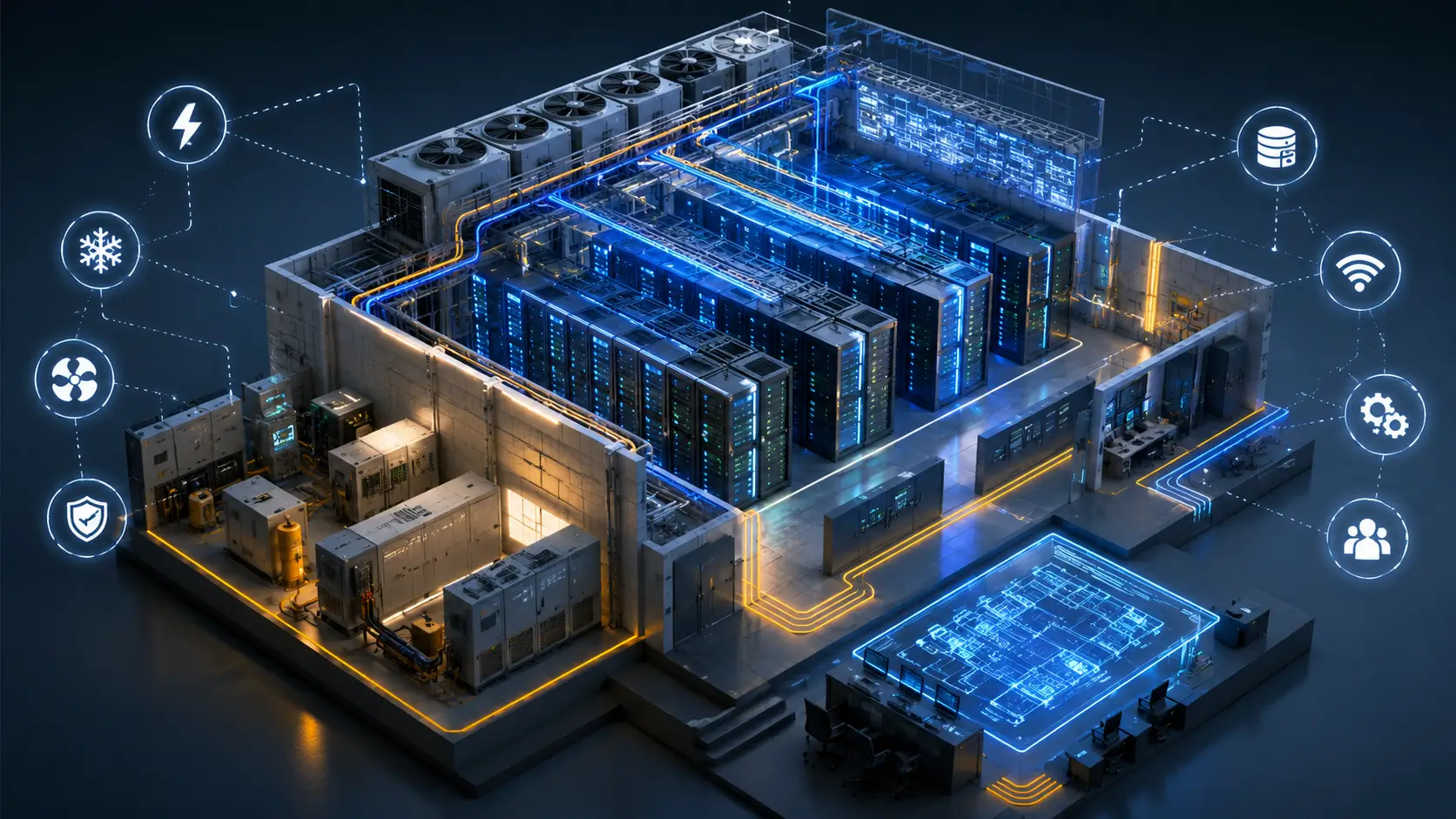
A modern data centre depends on multiple technical systems working as one engineered environment. Power distribution, cooling, connectivity, security and controls each have distinct technical requirements. Construction, commissioning and operations must connect those requirements throughout the project lifecycle. The Project Insider Asia discussion highlights interface-related delivery risks across data centre project packages. These risks become relevant when responsibilities and technical dependencies cross organisational boundaries. An electrical package can meet its specification while creating problems for mechanical systems or controls. Cooling performance can similarly depend on rack density, pipe routing and IT deployment assumptions. Construction progress can continue while unresolved interfaces create potential downstream delivery risks.

Where Interface Risk Starts
Interface risk can arise when project responsibilities depend on information controlled by different parties. The dependency may involve drawings, equipment dimensions or electrical characteristics. Control sequences and commissioning requirements can create similar dependencies between project teams. A design consultant may define a requirement while a specialist vendor supplies equipment with different integration conditions. One contractor may install equipment while another controls the service needed for operation. The project can develop gaps even when each party completes its contracted scope correctly. Interface registers and responsibility matrices can expose these dependencies before field conflicts develop. The critical question concerns ownership of the outcome at the boundary between packages.
Electrical and Mechanical Dependencies
Electrical infrastructure creates a critical interface environment within a data centre. Power systems support IT equipment, cooling equipment, controls, security and other critical loads. Utility connections, transformers, switchgear, UPS systems and generators have separate installation requirements. Their procurement and testing activities must still converge within the project programme. Changes in expected IT load can affect electrical capacity calculations and cooling requirements. Equipment dimensions and connection points can influence spatial coordination between electrical and mechanical systems. Generator systems introduce additional interfaces involving fuel, exhaust, ventilation, fire protection and controls. Uptime Institute’s integrated testing approach confirms the importance of testing power and cooling systems together.
Cooling Design Meets Changing IT Density
Cooling design becomes more complex as computing density increases. ASHRAE identifies liquid cooling, airflow management and thermal considerations for high-density AI workloads. Rack density affects heat generation, cooling topology and space planning. It can influence electrical demand because higher computing loads require greater power capacity. Direct liquid cooling can introduce coolant distribution units and secondary cooling loops. These systems create additional interfaces between IT equipment and facility infrastructure. Uptime Institute notes that liquid cooling can complicate commissioning because it links facility systems with IT equipment. Cooling design must therefore reflect equipment configuration, load profile, maintainability and future expansion requirements.
Backup Power Creates Multiple Secondary Interfaces
Backup power systems show why equipment specifications alone do not define resilience. UPS systems and generators connect with electrical distribution and several supporting systems. Fuel, ventilation, exhaust, fire protection and controls can affect generator operation. A generator can meet its electrical requirements while related interfaces still require completion. Control sequences must define responses during utility interruptions and generator starts. UPS transfers and restoration conditions require similar coordination between connected systems. Uptime Institute describes tests that interrupt utility power and verify UPS and generator responses. Integrated testing should demonstrate the intended system response rather than isolated equipment performance.
Connectivity Requires Physical and Logical Coordination
Connectivity creates another important interface within data centre infrastructure. Fibre routes, carrier entries and network rooms require physical coordination with the building. Pathways must share available space with electrical and mechanical services. Two network paths can appear independent while sharing a physical route or entry point. Physical separation can reduce exposure to common physical failure points. Network infrastructure must coordinate with security, access controls and power supplies. CISA cybersecurity guidance for commercial facilities emphasises controlling access to physical and logical assets. Connectivity planning therefore needs to cover routing, access management and operational maintenance.

Security and Operations Should Enter the Design Process Early
Security and operational requirements can require additional coordination near project handover. Access control, surveillance and monitoring systems may share networks and power infrastructure. Building management systems can connect facility equipment with operational monitoring platforms. CISA guidance states that access to physical and logical assets should follow assessed risk. Facility teams need visibility into alarms, equipment status and maintenance conditions. Design decisions can affect technician access and equipment isolation during maintenance. Operational adjustments may become necessary when monitoring points or alarm hierarchies differ from procedures. Treating operations as an interface participant during design can support operational readiness.
Logistics Is a Technical Interface, Not Only a Delivery Task
Large data centre equipment creates physical logistics requirements during construction. Transformers, generators, chillers and switchgear need suitable delivery and lifting arrangements. Temporary storage areas can influence installation sequences and site logistics. Equipment delivery schedules can differ from site readiness or permanent access availability. Structural loading and crane positioning can become constraints during major equipment installation. Replacement planning requires suitable access for future equipment removal and installation. Equipment logistics should account for lifting provisions throughout the facility’s operating life. Procurement, structural design, temporary works and maintenance planning therefore need coordination.
Commissioning Exposes the Quality of Earlier Decisions
Commissioning provides a practical test of whether integrated systems operate as intended. Individual equipment tests confirm component performance under defined conditions. Integrated testing examines system behaviour when multiple systems respond to one event. Uptime Institute describes scenarios involving power failures, generator starts and UPS transfers. Cooling response and redundancy scenarios can form part of integrated testing activities. Liquid cooling can add complexity through coolant distribution units and associated control systems. Uptime Institute’s 2026 analysis highlights factory witness testing for verifying CDU capabilities. A commissioning programme with unresolved interfaces can increase coordination demands during system testing.
Construction Progress Does Not Always Equal Interface Progress
Project reporting commonly tracks package milestones, procurement status and installation quantities. Schedule performance remains important for controlling a large data centre programme. Those indicators may not show whether package boundaries are ready for the next stage. A switchgear package can reach its scheduled milestone while controls remain under coordination. Chiller installation can reach physical completion while associated commissioning activities continue. A data hall can appear ready while IT load assumptions continue to change. Project controls should track interface deliverables alongside conventional package milestones. Interface registers can identify decisions, owners, dependencies and acceptance requirements.
Design Coordination Must Continue Beyond Drawings
Formal design reviews provide important coordination points during data centre development. Complex projects need continued alignment when procurement introduces new equipment information. Vendor submittals can contain dimensions and connection requirements that differ from early assumptions. Control characteristics can create additional dependencies between equipment and facility systems. Engineering teams need a structured process for evaluating such changes before approval. BIM coordination can identify spatial conflicts between electrical, mechanical and structural systems. Technical interfaces can extend beyond geometry into signals, controls and commissioning sequences. DOE guidance treats IT systems, cooling, air management and electrical systems as connected design elements.
Water, Energy and Cooling Decisions Intersect
Cooling decisions can affect energy management, water use and operational strategy. Evaporative cooling systems can consume water during heat rejection processes. Direct liquid cooling introduces different hydraulic and control requirements. DOE guidance connects data centre cooling performance with IT heat load and cooling equipment. Direct liquid cooling can transfer heat into a circulating liquid loop. Coolant distribution units can support the interface between IT equipment and facility cooling. Cooling architecture must consider rack density, equipment selection, climate and operational requirements. ASHRAE recommends cooling approaches that match the thermal characteristics of high-density computing.
Interface Ownership Needs Clear Governance
Interface risk can be better controlled when governance assigns responsibility for outcomes. A responsibility matrix can identify owners for design, supply and installation. It can identify separate responsibilities for controls, testing and documentation. Contract language can define deliverables across different project packages. Working-level coordination remains necessary when technical issues cross contractual boundaries. Interface meetings should focus on decisions, dependencies and unresolved technical questions. Project controls can connect interface actions with procurement and commissioning milestones. The Project Insider Asia discussion also draws attention to ownership between project packages.
The Human Interface Remains Critical
Technical systems depend on people who interpret requirements and execute procedures. Engineers and contractors can hold different assumptions about the same system boundary. Commissioning specialists may identify discrepancies that remain unnoticed during routine construction activities. Operations teams bring another perspective because they manage systems after project handover. Training and procedure development can help align the human side of technical interfaces. Uptime Institute stresses the importance of appropriate technical personnel during certification activities. Operators need to understand system interactions during maintenance, failures and recovery scenarios. Commissioning can provide a structured setting for this operational knowledge transfer.
From Package Management to Integrated Delivery
Data centre delivery can become more controlled when interfaces receive formal project attention. The approach starts by identifying systems that must interact during normal operation. Each boundary should define information, physical connections, controls and performance requirements. Coordinated design should continue through procurement and construction changes. Interface registers can maintain visibility over decisions and dependencies. Commissioning can then validate whether connected systems perform according to approved sequences. ASHRAE’s AI data centre framework reflects this systems-level approach for power and thermal requirements. Finally, project health should consider both package performance and interface readiness.
Operational readiness depends on connected systems, processes and people performing together. The project must support those interactions under the conditions for which it was designed. Procedures and documentation form part of that operational preparation. Staffing requirements must align with the systems entering service. Acceptance activities should confirm that technical and operational requirements have been addressed. Commissioning provides an important validation stage for these connected requirements. Interface ownership gives teams a defined route for resolving outstanding issues. A data centre therefore reaches a stronger delivery position when its individual packages and system boundaries progress together.











