
NVIDIA H200 shipments delayed to Q3  · BREAKING: Microsoft confirms 3GW data centre expansion in Asia-Pacific ·  AWS announces new sovereign cloud regions in India and UAE  · Arm-based servers now 24% of hyperscale deployments ·  EU AI Act enforcement enters phase two  · Global data centre investment hits $612B in 2026 ·  TSMC Arizona yields improve to 68% on 3nm process  · OpenAI valuation reaches $400B after latest funding round ·  NVIDIA H200 shipments delayed to Q3  · BREAKING: Microsoft confirms 3GW data centre expansion in Asia-Pacific ·  AWS announces new sovereign cloud regions in India and UAE  · Arm-based servers now 24% of hyperscale deployments ·  EU AI Act enforcement enters phase two  · Global data centre investment hits $612B in 2026

Ireland’s Data Center Boom Is Dragging Nuclear Back Into the Room

Ireland’s nuclear debate is no longer arriving as an abstract argument about reactor technology. It is emerging alongside a much

Share
Ireland nuclear

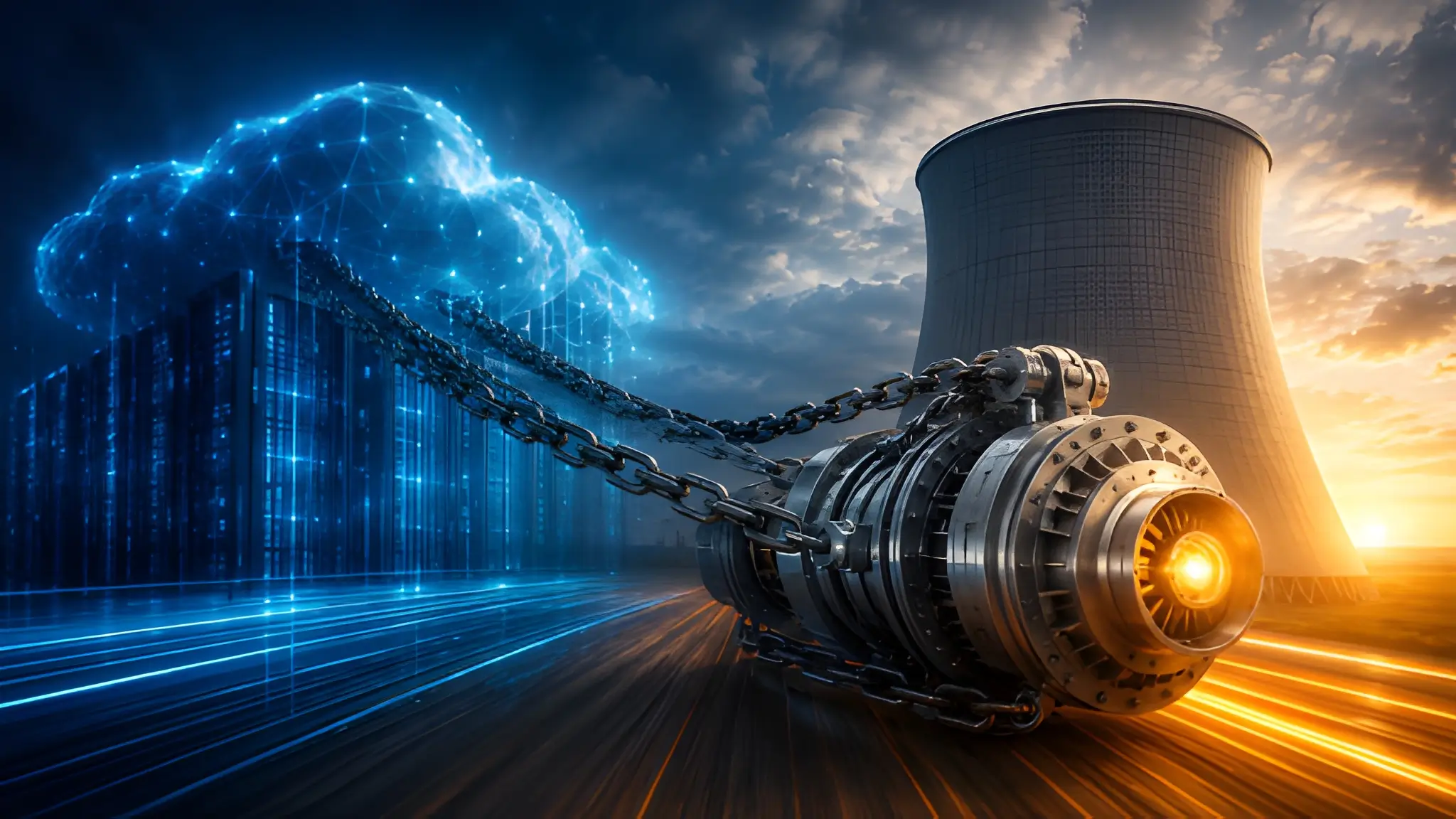
Ireland’s nuclear debate is no longer arriving as an abstract argument about reactor technology. It is emerging alongside a much more immediate question: how much electricity can the country reliably supply as its digital infrastructure expands? That connection matters because data centers have become an unusually large part of Ireland’s electricity system. Central Statistics Office figures show that data centers consumed 23% of metered electricity in 2025, up from 22% in 2024 and just 5% in 2015. Their consumption increased 10% in 2025, reaching 7,663 gigawatt-hours. The numbers change the political context around nuclear power. A technology that once sat largely outside Ireland’s mainstream energy conversation has now returned to policy discussions as policymakers consider the long-term consequences of adding large, continuous electricity loads.

Data centers have exposed the limits of an easy energy narrative

Ireland’s digital economy depends on infrastructure that cannot treat electricity as a secondary consideration. Data centers require substantial, reliable power around the clock, while the country also wants to increase renewable generation and reduce dependence on fossil fuels. The government’s Large Energy User Action Plan explicitly recognizes the scale of energy-intensive investment and calls for new large energy users to locate near renewable energy sources. The strategy includes data centers alongside sectors such as semiconductors, pharmaceuticals and precision engineering.

The tension is therefore not really between data centers and nuclear power. It is between rapidly expanding electricity demand and the pace at which Ireland can build generation, transmission and other supporting infrastructure. That distinction is important. Nuclear has entered the conversation partly because it represents a different type of power-system proposition: firm generation that does not depend on whether the wind is blowing at a particular moment. The technology question follows from the infrastructure question, rather than the other way around.

Nuclear has moved from taboo to policy option

The political shift is already visible. Fianna Fáil TD James O’Connor introduced the Electricity Regulation (Removal of Nuclear Fission Prohibitions) Bill 2026, which seeks to remove legislative restrictions on nuclear electricity generation. The bill is scheduled for debate in the Dáil. Fianna Fáil’s parliamentary party subsequently agreed to support the proposal. Taoiseach Micheál Martin has also said Ireland should seriously examine nuclear power and pointed to technological advances, including developments involving small modular reactors. That language is more significant than it may initially appear. Examining nuclear power is not the same as committing public money to a reactor, selecting a technology or changing the country’s electricity mix. It does, however, mark a departure from treating nuclear generation as a closed subject.

The debate has also acquired an unusual practical dimension. Martin’s comments also come as Ireland prepares to strengthen its electricity connection with France through the planned Celtic Interconnector, linking the Irish grid with a French electricity system in which nuclear generation plays a major role. Ireland, in other words, can reject domestic nuclear generation while remaining connected to a European electricity system in which nuclear power already plays a major role. That makes the old policy boundary increasingly difficult to view as purely technological.

AI infrastructure makes the question harder to ignore

The rise of AI adds another layer to the discussion, even though Ireland’s current electricity statistics cover data centers broadly rather than AI facilities specifically. AI workloads can require intensive computing infrastructure, and hyperscale facilities already represent a significant electricity demand. Ireland’s government-backed planning framework anticipates further expansion, while reporting to an Oireachtas committee has highlighted a scenario in which additional data centers could eventually require up to 5.8 gigawatts of electricity by 2040. That scale makes energy availability part of the technology strategy itself.

Ireland’s position as a European technology hub increasingly depends on more than servers and connectivity, with reliable digital infrastructure and electricity supply becoming important considerations for technology-intensive investment. It also depends on whether the electricity system can accommodate the infrastructure that those businesses require without undermining affordability, reliability or climate objectives. This is where nuclear becomes strategically interesting, regardless of whether it ultimately becomes economically or politically viable. The more consequential question is not whether AI companies want nuclear reactors. There is no basis for making that sweeping claim. The more defensible observation is that growing digital electricity demand is pushing policymakers to examine a wider range of generation technologies.

The nuclear conversation still has a long road ahead

Ireland’s nuclear discussion should therefore be viewed as a signal rather than a construction plan. Nuclear projects involve lengthy development timelines, major capital requirements, regulatory decisions, grid planning, safety systems and questions around financing and public acceptance. Small modular reactors may alter some assumptions about project scale and deployment, but they do not eliminate those challenges. Meanwhile, Ireland’s renewable resources remain central to its electricity strategy. The Climate Change Advisory Council has emphasized the importance of strengthening electricity infrastructure and accelerating renewable deployment, while noting that renewable generation can reduce wholesale electricity costs and fossil-fuel dependence. That leaves Ireland facing a more interesting policy question than “nuclear or renewables.”

The real issue is whether the country can construct an electricity system capable of supporting its digital ambitions while meeting reliability, affordability and decarbonization goals. Data centers did not create Ireland’s nuclear debate. They have, however, made the consequences of electricity planning impossible to ignore. That may help explain why nuclear has returned to the conversation with unusual speed, as rising electricity demand, energy-security concerns and developments in nuclear technology have broadened the policy debate.

The technology itself has not suddenly become inevitable. Ireland’s rising electricity demand has become significant enough to prompt policymakers to reconsider which generation options should remain outside the country’s long-term energy debate. The provocative part is not that Ireland might build a reactor. It is that the rapid expansion of computing infrastructure has coincided with a renewed nuclear debate, turning electricity generation into an increasingly important part of Ireland’s technology strategy. For a country whose digital economy increasingly depends on enormous quantities of electricity, that is a meaningful shift in the conversation.


[simple-author-box]

More from AI Infrastructure

AI campuses increasingly support workloads with different compute and infrastructure needs. They no longer

India’s AI infrastructure debate is beginning to resemble a question of location more than

The phrase “AI debt Enron 2.0” is designed to sound like an immediate financial

COMPUTE WEEKLY

The briefing that 40,000+ tech leaders read every Monday. Sharp, fast, essential.

Great! We’ve received your information.

Building an AI Startup Without Owning GPUs

Not owning GPUs has become the default, deliberate strategy for building an AI company — not a compromise founders accept reluctantly. H100 rental rates fell 64-75% in fifteen months, a dense ecosystem of neoclouds and inference-as-a-service providers now lets startups skip infrastructure entirely, and credit programs can fund a company’s first year before a founder writes a check
Most Read

Demand is broadening across enterprise workloads APAC’s infrastructure story is changing in ways that

AI infrastructure decisions increasingly influence what enterprises can build, test, and deliver. They also

Why Infrastructure Planning Now Starts With Availability A data center project can have a

A property can look enormous from the site entrance and still offer almost no

As rack power rises toward the megawatt range, the physical footprint of power-delivery equipment

Disruptor Spotlight

Cerebras Systems

The chip that makes Nvidia nervous. Cerebras’ Wafer Scale Engine is rewriting the rules of AI inference at scale.
Faster
0 x
YoY Revenue
0 x
Transistors
0 T
Market Pulse
MSFT
+1.02%
NVDA
+0.66%
AMZN
-0.078%
AMD
-6.95%
TSMC
-2.98%
Indicative only · Not financial advice
Upcoming Events
SEP
The AI Infrastructure Race (India)
WEBINAR · ONLINE
The AI Infrastructure Race: Won on Power, Land and Trust — Not Capital
MAY
0
AI Infrastructure Summit
DUBAI · IN PERSON
MEA’s premier AI infrastructure event.
JUN
0 0
Compute Forecast Summit
SINGAPORE · IN PERSON
Our flagship APAC event. Early bird open.
Latest Moves
Live
ecolab
Ecolab Deepens Cooling Strategy With $4.75B CoolIT Acquisition
Ecolab is making one of its biggest moves yet into AI infrastructure after completing its $4.75 billion acquisition of liquid cooling specialist CoolIT Systems
Pure DC AVK Europe data center microgrid Dublin 110MW AI infrastructure Ireland 2026
Pure DC and AVK Deploy Europe’s First 110 MW Data Center Microgrid in Dublin
The Pure DC Dublin microgrid has made history as Europe’s first large-scale on-site data center microgrid, launched in partnership with power solutions provider AVK at Pure DC’s campus in Ireland.
Pace Digitek
Pace Digitek Partners With MEGMEET to Expand AI Data Center Power Business
India’s AI infrastructure ecosystem continues to mature as domestic technology manufacturers move beyond traditional telecommunications and industrial markets toward high-growth digital infrastructure opportunities
Follow Compute Forecast
11K followers
1200 followers
Companies to Watch
CW
CoreWeave
Neo Cloud · $19B · IPO Watch
CB
Cerebras Systems
AI Hardware · $4.25B · Pre-IPO
G42
G42
Sovereign AI · Abu Dhabi
H
Humain
Saudi AI · $40B Fund
Latest Podcast
AI Capex, Cloud Margins & the Nuclear Bet
48 MIN · 25 APR 2026

Ireland’s Data Center Boom Is Dragging Nuclear Back Into the Room

Ireland’s nuclear debate is no longer arriving as an abstract argument about reactor technology. It is emerging alongside a much

Share
Ireland nuclear
0
847 SHARES

0
SHARES

[simple-author-box]

More from AI Infrastructure

Demand is broadening across enterprise workloads APAC’s infrastructure story is changing in ways that

AI infrastructure decisions increasingly influence what enterprises can build, test, and deliver. They also

Why Infrastructure Planning Now Starts With Availability A data center project can have a

A property can look enormous from the site entrance and still offer almost no

COMPUTE WEEKLY

The briefing that 40,000+ tech leaders read every Monday. Sharp, fast, essential.

Great! We’ve received your information.

Global AI Infrastructure Outlook 2026

The briefing that 40,000+ tech leaders read every Monday. Sharp, fast, essential.
Download Free
Most Read

Demand is broadening across enterprise workloads APAC’s infrastructure story is changing in ways that

AI infrastructure decisions increasingly influence what enterprises can build, test, and deliver. They also

Why Infrastructure Planning Now Starts With Availability A data center project can have a

A property can look enormous from the site entrance and still offer almost no

As rack power rises toward the megawatt range, the physical footprint of power-delivery equipment

Disruptor Spotlight

Cerebras Systems

The chip that makes Nvidia nervous. Cerebras’ Wafer Scale Engine is rewriting the rules of AI inference at scale.
Faster
0 x
YoY Revenue
0 x
Transistors
0 T
Market Pulse
NVDA
$924.60
+2.4%
MSFT
$421.30
+1.1%
AMZN
$192.80
-0.6%
NVDA
$924.60
+2.4%
NVDA
$924.60
+2.4%
Indicative only · Not financial advice
Upcoming Events
MAY
0 0
DCD Global — London
LONDON · IN PERSON
World’s largest DC event. CF is media partner.
MAY
0
AI Infrastructure Summit
DUBAI · IN PERSON
MEA’s premier AI infrastructure event.
JUN
0 0

Compute Forecast Summit

SINGAPORE · IN PERSON
Our flagship APAC event. Early bird open.
Latest Moves
  • Live
Sam Altman
OpenAI appoints new Chief Infrastructure Officer to lead $100B DC programme
27 APR · OPENAI
Sam Altman
OpenAI appoints new Chief Infrastructure Officer to lead $100B DC programme
27 APR · OPENAI
Sam Altman
OpenAI appoints new Chief Infrastructure Officer to lead $100B DC programme
27 APR · OPENAI
Follow Compute Forecast
18.4K followers
12.1K followers
9.3K subscribers
41 episodes
Companies to Watch
CW
CoreWeave
Neo Cloud · $19B · IPO Watch
CB
Cerebras Systems
AI Hardware · $4.25B · Pre-IPO
G42
G42
Sovereign AI · Abu Dhabi
CW
Humain
Saudi AI · $40B Fund
Latest Podcast
AI Capex, Cloud Margins & the Nuclear Bet
48 MIN · 25 APR 2026
Scroll to Top








