 Skip to content
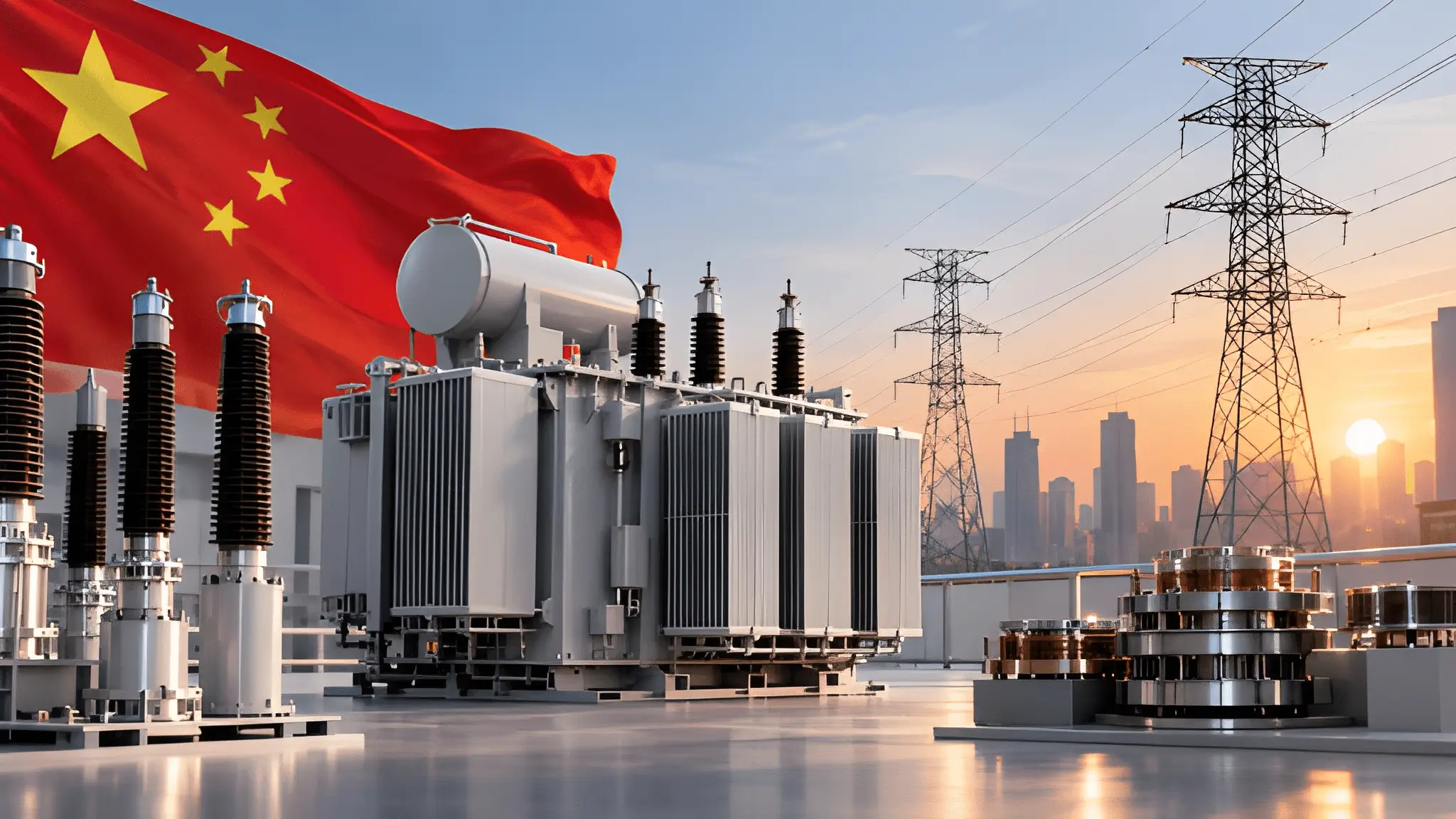
Hitachi Energy is putting another $300 million behind its China manufacturing strategy, positioning the country as a critical production hub for an increasingly power-hungry global economy. The investment will fund a new smart manufacturing base for power transformers in Hefei, Anhui, while also expanding the company’s ability to produce transformer components locally. The move comes as utilities, data center operators and industrial customers race to secure equipment needed to connect new electricity loads to increasingly constrained grids. For Hitachi Energy, the bet is not simply about serving Chinese demand, but about using the country’s industrial depth to strengthen supply for customers worldwide.

The company is pairing the investment with a broader upgrade of its existing Hefei operations. A newly digitized production line for transformer tap changers has now been inaugurated, while construction has started on an ultra-high-voltage bushing project at the same component hub. The combined expansion is expected to nearly triple tap changer capacity and turn the facility into a highly automated “Lighthouse” manufacturing site serving international markets. That designation reflects a shift toward digitally enabled production where automation, scale and supply-chain responsiveness become as important as physical manufacturing capacity.
AI Data Centers Push Grid Equipment Demand
The timing of the investment reflects a fundamental change in electricity infrastructure economics. Artificial intelligence workloads are driving data center construction at a pace that is forcing power suppliers and equipment manufacturers to plan capacity well ahead of demand. Transformer and grid-component availability has consequently become a strategic constraint, particularly for projects that cannot afford long equipment lead times. Hitachi Energy sees that dynamic spreading across data centers, transportation, industrial activity and the wider electrification economy.
“With the rapid development of artificial intelligence, data centers, transportation and industrialization, global electricity loads continue to climb and market demand for critical grid equipment has reached unprecedented heights,” Bruno Melles, executive vice-president of Hitachi Energy and CEO of its transformer business unit, said. He also pointed to the unusually compressed timelines surrounding AI infrastructure. Data centers can require grid equipment at a speed that traditional manufacturing and procurement cycles struggle to accommodate.
That pressure is encouraging suppliers to add capacity before orders arrive rather than waiting for shortages to become visible. The Hefei expansion therefore gives Hitachi Energy additional manufacturing headroom as electricity-intensive infrastructure accelerates. “This investment fully reflects Hitachi Energy’s firm confidence in continuously deepening our roots in the Chinese market. By elevating our manufacturing level and strengthening the resilience of the transformer value chain in China and globally, we will further support customers in building a more secure, affordable and sustainable energy system,” added Melles.
China’s Data Center Power Demand Is Surging
China’s electricity requirements are becoming an increasingly important part of the investment equation. Wood Mackenzie projects electricity consumption from China’s data centers will nearly quadruple by 2030, reaching 774 terawatt-hours, as AI computing drives new capacity. The scale of that growth puts additional pressure on the transmission and distribution equipment required to move electricity from generation assets to large computing facilities. It also creates a sizeable manufacturing opportunity for companies capable of supplying transformers and high-voltage components at scale.

Data from China’s National Energy Administration underscores the acceleration already visible in the market. Electricity consumption associated with internet data services reached 49.4 billion kilowatt-hours during the first half of 2026, representing a 44 percent year-on-year increase. Wu Liqiang, an official with the China Electricity Council, said demand from emerging industries should maintain a rapid growth trajectory in the coming years. The combination of AI infrastructure, industrial electrification and renewable-energy development is consequently reshaping the equipment requirements of China’s power system.
Hitachi Energy Deepens Localized UHV Production
The investment also has a supply-chain dimension that extends beyond transformer capacity. Hitachi Energy plans to use the expanded footprint to increase localized production of critical ultra-high-voltage components that previously came from Europe. That change can reduce exposure to cross-border logistics, shorten supply timelines and give customers greater access to components within the Chinese manufacturing ecosystem. It also places more of the company’s high-value power equipment production closer to one of the world’s largest and fastest-changing electricity markets.
“This significant investment not only reflects our long-term commitment to customers, partners and the market, but also highlights our firm confidence in the development prospects of China’s manufacturing sector, “Zhao Yongzhan, executive vice-president of Hitachi Energy and head of the North Asia region said. Zhao framed the expansion as a strategic upgrade rather than a conventional factory investment. Local production of UHV components could make the company’s supply network more resilient while supporting customers undertaking large-scale grid projects in China. The strategy also gives Hitachi Energy a stronger manufacturing base for addressing demand outside the country. In effect, Hefei is being developed as both a domestic supply asset and an international production node.
“The brand-new power transformer manufacturing base and the UHV bushing center open a new chapter for Hitachi Energy’s development in China. We will continuously support the construction of China’s new energy system and better satisfy the escalating needs of the global market,” he added.
Foreign Investment Signals China Manufacturing Confidence
The move also fits into a broader trend of multinational companies maintaining or expanding advanced manufacturing operations in China. Pan Yuanyuan, an assistant researcher at the Chinese Academy of Social Sciences’ Institute of World Economics and Politics, argued that the country continues to offer an unusual combination of market scale, industrial capability and supply-chain depth. Her assessment suggests the appeal for global manufacturers increasingly extends beyond selling products to Chinese customers. China’s role as a manufacturing and technology platform can also influence how companies build resilient global production networks.
“China offers a unique combination of a mega-sized market, a comprehensive, resilient industrial chain and continuous efforts to optimize the business environment,” Pan said. “For multinational companies today, investing in China is no longer just about accessing a vast consumer base. It is a strategic necessity to integrate into a highly efficient global supply chain and capitalize on the country’s rapid advancements in green energy and digital transformation.”
Hitachi Energy’s latest commitment illustrates how that calculation is evolving for critical infrastructure suppliers. The company is linking Chinese manufacturing scale with global demand for equipment needed to electrify economies and connect increasingly powerful computing infrastructure. Meanwhile, the push toward automated “Lighthouse” production indicates that the competition is moving beyond factory footprint toward speed, digitalization and supply-chain resilience. As AI data centers and other high-load industries expand, the companies capable of producing grid equipment quickly and reliably may become just as strategically important as the technology companies consuming the electricity.












